
EvergreenHealth may be out-of-network starting Sept. 1, 2023

If you are a member of the Regence KingCare PPO medical plan, and you see medical providers who are part of the EvergreenHealth network, please note the following information about their contract with Regence BlueShield.
Leaders from Regence and EvergreenHealth are currently in extended contract negotiations. Both organizations are working to reach an agreement before their current contract ends Sept. 1. Here is what you need to know:
- Most provider-health plan contract negotiations are resolved with no service disruptions and no provider network changes.
- If an agreement between EvergreenHealth and Regence is not reached by Sept. 1, services received on or after this date by EvergreenHealth providers will be considered out-of-network and will be paid at a lower benefit level, except for emergency care at Evergreen general hospitals in Kirkland and Monroe, which would be paid at the in-network level.
- Most employees pay 40% for out-of-network services after the deductible and copays are met, until you reach the out-of-pocket limit. For details about your medical benefits, go to www.kingcounty.gov/Plan-Details.
- You can receive care from EvergreenHealth through Aug. 31, and services will be paid at the in-network rate.
- No action is needed by you at this time. Additional information will be shared as it becomes available.
- Regence recently mailed a letter to members who use EvergreenHealth providers to inform them of the situation and identify potential alternative providers, should the parties not reach agreement by Aug. 31.
If you have questions or want help finding a different provider, please call Regence BlueShield at 800-376-7926 from 5 a.m. to 8 p.m. PST, Monday—Friday, and 8 a.m. to 4:30 p.m. PST on Saturday. You can also contact the King County Benefits team at 206-684-1556 or email KC Benefits.
Share this:

New requirement to report lump sum payments to the Division of Child Support

According to House Bill 1262, additional income reporting requirements became effective for Washington employers on July 23, 2023. Employers are now required to report lump sum payments of $500 or more to the Washington State Division of Child Support (DCS) before the lump sum is paid to the employee.
This requirement applies to only those employees with a current WA Income Withholding Order that includes a payment for past-due child support.
The reporting requirement applies to lump sum payments of $500 or more includes, but is not limited to: Retro pay, cash out of accruals such as vacation, sick or comp time; bonuses; commissions; retroactive pay; moving and relocation incentive payments; safety awards; settlement pay; and workers’ compensation for lump sum wages owed. Excluded are recurring payments of regular earnings, overtime pay, recurring premium pay, and reimbursements for expenses.
King County must report the lump sum payment to DCS and they will direct King County regarding how much to withhold for child support.
For more information, contact the Washington State Division of Child Support or visit their website at www.dshs.wa.gov/child-support.
Share this:

Pacific Northwest Admin Awards Nominations Close Aug. 9

The third annual Pacific Northwest Admin Awards nomination period ends Aug. 9. Admin Awards is a nationally recognized public celebration of administrative excellence reserved for extraordinary Administrative Professionals. Click this link to submit a nomination.
The nomination form includes the option of submitting nominations for the nine individual award categories and one company award category. Finalists and awardees will be announced during the Admin Awards Gala in September. Visit the Admin Awards website for more information.
Share this:

Recognizing Metro’s Operators of the Month, May – June 2023

Crossposted from Metro Matters
They are fitness enthusiasts and bicycle and motorcycle fans. Some always wanted to be behind the wheel, others came because they enjoy serving the public and getting people where they need to go. They are our “rolling ambassadors,” the kind, courteous and helpful smile that greets you every day when you ride with us.
They represent over 150 years of driving experience. The operators who drive your bus are as unique as you, and all of them love driving and giving back to their community.
Meet your Operators of the Month for May and June 2023. Read more.
Share this:

CHOMP!, King County’s local food celebration, returns to Marymoor Park with tasty food, live music, sustainable workshops, and free family activities

CHOMP!, King County’s celebration of local food and sustainable living, returns Aug. 19 to Marymoor Park in Redmond with live music from Blind Boys of Alabama, plus a full day’s worth of free, fun activities for all ages.
Activities will start at 10 a.m. and include a farmers market, local food vendors, tree climbing, NW Kung Fu lion dance, petting zoo, a fix-it fair, and scavenger hunt. Bring your gardening questions for Washington State University Master Gardener volunteers or make your own seed balls to take home. Read more in the full press release.
Share this:

Ending the HIV epidemic: King County’s new Heroes Award
Crossposted from Public Health Insider
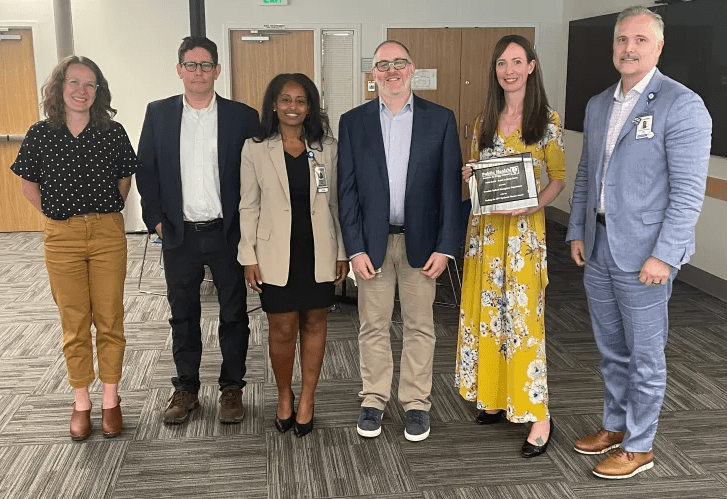
In February 2019, the U.S. federal government announced the Ending the HIV Epidemic: A Plan for America (EHE) – with a goal to decrease new HIV infections in the U.S. by 75% by 2025 and 90% by 2030. The initiative aims to capitalize on scientific advances in HIV diagnosis, treatment, and prevention to accelerate national progress in controlling the now 40-year-old HIV epidemic. The plan directs resources to geographic areas in the U.S. with the largest number of new HIV diagnoses each year. King County is one of the 57 regions funded.
EHE focuses on four “pillars” or strategies: 1) Diagnose, 2) Treat, 3) Prevent, and 4) Respond. King County’s EHE Plan aims to dramatically reduce new HIV infections by expanding access to HIV prevention and care resources to populations that have the hardest time using them. Read more.
Pictured: Swedish Ballard Emergency Department Receives inaugural Ending the HIV Epidemic Heroes Award.
Share this:

Metroadeo veteran Tammy Klein reclaims title
Crossposted from Metro Matters
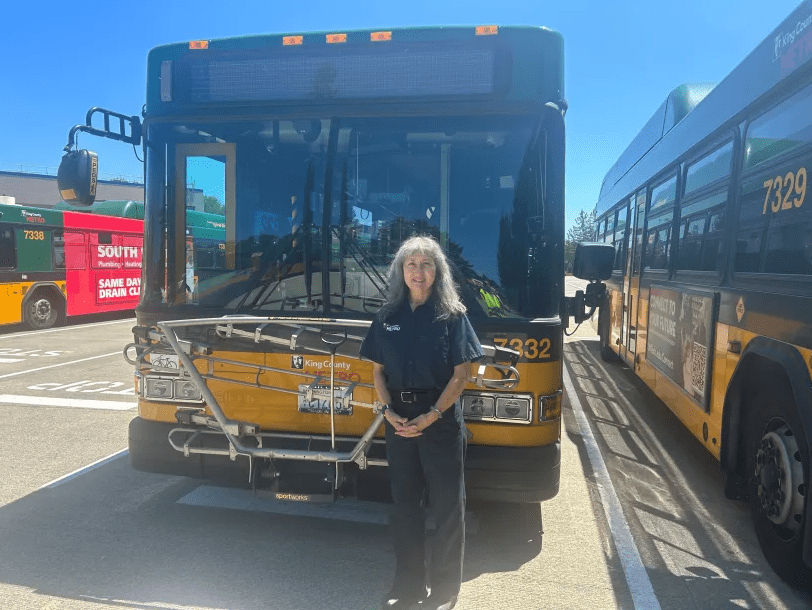
Our operators are the best when it comes to handling large vehicles in tight spaces, but how do you determine the “best of the best?” You hold a “Roadeo!!”
In June, some of King County Metro’s top operators came to Metro’s South Base for our “Metroadeo,” the annual transit Olympics for some of Metro’s most skilled drivers.
Operators maneuver their buses through left and right turns, passenger stops and tight spaces, taking care to adjust speeds and set up just right to perform each maneuver. It’s all scored by judges with a sharp eye and high expectations for precision. Operators also must pass an inspection test where they have to find a variety of operational defects on the bus within eight minutes. Read more.
Share this:

King County makes historic investment to tackle Racism as a Public Health Crisis with $25 million in grants to more than 120 small businesses, nonprofits, and community organizations

King County Executive Dow Constantine and fellow co-chairs of the Gathering Collaborative, Dr. Ben Danielson and Abigail Echo-Hawk, announced $25 million in grants awarded to 123 nonprofits, community organizations, and small businesses to advance the work of addressing racism as a public health crisis in the region.
Since March 2022, King County and the co-chairs have met weekly with the Gathering Collaborative, a group of diverse and trusted community members, to co-create the grant program. The Collaborative is the result of reimagining a different grants process in partnership with Black and Indigenous communities, and to equitably distribute grant funding to advance economic and racial justice in communities. Read more.
Share this:

King County Security Tips – Keep Devices and Software Up to Date

You know that little pop-up prompting you to restart your computer for a software update? The one that only seems to come up when you’re in the middle of something important? As annoying as it may seem, this notification is actually a valuable asset to your cybersecurity. So, before you click the “Later” option, let’s take a closer look!
What is a software update?
A software update is a new and improved version of a program, application, or operating system that you are already using. The update may include new features, bug fixes, or important security patches.
Why are updates important for cybersecurity?
Do you ever wonder how secure the programs installed on your device are? Cybercriminals do. They look for cracks in the security of programs and use these vulnerabilities to gain access to your device. With this access, they could enable a keylogger to track what you type, steal confidential information, or even install ransomware to lock you out of your files and demand payment for access. Developers help prevent this by fixing vulnerabilities as soon as possible. These fixes are included in software updates. Meaning, the longer you wait to install the update, the longer your system is at risk.
How do I check for software updates?
Any device that runs software, be it a computer, tablet, or even a smart tv, can release updates. Most software will prompt you when an update is available, but it’s good practice to check periodically. Here is a general guide to checking for updates on common platforms:
Mac System Updates (for macOS Catalina)
- Open the Apple menu and select About this Mac.
- Click Software Updates….
- If any are available, you will have the option to install it.
Windows System Updates (for Windows 10)
- Open the start menu and select Settings.
- Select Update & SecuritySettings then select Windows Update.
- Click Check for Updates. If any are available, you will have the option to install it.
iOS Updates
- Open the Settings app and tap General.
- Tap Software Update.
- If any are available, you will have the option to install it.
Android Updates (for most devices running Android 10 or higher)
- Open the Settings app and go to the System
- Tap About Phone. (If this is not an option, skip to step 3.)
- Tap System Updates.
- Tap Check for Update. If any are available, you will have the option to install it.
Don’t see what you’re looking for? Please consult the user manual or online support for your specific device.
Stop Look Think – before you click.
King County
KCIT ISRC
Cyber Security Awareness Training Program
kcitcsat@kingcounty.gov
KnowBe4.com is an authorized vendor for King County
Share this:

Best Starts 2022 Annual Report and Data Dashboard is now live
Crossposted from the Best Starts for Kids blog
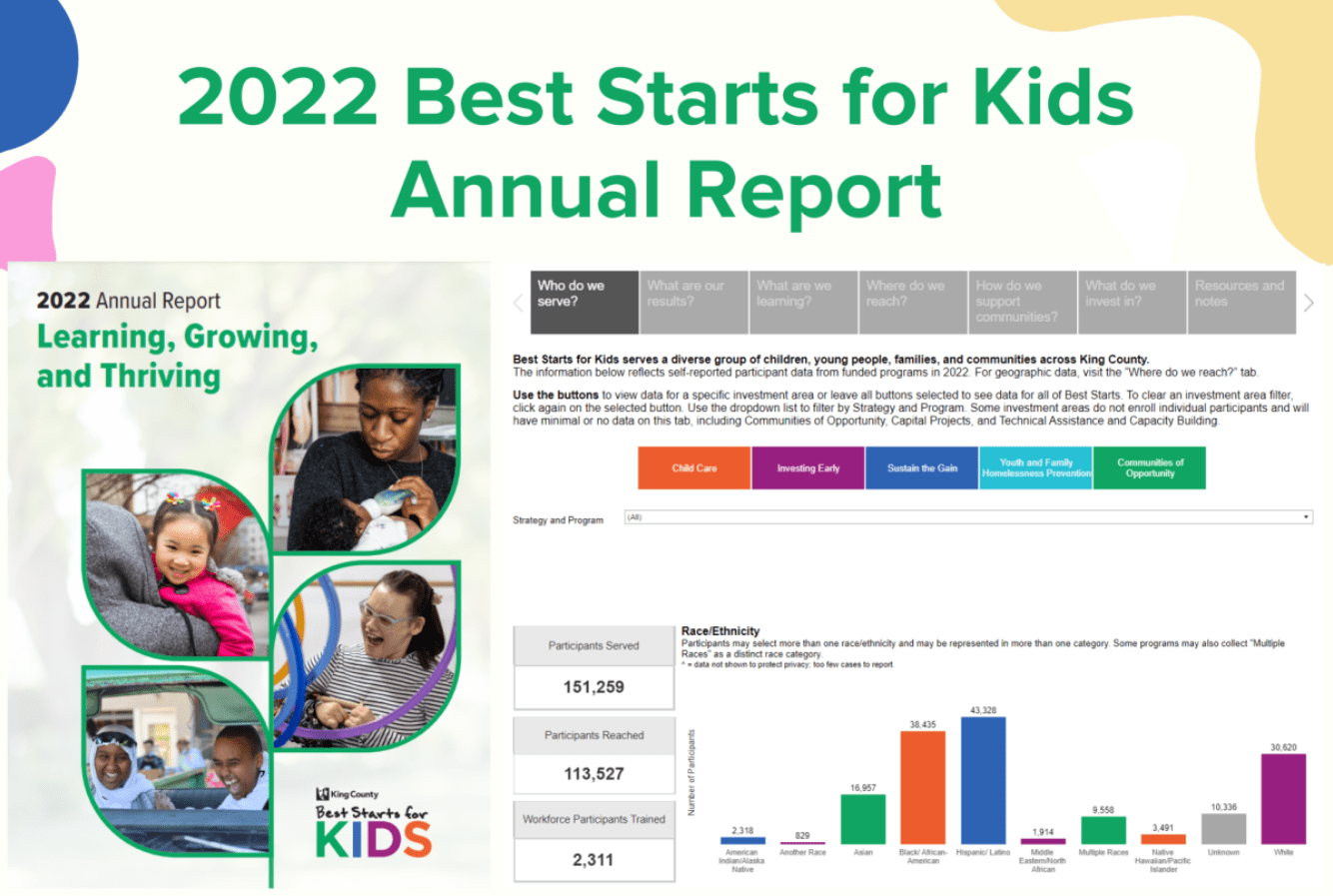
In 2022, Best Starts for Kids expanded into new investment areas, responding to community input and need, including funding equitable access to high quality, affordable, and well-compensated child care. Best Starts launched an equity-centered capital program to build, repair, and expand community spaces to better serve communities. Best Starts extended contracts to support continuity of services, offered 34 funding opportunities, and distributed over $110 million to community partners. Best Starts partnered with more than 450 community-based organizations operating more than 500 programs to reach over 264,000 children, young people, families, and community members across King County. Read more.






 Employee News