
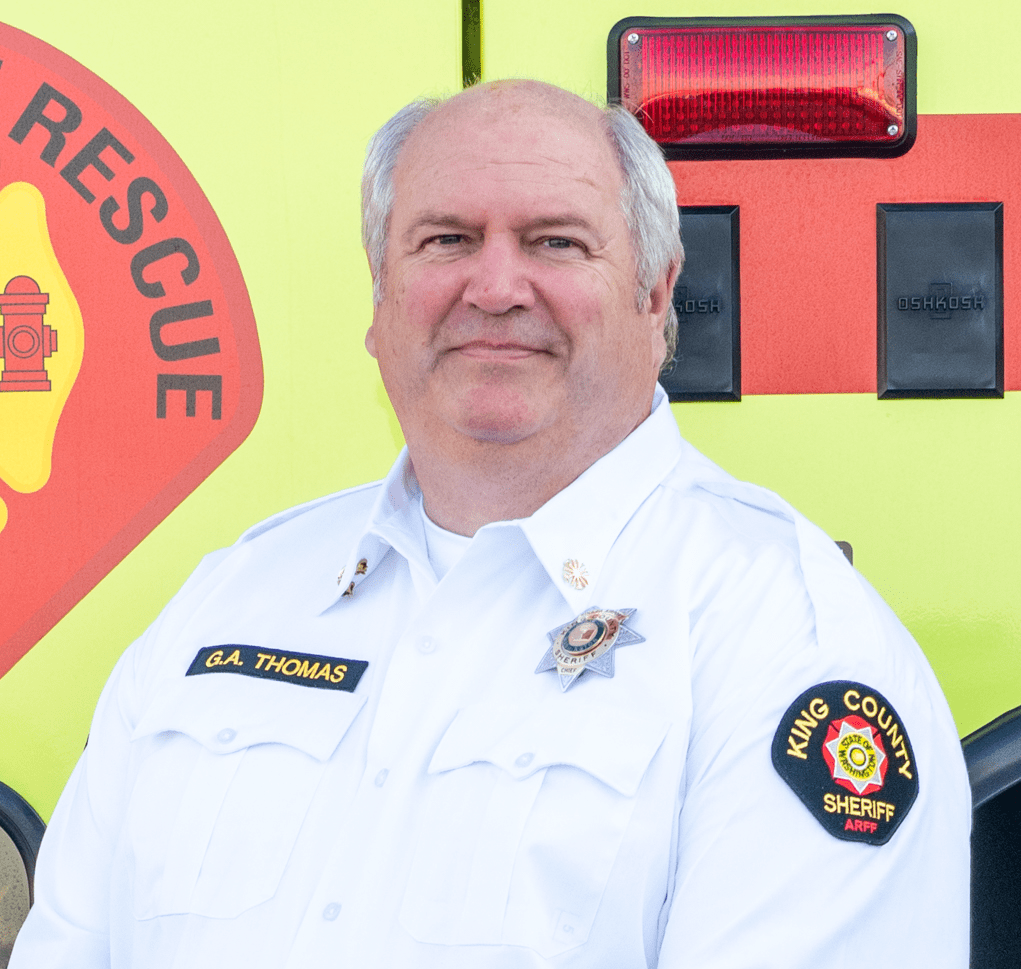
Congratulations, Captain Thomas, for 40 years of exemplary service
Excerpted from King County Sheriff’s Office Weekly Newsletter
Captain Greg Thomas recently was awarded his 40-year coin after four decades of commendable service to the Sheriff’s Office.
As the second-most senior member in the agency, he’s served in many capacities but has found his heart in honoring Fallen Officers. In his current role serving as Chief of Aircraft Rescue and Firefighting, he offers extraordinary leadership and serves as a role model to all, including his legacy within the department. Read more.
Share this:

Terry Moon, Metro’s Operator of the Year

Cross-posted from Metro Matters
King County Metro bus operator Terry Moon has been awarded the department’s highest honor, 2021 Operator of the Year.
Moon was surprised with the recognition at a ceremony celebrating his award at Metro’s Atlantic Base. He was chosen by 84 fellow 2021 Operators of the Month as the “best of the best.” Read more.
Share this:

Regional Animal Services hosts ElleVet Project
Cross-posted from Executive Services Express
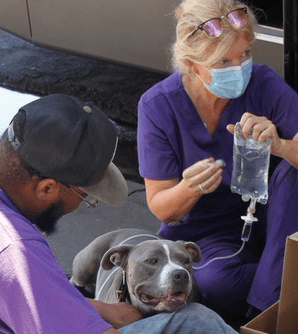
Regional Animal Services of King County (RASKC) leaders and staff know that helping pets and people go hand (or paw) in hand, so to speak.
To that end, they recently hosted the ElleVet Project, a non-profit organization that travels to various locations to help pets of people without housing. Read more.
Share this:

Mack Rutherford stops at KCIA then breaks world records

Cross-posted from Plane Talk
Mack Rutherford, who turned 17 while flying around the world, stopped at King County International Airport (KCIA) in early August on his way to breaking the record of the youngest person to fly solo around the world. Mack was greeted by David Decoteau, KCIA Deputy Director.
Mack’s sister, Zara, also stopped at KCIA on her record-setting journey last year, when she was 19.
Mack has now claimed two Guinness World Records, according to the Associated Press. Along with becoming the youngest person to fly around the world by himself, he is the youngest person to circumnavigate the globe in a microlight plane.
Learn more about Mack’s journey.
Share this:

Get rewarded for referring successful candidates to public safety jobs

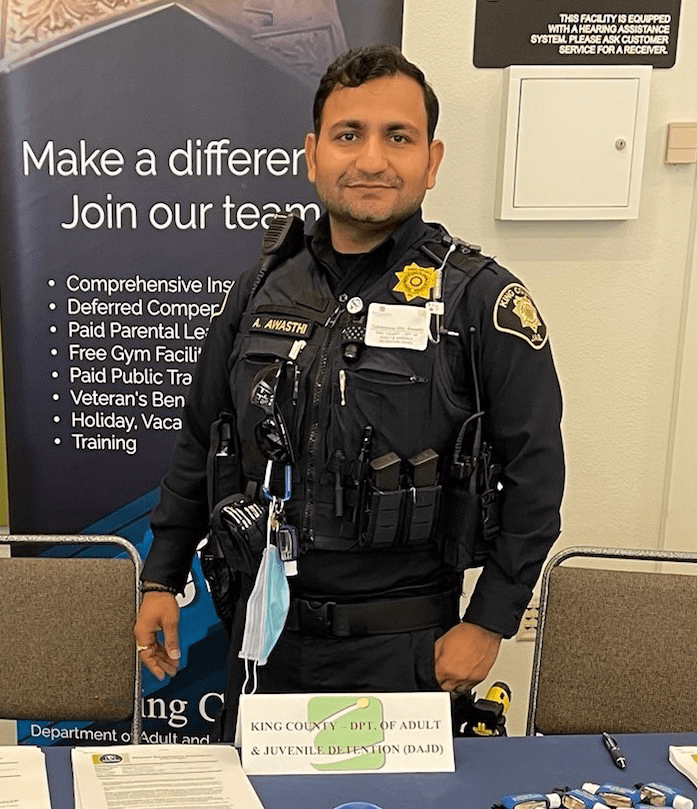
At King County, we are one team. It’s one of our core values. And virtually every member of our team can now get directly involved in recruiting deputy sheriffs, corrections officers, and juvenile detention officers – and potentially be rewarded for it.

Almost every King County employee is now eligible for a $5,000 bonus if they refer a successful candidate to our organization who is hired as a corrections officer, juvenile detention officer, or deputy sheriff.
Know a friend, a cousin, or a former classmate who’s looking for a rewarding career in public safety? Send them our way. New hires are eligible for a $7,500 sign-on bonus – double that amount if they have prior experience.
Here’s how it works:
- The successful job applicant for a corrections officer, juvenile detention officer, or deputy sheriff position must provide the full name of the existing King County employee as a part of their initial job application.
- To be eligible to receive a referral payment, an employee must be employed by the County on the day the referral payment becomes due.
- The referral bonus shall be paid to the referring employee’s paycheck for the pay period the referred employee successfully completes their probation period.
- There is no limit to the number of referrals an employee can make.
Restrictions include:
- Only one employee may refer any given applicant, and only one referral incentive shall be paid per applicant.
- Employees may not receive a referral bonus by referring themselves as applicants.
- Employees may not receive a referral bonus for referring another current King County employee, or someone who has been employed by King County within the past 12 months.
- Employees who by virtue of their job or assignment are tasked with the recruitment or hiring of corrections officers, juvenile detention officers, or deputy sheriffs are not eligible to receive the referral bonus for recruitments associated with their job or assignment.
If you know a great candidate, please let them know about our rewarding career opportunities in public safety. Job openings and descriptions can be found on our careers website.
Share this:

King County employee performs emergency CPR on unconscious coworker
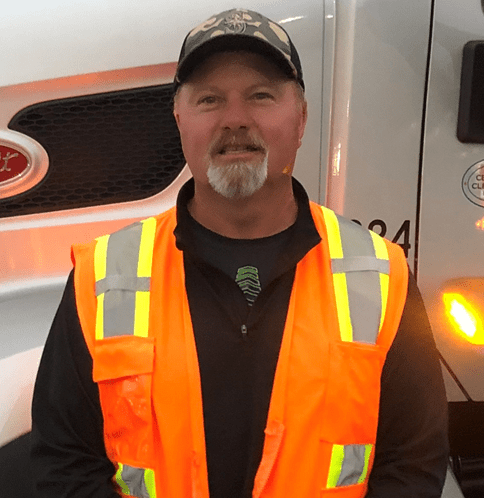
Last month, Solid Waste Division employee Kevin Dahl was unhooking his trailer before leaving Cedar Hills for his final garbage load of the night. That’s when he noticed something unusual.

What he saw was a utility truck parked by the wash bays’ restrooms. Not an unusual spot to be but at that time of night most workers using those vehicles have clocked out. When he returned from the transfer station 90 minutes later to pick up his final load of the night, the utility truck was still there. Kevin had a strong sense something was not right.
Kevin said, “I parked my truck and went to check it out.” After knocking and getting no response, Kevin decided he had to find a way in. “The door seemed locked, so I leaned into it and pushed it open.” What he found was a coworker passed out in the corner of the restroom.
“I tried to revive him, but he didn’t respond. I checked his pulse, and put some cold towels on him, hoping that might wake him up.”
Kevin ran to the lead office for help from additional coworkers. Kevin then called 911. With guidance from the 911 operator, Kevin began chest compressions, keeping this going until emergency personnel arrived.
“It was pretty emotional,” he said, the 911 operator told him to continue chest compressions until someone pulls you off. “She gave instructions while I kept pumping blood through his body.”
Kevin provided CPR for over 20 minutes until the Emergency Medical Technicians (EMT) arrived and took over. They continued working on the patient another 30 minutes before stabilizing him enough to put him in an ambulance.
“No one goes to those restrooms at night,” according to Kevin. An EMT told him that the unconscious man probably would not have been with us in the morning if he hadn’t been found that night.
“They left with the lights flashing, so I thought that was a good sign,” Kevin recalled.
Kevin credits his CPR training from his previous position with King County’s Roads Services Division for his ability to stay calm, take the right steps, and likely save a life.
CPR training available
Safety training courses are available free of charge to all King County employees and are taught by qualified Occupational Education and Training Program Administrators. When possible, classes can be held at work site locations.
Various safety training classes, including CPR and first aid, are available. Go to the Safety Training Classes page for information.
Editor’s note: The patient’s name has been omitted to respect their privacy.
Share this:

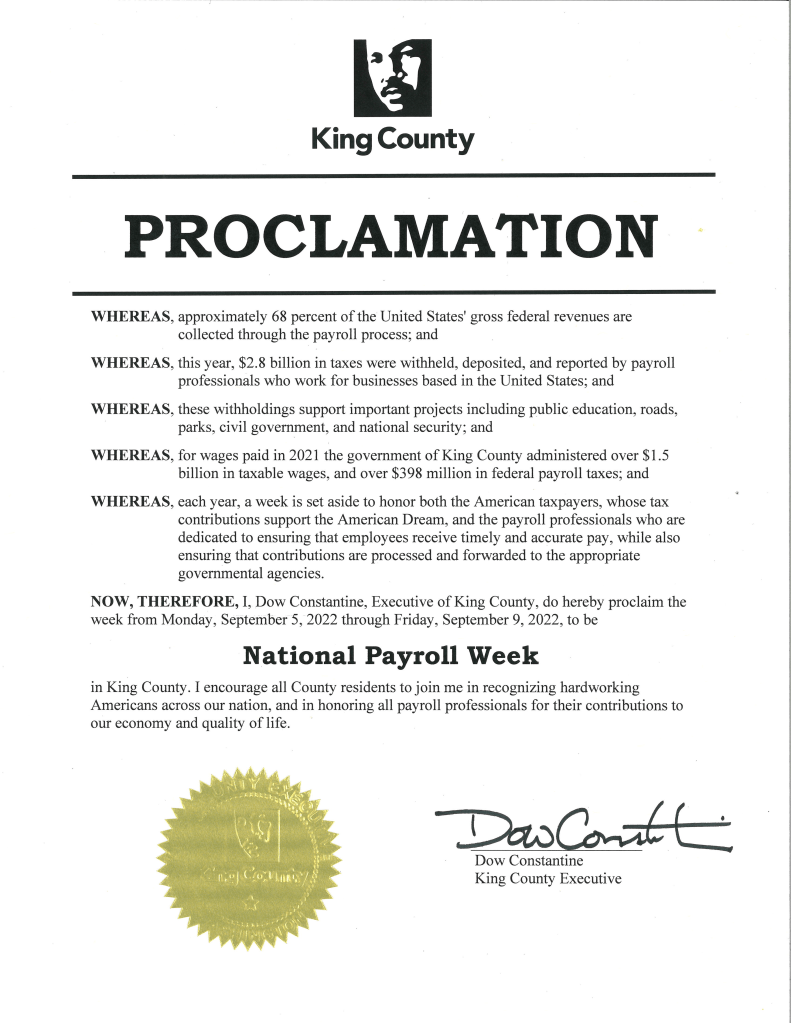
Executive Constantine proclaims National Payroll Week

King County Executive Dow Constantine is recognizing the dedication and expertise of King County’s payroll professionals by proclaiming Sept. 5 through Sept. 9, 2022 as National Payroll Week.
“I encourage all County residents to join me in recognizing hardworking Americans across our nation, and in honoring all payroll professionals for their contributions to our economy and quality of life,” Constantine states.
Read the entire proclamation below.
Share this:

Get a flu shot this fall

With mask mandates lifted in most settings and many people resuming in-person activities, public health experts are predicting flu activity will ramp up this season. It’s especially important for every person to be protected before it starts to spread in our area to give your body time to build immunity.
The county makes it free for employees and anyone covered by your healthcare benefits to get a flu shot at one of our onsite clinics, or at your doctor’s office or local pharmacy. The Balanced You team is again organizing free onsite flu shot clinics for those workers onsite.
Read about free onsite flu shot clinics and schedule your appointment here. Benefits-covered employees who are telecommuting and their covered family members may find it more convenient to go to their healthcare provider’s office or a local pharmacy for their free flu shot. Learn more about how to get a flu shot through your provider or local pharmacy.
Share this:

Megan Pedersen appointed as temporary Special Deputy for King County correctional facilities

Executive Constantine has appointed Megan Pedersen, current Director of the Office of Labor Relations, to serve as a temporary Special Deputy to the Executive, stepping into the role immediately to provide additional support in implementing critical actions and improvements related to staffing, operations, and health and safety in King County correctional facilities. Read more.
Share this:

When can I get the updated COVID-19 booster?

Cross-posted from Public Health Insider
An updated booster shot of COVID-19 vaccine is just around the corner. On Aug. 30, the FDA authorized updated booster vaccines for emergency use, but there are still a few steps left in the approval process.
Expert panels will review the applications from Pfizer and Moderna for these new booster vaccines at the end of this week and if they decide to recommend them, the updated Omicron-specific boosters could be available late next week. Read more.






 Employee News