
King County pulse survey starting Sept. 8

 King County is conducting a short pulse survey of a random sample of employees to get a better understanding of the impact of COVID-19 on our workforce, starting Tuesday, Sept. 8.
This survey builds on the May 2020 survey and listening sessions of more than 1,000 randomly selected Executive branch employees, which asked about their experiences amid the COVID-19 pandemic and its affect on their work. Its results will be used to better understand how the County can effectively support employee well-being at this time, and the changing nature of work.
As this is a random sample survey, not all employees will receive the survey email. If you are randomly selected to participate in the survey, you’ll receive an email message from our survey vendor from the email address DFarmer@us.confirmit.com early next week. We appreciate employees taking the time to answer the survey so that we are able to act quickly on the feedback in this ever-evolving situation.
Share this:

Metro is ‘Ready When You Are’ with new safety innovations and route changes
 Crossposted from Metro Matters
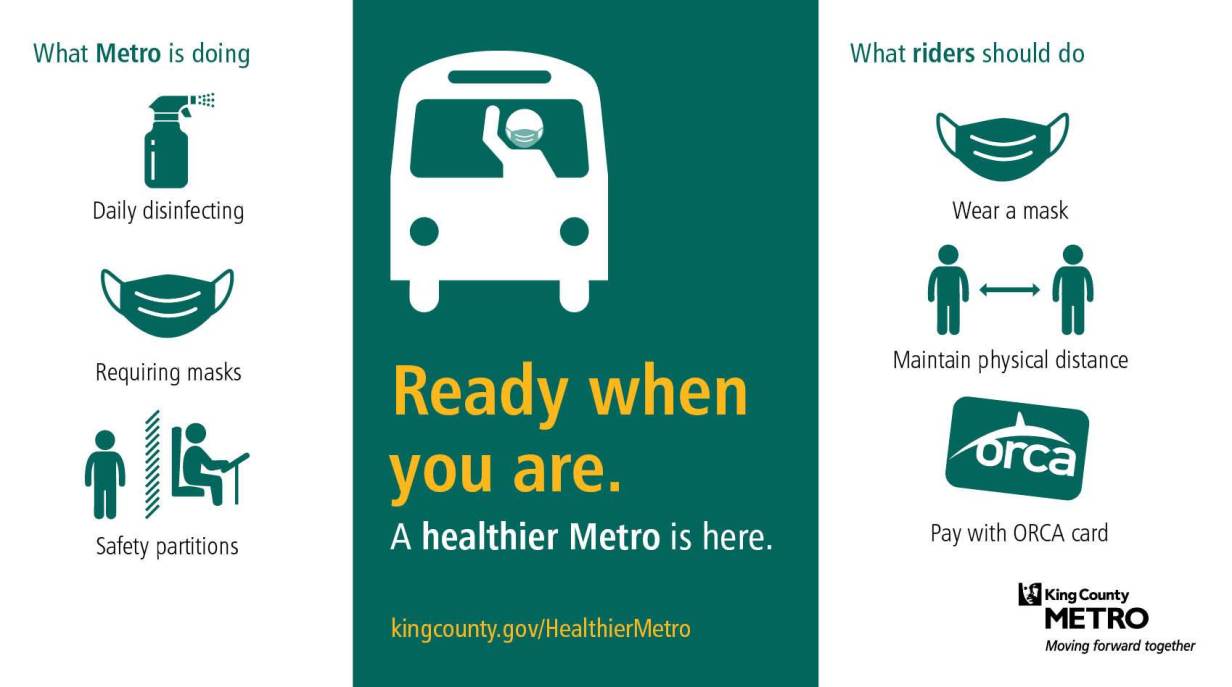
King County Executive Dow Constantine announced Metro is rolling out more than 1,400 first-of-their-kind automated safety partitions between passengers and the driver, to be installed on Metro buses, including Sound Transit Express buses operated by Metro. Metro also will equip over 100 buses with on-board dispensers to provide masks on the busiest routes.
To provide greater operator and passenger safety, Metro ceased front-door boarding and collecting fares on March 21.
Share this:

King County is moving to Microsoft Teams from Skype

 Microsoft Teams will soon be the hub for communication and collaboration. Teams provides communication with phone calls, meetings and IMs; collaboration tools for the shared work, and support for virtual large meetings with Teams Live Events.
What are the benefits? With Teams as the hub, working together will be easier:
- IM / Chat: Send IMs (instant messages) and chat with individuals, teams or groups, all in one location.
- Meet: Invite anyone with an email address to join a meeting to collaborate in real-time, share screens or use a digital whiteboard.
- Call: Make and receive calls within King County or to outside people or groups with no app needed.
- Collaborate: The new “one-stop” location for SharePoint, OneNote and Office tools.
What will the move to Teams look like? The move will happen in two phases: The first users will move from Skype to Teams in October. Most employees will move by Dec. 31.
During the transition, Skype and Teams will coexist. That means:
- Calls and instant messages between Skype and Teams will work.
- Users can attend Teams meetings Skype meetings, no matter which one is being used.
After the move, Teams will be the single communication tool.
- Zoom meetings will continue to be available for specific cases.
How will users be supported through this change?
- Users may already have Teams on their computer. If not, they will get it soon.
- Online training for Teams and live Q&A sessions will be available.
- Each agency or department will have resident Teams experts to help.
For questions or more information, view the Skype-to-Teams FAQs, or, submit a Helpdesk ticket to work directly with a KCIT Trainer.
Share this:

September is National Suicide Prevention Awareness Month

Dear King County employee,
September is National Suicide Prevention Awareness Month and this year it comes at a particularly difficult time for many people in our community. A recent Centers for Disease Control and Prevention (CDC) report found that 1 in 4 people aged 18-24 has had suicidal thoughts in the month preceding the survey, which was conducted in June. Behind that statistic are people experiencing racism, worrying about their jobs, and feeling the pandemic’s threat to their health. It is clear, these unprecedented times are having profound impacts on the mental health of people of all ages.
The COVID-19 pandemic, along with violence against Black minds and bodies, are placing a particular strain on people, causing predictions of a mental health crisis this fall, with increases in suicidal ideation, depression, and anxiety.
We know that every year thousands of individuals die by suicide, leaving behind their friends and family members to navigate the tragedy of loss. In many cases, friends and families affected by a suicide loss, often called “suicide loss survivors,” feel shame and stigma preventing them from talking openly and seeking support.
Together we can play an important role in destigmatizing mental health by talking openly about it. We can help one another by checking in on one another. We all want to know that we are not alone and that we have many mental health resources available to help navigate challenging times.
Effective and compassionate resources are available for you, a loved one, or a colleague, 24 hours a day, and many people have found hope and support through them:
- King County Mental Health Benefits and Resources Guide
- National Suicide Prevention Lifeline: 1-800-273-TALK (8255)
- Making Life Easier: 1-888-874-7290, 24/7 support available for King County employees and their families. Call to speak with a Making Life Easier counselor and receive help in a crisis, as well as get you or anyone living in your home set up with eight free sessions of counseling.
- Crisis Connections: 866-4CRISIS (427-4747), a 24-hour crisis line
- Crisis Text Line: Text HOME to 741741 to connect with trained crisis counselors about anything that’s on your mind. Free, 24/7 and confidential.
- For immediate crises, call 911 right away.
This month, watch for Suicide Prevention and Awareness events throughout September, and please continue to look out for yourself and for one another this month, and every month. Together we can help break the silence and stigma, and spread the message that hope, help, and support are available.
Sincerely,

Whitney Abrams
Chief People Officer
Share this:

Upcoming learning opportunities this fall

Learning and Development has a diverse collection of classes to choose from. Employees can view the King County Eventbrite page for current listings, and visit the Learning and Development website for other opportunities from various agencies. Current offerings include:
- Brain-based Time Management Online – This three hour class is $50 and space is limited.
- Thursday, Sept. 17, 2020, from 1-4 p.m. Register here.
- Tuesday, Sept. 22, 2020, from 9 a.m. to noon. Register here.
- More options for this class available on the King County Eventbrite page
- Grantwriting 101 Online – Offered through North Seattle College, this course is $99 and is four sessions. The series takes place every Tuesday beginning Sept. 29 through Oct. 20. Register here.
- Accounting and Quickbooks Online – Offered through North Seattle College, this course is $215 and is six sessions. The series takes place every Thursday beginning Oct. 1 through Nov. 5. Register here.
- Facilitating Effective Meetings Online – Facilitated by Lenny Borer, this class is $65 and takes place over two days, Tuesday Oct. 6 and Wednesday Oct. 7. Register here.
For more information, contact the Learning and Development Team at KCTraining@kingcounty.gov or visit www.kingcounty.gov/Learning.
Share this:

Tech Tip: Reminder to complete 2020 Cyber Security Awareness Training

All employees are required to complete KCIT’s Cyber Security trainings. Each employee should have received an email titled “King County 2020 Cyber Security Awareness Training,” which includes details on accessing this mandatory training. The training contains several short modules and will help all employees keep King County’s online systems safe and secure. Please note some departments will begin training this month.
For questions or more information, contact the KCIT Helpdesk or call 206-263-4357 (3-HELP).
Share this:

Pet of the Week: Bagheera
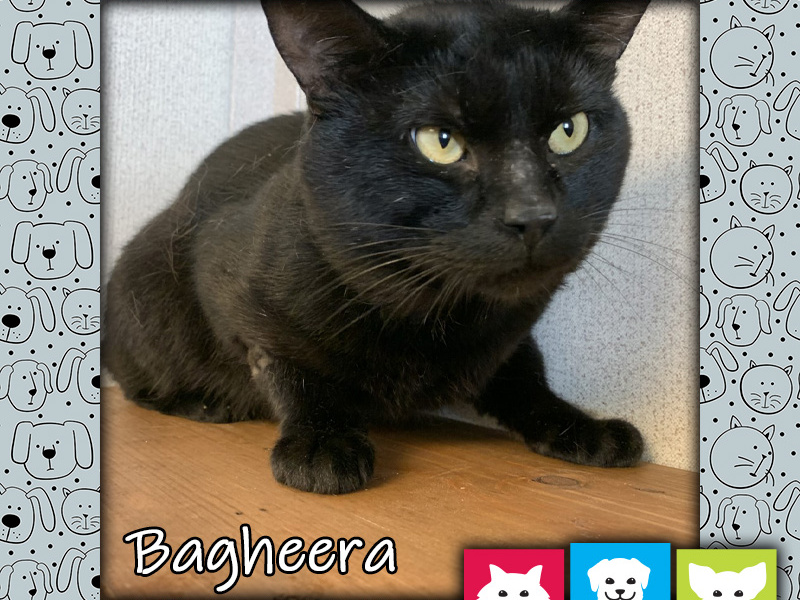
 Look who has their eyes on the prize… it’s Bagheera, our Pet of the Week! This young boy was brought in by a good Samaritan in early August. Bagheera likes to think he’s a panther – because he looks just like one! But that’s all just appearances, though, because Bagheera is actually a gentle and loving cat who likes to take things slow. So, he’s one of our “Bashful Blue” pets – one that would do best in a nice quiet home. He may get nervous in new situations, so he’s looking for a family that understands he might need some time to warm up.
Read more and view all available pets at www.kingcounty.gov/adoptapet. Have you or someone you know adopted a pet from RASKC? Let us know. We’d love to tell your story.
Share this:

Rev Up For Retirement online session, Sept. 22

 It’s never too soon to start retirement planning. If you’re considering retiring in the next few years, the Rev Up For Retirement class will provide you with a basic understanding of Medicare and Social Security to help you make wise and informed decisions.
- Tuesday, Sept. 22, from 8 -10:30 a.m. Register here.
At this online event, you will have the opportunity to ask questions and meet guest speakers Kirk Larson from the Social Security Administration and Jean Cormier, who will discuss your Medicare and Social Security options. This will be an online session and you will be provided a confirmation email the week prior to the seminar.
Registration is required. Please note attendance is strictly voluntary, on your own time, and non-work related. For more information, contact King County Retirement Navigator Carmen Johnson at Carmen Johnson or 206-263-1096.
Share this:

Resources for parents and caregivers during COVID-19

Being a parent or caregiver during this pandemic is tough. Between school schedules, naps, entertainment, meals, finances, and work, 2020 is one big balancing act for employees caring for kids.
Balanced You understands the toll that this stressful and unprecedented time is taking on working parents and caregivers, and we want to make sure employees know there are resources available from King County to help you through this. A summary of available resources can be found in this Balanced You blog post. If there’s anything else Balanced You can do to support you, please do not hesitate to reach out to us at BalancedYou@kingcounty.gov.
Share this:

King County OEM delivers live webinar on preparedness to celebrate National Preparedness Month
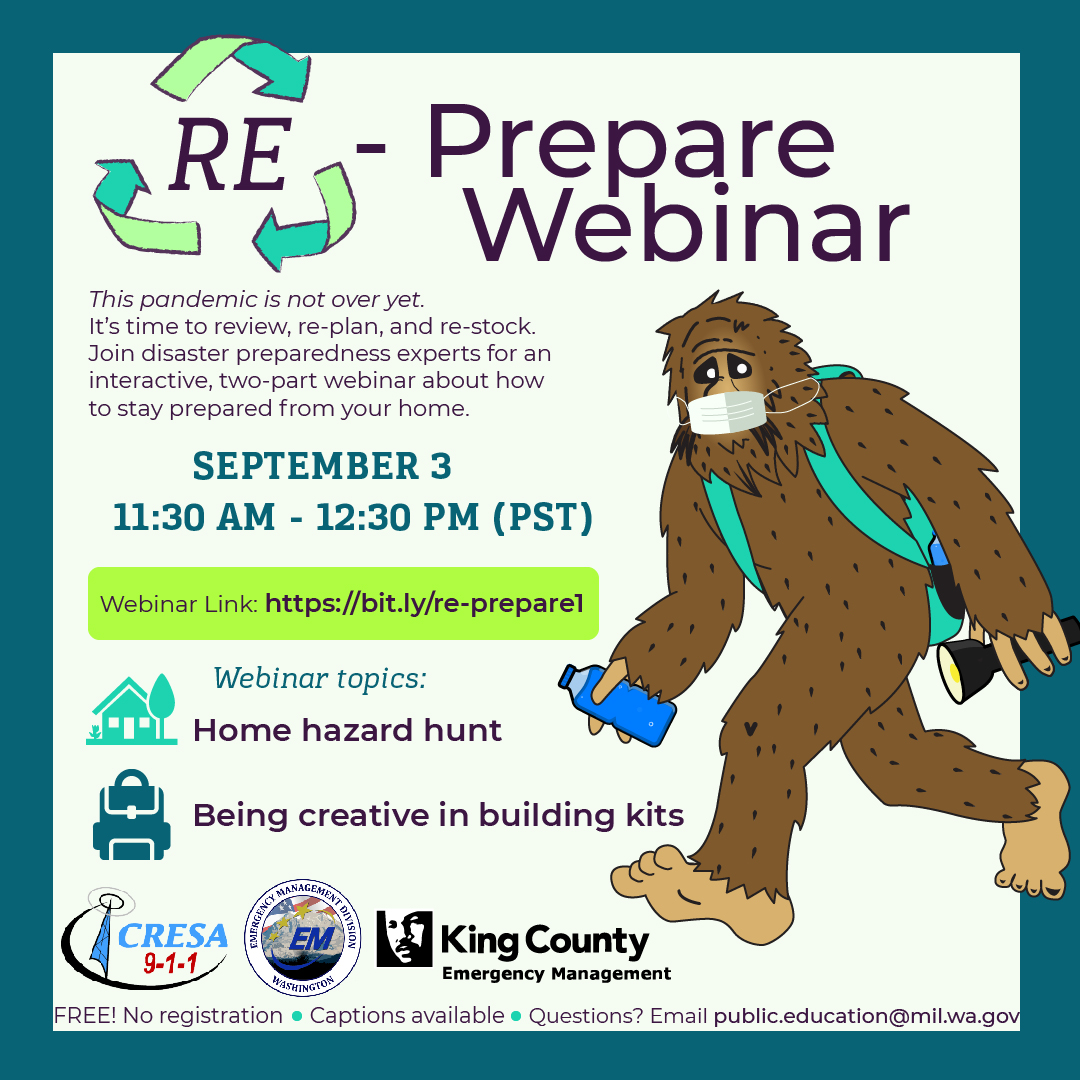
 September is National Preparedness Month. Over the next few weeks, the Office of Emergency Management will be reaching out to residents around the County to make sure that they are taking actions to prepare themselves and their loved ones for disasters. As we all continue to face the daily challenges of living through a global pandemic, it is important not to lose sight of other natural disasters that could occur in our region. Earthquakes, flooding, and severe weather, to name just a few, could have an impact on our families, friends, and loved ones, and by planning ahead we can reduce the impacts those emergencies can have on our lives.
Making a preparedness plan is an easy step we all can take. To learn more, register for a live webinar on getting prepared, Thursday, Sept. 3 from 11:30 a.m. to 12:30 p.m. Join the webinar here.
The webinar will feature preparedness plan tips including:
- Involve your loved ones, including your children.
- Discuss where you will meet and how you will communicate if you are apart when a disaster strikes.
- Document the actions you and your family will need to take if an emergency happens. Together address the questions:
-
- Where will you go if you need to evacuate?
- What if transportation is limited or you are unable to travel by traditional modes?
- How will you communicate with loved ones?
- What will you do if you must shelter in place for an extended period?
- Take into consideration all members of your family and their abilities/needs. Don’t forget your pets!
Please follow along this month at @KingCounty,WA and visit www.kingcounty.gov/prepare for more information on getting prepared.






 Employee News