
Learn about the proposed 2021-2022 budget

Dwight Dively, Director of the Office of Performance, Strategy and Budget, has recorded a short video about the proposed 2021-2022 budget.
In the video, he discusses the uncertainties we’re facing as we plan for the next two years, the budget shortfalls in several funds, and the County’s commitment to investing in anti-racist policies.
“My team in the Office of Performance, Strategy and Budget is currently reviewing budget proposals and developing recommendations for the County Executive,” Dwight said. “There are still many unknowns and a lot of work to do between now and late September, when the Executive will submit his proposed budget to the County Council.”
You can watch the video below.
Share this:

New name for DHR division

As the Benefits, Payroll and Retirement Operations Section of the Department of Executive Services (DES) gets set to join the Department of Human Resources (DHR) in 2021, DHR’s existing Employee Health and Safety Division (EHSD) will be renamed Central Employee Services Division (CESD), effective Jan. 1, 2021.
This change will more accurately reflect the full suite of services that the expanded division will provide beginning next year.
Employees in BPROS and EHSD took part in a survey to name the division. While Employee Services Division (ESD) received the highest number of votes (34%), some expressed concern that it could be confused with Employment Security Department (ESD). In addition, Transit has an Employee Services Division, which could lead to more confusion. DES Director Caroline Whalen and DHR Director Jay Osborne agreed, and approved CESD, which had the second highest votes at 31%. In fact, the top three names where all minor deviations of each other and showed 85% agreement, a great sign of aligned thinking.
Share this:

Ride Away Your Stress, Safely and Affordably!


Crossposted from the Public Health Insider
By Emily Devora Hops, UW MPH Student, Violence and Injury Prevention Unit
When you are stressed out, what do you do to relax? Did you know that physical activity reduces levels of the body’s stress hormones? In fact, exercise releases brain chemicals that improves mood. During times of high stress, riding a bicycle is a great way to improve your physical, mental and emotional wellbeing. Biking can help you get to where you need to go and be a rejuvenating social activity to do with family, friends or alone.
Within King County, not everyone has the same access to safe places to ride, life-saving bicycle helmets, or at times even a bike itself. Here are some resources and information to help everyone in King County have a safe and stress-free bike ride this summer.
Share this:

WW now offering live, interactive Virtual Workshops

WW now offers live, interactive Virtual Workshops, led by a WW coach that will support you on your wellness journey. During Virtual Workshops, you’ll be connected with other WW members based on your hobbies and lifestyle. There are also groups for your favorite activity, age, location, and more.
Sign up for WW at www.WW.com/wellness and enter King County Access ID: 33139. All King County employees and benefits-covered spouses or state-registered domestic partners are eligible for WW discounted rates and a 50% subsidy. For more information, contact balancedyou@kingcounty.gov.
Share this:

King County receives award for employee engagement program

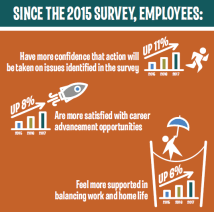 King County recently received an ACE Award from Confirmit for improvements made in employee engagement as a result of its annual surveys and an employee-led action plan process to address issues identified in the survey.
King County was further distinguished by being named the Judge’s Choice in the Employee Experience category and was the only public sector winner in any category. Confirmit’s 5,000 clients from around the world were eligible to apply.
“This accomplishment was achieved by the collective efforts of employees and managers at all levels of our organization over the past five years, working together as one team to drive change and improvement,” Whitney Abrams, Chief People Officer, said. “I have been inspired by the willingness of teams to use the engagement data to have direct, compassionate conversations on how to collectively address the survey findings.”
The employee engagement program is part of King County’s Investing in YOU strategy to build a welcoming workplace culture where every employee can learn, thrive, and do their best work. It uses data to identify opportunities for improvement and progress toward change.
King County also applies its Equity and Social Justice strategy to the engagement program to better understand the experience of employees of color through data, use a shared decision making model in action planning and address change through policy.
“Our program is unique in proving actionable data to create an equitable employee experience,” Brooke Bascom, Employee Engagement and Well-Being Manager, said. “The questions we ask about equity and social justice, paired with the reporting we do on the disparity in experience, provide a high level of visibility and accountability. We also support the ESJ strategic plan with the shared decision making model we use in action planning.”
Below is the write up about our program which will be shared with industry leaders in the ACE Awards 2020 book.
King County
Driving respect, results and equality through actionable employee experience
King County is a government entity covering the most populated county in the state of Washington, US. Its geographic area includes some of the most pristine rural areas in the country along with thriving technology hubs including Bellevue, Redmond and Seattle. King County employs a workforce of 16,000 people covering lines of business as diverse as medical clinics, transportation, corrections, recreation, public defense and facility planning.
To support its goal of creating an environment in which employees are supported to learn, innovate and do their best work, King County runs an Employee Experience program, centered around an annual anchor survey and action plan tracking. The program focuses on three values: demonstrating respect for people by involving them in discussions and action about their work experience, driving results by being responsive to employee feedback, and being racially just.
The program’s survey is answered at every level of the organization. Employee response rates have increased from 59% to 70% as people see direct action being taken as a result of their feedback, and the engagement index has increased by 8%. From the insight gathered, action plans are developed by teams at the department, division, workgroup and senior leader levels.
To ensure accountability around action being taken, King County worked with Confirmit to develop a platform for entering and tracking employee engagement action plans. This tracks nearly 300 plans at all levels of the organization. What’s more, because King County positions itself at the forefront of aligning organizational operations to a strategic goal of racial justice, it worked with Confirmit on an algorithm to report the survey questions with the biggest disparity by race, gender and other demographic factors. This insight ensures action is focused on racially just practices.
Smarter Decisions:
- Insight has driven the launch or expansion of fellowship and mentoring programs, and the creation of Professional Development scholarships
- Visible action resulting from the program has increased perceptions of career advancement, peer culture and feeling respected
- Diversity of top tier hires and promotions has increased by 18%; a wellbeing index has been created and a comprehensive mental health strategy implemented.
Share this:

Featured Job: Principal Accountant

Salary: $82,825.60 – $104,998.40 Annually
Location: Seattle, WA
Job Type: Career Service, Full Time, 40 hrs/week
Department: DES – Executive Services
Job Number: 2020JM11949
Division: FBOD-Finance & Business Ops
Closing: 8/16/2020 11:59 PM Pacific
Learn more about this position or view all available positions
Share this:

Automated, online Employment and Income Verification services available to all employees


We want to remind you that all King County employees can use InVerify, an Income and Employment Verification service, to access verification of County employment.
In order to better serve you, King County has partnered with InVerify to meet all of your verification of employment needs. By automating this process, we are ensuring speedy, secure, auditable, and legally compliant responses to assist you in obtaining:
- Loans, home mortgages, new jobs, rental qualifications, and
- Social Service benefits such as temporary assistance, housing assistance, child support, or nutrition assistance.
It’s one more way we’re Investing in YOU by providing workplace processes and systems that support you. For more information, or to access employment verification self-service, visit our Verification of Employment website and follow the instructions.
Share this:

Bridging the Gap Between Community and Systems
 Crossposted from the Zero Youth Detention blog
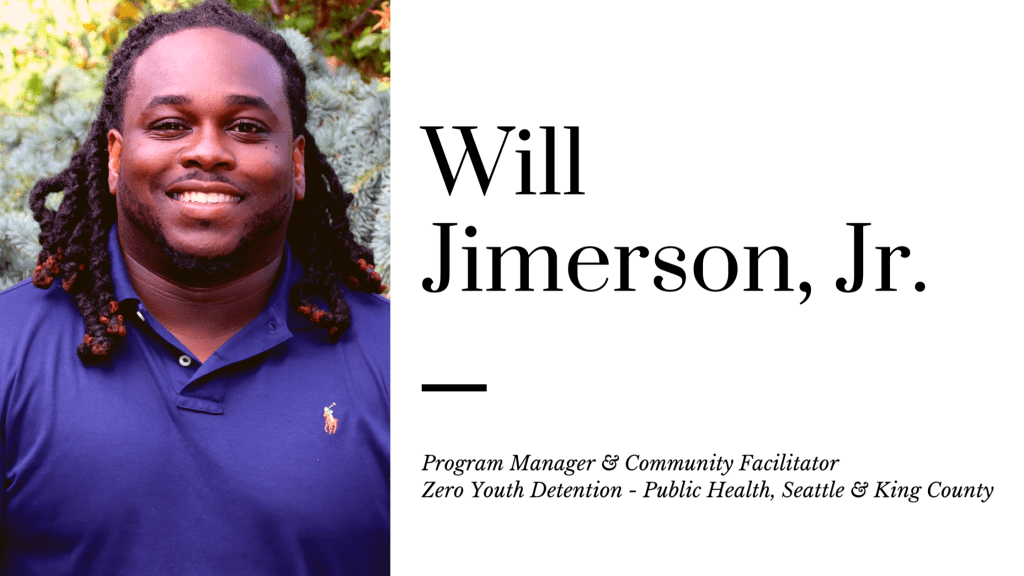
Willard Jimerson, Jr. grew up in Seattle’s historically African American Central District neighborhood. Raised by a loving grandmother and grandfather, young Will could never have predicted that just six weeks after his 13th birthday he’d become a ward of the state and spend the rest of his childhood in America’s adult prison system.
One fatal and catastrophic moment on a late night in 1994 changed everything. The kid who once fancied himself a charming and mischievous prankster, who loved playing arcade games and pick-up football, was gone.
Will grew up in a time when many Black families and children were reeling from the impacts of redlining, concentrated poverty, strict drug laws, and unfair sentencing practices that overwhelmed inner-city communities. Meanwhile, academic and political leaders alike pushed racist rhetoric that painted children as domestic terrorists and unjustly justified America going to war against it’s self-imposed “Underclass” and their inhumane “Superpredator” offspring. The Violent Crime Control and Law Enforcement Act passed in 1994, legalizing the inequitable and inhumane treatment of Black and Brown people in the judicial system.
Share this:

Tips and resources for employees living alone during the pandemic

Social distancing during the COVID-19 pandemic presents unique challenges for people who live alone. While those living alone do not have to navigate boundaries with housemates, they may be faced with more difficulty finding social connection.
Social connection is an integral part of mental and emotional well-being, and social isolation can lead to feelings of anxiety and depression. To support employees living alone, Balanced You has developed the following list of tips and resources for you to consider during these uncertain times. Visit Balanced You’s blog for more information.
Share this:

Emergency Deployment Program needs your administrative and project management skills!
 Do you have administrative, data entry, project management support or translation skills and want to assist with King County’s response to the coronavirus? If so, we need you!
As King County continues to respond to the coronavirus (COVID-19) outbreak, there is an urgent need to fill administrative-related roles within the County. In support of the County’s mandatory telecommuting order, most roles can be done remotely. As we strive to keep our workforce, workplace, and community safe, we have opportunities available to employees for temporary work redeployment to assist with COVID-19 related concerns and resources to the community.
Employees will be provided training and support to help them succeed in these temporary redeployments. Read more.






 Employee News