
Pet of the Week: Buster

 Buster is a 4 ½ year-old, brown brindle, Pit Bull mix. His personality color is RED, meaning he is a spirited dog with a fun-loving personality. Buster is an energetic guy who would love to be your hiking partner. He would also make a great cuddle buddy and he just adores belly rubs!
Share this:

Applications open for Professional Development Scholarships

As a part of the Master Labor Agreement and Investing in YOU, applications are now being accepted for Professional Development Scholarship Awards for training that occurs anytime between May 17, 2019 and December 31, 2019. This is the third of four application periods this year. The final application period will open on July 8, 2019.
Scholarship awards are only available to King County employees who are represented by a union in the Coalition of Unions and who meet additional eligibility requirements.
Scholarships are intended to support employees in growing their careers at King County. This could include enhancing your knowledge and skills for your current job field; obtaining a professional certification, license, or pursuing a degree that is related to paid work performed at King County; or preparing you for a career change in job fields performed at King County. Each quarter, $37,500 of the $150,000 total 2019 budget is allocated for scholarship awards. There is a maximum allotment of $2,500 per qualified employee in 2019 for approved training opportunities. If there are more qualified applicants than funds available, a lottery process will be used.
How to Apply: Eligible employees may apply online at the County’s job page at the posting titled, “MLA Professional Development Scholarships.”
The current application period closes April 12, 2019.
For more information go to Professional Development Scholarship Fund Program or email ScholarshipFund@kingcounty.gov.
Share this:

Ukulele Club builds bonds, welcomes all

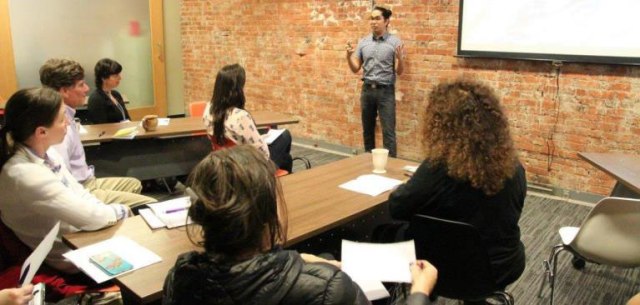
When Stef Frenzi, an educator consultant with the Department of Human Resources, saw an opportunity to strengthen team unity, improve employee engagement, and have fun at his last county role, he took it.
“The thing that’s cool about a ukulele is that you can’t help but smile when you play it, because it’s a silly little instrument – you can’t take it too seriously,” said Stef.

Pictured: From left, Terri Hansen, Diana Wurn, Glenn Evans, Stef Frenzl and Elaine Porterfield.
What started as a light-hearted conversation soon became a small group of people playing ukuleles together before blossoming into a movement within the workplace to bring people together.
“We started meeting once or twice a week and practicing songs,” said Stef. “What was interesting about it was the camaraderie that people felt, and what was also fantastic was that our manager was playing. It created a new relationship between management and staff.”
Stef knew the ukulele club was beginning to shift the dynamic of work when people began looking forward to “ukulele club day.”
“We really ended up seeing some huge changes with people’s desire to come into work,” said Stef. “It’s really made a big difference with helping people feel engaged – helping people feel like they have something more than just work when they come to work, in a way that’s not forced upon them.”
When he transitioned to the Department of Human Resources there were a few employees who knew about the ukulele club at his previous worksite and were interested in starting one at DHR. The club, which has only been meeting for about a month, is open to all employees and all skill levels.

“We’re in a society that says you have to be really good at something in order to do it, and that’s not what this space is at all,” said Stef. “This space is about having a good time, learning something, trying out something new, just having fun and connecting with people.”
The club meets every Monday at noon in one of the Administration Building’s Project Space Conference Rooms on the third floor. If you’re interested in learning more about the club or joining reach out to Stef Frenzi.
“Just come, you are welcome,” said Stef encouragingly to anyone considering. “This is one of those places where you can go and it’s a safe place for you to not have to be perfect and where nobody is going to judge you, everyone is going to be supportive, and we are going to learn together. That’s what I think is the magic about this space.”
Share this:

“A mentor is someone who allows you to see the hope inside of yourself” – Oprah Winfrey

The King County Mentorship Program provides opportunities for growth, development and support, and also helps employees achieve their career goals.
The program supports mentors by providing opportunities to deepen their knowledge on a specific topic (to teach is to know), increase their reputation and influence, and the satisfaction of passing on critical knowledge important to the continued success of the county. The program supports mentees by providing a trusted advisor to urge each person to learn new things about his or herself, help make more of personal strengths and develop hidden talents.
To learn more and take the first step to participating in the program, register for a monthly Lunch-n-Learns. The next available dates are Thursday, April 11, Thursday, May 2, and Wednesday, June 6.
Share this:

Executive Services employee represents Seattle region at Harvard Business School
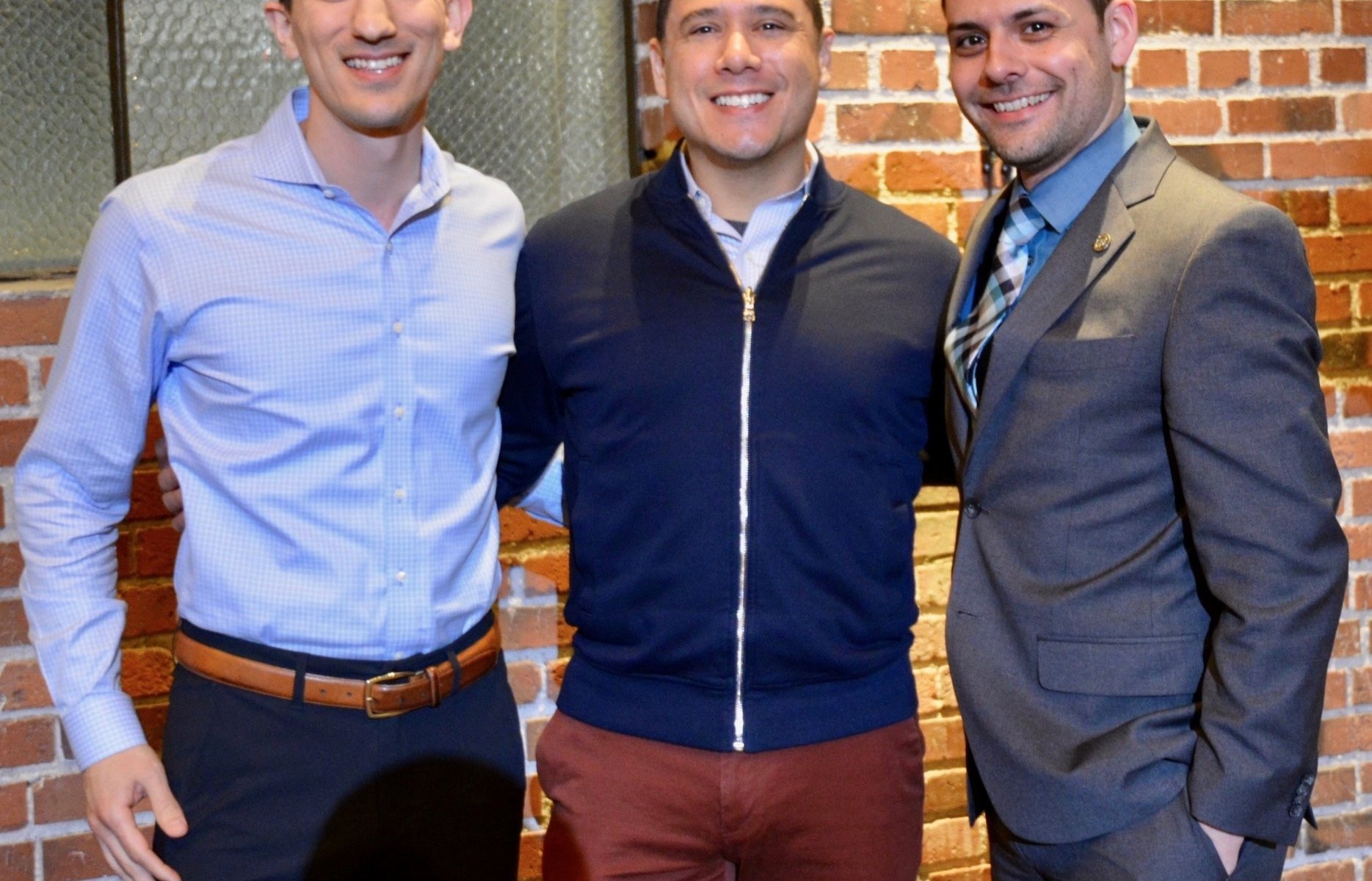
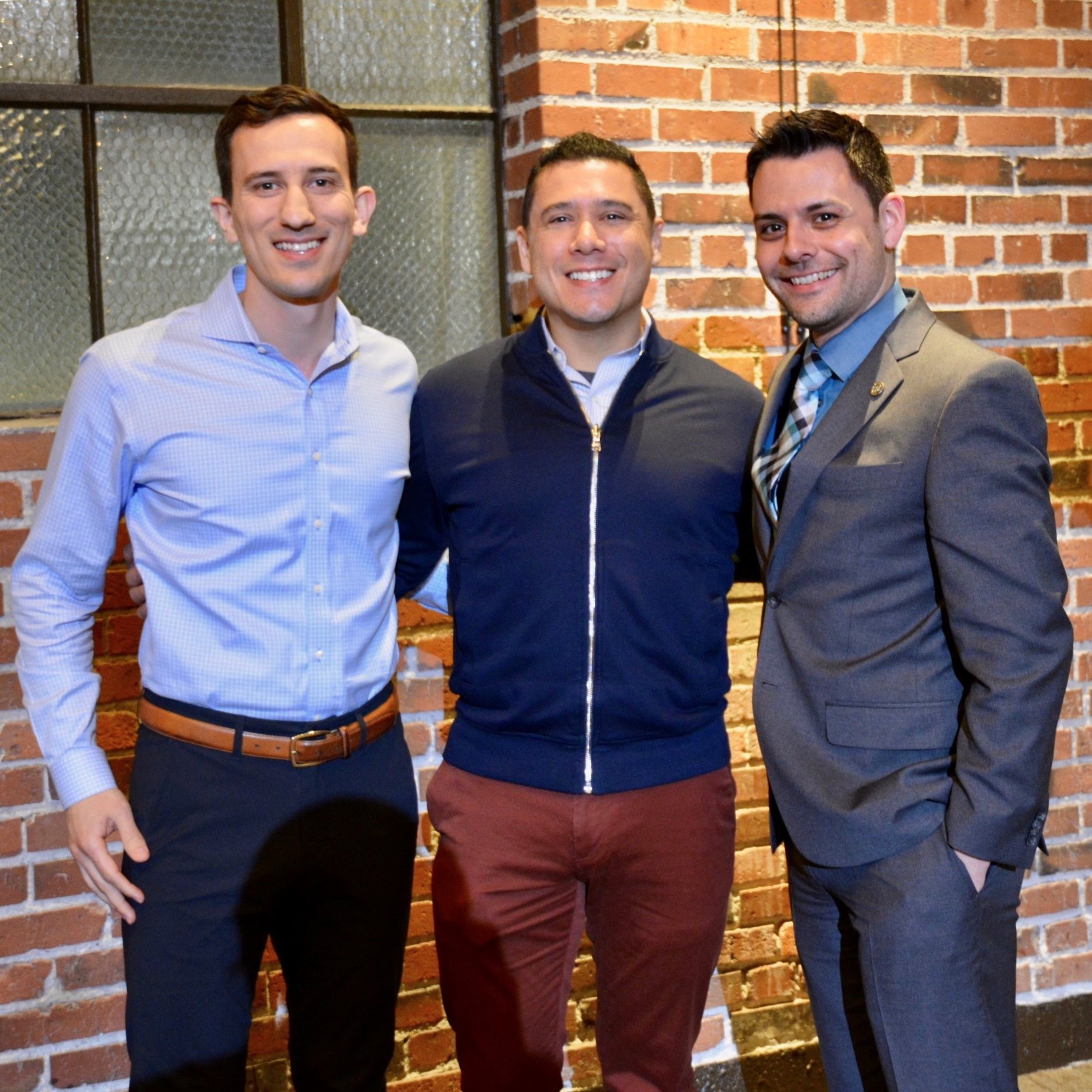
Pictured: Chris Franco, far right, featured with other YALP participants.
King County employee Chris Franco, a Procure and Pay Functional Lead in the Business Resource Center, was selected to attend Harvard Business School’s (HBS) Young American Leaders Program (YALP) this June, as a representative of the Seattle region.
Only 10 members are chosen each year to participate in the program from select cities across the country including: Birmingham, Boston, Chattanooga, Columbus, Detroit, Miami, Milwaukee, Minneapolis-Saint Paul, Nashville, Pittsburgh, Salt Lake City, and Seattle.
“Being selected to represent the Seattle Region is a deeply humbling honor, and means the world to me,” said Chris. “We’re fortunate to live in one of the fastest growing and most prosperous regions in the world. However, not all of our residents have benefited from that growth and prosperity. I look forward to working with my cohort, our community, and our region’s leaders to find innovative and equitable ways for all of us to prosper from our collective labor and wealth.”
In June, Chris will gather with his ten-person cohort at HBS, and for four intense days the group will learn about cross-sector collaborations – best and worst practices from across the country and around the globe. The program gives opportunities for city teams to apply the ideas learned in the program to their hometowns and envision new cross-sector collaborations that can put their cities on paths toward shared prosperity.
“I want to elevate some of the cross-sector collaborative work that King County is leading in an effort to build healthier communities,” said Chris. “I also plan to help connect King County to other organizations and people throughout the nation to help us share/learn best practices as a part of our effort to become the Best Run Government.”
Through best-practice and case-method discussions, as well as personal experiences from participants, YALP aims to bring out insight into where America and American cities stand today, examples of innovative cross-sector collaborations that improve cities’ standing, and personal lessons about collaborative leadership.
Chris’ daily work at King County includes leading and developing a team that maintains and optimizes the county’s financial system, and he also has the opportunity to help advance the county’s equity and social justice efforts as the male-identifying representative of King County’s LatinX affinity group.
YALP began in 2015 to convene groups of emerging leaders from across the country who are working to help their communities prosper. The program aims to develop leaders who understand the value of cross-sector collaborations, and are driven to implement them more effectively within their own communities.
Share this:

A perfect fit: How King County’s Mentorship Program develops employees


Pictured: From left, Mentee Mary Lear and Mentor Chris Ynzunza.
As Mary scrolled through the database of potential mentors a quote caught her attention: “I believe in having a ‘growth mindset.’ I think our potential exceeds our awareness, and the benefits of having someone guide your thinking in that direction can be incredibly helpful. Seeing someone make intentional choices about their next step in their careers will be very gratifying.”
“I recognized the support I needed when I read this approach to mentoring before we were matched, said Mary Lear, Capital Project Manager, Department of Natural Resources and Parks. “Getting to meet Chris and talk to her has helped me learn more about the County structure and leadership.”
Christine (Chris) Ynzunza, Human Resources Manager, Department of Natural Resources and Parks, ended up being the perfect match for Mary. Prior to making the mentor-mentee relationship official, Mary and Chris took part in the Mentorship Orientation. The purpose of the training was to allow both parties to learn more about the program, learn more about each other, and to form the foundation needed for a successful mentoring relationship.
“One of the great things about working with Mary is that she came with a lot of questions and ideas and professional goals,” said Chris. “She always comes prepared with thoughts and questions, and she is very proactive – willing to take steps, risks, and get out of her comfort zone. For me it’s been really gratifying.”
Whether a mentor or mentee, mentoring is a beneficial and rewarding partnership that encourages professional and personal development in powerful ways. Mentors get a chance to improve their coaching skills, help engage and empower others, and give back to the success of King County. Mentees get to build relationship with a trusted advisor, assess their strengths and challenges, and have someone to help them navigate complex situations.
“Ever since I became a professional I’ve known that it’s important to have at least one mentor,” said Mary “We’re a good match. Chris has said that I have come with questions, but she has been open to hearing them.”
The program launched in September 2017. Mary and Chris began meeting near the start of the program in November 2017, and since then have continued to meet monthly.
“This program is giving people an opportunity to share knowledge and help employees in ways they didn’t know they could, and that’s a gift,” said Chris. “This is another way to give back to the County where you get just as much from it. It’s a great opportunity to share your knowledge that you wouldn’t have had otherwise.”
There are currently around 200 employees taking part in the King County Mentorship Program. As King County continues to nourish a learning culture, mentoring is set to play an important role in the “Investing in You” strategy.
To sign up and learn more about the program employees should register for the King County Mentoring Program lunch and learn. During the sessions, participants will learn about the program, including the application process and how to select a mentor.
Share this:

KCIT communications employee honored for military service on International Women’s Day
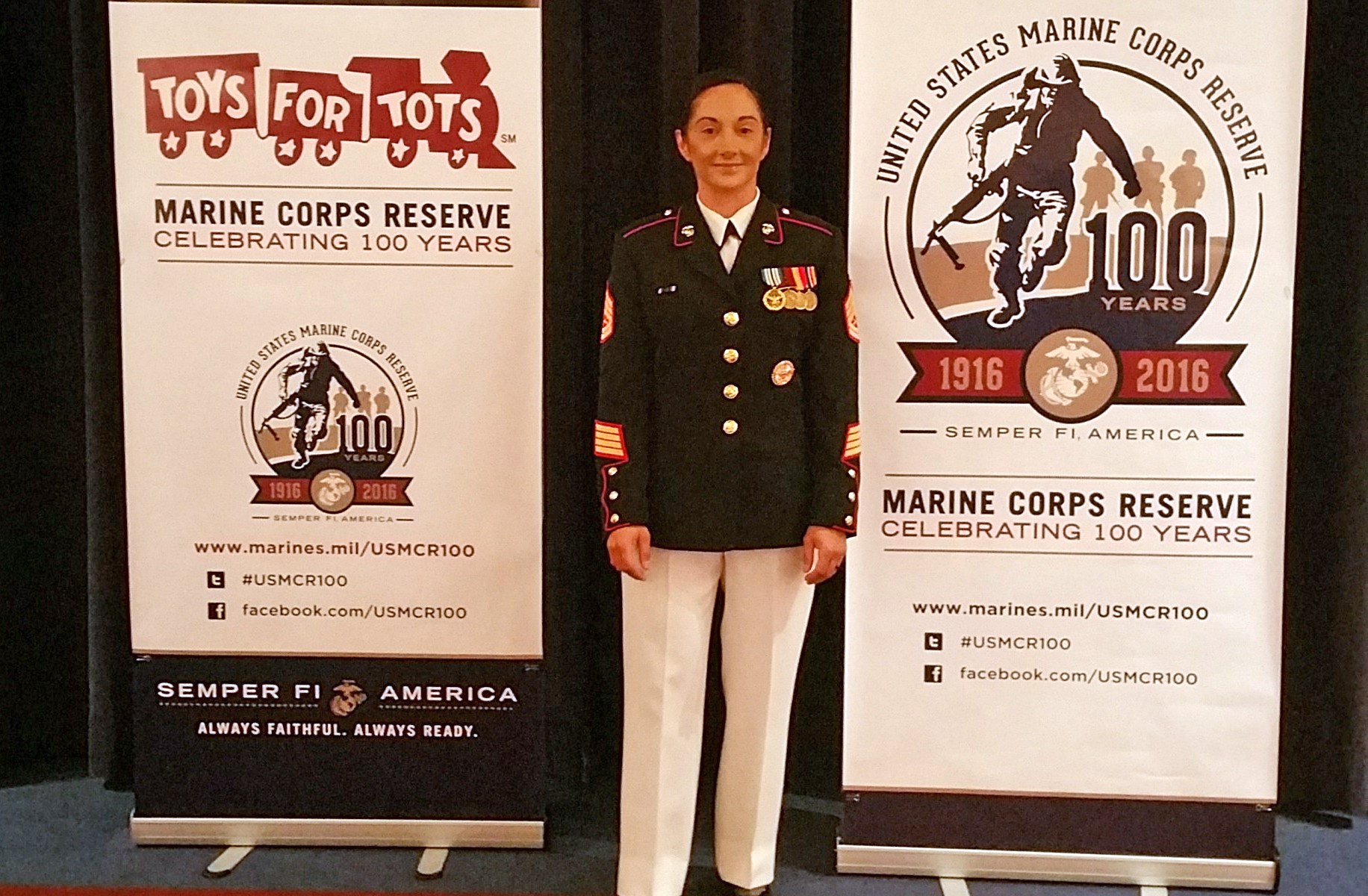
Elizabeth Inglese, a Visual Designer with King County Information Technology, was recently featured in a New York Times article highlighting women’s achievements in the military as part of International Women’s Day.
As a Gunnery Sergeant in the U.S. Marine Corps Reserve Elizabeth served as the Chief Designer for the Reserve’s Centennial Commemoration Campaign, (2015-2016). Her design work appeared across America, including such locations as the National World War II Museum in New Orleans, La., the Navy Memorial Museum in Washington DC, and even Times Square in New York.
“It was an honor to be selected for the job of designer for the United States Marine Corps Reserve Centennial,” said Elizabeth. “This was a once in a lifetime opportunity that took a lot of work, but the prize was truly in the process – seeing the end-state impact and fruits of our labor, which made all the hard work worth it. We communicated the significance and history of the Marine Corps Reserve to people all over the Country.”
Her work included all photo shoot direction and design to include the official centennial campaign logo and brand guide, merchandise, posters, advertisements, event programs, a traveling museum display, banners, a permanent exhibit at the Pentagon, and the official 2016 Toys for Tots donation box design.
Read the full article here at The New York Times. View photos of Elizabeth’s work below.


Share this:

Halfway through the Employee Survey, who’s leading the participation contest?

We’re halfway through the 2019 Employee Engagement Survey and more than 4,800 employees have already had their say on their experience at King County. The survey is an opportunity to check in with you about what’s working and not working, how we can improve our services, and what we can do to help you get the most out of your King County career.
This year we are running a countywide Speak Up! participation contest, with all divisions placed in contest classes with their peers by employee headcount. Those with the highest participation or are the first in their bracket to achieve 100% will be awarded prizes. As of Wednesday, March 20, the current leaders of this year’s contest are:
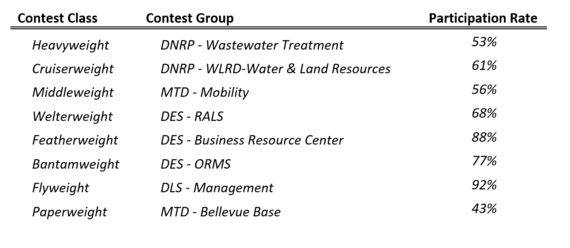
Click here for the breakdown for each category and get real time participation rates here.
The survey runs through Friday, March 29 (March 22 for Metro paper surveys), so please take 15 minutes to have your say. This year, employees in all branches and departments of King County are eligible for the employee survey, except employees in Superior Court, District Court, and the Sheriff’s Office, employees who are short term temporary (STT), interns, and employees who have not worked at the county for at least six months prior to the survey period. For 2019, employees must have started before September 11, 2018 to be eligible.
Share this:

Womxn’s History Month Panel 2019: Womxn Who Lead

Employees are welcome to join the 4th annual panel discussion in recognition of March as Womxn’s History Month at King County. This year’s theme is, “Womxn Who Lead: Stories from the Past and How They Influence the Future.”
Monday, March 25, from 11:45 a.m. – 1:15 p.m. Doors open at 11:30 a.m. King County Courthouse room E-942. The King County Courthouse is located at 516 Third Avenue, Seattle, WA 98104.
This event is free and open to the public. No RSVP is needed. Lunch is not provided, but there will be light refreshments. Employees are welcome to bring their own lunch to eat during the event.
This event is co-sponsored by King County Councilmembers Jeanne Kohl-Welles, Claudia Balducci, and Kathy Lambert, as well as the King County Women’s Advisory Board and the King County Legislative Branch Equity and Social Justice Team. Welcoming remarks will be provided by Seattle Mayor Jenny Durkan and King County Deputy Executive and Chief of Staff Rachel Smith. There will be a performance by Sharon Nyree Williams. Confirmed panelists include Aretha Basu (community organizer and Legislative Aide to Seattle City Councilmember Teresa Mosqueda), Cindy Domingo (author, activist, and Chief of Staff to King County Councilmember Larry Gossett), Colleen Echohawk (Executive Director of the Chief Seattle Club), Mitzi Johanknecht, King County Sheriff, and Estela Ortega (Executive Director of El Centro de la Raza).
If unable to attend, the event can be livestreamed here. More information can be found here.
Share this:

Training Spotlight: Emotional Intelligence for Leaders and Emerging Leaders series and Communication and Problem-Solving Skills

Emotional Intelligence for Leaders and Emerging Leaders series, April 27-May 11: Emotional intelligence describes the ability to understand one’s own feelings, and that of groups, and how these emotions can influence motivation and behavior. Leaders who are emotionally intelligent foster safe environments, where employees feel comfortable to take calculated risks and to voice their opinions. Engage in interactive, hands-on self-evaluation and exercise to develop your emotional intelligence and become a respected and inspiring leader. Register and learn more.
Communication and Problem-Solving Skills, June 19: This one day training will address communication and problem solving skills with the public and with co-workers. This class covers skills for effective listening, speaking, dealing with conflicts and with defensive behavior. Register and learn more.
View more training and development opportunities at www.kingcounty.gov/learning.






 Employee News