
Featured Job: Public Health Nurse – Immunization PHN

Closing: 08/24/18 5:00 PM
Salary: $33.61 – $45.92 Hourly; $69,908.80 – $95,513.60 Annually
Location: Chinook Building, Seattle
Job Type: Special Duty Assignment or Term-Limited Temporary
Department: Public Health – Seattle and King County
Job Number: 2018-08434
This position works in close collaboration with members of the Healthcare for the Homeless Program, Emergency Preparedness Program, and other members of the CD-Imms Program. Major areas of responsibility include coordinating and leading community vaccination clinics, supervising Medical Reserve Corps volunteers, providing technical assistance regarding recommendations for vaccine administration to health care providers and the public, representing PHSKC at internal and external meetings and events, and participating in the Section’s response during vaccine preventable disease outbreaks. While this position is based in the Chinook Building in Downtown Seattle, the incumbent will oversee vaccination clinics in non-traditional settings such as homeless villages and shelters throughout King County. The position reports to the Immunization Program Manager in the Communicable Disease Epidemiology & Immunization Section of the Prevention Division.
For more information, contact Nursing Talent Acquisition Specialist Amy Curtis at 206-263-8358 or Amy.Curtis@KingCounty.gov.
Learn more about this position or all available jobs.
Share this:

Social Media Spotlight: GIS & You on WordPress

GIS & You is introducing a new monthly contest called “Where in King County?”
Each month, GIS & You will present a portion of a map either published on the King County website or produced from a King County GIS web mapping application. Each contest will also spotlight some of the features available from the web-mapping applications and some cartographic concepts that can help make you a more effective map user.
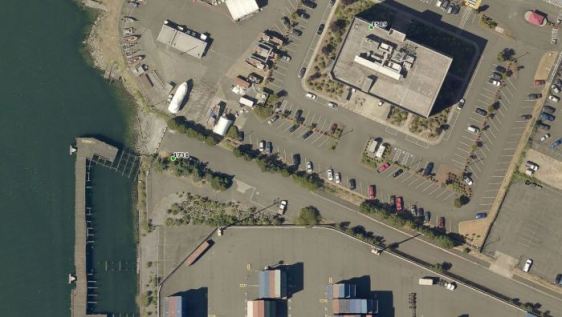
How does the contest work? Simply study the map presented and perhaps find other clues in the text. You may have to do some detective work to solve the question. Then answer the question in the comments section of the post on the GIS & You blog. The first correct answer received wins.
The winning answer to the first challenge was Jack Perry Park; congratulations to Kristina!
Follow GIS & You on WordPress today.
Share this:

Pet of the Week: Slinky
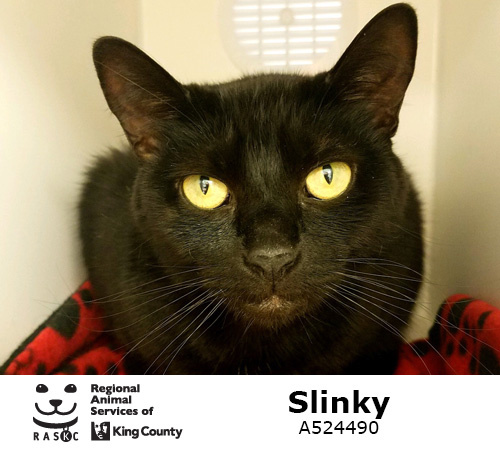
Crossposted from Tails from RASKC
She’s fun for a girl or a boy – she’s Slinky, our Pet of the Week!
This young black cat is spirited, with a fun-loving personality – so she’s one of our “Rambunctious Red” personalities. Slinky is friendly and, though she’s shy, she can be vocal! Slinky can get a little overstimulated with petting, but she is affectionate and loves getting attention. Because of her shy nature and sensitivity to handling, a quiet, low-traffic home with a cat-savvy family would be ideal. Slinky would thrive as the only pet in her new home.
She has been diagnosed with an inflammatory condition that is currently being managed. The staff and volunteers at RASKC will be happy to answer any questions when you come to visit her. Slinky is litter box trained, spayed, current on vaccinations, and microchipped. Her adoption fee includes a certificate for a free veterinary exam and the option of 30 days of free pet insurance through Trupanion.
You can learn more about Slinky on our website, kingcounty.gov/AdoptAPet, or visit her at the Pet Adoption Center in Kent.
Share this:

Movies@Marymoor adds ‘The Lion King’ to summer movie schedule, Aug. 15

The BECU Outdoor Movies@Marymoor has made a change to their 2018 movie schedule. The Aug. 15 planned screening of Ferdinand has been replaced by Disney favorite The Lion King. The rest of the schedule remains the same with all events offering entertainment, trivia, food trucks and vendors.

All events are “bring your own seating,” dog friendly and smoke free. Admission is $5 per person cash or $6 credit, with kids age 5 and under free. Seating opens at 6:30 p.m., and movies begin at dusk. Parking is $5 per vehicle.
For more information, visit the DNRP Newsroom or facebook.com/moviesatmarymoor.
Share this:

KCIT testing Cherwell IT service management tool


Last month, we announced KCIT’s project in KCIT Help Desk to transition from email tickets to online portal.
They are now finishing the portal design, have completed revising the Service Catalog, and are mapping the new portal to Cherwell.
Administrator and analyst training will begin this month, and sessions to determine if the new design resonates with end users are in the works.
Specific launch details will be shared here as they become available. Departmental IT staff can email Amy Hitchcock with questions.
Share this:

Training Spotlight: Basic Data Visualization

 Basic Data Visualization: Our ability to gather and collect data has steadily increased over the past decade. But data alone is not information and does not easily convey a compelling story. This half-day introductory course will allow participants to:
- Understand why data visualization is important
- Explore ways to tell a story with data
- Mock up data visualizations in whiteboard exercises, using tips explored in class
Participants have the option of bringing their own measures to the training to review in small teams. Examples throughout the class will focus on performance measurement, although the data visualization tips are more broadly applicable.
What this training is NOT:
- A technical training on building visualizations in Excel, Tableau, Power BI, or Oracle BI Insights
- An advanced business Intelligence or dashboard tools training
- A training on how to build a tier board or round at a tier board
- An infographics training
The training takes place Tuesday, Aug. 14, 8:30 a.m. to noon at the King County Administration Building. Click on the above link to learn more and register before the sessions fill up, and visit Learning and Development on KingCounty.gov to learn more about trainings and other opportunities to invest in YOU!
Share this:

Say CHEESE for #CityHallSelfie Day!
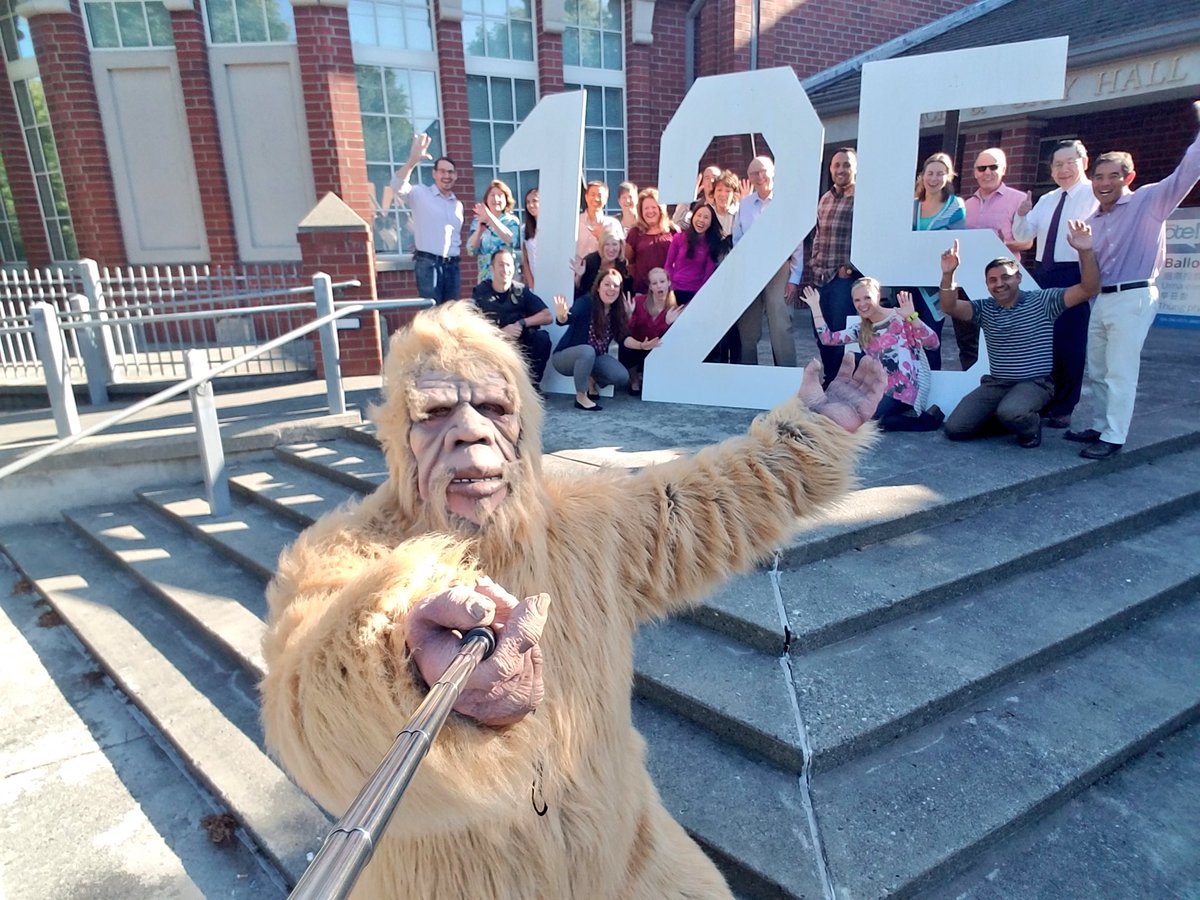
Show your King County pride by taking part in national City Hall Selfie Day! This annual event, sponsored by Engaging Local Government Leaders, is an opportunity to showcase the people who make local and regional government work.
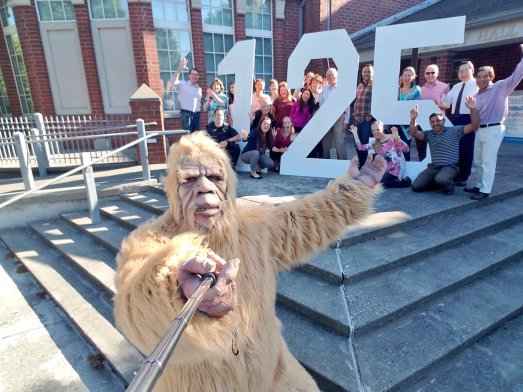
Hey, hey! It’s our quasquicentennial (125th) birthday and @ELGL50‘s #CityHallSelfie Day. #Issaquah125 #LegendaryIssaquah #SasquatchSelfie
To participate, just take a photo of yourself or your workgroup in front of any King County facility (make sure we can tell where you are) and send the photo, including the names of everyone in the photo, to socialmedia@kingcounty.gov by noon, Aug. 14. We’ll share your photos on King County social media channels on #CityHallSelfie Day, Aug. 15.
Share this:

A new front for public defense: Helping clients address collateral consequences of criminal involvement
Crossposted from For the Defense
By Leslie Brown, King County Department of Public Defense
It’s not what public defenders normally do: Stop an eviction. Keep a kid in school. Help someone hang on to a job.
But thanks to a pilot project funded by the City of Seattle, three lawyers for the King County Department of Public Defense are working every day on just these kinds of matters: They’re representing public defense clients who are facing the civil consequences of a criminal conviction or arrest – the often unseen upshot of criminal justice involvement that can follow somebody for years.
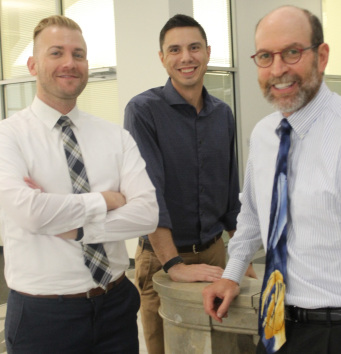
From left, Josh Treybig, Charlie Klein and Lou Manuta are DPD’s new ‘collateral consequences’ attorneys.
Lou Manuta, Josh Treybig and Charlie Klein began working as civil legal aid attorneys at DPD a year ago. Already, they’ve helped nearly 800 low-income Seattle residents, most of them facing the collateral consequences of a misdemeanor conviction.
The obstacles their clients face are considerable, and the victories are hard-won. Treybig went to court four times to get one eviction quashed. Still, all three attorneys can cite countless examples where they’ve had an impact, thanks to their experience in civil legal aid combined with the work of a public defender addressing the criminal matter.
Manuta was able to keep someone employed at a grocery store after the employer tried to fire him for an unrelated arrest. Klein worked with a woman who had a housing voucher but couldn’t find a place to live because of a past eviction; he was able to get the eviction notice out of reporting agencies’ records. Treybig recently handled a juvenile case, where a student – charged with a minor crime – faced possible expulsion; the student had a documented disability, and Treybig was able to convince the school district to develop a plan to help the student get back on track.
Their clients are often charged with what Klein called “crimes of poverty” – petty theft, disorderly conduct, driving without a license – incidents that stem from homelessness and profound instability. “We’re giving them a chance to move forward without feeling as though the ground is always giving way beneath their feet,” he said.
Concern about collateral consequences has been mounting, as a growing number of activists, scholars and writers have spotlighted the devastating array of sanctions and disqualifications that can attach to someone for years in the wake of a criminal conviction or in some instances merely an arrest.
The Council of State Governments has identified more than 100 possible collateral consequences for a misdemeanor conviction. Books have been written on the topic, including Michelle Alexander’s groundbreaking The New Jim Crow, which looked at the disproportionate impact these consequences have on people of color.
Public defense firms have also recognized the need to address these civil consequences. The Bronx Defenders in New York has become a national leader in the effort, establishing a practice that has become a model for agencies around the country.
Inspired by The Bronx Defenders, Anita Khandelwal, formerly DPD’s policy director and now the department’s interim Public Defender, began working with Seattle City Councilmember Lisa Herbold two years ago to address the issue locally. They developed a two-year pilot project for a legal aid program housed within the Department of Public Defense, and in 2017 Councilmember Herbold was able to get $440,000 in funding to launch the program.
Councilmember Herbold was particularly interested in helping people avoid evictions. In a news release last year, she noted that someone who is simply arrested in Seattle can be evicted – “which, to me, feels like the opposite of justice.”
In a report to the Seattle City Council earlier this year, DPD analyzed more than 300 referrals to the new program and found that 24 percent of them faced a loss of housing, 12 percent were facing employment impacts and 10 percent stood to lose public benefits. Two-thirds of the clients were male, and one-third were African-American.
Khandelwal said she’s deeply encouraged by the work of the three attorneys and hopes to see the program expand over time. This is the kind of work, she said, that not only makes a difference in a person’s life – it is also in the public interest.
“Housing is a protective factor against recidivism. So is employment,” she said. “All of us want to see people rehabilitate and reintegrate into the community. And that’s really the issue here, making sure people are able to get on with their lives once the criminal matter is behind them.”
Share this:

Food, games, music and more now at City Hall Park
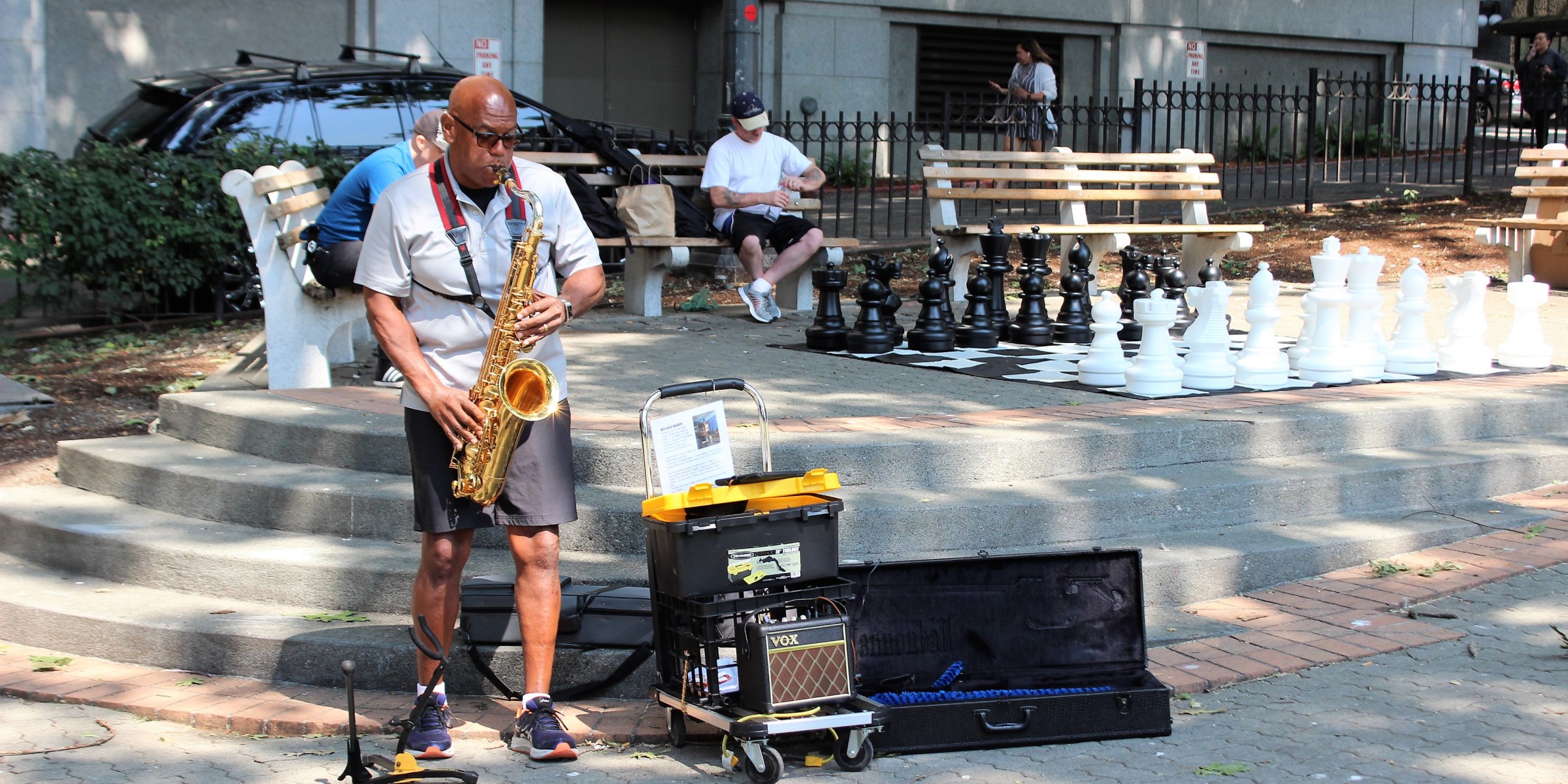
In an effort to create a welcoming space neighbors and nearby employees can enjoy, City Hall Park, next to the Courthouse Building, will be full of games, music, outdoor furniture and a food truck through the end of September. Evaluation of this pilot program in the park will occur in the fall and continuation thereafter will be determined. Programs and daily activities in the park are always weather dependent.
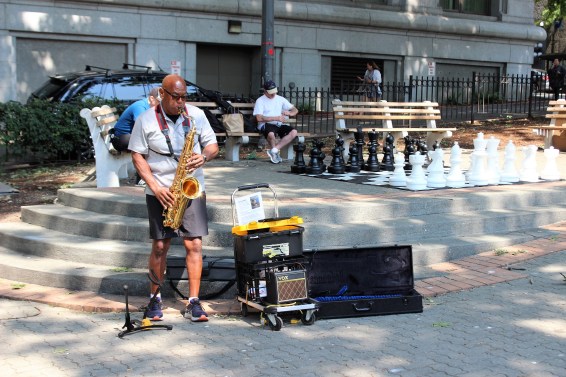
Food trucks will operate daily, Monday-Friday from 11 a.m. – 2 p.m., and be sure to check the schedule to see who is lined up each day: https://www.seattlefoodtruck.com/schedule/city-hall-park. A park concierge will also be on-site Monday-Friday from 10 a.m. – 4 p.m. There will be giant chess, cornhole and other games, bistro furniture and adirondack chairs, and musicians and performers from noon to 4 p.m.

This effort is part of the Courthouse Vicinity Improvement effort – a partnership between King County, the City of Seattle, Downtown Emergency Service Center (DESC) at The Morrison, Downtown Seattle Association’s Metropolitan Improvement District (MID), Alliance for Pioneer Square, and Sound Transit – to improve the safety and cleanliness around the Courthouse for employees, visitors and residents of the area.
Share this:

Water Taxi offering extended evening sailings for Pearl Jam concerts tonight and Friday

Crossposted from Captain’s Blog
King County Water Taxi will offer extended evening sailings on the West Seattle route during the Pearl Jam concerts today and Friday, Aug. 10, in Seattle.
We typically offer extended evening service for evening Mariners, Seahawks and Sounders FC home games during our summer schedule. However, given the number of West Seattle riders who are expected to attend the Pearl Jam concerts, our standing principles to alleviate traffic congestion to support mobility for our residents warrants providing this additional service offering.
In addition to the regular sailings, King County Water Taxi will depart downtown Seattle at 8:30 p.m., 9:30 p.m. and 10:45 p.m. the evenings of the concerts.







 Employee News