

Are you prepared?
In September, we recognized National Preparedness Month and highlighted some of the efforts to raise awareness of the importance of preparing for disasters and emergencies. The Safety and Emergency Management Unit (SEMU) of the Solid Waste Division works to engage, equip, and educate their staff for the various disasters and emergencies that are possible in the Puget Sound region. Throughout September, SEMU organized both in-person and virtual activities that prepared leaders to protect the safety of employees and the security of Solid Waste Division programs; and educated employees on how to increase their personal preparedness at home and at work.
One of the main goals of the National Preparedness Month program was to engage all employees at all levels of the division in a meaningful and fun way. One of the ways they did this was by hosting monthly safety talks. The talks included information on KCInform, a county-wide system to send alerts and notifications to employees. The system provides timely information about weather impacts, infrastructure disruptions, facility closures, changes in business operations, and safety precautions. Employees were also encouraged to sign-up for KCInform and included a random drawing at the end of the month for a chance to win prizes for those that signed up or who were already signed up.
Employees were provided education on preparedness steps and tips to reduce the impacts of local hazards on themselves and their families. The general preparedness steps include creating a plan, building a kit, and supporting your community. See more information on the steps below:
- Create a plan: You and your family may not be together during an emergency. Collect contact information of everyone in the family and discuss where you will meet and how you will communicate if you are apart during an emergency. Involve everyone, including your children.
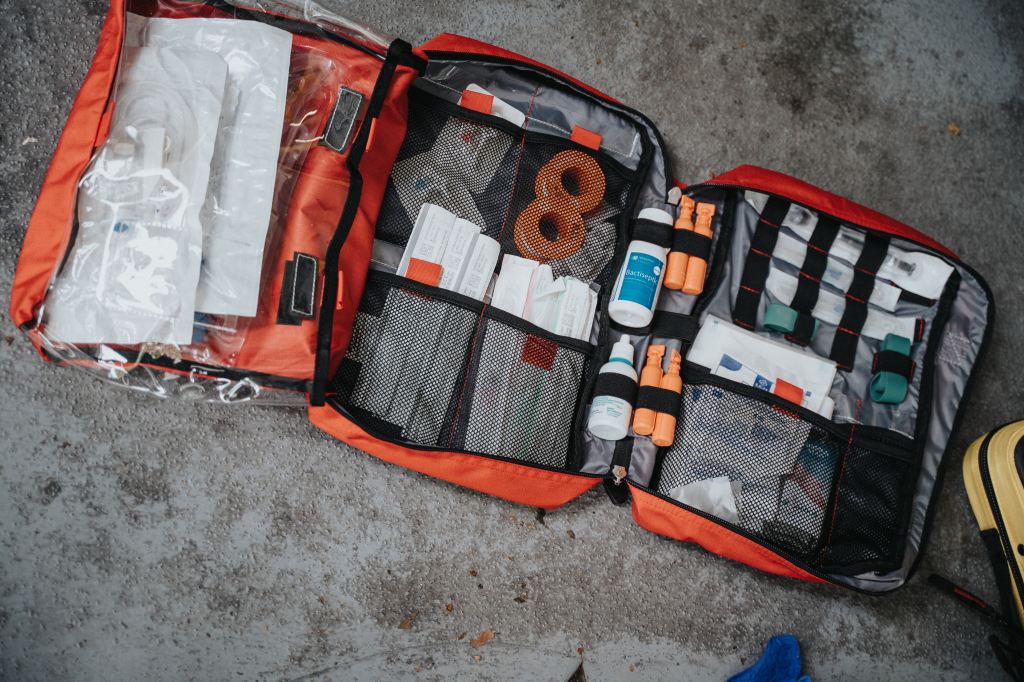
- Build a kit: Build an emergency kit (with everyone in mind) that includes, food, water, and specialized items for your family. You should be prepared for at least two weeks. Store a kit at home, at work, in your car, and at each child’s school or daycare.
- Support your community: In an emergency, first-responder agencies may be overwhelmed and may need help from trained volunteers. Consider learning CPR and basic first aid or taking Community Emergency Response Team (CERT) training. People helping each other in a crisis can make a significant difference in how well and how quickly you recover.
One of the ways that SEMU engaged employees in this was to host an activity where employees had to name 10 items that should be included in a safety and preparedness kit. The employees that won the random drawing received a human or pet first aid kit.
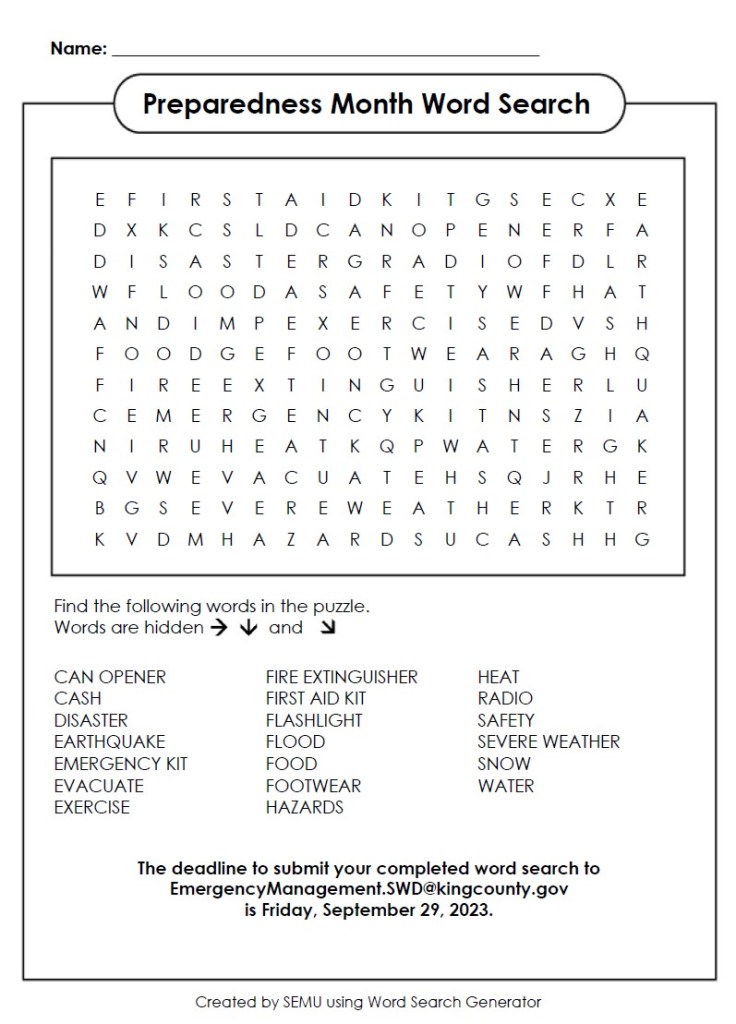
SEMU recognizes that frontline employees are not on computers on a regular basis so to be inclusive and create access to this information, they provided a preparedness-themed word search and safety talks which were conducted amongst each team. There were six random drawings from the completed word searches and the winners received 72-hour emergency kits.
Other activities included preparedness jeopardy and a home hazard identification game where employees had to find various hazards within a home. Each of those activities came with prizes that included a NOAA emergency weather radio and a hand crank lantern.
SEMU’s creativity during National Preparedness Month helped raise awareness about preparing for disasters and emergencies before they happen. We all know that there are various forms of hazards in our region that range from snowstorms to floods and earthquakes to wildfires. King County cares about the safety of employees and all residents and encourages you all to take steps to prepare now. Doing so can protect you, your loved ones, and your community.






 Employee News