
KCSO Crisis Negotiation Team, Part II
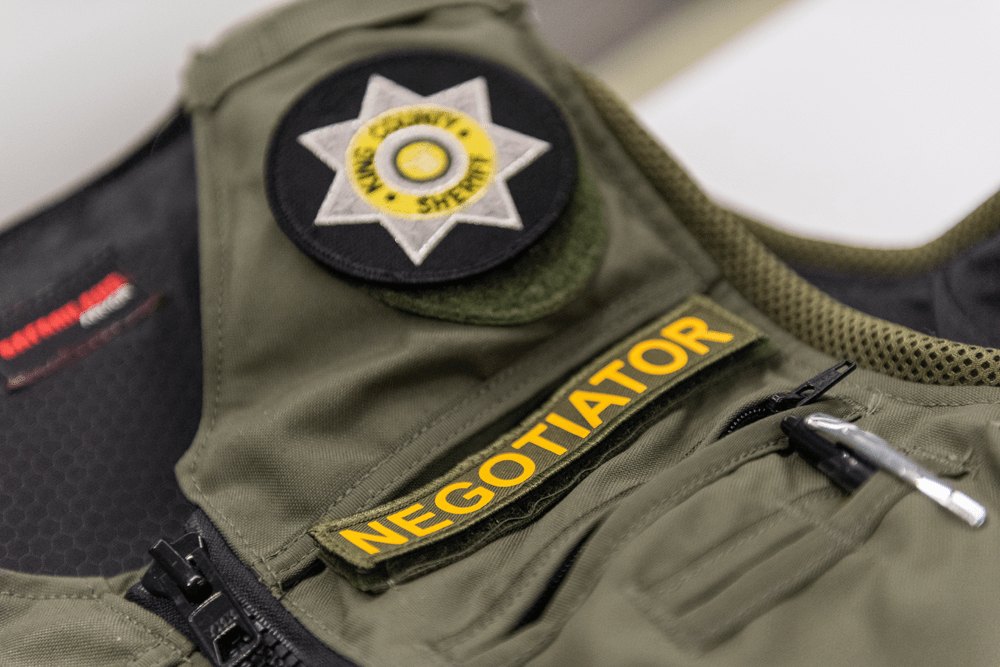
Part I explored the evolution of the Crisis Negotiation Team (CNT). Part II brings the story of how a mental health professional (MHP) became an official member of the team after years of volunteering. Read Part III here.
Part II: A mental health professional’s perspective
“There was a suicidal gentleman on an overpass, just leaning and staring at the pavement below,” said mental health professional Susie Kroll. “We had to stop traffic for five or six hours.” The first 90 minutes were like talking to a wall, she added, but negotiators were able to convince him to get off the bridge and she was then able to talk to him one-on-one.
The man was new to Washington, estranged from his children, homeless, and dealing with substance abuse. With Kroll’s support, he was able to get into treatment after the incident instead of just being sent to a hospital and released.
“He called three months later to thank the team and the negotiator,” she said. He was clean and sober, and moving into transitional housing.
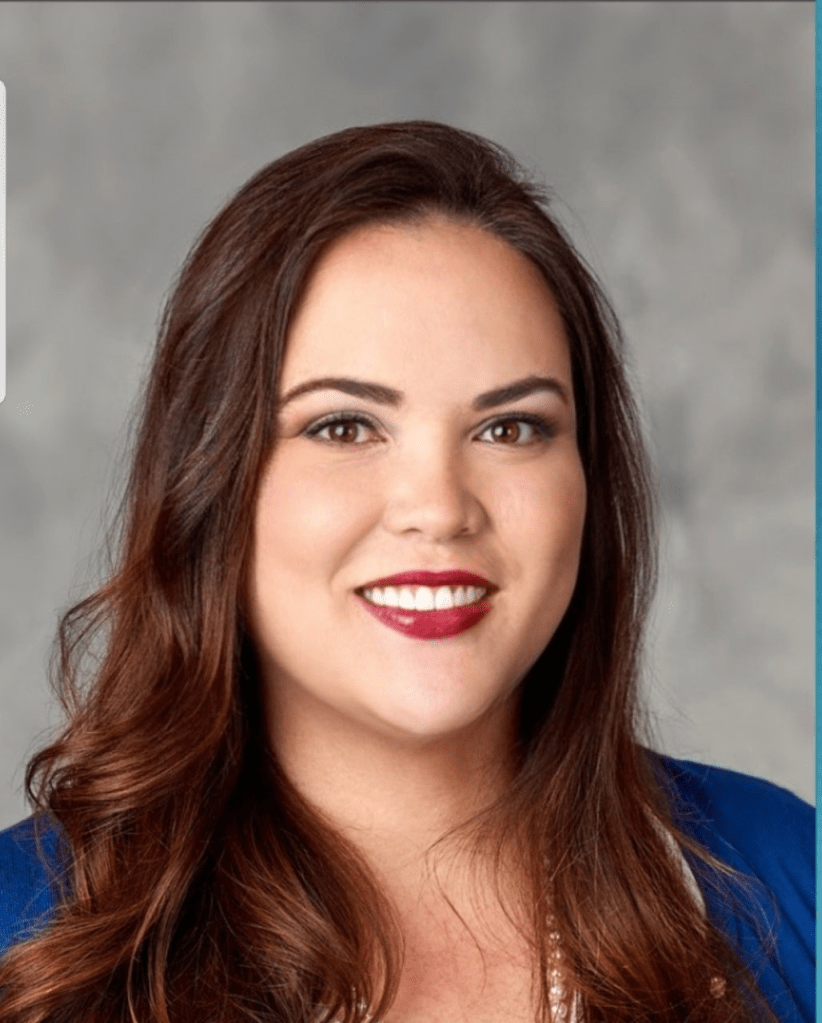
“I first met Susie at a crisis negotiation training put on by the police academy,” said Master Police Officer (MPO) George Ireland. Showing a strong interest in the CNT work, Kroll was invited to “hang out with the team” when she was available. “She was wholeheartedly into what we were doing” Ireland added, and she became an incredible volunteer.
Kroll has a master’s degree in Counseling Psychology, and can assess, diagnose, and design therapy and treatment. Her father was a hostage negotiator and Special Agent for Naval Criminal Investigative Service (NCIS), so you might say this line of work is in her blood. She was attending the Crisis Systems Management training school on her own when she and MPO Ireland started talking about the cross-section between psychology and crisis negotiation.
She began going to training callouts just to observe, and then after completing her schooling got asked to her first real callout. She continued to do this as a volunteer for about five years, sometimes logging 500 hours in a year.
According to Sgt. Mulligan, when he took over CNT in 2019, he saw how much Susie was volunteering and he spent the next 18 months working to get her paid for her time.
“Having a mental health professional on a crisis is critical,” he said. “It’s great she was willing to volunteer but we needed to be doing the right thing and pay for all her assistance.”
In a crisis, command might ask for Kroll’s guidance on how to intervene based on a person’s mental health issues and conditions. She gives her perspective so they can make an informed decision on how to proceed based on her expertise and police legalities.
“Kroll brings an expertise and connections in getting background information to help us create a negotiation strategy,” Sgt. Mulligan said. “She can put this person into context and help guide how we negotiate, to help vet what we’re seeing and thinking in a situation.”
Kroll is not a sworn deputy, so she does not make tactical decisions. But the fact that she has been through the same training as the negotiators allows her to provide valuable input. At the scene, she can listen in on a conversation and give feedback that helps the CNT and TAC 30 teams make strategic decisions.
Creating a ‘hook’
Sgt. Speight shared about an event in Duvall where a person was having a mental episode. The local police had been called and found him banging on the door of a house with intent to harm his elderly parents inside. When the local police arrived, he ran off into the bushes with a gun.
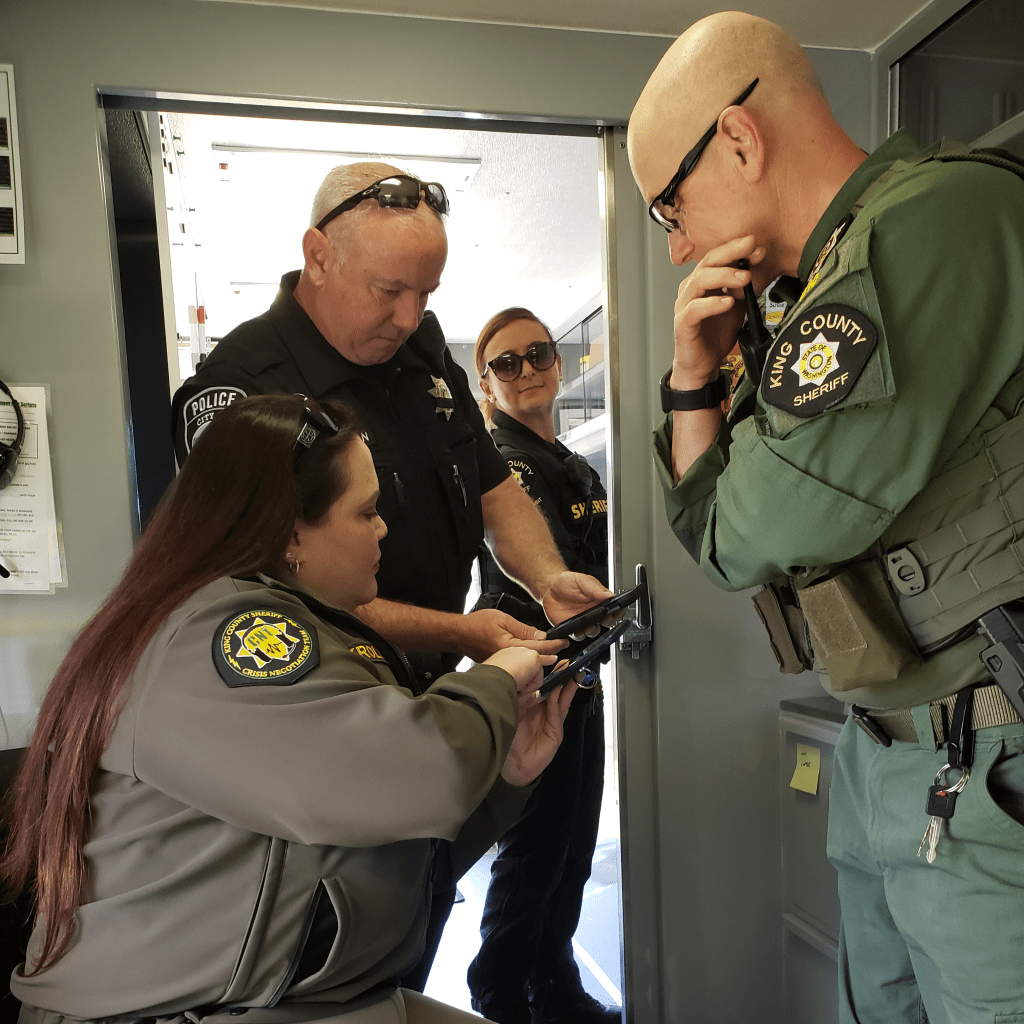
TAC 30 arrived on site and the man began firing on the armored car which had been emptied of personnel. When Kroll got on the scene, she was able to speak the man’s father after he had been safely evacuated from the house, and he told her about the man’s Native American background, which she shared with the negotiator, Sgt. Nate Obregon. The team flew a communication drone overhead and Sgt. Obregon was able to appeal to the man’s sense of heritage and pride and being a warrior with honor. This breakthrough is what eventually got him to surrender.
“Our crisis team is made up of really good negotiators,” Sgt. Speight said, “but that hook Susie came up with, none of us would’ve thought about that and they were magic words that got the man to surrender and avoid any harm.”
According to Kroll, someone surrendering is not the end of the story. She will work with the victims, families, survivors, and the person in crisis following up to make sure they have services and resources available. She also pays attention to her team, especially during a heavy negotiation.
“I’ll watch for signs of trauma and stress, changes in normal behavior,” Kroll said. “I’ll suggest team leaders check in to see if someone needs a referral to services. We all look out for each other, but I try to make those connections, monitor the mental health of our team – and they do the same for me. We’re like a family in that way.”
Part III: An incredible partnership
Share this:

Programs available to help get you on the path to feeling better

Several Health Support Programs are available to employees and family members covered by King County medical plans. These programs provide extra support when you need it, for example, when you need help understanding a new diagnosis, managing a chronic condition, or handling an illness. Program representatives may contact you by phone or email to provide additional information. A summary is provided below. For details, go to Health Support Programs.
Omada Diabetes Prevention: Offered to Regence and Kaiser Permanente members
If you or a family member are at risk for Type 2 diabetes, this program provides a personalized health plan, a health coach, smart health devices, and online support to help you reach your health goals. To learn more, go to Omada Health.
Omada Type 1 and Type 2 Diabetes Support: Offered to Regence members
If you or a family member have Type 1 or Type 2 diabetes, this program provides support to help you reach your health goals, whether that’s losing weight, managing diabetes, or improving your overall health. Go to Omada Health for more information and to enroll.
Better Choices Better Health: Offered to Regence and Kaiser members
This six-week online program offers strategies to manage chronic conditions such as anxiety, asthma, pain, depression, diabetes, heart disease, and more. To enroll in a workshop, go to Feel Better in 6 Weeks. For more information go to Online Support or call 844-384-1933.
AbleTo: Offered to Regence members
This eight-week virtual and video-visit program helps people manage the stress, anxiety, and depression associated with a medical condition or a life event. AbleTo offers support from licensed therapists and behavioral coaches. For more information, call 833-881-1464 or go to AbleTo.
Virtual First Care Pathways: Offered to Kaiser Permanente members
The Virtual First feature on the Kaiser Permanente Washington app provides educational content, tracking tools, and self-management strategies to help you better manage your health. Your doctor identifies whether you’re eligible for one of the targeted care pathways programs and invites you to participate.
SpecifiCare: Offered to Regence members in the Regular and Transit ATU 587 benefit groups
If you have a chronic or serious illness or injury, or a condition that requires complex care, a SpecifiCare nurse is available to offer telephone-based confidential support to you and your family members. Call 866-543-5765 for details.
Pregnancy Program: Offered to Regence members in the Regular and Transit ATU 587 benefit groups
If you’re a parent-to-be, the Regence Pregnancy Program offers a 24/7 nurse advice line, support and education from a maternity nurse care manager, and a smartphone app with tips and tracking tools. To enroll, call 888-JOY-BABY (888-569-2229).
More information
For more information about these and other programs offered by King County medical plans, go to Health Support Programs or contact Benefits, Payroll and Retirement Operations at 206-684-1556 or kc.benefits@kingcounty.gov.
Share this:

KCSO Crisis Negotiation Team in the forefront of special operations, Part I
This article is the first in a three-part series highlighting the KCSO Crisis Negotiation Team. Read Part II here, and Part III here.
When the King County Sheriff’s Office TAC 30 team is called on, it’s because there is a potentially dangerous event that requires highly skilled personnel. Whether it’s an active shooter or hostage situation or virtually any serious case, TAC 30 — commonly called a SWAT team in most places — is sent in to secure and resolve the situation. What’s unique about the KCSO TAC 30 is whenever they get a call, the Crisis Negotiation Team goes on alert.
The Crisis Negotiation Team (CNT) is a group trained in the fine art of mediating with a person (or persons) who have placed themselves or others in a dangerous position. And one of the unique aspects of the KCSO CNT is they also have a mental health professional (MHP) embedded in the team to bring a high level of expertise that is not common in the field of crisis negotiation.
From humble beginnings

Master Police Officer (MPO) George Ireland has been on patrol with KCSO for 23 years. When he joined this unit about 10 years ago it was called the Hostage Negotiation Team. That team had been in place for several years, but morale was low because they didn’t feel the department appreciated what they were doing.
MPO Ireland decided to make it his project to correct the perception because “I felt our mission was critical.” He realized that maybe those in charge didn’t understand what all the team brought to the department, so it was the team’s responsibility to enlighten them.
“If we’re going to call ourselves negotiators,” he said, “we should be able to negotiate with our command staff to improve our situation.”
MPO Ireland’s assumptions were correct. Once conversations with leadership began about the team’s needs and what it delivered, the response was very positive, and resources were procured in a short amount of time.
One critical upgrade for the team was reliable communications equipment and a mobile space to work. The team had been huddling up around the trunk of a squad car when on a call. Not ideal during a rainy northwest winter.
MPO Ireland took over an underused major crimes vehicle and over a Thanksgiving weekend, gutted it and put it back together. The vehicle has all the communications equipment set up and ready to roll at a moment’s notice. A small team can work together comfortably out of the weather. And thanks to a former special operations commander, there’s even a coffee maker. “It’s a popular piece of gear when it’s cold and wet out,” Ireland adds.
“I pushed for a lot of things early on that I knew would be critical,” Ireland said. He saw a need to get the team to the high performing level of other special operations teams, like the bomb squad, K9, and air support.
The team also got their own uniform. “Something as simple as uniforms helps improve the esprit de corps,” according to Ireland, “it gives a sense of unity and professionalism.”
Growing the team
The CNT has doubled in size to 18 members, with each of them serving on-call. That means they all have a regular patrol or supervisory position that they do on a daily basis, and the crisis negotiation is only a part of their responsibilities. Even though it might sound like extra work, the positions are few and highly coveted similar to other special operations teams.
Sergeant Sam Speight spent about 17 years on the TAC 30 team prior to joining the CNT, which he now leads. His experience on that side of a crisis and personal knowledge of the TAC 30 team is invaluable when it comes to the two teams working toward a resolution that is successful for all parties involved.
There are three six-person teams, each with a team leader, who is the most experienced negotiator. When there’s a call where a negotiator will be helpful, Sgt. Speight coordinates a response team, anywhere from two to six people, depending on the situation.
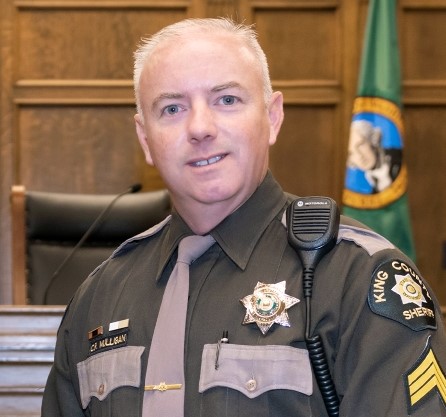
While Sgt. Speight refers to MPO Ireland as the “heart and soul” of the CNT for his ongoing service, he also calls out Sgt. Chad Mulligan for his leadership on the team.
Sgt. Mulligan, who has also spent 10-plus years with the TAC 30 unit, led the CNT for 18 months prior to Sgt. Speight. While he was leading the team, CNT started having joint trainings with TAC 30.
“The goal was to get them speaking the same language,” said Sgt. Mulligan, “and to have insights on to how both teams worked.” He described that on one side with these trainings, you have negotiators learning what equipment and procedures the tactical team utilizes, for a forced entry or setting a perimeter. On the other side, the tactical team learns more about what kind of information they need to provide the negotiators to do their job.
Part II will look at a mental health professional’s perspective
Share this:

Executive proclaims Emergency Medical Services Week

King County Executive Dow Constantine has proclaimed May 21-27 as Emergency Medical Services Week in recognition of the important work these medical professionals provide to our community, including saving lives, responding to crises, and serving as a model for the federal Emergency Medical Services System Act of 1973, now celebrating its 50th year.
Executive Constantine encourages all residents of King County to show their gratitude and appreciation to these valuable providers. Read the full proclamation below.

Share this:

Mental Health Accommodations for King County Employees

King County is committed to supporting employees with mental health conditions in the workplace. A key part of this focus is to provide employees who experience limitations due to a mental health condition with reasonable accommodations in the workplace to be able to perform their job duties productively and effectively. Examples of reasonable accommodations that may be provided to employees with mental health conditions include the following:
- An employee with depression may benefit from noise-cancelling headsets to help with concentration and focus.
- An employee coping with an anxiety disorder may need to have flexible or additional breaks built into the workday to step away when feeling overwhelmed.
- An employee in a treatment plan may need a flexible work schedule in order to access medical care.
These are just a few of the many examples of reasonable workplace accommodations King County has provided to employees with mental health conditions to stay at work or return to work. For more information on Mental Health Accommodations, view the Balanced You blog. If you need assistance with accommodation in the workplace, talk to your Human Resources representative, supervisor, the Department of Human Resources’ Disability Services staff at 206-263-9329 or DisabilityServices@kingcounty.gov, or the Metro Transit Department’s Disability Services Staff at TransitDisabilityServices@kingcounty.gov.
Share this:

An industrial mechanic at home at West Point Treatment Plant

Cross-posted from Clean Water Stories
Shane Hamilton, an industrial maintenance mechanic, knows West Point like home turf. At 33, he’s been in this line of work more or less since he was a 15-year-old intern.
Shane grew up in Federal Way. In high school, his friend’s father was Mike Lindsay, an industrial maintenance mechanic at South Treatment Plant in Renton. Mike saw in Shane a hard worker who was willing to learn, and when time came for Shane to do a job shadow for school, Mike worked out an internship at South Plant. The rest is history. Read more.
Share this:

We’re ready for warmer weather – but our bodies might not be

Cross-posted from Public Health Insider
Our bodies may be more sensitive to heat when they haven’t had a chance to adjust to warmer temperatures. And people flock to rivers and lakes when the weather turns warm – but the shock from unexpectedly cold water can lead to accidental drowning.
You can prepare for the heat by knowing if you or your loved ones are more sensitive to heat, paying attention to any signs that you are overheating, and being careful around cold water. Read more.
Share this:

Metro Matters: Service you can count on

Crossposted from Metro Matters
By Michelle Allison, King County Metro General Manager
King County Metro is the largest transit agency in the entire Northwest. We provide bus, paratransit, vanpool, and water taxi services. We also operate Seattle Streetcar, Sound Transit Link light rail, and Sound Transit Express bus service.
We are proud to be part of Executive Dow Constantine’s broader vision to continue to expand our regional transit network by putting people first. We’ve earned recognition ranging from Best Large Transit Agency in North America in 2018 to Most Equitable Large Transit Agency in Combatting Climate Change just last year. Most importantly though, our shared success is due entirely to our community members, our customers, and our employees. So, especially in challenging times, you deserve to know what’s working, what’s not working, and how we’re fixing it. Read more.
Share this:

Fourth Avenue entrance to King County Courthouse now closed, Third Avenue reopens

Updated June 15, 2023
The Fourth Avenue entrance to the King County Courthouse in downtown Seattle has closed for necessary repairs, and the Third Avenue entrance has resumed serving as the primary access point to the building moving forward.
Employees, jurors, and other visitors to the Courthouse Building should allow additional time to gain access and clear security screening on Third Avenue during this transition. Temporary signage will be installed to provide directions to users of the building. King County employees will still be able to access the Courthouse Building through the Administration Building and Goat Hill Garage tunnels.

Employee and community safety is one of our highest priorities, which is why we continue to partner with law enforcement, neighborhood and community organizations, and other governments to ensure a safer, more welcoming environment in and around our facilities. As this shift to Third Avenue happens, Sheriff’s deputies will be reposted at the Third Avenue entrance and will continue their regular foot and bicycle patrols of the downtown civic campus area, and Facilities Management Division (FMD) Security Officers will continue their exterior perimeter patrols
Repairs to the Fourth Avenue entrance will begin soon after the closure and are expected to be completed at the start of August. It will reopen as a secondary entrance when resources allow.
Third Avenue served as the main entrance to the Courthouse Building since it was remodeled in 1967. The reopening of the Third Avenue entrance will provide easier access for public transit commuters, offering closer proximity to more Metro Transit routes as well as Link light rail stations and the Colman Dock ferry terminal. Employees who park at Goat Hill Garage can continue to use the garage tunnel to access the building.
Share this:

Submit WA Cares Fund exemption letters to King County by June 26

The WA Cares Fund is a new long-term care insurance program administered by the Washington State Employment Security Department (ESD) and the Department of Social and Health Services (DSHS). With limited exceptions, workers in Washington are required to contribute to the WA Cares Fund via mandatory payroll deduction beginning July 1, 2023.
The premium has been set at 0.58% of gross wages (58 cents per $100). The initial maximum value of the benefit will be $36,500 (adjusted annually for inflation).
Exemptions to the WA Cares Fund
You may be eligible for a permanent or conditional exemption from the WA Cares Fund. An employee with a permanent exemption from the WA Cares Fund premium is permanently ineligible from receiving benefits and cannot rejoin the program later. An employee with a conditional exemption does not contribute premiums to the program while their conditional exemption is in effect.
If you already submitted your approved exemption letter to King County, you should have received a confirmation email from King County Central Payroll on May 12. No further action is required.
If you have been approved for an exemption and did not receive the email from Payroll, submit your approved exemption letter from the ESD no later than June 26, 2023, to avoid the non-refundable WA Cares mandatory payroll deduction that begins in July.
Send a copy of your exemption letter and your nine-digit PeopleSoft ID# by email to WA.CARES.Exemption.Letters@kingcounty.gov or by U.S. mail to Central Payroll WA CARES, 401 5th Avenue, Seattle, WA 98104.
Attend a webinar for King County employees May 31
WA Cares is hosting a webinar for King County employees via Zoom on Wednesday, May 31 from 11 a.m. to noon. Learn more about the program and its benefits, and get your questions answered by Washington state employees. Join the Zoom Meeting using Meeting ID: 837 8908 8276 and Passcode: 870976.
More information
King County does not administer any part of the WA Cares Fund beyond collecting premiums via payroll deduction and reporting employee pay and hours to the ESD. For more information about the program, Contact the WA Cares Fund, go to Learn More, or watch webinar recordings on the WA Cares YouTube Channel.






 Employee News