Burien Police storefront takes an old-school approach
While the idea of a ‘storefront’ police officer is not new to King County – Kent, White Center, Skyway, Seatac, and others have had them several years – Burien has only recently joined in with the practice of having a fulltime presence in the downtown business district.

The storefront is more of a community-focused, old-school approach to policing. It’s basically having an officer who’s out there most every day, walking a beat.
“It allows us to look at problem solving instead of crisis response,” said Burien Police Chief Ted Boe. People feel more comfortable and safer having that visibility, someone with a presence that’s around but not actively arresting someone, Boe continued. It’s building a tight relationship with the community to “help prevent issues and develop ideas on how to increase safety and services.”
The need was there
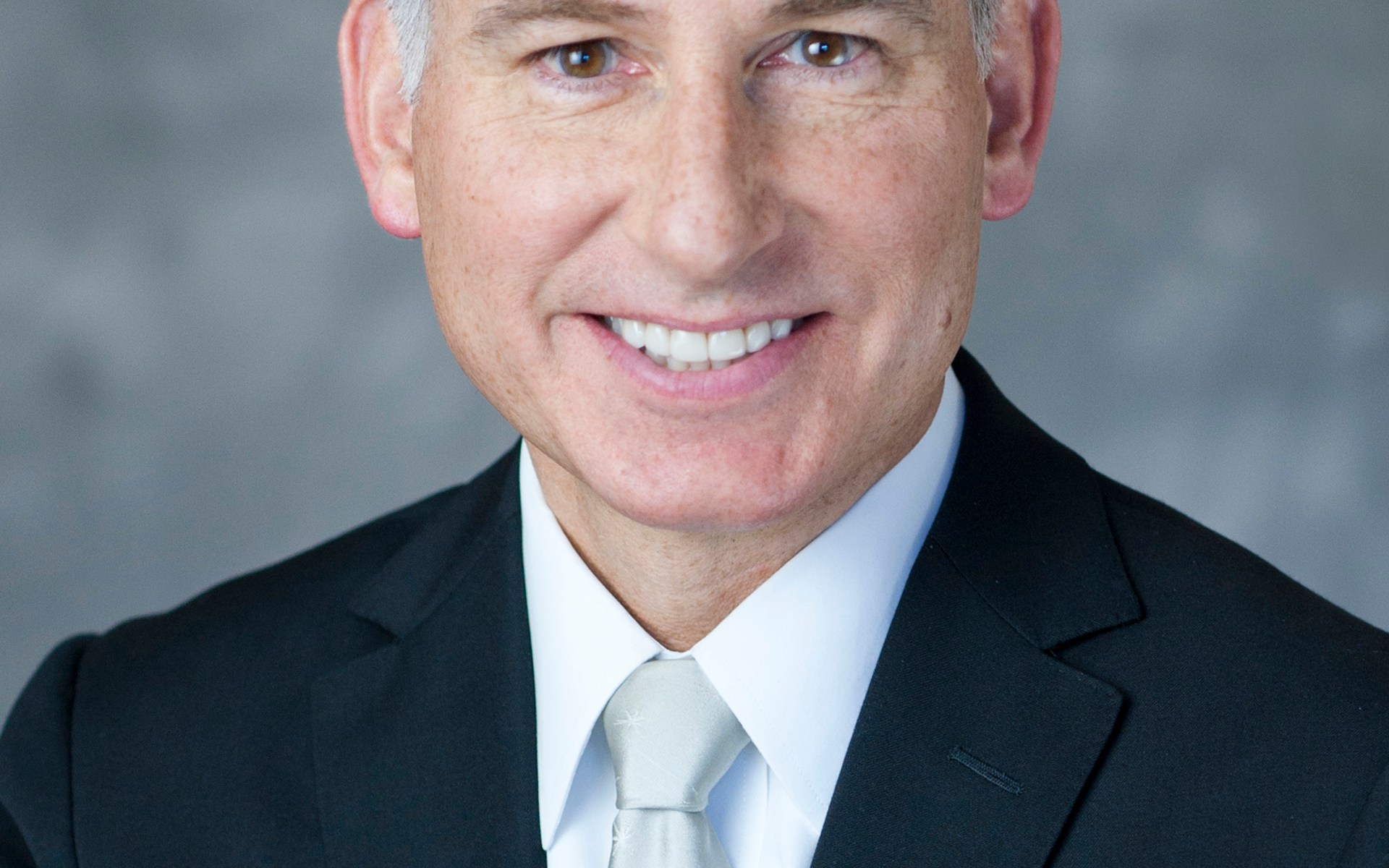
King County Sheriff’s Office (KCSO) Deputy Mark Hayden has lived in Burien for nearly 20 years, but he grew up in Ballard at a time when there was a Seattle Police officer that patrolled the neighborhood on foot. The officer in Ballard “was an ex-Marine with a high and tight haircut that carried himself,” Hayden said. People in the community knew the officer, would see him around, engaging with people and the businesses. That had an impact on Hayden as a youngster.
Like many communities, Burien has experienced a recent uptick in crime in the downtown area, including burglaries and car prowls. And like other communities, Burien is very busy with calls for service. With KCSO grappling with higher than usual staff vacancies, businesses were not seeing enough police presence downtown to provide a sense of safety and security for those coming to the city.

“Police visibility helps encourage the community and discourage the negative activity,” Deputy Hayden explained. People and business owners in the community reinforced that in his interactions with them. “So, I went to my chief and captain to encourage at least a limited amount of time to provide a presence downtown,” he said
“Burien is not just where Mark works, but also where he lives,” Boe said. “When he approached me with the idea of trying the storefront there a couple years ago, I thought it was a great idea.” Chief Boe was able to get funding for Deputy Hayden to work one day a week, and the community response was overwhelmingly positive. So much so, that after less than a year, the Burien City Council came up with an investment in downtown public safety that allowed this position to be full time.
Burien faces the same societal issues as any city, including providing support for people experiencing homelessness, substance abuse, and mental health issues. The storefront officer position is also involved in outreach along with Crime Reduction units, connecting those people in need to services when we can, while educating the public about their efforts. “We let the community know we’re here, monitoring the situation, and trying to help these folks,” Hayden said.
Connecting with the community
With COVID-19 restrictions loosening up, there are more opportunities to engage with the community. Burien Starbucks recently held a Coffee with a Cop event where community members were invited to engage in conversations with their local officers. The community is extremely supportive, as it provided an opportunity to talk one-on-one in a casual atmosphere. These events help educate the public on what police enforcement is like, instead of just talking to police when they’ve been called for an emergency.
“I interact with kids all the time,” Deputy Hayden said. He keeps little bags with police trinkets with him, like Matchbox and Hot Wheels cars, plastic badges, stickers. He says it’s so important to interact with kids and take away the fear they might have of police. He’s overheard parents warn their kids “You better be good or he’s gonna throw you in the car and take you to jail.” Hayden prefers the positive approach to make kids feel comfortable and to know that the police are there to help. “I’ll let them sit in the driver seat of my car sometimes, turn on the lights,” he said with a grin. “It goes a long way for the parents and other adults to see it, too. I don’t want them to be afraid.”
“I want my friends to feel safe and have a connection with the PD,” Hayden emphasized, “And I want people visiting the city to feel safe and enjoy their time here.”
New PeopleSoft interface demonstrates improved inclusion and accessibility
You might have noticed a change the last time you logged in to PeopleSoft. As part of an upgrade earlier this month, the Business Resource Center (BRC) implemented a new look and feel to the interface, including new icons.
While the old icons served their purpose to illustrate the tasks and functions, they didn’t reflect the diversity of our workforce and the communities we come from. They also weren’t designed to be accessible for people with vision impairments.

“All employees, at one time or another, access PeopleSoft for payroll, benefits, or other HR needs. The old homepage tile icons lacked the diversity we have at King County; many employees couldn’t see themselves represented in these images, ” said Amanda Gudmunson, a member of the BRC project team that implemented the upgrades. “At King County we have the shared value of being racially just and part of that is acknowledging systemic ‘…racism and oppression’ and seeking ‘…to undo it at all levels.’ The prior person icons in PeopleSoft perpetuated white/Caucasian as the default, which doesn’t reflect this value – so it needed to change.”
Amanda shared these concerns with Oracle, the vendor responsible for PeopleSoft, at their RECONNECT conference in 2020. Hannah Gacey, the PeopleSoft Release Manager in the BRC, was a driving force for these changes by routinely engaging with Oracle to help champion this move to a more inclusive and accessible application.
To help guide the equity and accessibility changes, Oracle created a PeopleSoft Accessibility monthly focus group and invited Amanda and fellow BRC colleague, Jennifer Gilbert, to participate. Through this process, they have advocated for equity and accessibility in PeopleSoft.
“The focus group has been key in gauging where we are on our accessibility journey and comparing how far along other organizations are. Distributing more information, finding common ground, everything works better when we can come together and discuss best practices,” Jennifer said.
Not only were the icons updated to be more race and gender inclusive, but Oracle also increased color contrast, text spacing, and included better labeling for images and background processes. These changes help those with low vision, color blindness, and anyone who utilizes assistive technology, like a screen reader.
This work also set the stage for implementing other PeopleSoft enhancements, including the ability for employees to set their pronouns and gender identity in the system. The BRC will partner with the Department of Human Resources to roll out that enhancement later this year.
“Changes like these can have a big impact,” Amanda added. “Everyone at King County should feel welcomed, included, and represented – and that extends to the technologies we use as well.”
King County Council and King County Executive proclaim Juneteenth
The King County Council and King County Executive Constantine have formally proclaimed June 19, 2022, as JUNETEENTH.
“Juneteenth is an important opportunity to honor the principles of the Declaration of Independence and to celebrate the achievements and contributions African Americans have made, and continue to make, in King County and across the nation” the Council and Executive proclaimed.
View the official proclamation below.
Allen Nance prepares to lead DAJD
Quanetta West will serve as interim juvenile division director
Submitted by the Department of Adult & Juvenile Detention (DAJD)
Allen Nance is scheduled to take over for John Diaz as DAJD director effective June 25. Nance has served as juvenile division director since late 2019.
“I am humbled by the opportunity to serve King County in this important role leading the Department of Adult and Juvenile Detention and want to thank John Diaz for his leadership to the department and his lifelong commitment to public service,” Nance said in May, after Executive Constantine announced his appointment.
“I look forward to the work ahead as we improve conditions of confinement for those in our custody, support the hardworking people of the department, and advance the community safety goals that enhance the quality of life for those who live, visit, or work in our county.”
The appointment is subject to confirmation by the King County Council.
Nance brings decades of experience in adult, youth, and community corrections settings with a sustained commitment to reform. Immediately before joining King County, he served as the chief juvenile probation officer for the city and county of San Francisco, California. He previously led criminal justice policy efforts for the San Francisco Mayor’s Office and held leadership positions for probation departments in Illinois’ DuPage and Cook counties for many years.
Quanetta West will take over as interim director of DAJD’s Juvenile Division. She is currently the deputy division director.
“I am honored to be chosen for this wonderful opportunity within DAJD,” West said. “I intend to continue my commitment to partner with the staff, community, and stakeholders as we work together to provide the best care and services for youth in support of their families and the communities we serve.”
Lisa Hymes-Davis will become the Juvenile Division’s interim deputy director. At the Adult Divisions, interim Commanders Lisaye Manning and Troy Bacon will continue in their respective roles. The majors’ positions will stay vacant for the time being. DAJD Deputy Director Kari Tamura will remain in her role.
“They’re everywhere”: The never-ending battle to control noxious weeds
Recently, The Seattle Times accompanied one of the King County noxious weed patrols on their rounds as they take on the determined garlic mustard weed. This group from the Department of Natural Resources and Parks’ Water and Land Division has the ongoing task of trying to keep certain weeds from taking over indigenous flora habitats in the region.
The Times story is a great look at how King County crews on the frontline of environmental stewardship keep up this steady, important work. Read more.
Photo: Steve Ringman / The Seattle Times
King County IT Security Tips: Data Breaches
Data breaches are becoming more and more common these days. You hear about them in the news all the time. So you might be wondering: what exactly is a data breach? A data breach is when secure information is taken from a trusted environment without permission. The bad guys can use this information to steal your identity, hack into your online accounts, or use the information for targeted phishing attacks to gather even more information about you.
However, just because the data was exposed does not necessarily mean it’s already being used by the bad guys. It only means that bad guys can easily gain access to it. There are steps you can take to protect your information even if you were exposed in a data breach.

How do I protect my information?
- Use secure passwords. You may also want to try using a password manager.
- Set up two-factor or multi-factor authentication.
- Keep your personal information secure. Never share your passwords or personal information with anyone you don’t know. Shred documents with your personal information on it before throwing it away.
What do I do if my information was already exposed in a breach?
Don’t panic! Take a moment to assess the situation. Ask yourself: What sort of information was exposed? Do I need to notify my bank or other entities? What steps should I take to make my information more secure now?
- If your password was exposed, we recommend changing your password for all online accounts associated with that password immediately. Make sure the password is complex or use a password generator to create one for you. For extra security, you may want to set up two-factor or multi-factor authentication.
- If your credit card number or bank account number was exposed, we recommend calling your bank or cardholder and canceling your card(s) immediately. Let them know that your information was exposed so they know to look out for charges that may be fraudulent.
- If your social security number was exposed, immediately report that your social security number was stolen to the police, credit-reporting agencies, and the IRS. You may also want to sign up for a service that can monitor your identity or credit for added protection.
If you have questions, please contact kcitcsat@kingcounty.gov.
Jennifer Hills receives Fred Jarrett Award
The recipient of the Fred Jarrett Leadership Excellence Award is Jennifer Hills, Director of the Office of Risk Management, Department of Executive Services. This award is named for former Deputy Executive Fred Jarrett and honors a senior leader of a department or division.
Under Jennifer’s guidance, King County has adopted a more progressive view of risk. Where it once avoided risk, the county now uses a more balanced approach and takes risks when it can add value, drive change, and deliver results. Watch the video to learn how Jennifer led the Office of Risk Management to modernize its tort claims handling process to be more transparent, electronic, and timely – and how she forges partnerships with other agencies, factors equity into decision-making, and prioritizes employee engagement and belonging. Watch the award presentation here.
Welcome Back Bash to Celebrate County and City Employees
Fellow Public Servants,
It’s time to celebrate your great work in support of our residents and communities!
Thank you for all you have done to serve the people of Seattle and King County during a time of significant challenge. We were the first in the nation to confront the COVID-19 pandemic, but because you stepped up with courage, dedication, and hard work – even while lives and livelihoods were upended – our region is recovering and reopening.
To celebrate you, and all public employees, during these unprecedented times we are throwing a party.
You are invited to a Welcome Back Bash on Tuesday, June 21 on the 4th Avenue Plaza of Seattle City Hall from 11 a.m. to 1:30 p.m. There will be live music from King Youngblood and Black Tones, celebrations, and a free lunch from local food trucks for city and county government employees.
To receive a free lunch coupon for one entrée and one beverage, please show employee identification (badge, pay stub, etc.) on June 21 at the tables inside the Red Room adjacent to the plaza. Only 400 coupons are available, so get yours early.
Attendance and participation are optional and voluntary. You can find more information on our Welcome Back Bash website.
For those returning, and those who never left, we are welcoming city and county government employees back to a reopened downtown Seattle, saying thank you for your service, and celebrating the brighter future we are building for the people of our region.
P.S. Remember, to get your lunch coupon on June 21, please present your employee identification at the tables inside the Red Room adjacent to the plaza. Let’s celebrate together!
Local Food Initiative supports farmers, protects land, and increases access to healthy foods
King County strives to be a healthy community, where residents can access opportunities and receive the support needed to succeed. One way it does this is through the Local Food Initiative. This program was started in 2014 and aims to make the local food economy more equitable and resilient to climate impacts.
The initiative is overseen by Mike Lufkin, Food Economy Manager in the Department of Natural Resources and Parks. Mike has been with King County since 2015. His work includes growing the food and farm sectors, increasing access to healthy nutritious foods in low-income communities, and working with stakeholders in both the public and private sectors to develop projects and programs that help achieve those goals.
He shares that this work is exciting because he is able to work with a diverse group of people, in every sense of the word. This includes people in different locations, in different types of businesses, and even from different cultural nationalities and ethnicities.
“Farming in this community and agriculture in King County is incredibly diverse,” Mike said. “We have family farms in Snoqualmie and Green River Valleys that have been growing food for generations but we also have new farmers and organizations creating innovative new models for growing food in rural and urban communities across the entire county.”
“These smaller systems are just as important and require a different set of supports than the previous one.”
The initiative is also in line with other work the County is doing to develop healthy communities and is an opportunity to see the impacts of a successful local food economy.
“Food is an issue that affects so many aspects of public policy that we work on at King County. It’s related to conservation and sustainability, it’s part of equity and diversity, it’s part of – and important to – climate change strategies, it’s important to economic development, and social and community development,” said Mike.
“Food is an issue that affects all different parts of this policy work at the County,” he said. “I love knowing that what we’re working on can impact all of these different issues at one time.”
Mike’s experience with the program has been positive, with great strides made in progress and accessibility. He looks forward to continuing this work and expanding on it.
“The County has been so supportive of this work, we have had some great accomplishments,” he said. “Especially with things like farmland access, we’ve made great movement in supporting farmers and other food system actors with developing the much-needed infrastructure for them to succeed.”
This work in creating and supporting successful food system infrastructure can include cold storage and places where farmers and businesses can store and aggregate their product to sell into market and can also mean commercial kitchens and places to get items ready for market. Two different food hub projects that in the development process to address this work are the Kent Valley Food Entrepreneurial Center and the South Seattle Community Food Hub. Food hubs connect farmers with larger markets and provide support services like marketing and education, while also promoting entrepreneurship, creating jobs, and providing food stability.
“We’ve made a lot of progress in terms of equity and social justice in this work, pivoting the program to support agriculture in all its forms, not just traditional forms in rural areas, but also community-based food systems,” explained Mike.
It is important King County does this work, including protecting farmland and taking a wide range of actions to ensure people have equitable access to both food and the land itself. Mike shares how this improves quality of life for so many people.
“One thing I find interesting is when you go in and ask communities what is important to them, food always comes up. It’s important to know where it’s coming from, it’s a cultural driver, an economic driver, and a focal point for communities not just in our region but across the world,” he said.
Mike shares another innovative part of the project, supported by multiple divisions within DNRP, is that the County is also leasing out 200 acres of farmland for use by historically socially disadvantaged farmers. This helps target communities that are marginalized and works on supporting the next generation of farmers in King County so that they have new, different opportunities. While a few other local governments lease farmland, few have focused their program on supporting underserved farmers at the scale of King County. This work was recently highlighted in an article on the Keeping King County Green blog titled Horseneck Farm: Preserved for agriculture, now increasing access for diverse growers.
From multiple standpoints, Mike explains, it is essential to do this work. From a climate and environmental position, working with local farmers across the region to make sure food is grown through climate and environmentally friendly practices, to an economic standpoint, where agriculture accounts for over $135 million dollars of the King County economy, to a public health priority supporting access to healthy nutrient food to our communities. For King County to do this work as a region ensures that all residents have access to healthy, nutritious food.
Mike looks forward to sharing the success stories of the work this initiative is completing and adds that educating employees about it is helpful in continuing to successfully work together.
“I think that were achieving some really great successes across the County and doing big and important things for the residents around this initiative, and that’s exciting,” he said. “This work impacts so many different aspects of what other departments and divisions are doing in King County, not just DNRP, that it’s just really helpful for other employees to know this is happening.”
More information about the Local Food Initiative can be found at www.kingcounty.gov/LocalFood. To stay up to date with the program, read current Local Food News here on the Keeping King County Green blog.
About: Mike Lufkin is the Food Economy Manager in the Department of Natural Resources and Parks. He has been with King County since 2015 and came to work in food systems via a background in law and subsequent work with nonprofit Landessa, where he primarily got involved with agriculture and small farming. He was recently selected by the Rockefeller Foundation as a recipient of the Rockefeller Foundation-Acumen Food Systems Fellowship, for his outstanding work in this field. The Fellowship is an intensive, one-year leadership development program offered through Acumen Academy, the world’s school for social change. The inaugural Food Systems Fellowship will introduce moral leadership concepts to a globally diverse cohort of 20 food systems leaders who are creating more inclusive, nourishing and regenerative food systems.
Executive Services BEAT Assessment wins 2022 Achievement Award
Cross-posted from Executive Services Express
The Department of Executive Services’ Beginning, Exploring, Applying and Transforming (BEAT) Assessment has been recognized with an Achievement Award from the National Association of Counties.
The awards honor innovative, effective county government programs that strengthen services for residents. The BEAT Assessment was recognized in the Personnel Management, Employment and Training Category. Read more.