


Questions? Contact the Payables Team at Central.AP@kingcounty.gov.
The King County 2026 Better Government: Customer Focus Survey launched today for employees in all departments, except District Court, Superior Court, Council, and the Prosecuting Attorney’s Office, and employees in Short-Term Temporary positions (STTs), Interns, and anyone with less than 3 months of tenure.
This is your opportunity to share feedback to help the County better support you in providing the best possible service to our community. We want to hear from you so we can learn what matters most in helping you serve the public effectively. Your responses will help us identify strengths and opportunities to ensure King County continues to deliver high‑quality, community‑centered service.
The survey should take about 5-10 minutes to complete, and you will have the opportunity to take the survey during working hours. All responses are confidential. Our survey vendor, Qualtrics, will ensure that responses are kept confidential. Please complete the survey no later than Friday, June 12, 2026.
Click on the link below to access the survey. Please select your language by clicking on the appropriate language in the drop down provided.
Read more and take the survey here.

Crossposted from Tails from RASKC
Until now, most of the work being done at the new Regional Animal Services of King County (RASKC) shelter location has been focused on the interior of the building.
Recently, the county’s Facilities Management Division (FMD) worked with a local landscaping company to revitalize the exterior landscaping, opening multiple parking spaces, public walkways, and an entry point to the nearby Green River Trail that had been overrun by weeds and overgrown trees.
When the new facility officially opens, the public will be able to park their cars onsite, adopt a pet, and then access the trail to walk their new furry family member. King County is working hard to ensure that this shelter not only benefits RASKC visitors, but also the local community.

Crossposted from the DES Express
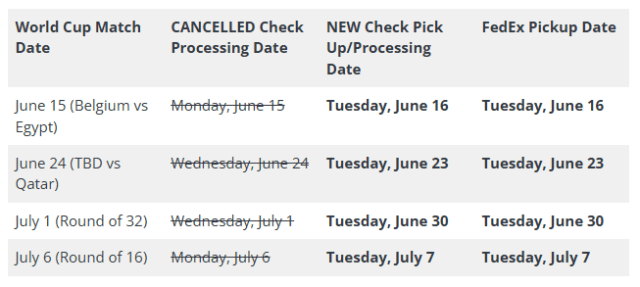
Due to heightened security measures in downtown Seattle during the World Cup matches in June and July, vehicle and pedestrian access to buildings near Lumen Field – including King Street Center – will be significantly restricted. Even on non-match days, expect large crowds and extra traffic that will make travel through the area difficult.
To ensure you receive timely check payments during the event, the Payables Team highly recommends minimizing or eliminating your need to pick up checks.
For employees who still wish to pick up checks in person, please note the Customer Service Center pickup dates will shift to the Tuesday closest to each match date.
Questions? Contact the Payables Team at Central.AP@kingcounty.gov.
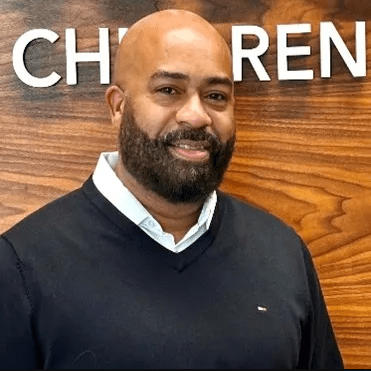
King County Superior Court has selected Robert E. Gant MA, LMHC, as the Director of Juvenile Court Services. Robert has served as a Juvenile Court Services Manager since joining the Court in 2019 and was Acting Director in 2021.
“Robert’s work is characterized by the collaboration and clarity necessary to ensure Juvenile Court delivers programs that are effective, strategic, and promote equitable outcomes,” said King County Superior Court Chief Administrative Officer Linda K. Ridge. “We are grateful for his leadership and longstanding commitment to serving youth and families in King County.” Read more.
Crossposted from the DES Express
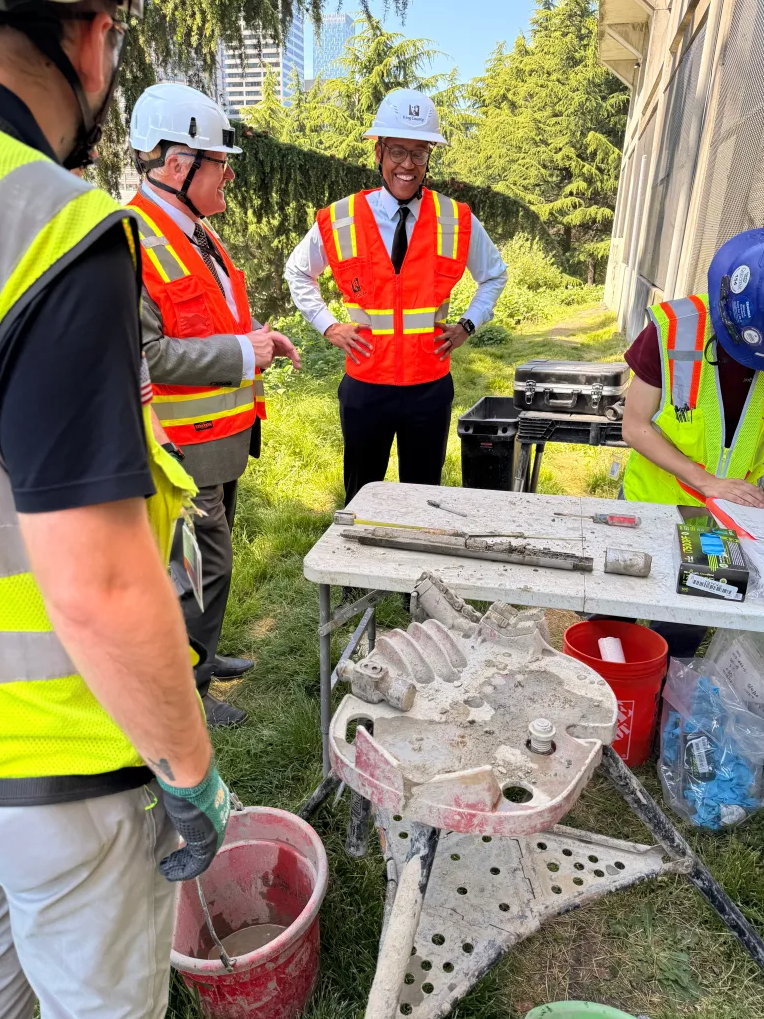
King County’s Harborview Construction and Infrastructure Division (HCID) was pleased to welcome County Executive Girmay Zahilay to Harborview Medical Center on May 4 to view the current geotechnical drilling taking place on campus and learn more about the project.
Over the last month, HCID has been conducting geotechnical drilling at various locations across campus, drilling up to 150 feet down to better understand soil conditions in preparation for constructing new facilities for patients and staff. The samples will inform the design of the new patient tower to be built on campus, as well as a new parking garage located at Ninth Avenue and Alder Street. Learn more about HCID and the Harborview Bond Program.

Employees can now take advantage of additional discounts to performances of Harry Potter and the Cursed Child for Broadway at the Paramount Theatre. Discounted tickets for the 2026-2027 season are available for purchase here.
HomeStreet Bank is now officially Mechanics Bank and has continued to offer King County employees banking and mortgage benefits. As part of the Mechanics Bank Affinity Program, employees can access down payment assistance, rate reductions on select consumer loans, and much more. For more information, view this flyer or visit their website.
See all available discounts on the Employee Discount intranet page.
Crossposted from the DES Express
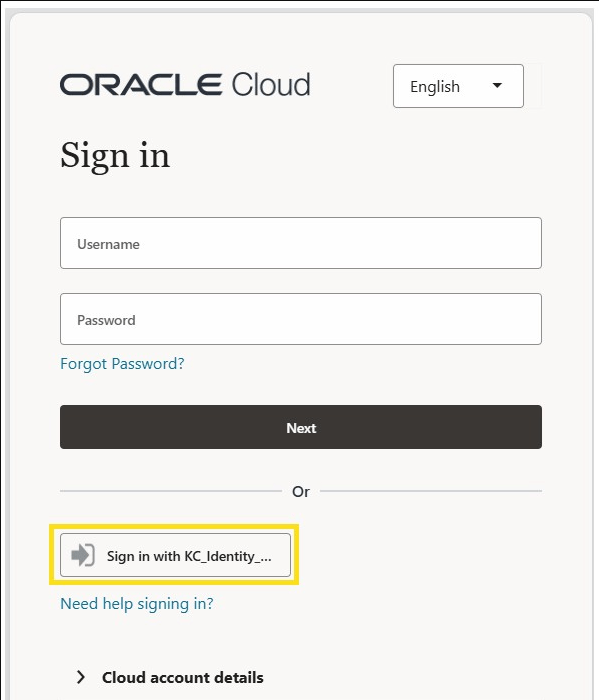
E-Procurement (powered by Oracle) is rolling out a new log-in page as soon as May 23 to make systems more secure. The Procurement and Payables (P&P) team is working closely with Oracle to determine a specific date for the change and to provide information to help suppliers and employees navigate the new log-in page.
After the upgrade, the new Company Single Sign-On option for King County users will appear as “Sign in with KC Identity…” at the bottom. When you select that, you will be logged into E-Procurement as a King County employee. As part of this update, suppliers who sign in to E-Procurement will need to set up Multifactor Authentication (MFA) to access their account. Agency users will not need to set up MFA, but will see the upgraded log-in page. Here is the current Company Single Sign-On page.
Questions? P&P will notify users and suppliers as more details are available. Please forward all questions or concerns to P&P’s Customer Service Desk at Procurement.Web@kingcounty.gov or 206-263-9400.
We’re excited to introduce the new and updated Employee Experience page, your hub for understanding and strengthening Employee Engagement at King County. On this page, you can explore what engagement means and why it matters, how we measure it, and how your feedback directly shapes improvements through Action Planning.
As a reminder, another opportunity to share your voice is coming soon with the Better Government Customer Focus survey, which launches on May 26. Your feedback is essential—it helps leaders refine processes, build better programs, and strengthen how we serve our community. Surveys aren’t just about gathering information; they’re about taking meaningful action. We look forward to hearing from you and using your insights to help teams across King County continue to grow and better support the people we serve.

Most King County offices will be closed in observance of Memorial Day on Monday, May 25. Due to the nature of our work, some services will continue as normal while others will operate on a reduced schedule.
Metro will be on Sunday service.
If you have any questions about your schedule, please talk to your supervisor. Offices will return to normal service on Tuesday, May 26.

Crossposted from the King County Sheriff’s Office (KCSO) Newsletter
On April 26, King County Aircraft Rescue and Firefighting (ARFF) joined the annual Touch-A-Truck event hosted by the Junior League of Seattle, giving kids of all ages a hands-on look at big rigs from various agencies.
The KCSO fire truck was a clear crowd favorite, drawing a steady line of excited future first responders.
Special thanks to ARFF Captain Eric Muller and ARFF Sergeant Clint Herman for participating in this fun event.
Follow us on LinkedIn to stay up to date with all King County professional news.






 Employee News