
Facilitating Effective Meetings online webinar, August 10 and 11

 A common challenge faced by individuals in business is how to lead and facilitating meetings that are interesting and solicit active engagement. This two-day training covers the skills used by a facilitator to design and run an effective meeting. How to be a better participant is also discussed. Topics include specific facilitation skills, group decision making skills, and how to deal with disruptive behaviors.
This webinar will be led by notable trainer and meeting facilitator Lenny Borer, who specializes in classes on communication and problem solving skills, meeting facilitation, instructor training and giving business presentations.
- Monday, August 10, and Tuesday, August 11, from 8:30 a.m. to noon. Register here. Participants must attend both days.
The webinar is $65 and space is limited. For more information, contact the Learning and Development Team at KCTraining@kingcounty.gov or visit www.kingcounty.gov/learning.
Share this:

Celebrating ADA30: A Discussion on Youth Employment from the ADA Generation webinar, July 24

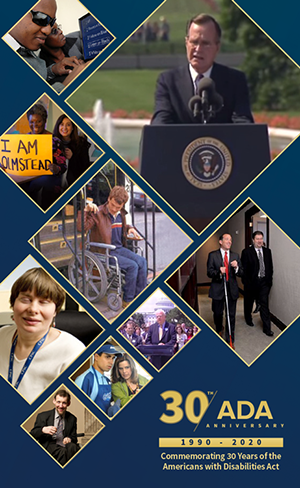 The Employer Assistance and Resource Network on Disability Inclusion (EARN) will host a webinar on “Celebrating ADA30: A Discussion on Youth Employment from the ADA Generation” on July 24 from 1 – 2 p.m. Eastern Time.
During this webinar, young people with disabilities who grew up after the passage of the Americans with Disabilities Act (ADA), known as the “ADA Generation,” will discuss their experiences in the workplace and offer ideas to help employers attract young people with disabilities. They will address policies and programs of particular interest to younger workers with disabilities; including internship, apprenticeship, and mentorship opportunities, and how to ensure they are accessible. They will also touch on how young people with disabilities view disability disclosure and self-identification.
A representative from the Institute on Disability at the University of New Hampshire will review key findings of the “2020 Kessler Foundation National Employment and Disability Survey: Recent College Graduates.”
Register here for the webinar, and read key findings of the new Kessler Foundation survey here.
Share this:

King County IT GIS team receives SAG Award for ESJ work


The King County Information Technology GIS For Equity & Social Justice Team received Esri’s Special Achievement in GIS (SAG) Award on July 13, 2020, at the annual Esri User Conference. Selected from over 300,000 eligible candidates, King County Information Technology received the award for its innovative application of mapping and analytics technology, as well as thought leadership in the field of GIS for Equity and Social Justice.
King County’s GIS for Equity and Social Justice program was developed to create methodologies, training and ultimately solutions that leverage or innovate GIS technology to Advance Equity and Social Justice. This includes a GIS for ESJ workshop, the GIS for ESJ lifecycle, and GIS for ESJ best practices. King County’s Project Equity Performance Management (EPM) Methodology and Tools utilized GIS solutions to understand where the needs are greatest. It identifies place-based investment targets and needed performance goals. This replicable process leverages geovisual dashboards that empowered stakeholders, regional partners and communities. Stakeholders apply GIS data, analysis and visualization to conditions in each phase of the GIS for ESJ lifecycle.
Share this:

Making Life Easier for King County employees

 King County provides mental health programs to help employees and their family cope with the personal outcomes of tragedies, stress, change, or trauma. The Making Life Easier Program (MLE) is one free resource that is available for employees to use when experiencing difficult situations.
MLE offers support with various services, such as free mental health counseling to address any issue, financial advising, credit and legal consultation, support for alcohol and drug dependency, and childcare and elderly services. Interactions are confidential and the program’s flexibility lets you request a counselor by race, ethnicity, and language, as well as change counselors as needed. For more information on the MLE program, including directions for signing up, visit the Balanced You blog.
Share this:

Pet of the Week: Rocko

 Hi! My name is Rocko and I am available for adoption. My personality color is GREEN. I am an adaptable dog who loves to go with the flow! I am outgoing and carefree, and I just can’t wait to find my forever home! I’m just a sweet old man looking to live the rest of my days with someone who will spoil me! I lovvveee doggie treats! Please read the shelter process to find out how to meet Rocko.
Read more and view all available pets at www.kingcounty.gov/adoptapet. Have you or someone you know adopted a pet from RASKC? Let us know. We’d love to tell your story.
Share this:

Featured Job: Employee Assistance Program (EAP) Counselor

Salary: $88,937.06 – $112,732.88 Annually
Location: Seattle, WA
Job Type: Special Duty Assignment or Term Limited Temp (TLT)
Department: DHR – Human Resources
Job Number: 2020EM11854
Division: Benefits, Safety & Well-Being
Closing: 7/26/2020 11:59 PM Pacific
Learn more about this position or view all available positions.
Share this:

Metro GM Rob Gannon stepping down, Deputy Terry White named interim GM


Rob Gannon
King County Executive Dow Constantine yesterday announced that King County Metro General Manager Rob Gannon is stepping down to take a position as chief financial officer for the city of Missoula, Mont.
“I want to thank Rob Gannon for leading King Country Metro with his steadfast service, his core commitment to providing transit where needs are greatest, and his vision for an agency devoted to overall mobility,” said Executive Constantine. “When Metro won Best Large Transit Agency in North America during Rob’s tenure, it recognized what King County residents already knew: that one of the great advantages of living here is a safe, equitable, and sustainable mobility agency that connects all our residents to community and opportunity.”
 Gannon oversaw the transformation and restructure of Metro from a transit division to a full King County department. Under his leadership, Metro outlined a path for operating and growing transit to reduce congestion, tackle the climate crisis, and make mobility accessible and affordable for everyone—especially communities of color, people with lower incomes, and customers with disabilities.
Executive Constantine has appointed Deputy General Manager Terry White to become Interim General Manager when Gannon steps down at the end of July. Chief of Staff Michelle Allison has agreed to serve as interim Deputy General Manager.
White began his Metro career in 1987 and possesses both an unparalleled knowledge of the agency, and a heartfelt and highly personal connection to its employees and customers. White oversees all of Metro Operations, which includes bus, rail, and marine service, facilities, and vehicle maintenance. White also has served at Metro as a transportation planner, customer service administrator, communications superintendent, and managing director of bus operations.
Share this:

We’re listening to employees to support employees
The King County value “We respect all people,” encourages us to actively seek to learn and understand all perspectives, beliefs, and values, engage people in decisions affecting them, and recognize all people for their contributions and accomplishments. This has never been more important than during our COVID-19 response.
With this in mind, and to more fully understand the impacts of COVID-19 on employees, more than 1,000 randomly selected Executive branch employees participated in a survey or listening session in May 2020 to share their experiences and opinions.
This opportunity allowed employees from a range of departments to openly discuss the challenges they are facing, as well as provide feedback on how King County can more fully support them during this difficult time. Topics such as equity and social justice (ESJ), safety, well-being, communication, and accessibility came up repeatedly during the discussions.
“Safety should come first, and consideration for the whole person. Also, flexibility for mixing up telework and on-site work should be a long-term outcome,” one participant shared.
This also allowed managers and supervisors to learn from employees, and how King County can better address their need. Hearing directly from employees about their experiences is essential for moving forward in developing a healthy workplace and community. Leadership across the County is invested in responding to these survey findings and enacting policies and procedures to make lasting change.
“The Executive and his senior leadership team are committed to listening and acting on what we hear from you,” said Whitney Abrams, Chief People Officer. “We will continue to conduct regular surveys and listening sessions to better support you throughout this pandemic and beyond.”
To learn more about this survey, view the video below to see the key findings, or view the full survey results here (SharePoint).
Share this:

Boost your Microsoft Teams skills: Take a free King County webinar, multiple dates

KCIT Training is offering a series of free webinars all about Microsoft Teams. Select the free King County webinar that best fits your interests or skill level or attend them all.
Webinars are available multiple dates from Wednesday, July 15 through Wednesday, Sept. 9. Register here.
Courses include:
- Getting Started with Teams— gain confidence in navigation, search and managing your profile/settings.
- Teams for Intermediate Users —featuring collaboration and co-authoring tools and managing member roles.
- Teams for Advanced Users —add to your toolkit with the addition of tabs and file recovery.
- Collaboration Across Office 365 —includes OneNote and Outlook integration and sharing files/folders in OneDrive.
Share this:

Brain-based Time Management online training, July 30
 Do you procrastinate, get distracted, have a hard time prioritizing, or feel overwhelmed? What we do and how we do it are driven by how our brains are wired. Neuroscience tells us we have 10 brain skills and each one of us has skills that are strong (and skills that are not strong).
In this class, you’ll hear about each of these skills so you can identify where the weak areas are for you and most importantly, learn what you can do about it. Imagine finishing your workday with confidence that you remembered and handled everything you needed to!
- Thursday, July 30, 2020, from 9 a.m. to noon. Register here.
The webinar is $50 and space is limited. For more information, contact the Learning and Development Team at KCTraining@kingcounty.gov or visit www.kingcounty.gov/learning.






 Employee News