
Volunteer in your community with King County

 Did you know that King County has many unique volunteer opportunities ranging from animal services to tackling climate change, and much more? Not only that, many employees can use up to three days of sick leave to give back to those causes.
Volunteering with King County is an opportunity to give back to causes right here in your community. Volunteer opportunities include planting trees as part of King County’s effort to plant 1 Million Trees by 2020 to reduce carbon pollution; volunteering with Regional Animal Services of King County (RASKC) or temporarily fostering an animal, remove invasive weeds, and even volunteering with Marymoor Park during their summer concert series to help concert goers recycle, compost, and keep the venue litter-free.
Employees covered by the Master Labor Agreement with the King County Coalition of Unions, other collective bargaining units that have ratified this option, and all non-represented employees can use up to three days of sick leave per year to volunteer with organizations that participate in the Employee Giving Program, including RASKC and King County Parks Foundation.
This benefit makes it easier for employees to give back.
“We are an employer that invests in our employees so that they can make a difference at work and in our communities,” Chief People Officer Whitney Abrams said. Whatever your passion, you can use this benefit to support organizations that share your passion.”
To learn more about King County’s volunteer opportunities, how to get involved or register a nonprofit, check out the volunteer web portal.
Share this:

The Water Taxi and Kitsap Fast Ferry will remain in service the week of July 22-28

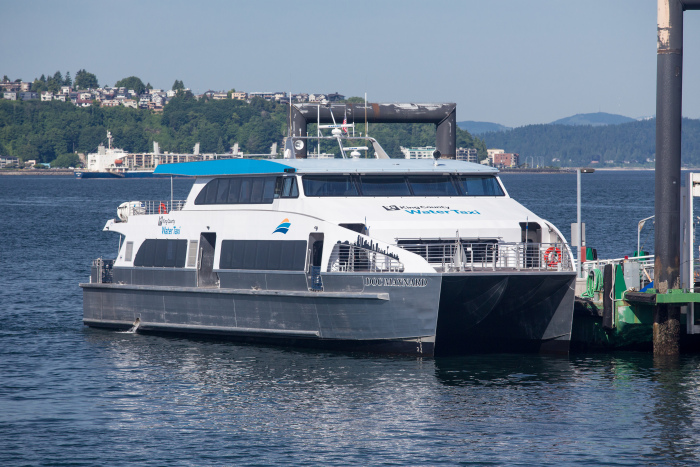
The King County Water Taxi and Kitsap Fast Ferry will remain in service the week of July 22-28. The scheduled temporary suspension of sailings on those dates has been cancelled and will be rescheduled at a later date. The King County Water Taxi and Kitsap Fast Ferry look forward to providing service from the new facility as soon as work is completed. We apologize for the inconvenience and we will update you on changes as soon as possible.
You can also visit your Employee Transportation Program (ETP) for information about your transportation benefits as a King County employee. While you’re browsing, make sure to view the brief video on the first page.
Share this:

Water Taxi and Kitsap Fast Ferries out of service July 22-28 for move to new terminal
UPDATED 7/18/2019
The Water Taxi and Kitsap Fast Ferry will remain in service the week of July 22-28
The King County Water Taxi and Kitsap Fast Ferry will remain in service the week of July 22-28. The scheduled temporary suspension of sailings on those dates has been cancelled and will be rescheduled at a later date. The King County Water Taxi and Kitsap Fast Ferry look forward to providing service from the new facility as soon as work is completed. We apologize for the inconvenience and we will update you on changes as soon as possible.
You can also visit your Employee Transportation Program (ETP) for information about your transportation benefits as a King County employee. While you’re browsing, make sure to view the brief video on the first page.
—————-
Due to the Seattle dock closure, neither Kitsap Fast Ferries nor King County Water Taxi will operate service during the week of July 22. These services are anticipated to resume on Monday, July 29.
How to get around while Kingston Fast Ferry is suspended
During the service disruption, King County employees who typically ride the Bremerton Fast Ferry can ride WSF’s Bremerton-Seattle service; those who ride the Kingston Fast Ferry can ride WSF’s Bainbridge-Seattle service.
To pay for their WSF fare, King County employees who are currently using the Kitsap Fast Ferries should see a Kitsap Transit Marine Services Ambassador inside the main WSF terminal at Colman Dock in Seattle to obtain a free ticket to ride WSF.
How to get around while Water Taxi service is suspended
While Water Taxi service is suspended, as a King County employee, you may use your ID/ORCA card and use one or more of the following options for free:
- Buses:
- Metro’s RapidRide C Line and routes 21, 37, 55, 56, 57, 120 and 125 connect West Seattle to downtown Seattle.
- Route 116 connects the Fauntleroy Ferry Terminal to downtown Seattle during weekday peak commuting hours.
- Routes 118 and 119 connect Vashon Island, the Vashon Ferry Terminal and West Seattle to downtown Seattle.
- Route 128 connects the Admiral District, Morgan Junction, High Point, Delridge, South Seattle College and White Center areas with the West Seattle Junction.
- Water Taxi shuttle routes 773 and 775 will continue to operate on their regular schedules during the closure, connecting West Seattle riders to the West Seattle Junction and Alki Beach.
- Link light rail:
- Metro Route 50 connects West Seattle to Link light rail at SODO Station.
- Ride2 West Seattle
- Ride2 West Seattle is a new on-demand service for people who live or work in West Seattle. It provides rides to and from Metro buses at the Alaska Junction.
Plan your trip today.
To read more about Water Taxi message, click here.
To read more about Kitsap Fast Ferries message, click here.
You can also visit your Employee Transportation Program (ETP) for information about your transportation benefits as a King County employee. While you’re browsing, make sure to view the brief video on the first page.
Share this:

State retirement plan contributions increased July 1
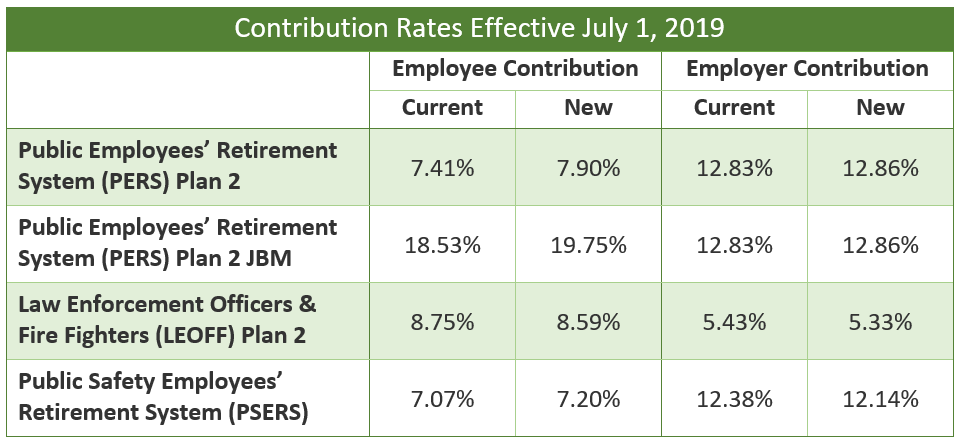
Employee and employer contribution rates for the following retirement plans changed on July 1, 2019, as approved by the State Legislature.
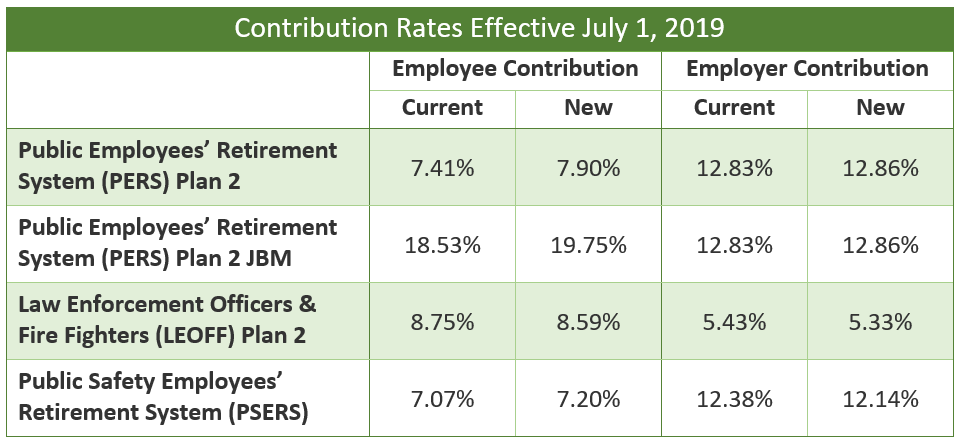
The PERS employer rate increased to 12.86% for PERS plan 3 and PERS JBM plans 1 and 3.
The new contribution amounts will be deducted from your second paycheck in July:
- If you are paid every other Thursday, your new contribution will appear on your July 25 paycheck.
- If you are paid on the 5th and 20th of the month, your new contribution will appear on your July 19 paycheck.
If you have any questions about the rate change, please contact the Washington State Department of Retirement Systems (DRS) at 800-547-6657 or recep@drs.wa.gov. More information is available on the DRS website at www.drs.wa.gov.
Share this:

Featured Job: King County Multimedia Reporter Producer – Council

Salary: $70,688.00 – $95,068.00 Annually
Location: WA 98104, WA
Job Type: Appointed
Department: KCC – King County Council
Job Number: 2019-10170
Closing: 8/8/2019 11:59 PM Pacific
King County Television (KCTV) is seeking a multimedia reporter/producer to engage and connect citizens with County services, programs, issues, ideas and ideals. This innovative storyteller will develop and produce video and multimedia content for KCTV’s cable channel and social media platforms overseeing production from script to screen. The person who fills this position will ensure all media content has high production value that is consistent with the Council and County’s vision for Equity and Social Justice. Effective candidates will collaborate with the Council, Council leadership, County departments and staff to conceptualize, design and develop programming concepts and implementation strategies.
KCTV is an award-winning municipal television station that reflects, informs, and inspires the community it serves with a local mix of stories, analysis, and perspectives you won’t find anywhere else.
Ideal candidates are creative, experienced storytellers who are innovative, organized, well versed in industry best practices and all aspects of video production from development through final edits. The most competitive candidates are passionate about providing quality programming to the citizens of King County; intellectually curious; have strong problem solving and communication skills; and work well in team environments.
Learn more about this position or view all available positions.
Share this:

Training Spotlight: Defensive Driving

Defensive Driving, multiple dates: Dedicated to enhancing driving skills, reducing collisions and controlling insurance costs, this course focuses on accepting personal responsibility while operating a motor vehicle. Knowing why your vehicle performs the way it does, and understanding key concepts of safety, can reduce your chances of serious injury. A key objective of Defensive Driving training is to influence a person’s driving behavior. This we attempt to achieve through classroom interaction with not just the instructor, but with the other students as well. This certification is valid for 3 years. Register and learn more.
View more training and development opportunities at www.kingcounty.gov/learning.
Share this:

Tech Tip: Cyber Security Awareness Training is now available

To start your Cyber Security Awareness Training please login at:
https://sso.securingthehuman.org/kingcounty/
Your account for Securing the Human:
- Username: King County email address
- Password: King County email password
For more information about Cyber Security please visit our Sharepoint site:
https://kc1.sharepoint.com/teams/ITISRC/ISRCPUB
Share this:

Road to Retirement classes coming up!

 Are you planning to retire in the next six months? If so, join your Retirement Team for this informative two-hour class. We’ll discuss procedures and forms, medical coverage options, and pension plans—so you’ll be on a smooth road toward a happy retirement.
Road to Retirement is offered in two locations: the Elections office in Renton and the Chinook Building in Seattle. Registration is required. Use the green Register button, then select the date and location. Upcoming dates:
- Tuesday, July 23: 10 a.m. – Noon, Renton
- Tuesday, July 30: 1 – 3 p.m., Seattle
- Tuesday, Aug. 20: 10 – Noon, Renton
- Tuesday, Aug. 27: 1 – 3 p.m., Seattle
To learn more before the class, go the Retirement page and read the Retirement Guide.
Please note, attendance is strictly voluntary, on your own time, and non-work related. For more information, contact King County Benefits, Payroll and Retirement Operations at KC.Orientations@kingcounty.gov.
Share this:

Pet of the Week: Tricksy
Crossposted from Tails from RASKC
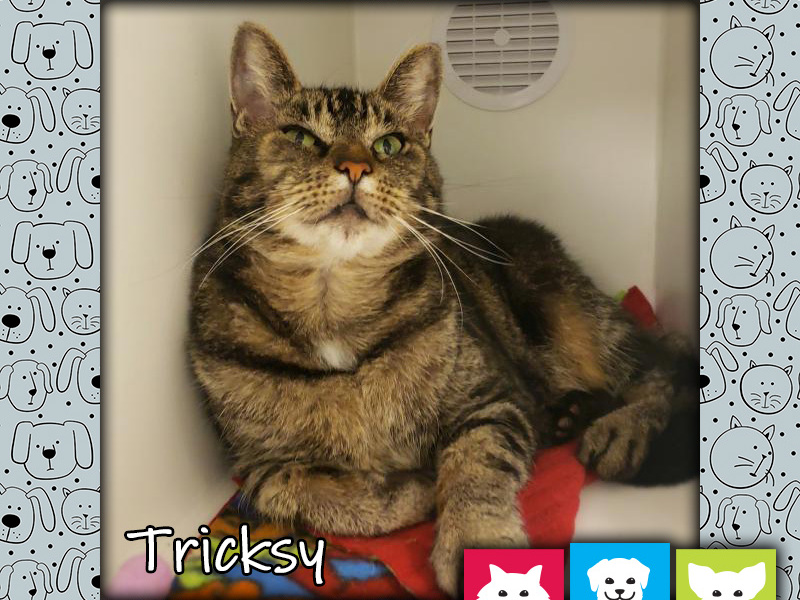
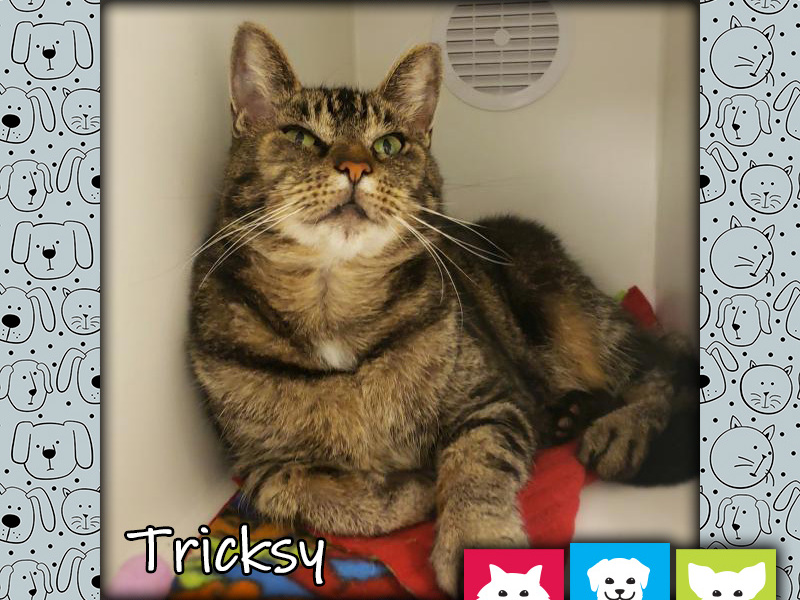 We have a treat for Pet of the Week – meet Tricksy!
This younger brown tabby is a huge softie with a heart of gold. Her personality color is “Easy Going Green,” meaning she is an adaptable cat who loves to go with the flow. Tricksy is very affectionate and just loves getting pets and spending time with her human friends. Although she may be a little timid with strangers, she will warm right up once she gets to know you!
Read more from Tails from RASKC
Share this:

Volunteer to be a Ballot Drop Box Closer for Aug. 6
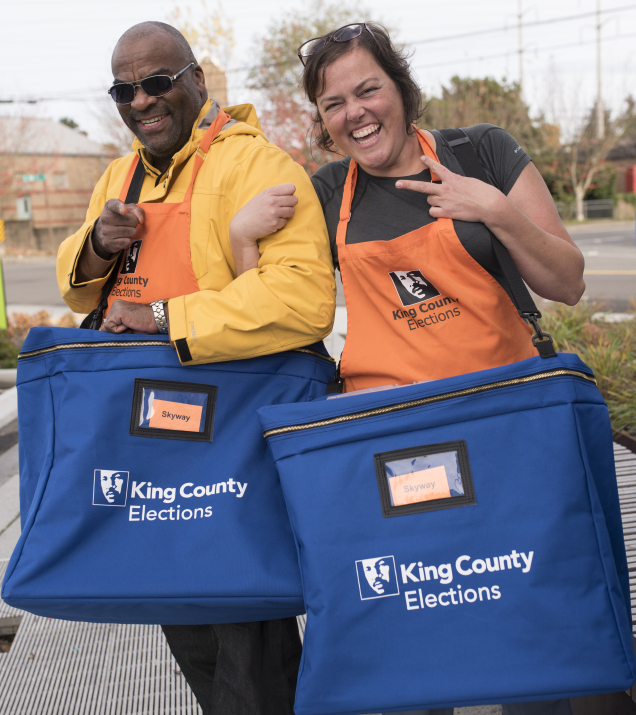
Looking for some Election Day excitement? Meet your neighbors and continue your commitment to public service by volunteering as a drop box closer. Drop box closers are the friendly face the public sees on Election Day, ensuring that every vote is counted and every voice is heard.
- Who: You and your co-workers!
- What: Closing ballot drop boxes across King County
- When: Election Night – August 6th from 6:30-8:30 pm
- Where: A drop box location near you
State law requires that ballot drop boxes close at 8 p.m. Election Day. Most voters wait until Election Day to return their ballots, with drop boxes seeing the most traffic in the final few hours. We need your help to provide customer service and assistance to voters using this last opportunity to return their ballots. Sign up and join us for a fun and fulfilling experience helping your neighbors experience the excitement and community of casting their ballots.
King County Elections has expanded our ballot drop boxes to nearly 70 over the last few years. We need your help to fill over 100 volunteer shifts across King County to bolster our operational capacity. You’ll be partnered with Elections staff and no experience is necessary – we provide all the training you need!
Join us in this pilot program by signing up to help with the Primary Election on August 6, 2019 from 6:30-8:30 pm.
Have questions? Learn more here.






 Employee News