
Employee Giving Drive events
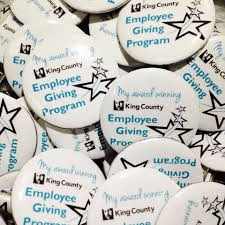
This year’s Annual Giving Drive is in full swing and there a plenty of events around the county that you can take part in to support, or discover, your favorite nonprofit.
Nonprofit Lunch and Learn, Oct. 16: Bring your lunch and get inspired! Join us Tuesday, October 16 at 12:30 p.m. in the Chinook Building, Room 121 to learn about two local nonprofits in our community doing great things to help children and families in need. NW Children’s Foundation and Pediatric Interim Care Center will be speaking about the work that they do in the community. For information about this Lunch and Learn contact Amanda Gudmunson by email or at 206-263-0186.
Festival of Frights Halloween Carnival, Oct. 31: The Executive Office presents the first Festival of Frights Halloween carnival, a carnival of spooky sensations, on Wednesday, October 31 from noon to 1:30 p.m. in the Lean Lab, on the third floor of the Admin Building. The event will benefit Peace for the Streets by Kids from the Streets and Project SeaWolf.
For information about other Employee Giving Program (EGP) Events, view the special events calendar. To add an EGP event to the calendar submit the information here.
Share this:

Disability Awareness Month two part Lunch and Learn, Oct. 18 and 24

The Department of Executive Services and Human Resources Division have cosponsored two interactive lunch and learn events that trace the rise of the Disability Rights Movement in the United States, Oct. 18 and 24. From the first stirrings after WWII, through the intersections of race, visibility of the disabled, and economics in activism, to the famous Capital Crawl, the classes will uncover the unexpected connections that led to the passage of the Americans with Disabilities Act (ADA). The event is first come first serve with seating available for up to 40 people. Please contact Christina Davidson with any questions at Christina.Davidson@KingCounty.gov. View a flyer for these events here.
Share this:

Invite the Exec to Walk in your Shoes

Dear King County employee,
 If you are doing a job that you think I should experience as part of the Walk in the Shoes of a County Employee competition, please submit an invitation. I look forward to new opportunities to see more of our diverse lines of business and meet the people who serve the residents and customers of King County.
Your pride in your work and dedication to serve is inspiring. I look forward to your invitation to walk in your shoes. Again, here is the submission form.
Sincerely,

Dow Constantine
King County Executive
Share this:

New package of emergency housing strategies in time for winter
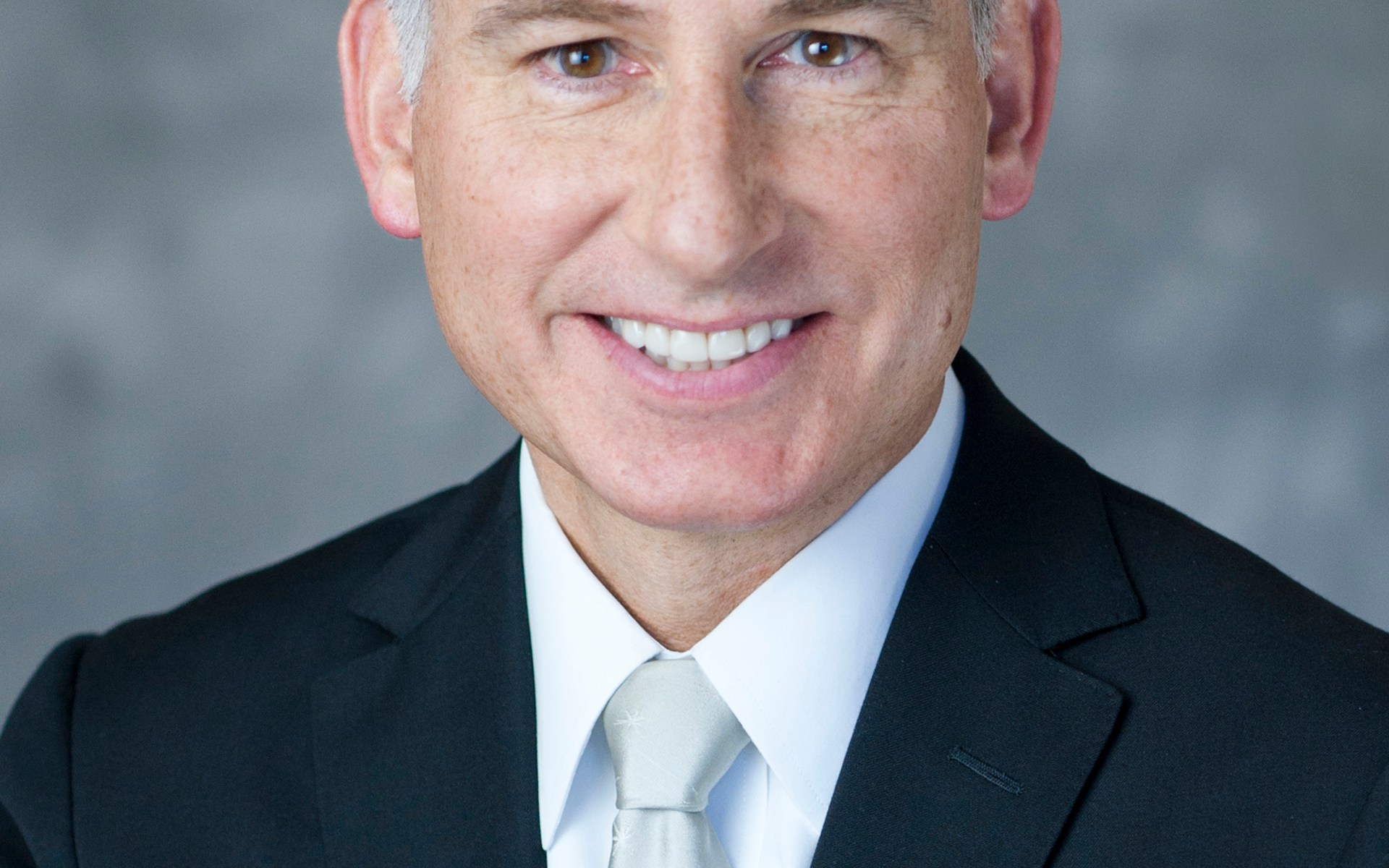
King County Executive Dow Constantine
Dear fellow King County employee,
Today I am announcing a series of innovative actions to provide housing and services for the most vulnerable people in our community, and help them get on a path to permanent, stable housing.
Throughout King County government, we are constantly asking: what resources can we leverage to help people off the streets? What innovations can we deploy? What new approach can we try? These questions become all the more urgent as the days become shorter and colder.
The actions I am announcing today will help bring more people inside for the winter, and provide more outreach to those living on sidewalks, and in doorways, and parks:
- King County will operate a temporary 24-hour enhanced emergency shelter in the West Wing of the King County Correctional Facility, which has not been used for detention purposes since 2012. It would be converted to house between 125 to 150 single adults, and be operated under the oversight of the Department of Community and Human Services.
- We will open a day center in the first floor of our Fourth Avenue and Jefferson Street building to offer a safe, warm place for people staying at the three overnight shelters in the immediate area. Under my plan we will move the shelter operation, which currently offers 50 overnight shelter beds for adults on the ground floor, to the second floor, and use the ground floor as a day center so people have somewhere to come during the day and get connected to case management and housing navigation services.
- We will purchase modular housing units to create dormitory style bridge housing to help up to 160 people transitioning from homelessness to permanent housing in the community. The site for this facility is yet to be determined.
- We have also been working to convert Harborview Hall to overnight shelter space for 100 beds, and potentially expanding the shelter to 24/7 at a later date if feasible.
These actions would make a total of 285-310 new beds available by the end of the year, in addition to the 100 beds at Harborview Hall. They will have a positive impact on the areas surrounding our work locations in downtown Seattle by adding a new 24/7 shelter that people do not need to vacate in the morning, and giving people a day center to go to when the overnight shelters close at 7 a.m. They will also help more people get connected to services.
There is no doubt that we are in the midst of a housing and homelessness crisis in our region, and that calls for emergency actions. While it is necessary that we take these actions right now to help more people off the streets and into shelter by winter, our focus remains on getting people into permanent housing and helping them rebuild their self-sufficiency. We are steadfastly investing upstream to address the root causes that lead to homelessness. That’s where our efforts must continue and, working collaboratively with our regional partners, that’s how we will solve this crisis.
We will be constantly evaluating the impacts of these actions and work to address any issues that are identified. Your safety at work and the safety of visitors to our facilities is paramount.
Thank you for all everything that you do for King County. It’s the innovative thinking of our employees that will enable us to solve the biggest challenges facing our region.
Sincerely,

Dow Constantine
King County Executive
Share this:

King County Council recognizes Water Taxi crew who rescued man near West Seattle over the summer
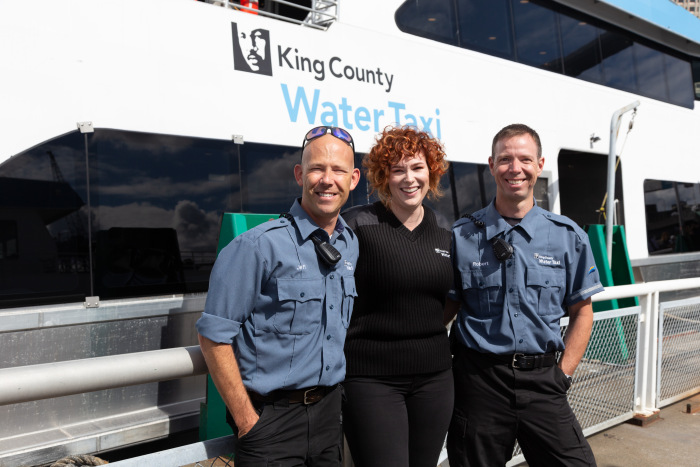
Crossposted from The Captain’s Blog
Fifteen minutes. That’s the amount of time that had elapsed from the moment the crew working King County Water Taxi’s West Seattle route on Aug. 30 spotted a man overboard in Elliott Bay to the time medics were giving him a clean bill of health.
During those 15 minutes, the three-person crew – relying on its extensive marine safety and emergency training – positioned the MV Doc Maynard near the man, fastened together a rope-and-pulley system, pulled him safely aboard and delivered him to waiting medics.
Read more at The Captain’s Blog or in the official press release. This recognition was also highlighted in the West Seattle Blog.
Pictured: From Left to right Jeff Bearden, Amanda Cook and Bob McDougall.
Share this:

Featured Job: 911 Communications Specialist

Salary: $22.53 – $33.28 Hourly
Location: Renton, WA
Job Type: Civil Service, Full Time, 40 hrs/week
Department: King County Sheriff’s Office
Job Number: 2018MLB07659
Closing: 12/31/2018 12:00 AM Pacific
Excellent opportunity for a career in Law Enforcement, partnering with our men and women in the field! Make the difference in someone’s life, become a 911 Operator (Communications Specialist).
Communications Specialists serve as Call Receivers and Dispatchers. As a new Communications Specialist you will receive classroom and hands-on training to be able to take both emergency and non-emergency calls in a high volume call center. Some calls require call receivers offer resources or instructions to callers, make referrals to other organizations or persons and write routine police reports for less serious crimes. They also answer complex, emergency calls that require the call receiver to use appropriate de-escalation and interviewing skills to gather necessary information before routing the information to the appropriate Dispatcher.
Learn more about this position or all available positions.
Share this:

John Taylor takes helm as inaugural director of Department of Local Services
Crossposted from Inside Transportation
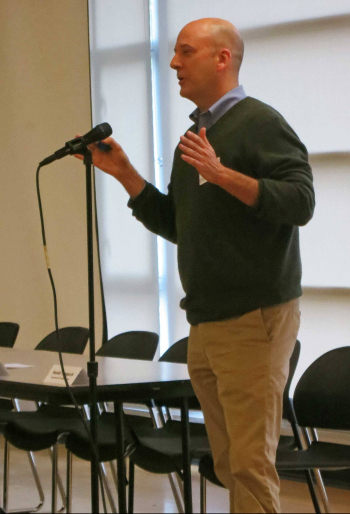
One day after being named the first director of a new King County department designed to exclusively serve residents of the unincorporated areas, John Taylor participated at a retreat for division leaders and outlined his vision for delivering outstanding local public services.
“There is currently no city hall for the residents of unincorporated King County, yet it’s in effect a city of 250,000 people,” he said. “Our goal is to give them that ‘city hall’ — a place they can get permits in a simple way, get their questions answered, and find out what other services are available to them.”
King County Executive Dow Constantine appointed Taylor on October 2 to lead the new King County Department of Local Services, saying “I want the Department of Local Services to start with a strong foundation that empowers our talented employees to achieve the highest level of customer satisfaction, and that is the workplace culture John will promote.”
Read more at Inside Transportation
Share this:

Bridge Fellowship kicks off fourth year program with expanded group, more development opportunities

Twenty seven employees from across King County have been selected to participate in the 2018 Bridge Fellowship Program as part of the County’s Investing In You commitment to provide leadership and development opportunities to employees.
The Fellowship, open to all full-time and TLT employees, was reestablished in 2013-2014 by King County Executive Dow Constantine. The program was expanded in 2017. Bridge participants underwent a rigorous application and interview process before joining this year’s cohort.
Over the course of the program, participants engage in classroom learning, group projects, presentations and career development activities, as well as interviews and site visits to explore the County’s agencies and their priorities. By participating in the Bridge Fellowship program, employees will enhance their leadership skills, learn more about County systems and operations, and advance their professional development and King County careers.
The program is supported by the Human Resources Department and is led by Debra Baker. Together they have created a rich course that encourages participants to explore new possibilities, for themselves and for the organization.
The Bridge Fellowship Program is currently in progress but will take applications again next year. Information about the program is available at www.kingcounty.gov/Bridge.
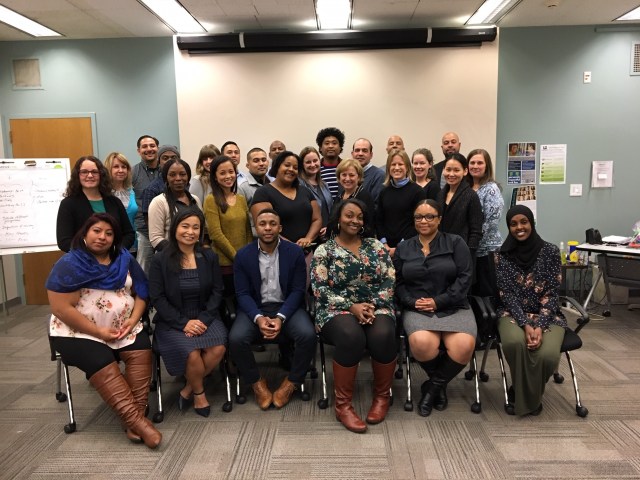
Pictured: First front row, from left to right: Rocio Martinez Lopez, Mindy Tiangson, Delroy Mukungatu, Kerren Buchanan, Myranda Miller, Ladna Farah. Second row, from left to right: Michelle Anderson, Shonita Savage, Grace Fisk, Porsche Austin, Kendy Rossi, Sarah Margeson, Tsengyang Vang. Third row, from left to right: Tiffany Kalfur, Saybre Locke, Nickie Ford, Julio Rodriguez, Jessica Cafferty, Rafael Munoz-Cintron, Susannah Rowles, Emily Hart. Back row, from left to right: Jose Ramirez, Francisco Pine, Abdirahman Hashi, Nathan Brown, Anderson Jones, Waverly Williams.
Share this:

Inclusive process results in more accountability and higher customer standards for Metro’s Access paratransit service
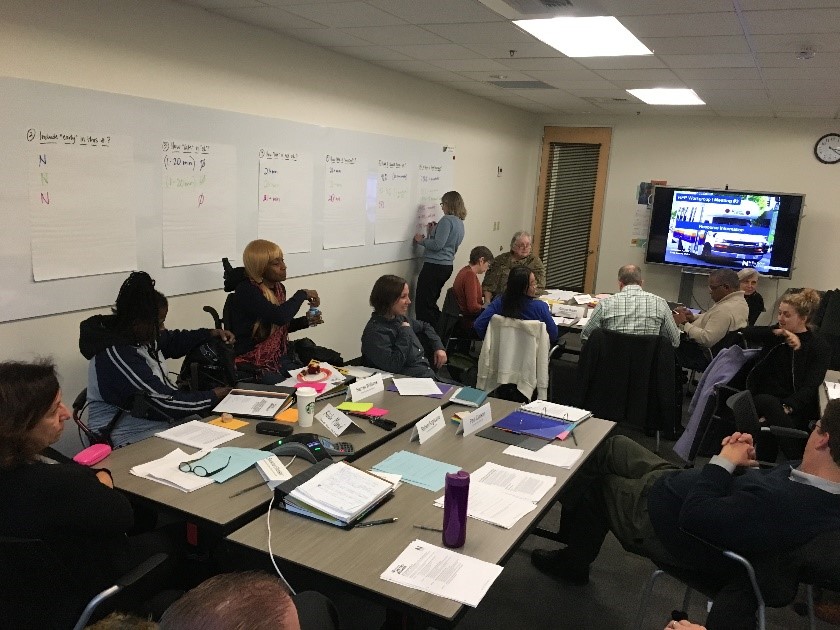
King County Metro’s American with Disabilities Act of 1990 (ADA) Paratransit Program provides shared rides on Access Transportation for people whose disability(ies) prevent them from using fixed route bus or light rail service. Access Transportation provided nearly 1 million trips last year, serving about 10,000 customers.
With the help of customers and advocates, King County Metro is scheduled to have a new contract to improve Access service beginning in August 2019.
Metro first asked for contractor proposals last year; however, Access riders and other stakeholders communicated their disappointment that they were not involved in the development of the Request for Proposals (FRP). They advocated for a more inclusive process.
 At the direction of the King County Council, Metro paused the RFP process and formed a workgroup of riders, caregivers, members of organizations that serve people with disabilities, and staff from the King County Executive’s Office and the King County Council to further engage and listen to our stakeholders.
This workgroup and Access staff developed a list of key recommendations which will be included in the new contract. The result for customers will be better accountability and higher standards for on-time performance than Metro has under their current contracts. Metro will also have more financial incentives to encourage contractors to improve performance and customer service, as well as reduce costs and travel times – and disincentives if standards aren’t met.
Access has already has made some changes to improve service for customers including: improved on-time performance and scheduling policies, as well as strengthened contract management and accountability.
Access staff are committed to delivering high quality service. The experience they’ve had over the past year has served as a reminder of the value of pausing to listen to their customers. With the workgroup effort coming to a close, Access is supporting a new Access Task Force with more than 20 riders and advocates who will continue to hold them accountable and help improve the program.
Share this:

Disability Awareness Month: Transit Disability Services helps to provide resources for over 5,000 employees
Sometimes it just takes a little creativity and a few good resources to make it easier for an employee to do their job. For the past two decades, a small group of Transit Disability Services staff has been coming up with ideas to help Transit workgroups accommodate employees who have a medical condition, from bus drivers to office workers.
A study by the Job Accommodation Network in partnership with the West Virginia University School of Social Work, found that the majority of workplace accommodations employees need are either free or low cost. For Transit Disability Services, this often involves coordination with community resources.
When an employee wants to “try out” a device or item that may make their job a bit easier based on a medical condition, Transit Disability Services staff frequently work with Washington Assistive Technology Act Program (WATAP) at the University of Washington. The organization allows an individual to borrow a piece of equipment that may help them overcome their limitations on the job, such as a split keyboard, voice-activated computer software or other items that can help make a difference.
The Transit Disability group also works with Dan Nwaelele, Safety Officer with the Department of Human Resources, to perform ergonomic evaluations. Ergonomic evaluations can be something as easy as moving a desk or keyboard set up, but often can be more complex. This year alone, Dan has performed 67 evaluations for Transit employees. “As an ergonomist, I have a modest goal – to fit work to the employee regardless of his or her stature, work environment or equipment used,” said Dan. The effect is enhanced productivity as well as improved employee health.
But trying to find a new way of getting the job done can often be stressful at first. When an employee is going through a workplace issue that impacts their ability to perform their job, Disability Services staff often provide referrals to the Making Life Easier Program for assistance with personal issues or stress. Employees or family members can call a 24-hour phone number to be connected with a professional clinician in the community for up to eight free sessions of counseling. And sometimes, after all attempts to accommodate an employee in their current job have been made, it turns out that a different job is just a better fit based on a medical condition. In those cases, the County provides a path to more suitable employment under the King County Reassignment Program, which offers priority placement into a new job for which an employee is qualified. It is the best way to keep talented staff who have the kind of experience the County needs.
Regardless of which path the employee and the County take, the goal is always the same: to help the employee continue to pursue their passion for public service.






 Employee News