
DPD offers Public Defense 101 Training to administrative staff

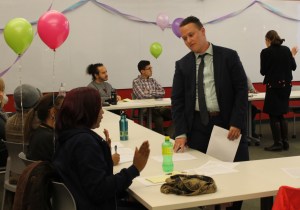
Pictured: DPD attorney and trainer Adrien Leavitt speaks with a participant during the training.
Several employees at the Department of Public Defense (DPD) took advantage of the department’s first Public Defense 101 trainings in December, an opportunity for administrative staff to learn the nuts and bolts of public defense. Two 90-minute sessions were held, one for staff in Seattle and another for staff in Kent, led by three members of DPD’s management team – Katherine Hurley, Tara Urs, and Adrien Leavitt. The three attorneys discussed many aspects of public defense as it is practiced in King County – from how the department is set up, to the types of cases DPD handles, to caseload standards – as well as answered questions and facilitated discussions.
The trainings were designed in coordination with Debra Baker from the Department of Human Resources. After a recent meeting with administrative staff, Debra reported to DPD leadership that several employees wanted a training of this type. Tara Urs, who is coordinating training at DPD on an interim basis, said both sessions were successful and additional ones will likely take place later this year.
“People were engaged. They asked great questions. And it seemed helpful,” she said. “It’s important that everyone feels a connection to the mission of public defense, and this is one way to make sure our administrative staff feels both connected and respected.”
Share this:

Featured Job: Public Administration Graduate Intern

Salary: $19.43 – $24.63 Hourly
Location: Seattle, WA
Job Type: Intern
Department: DES – Executive Services
Job Number: 2018TR09148
Closing: 1/21/2019 11:59 PM Pacific
King County International Airport supports internship programs that provide work experience for students in an accredited post-secondary institution that is related to their course of study. The internship program is designed so that the student will have the opportunity to apply principles and theories learned in the classroom, gain new skills, explore a career path and be supervised and mentored by a professional in their field.
The public administration intern will collaborate with the Program and Projects Administrator. The intern will be responsible for assisting with research, report writing, attending briefings, developing databases, data analysis and visualization, program development, and the development of Airport stakeholder outreach and engagement strategies to support KCIA in the implementation of projects as needed. The intern will play a key role in performing document review and contributing to the development of evaluation frameworks for organizational development, programs and projects at the Airport. The internship is intended to build the intern’s qualitative research and process evaluation skills and public administration skills. The intern will receive direct supervision and mentorship from the Program and Projects Administrator and will have the opportunity to become engaged in high priority policy topics of relevance to the Airport.
Learn more about this position or view all available positions.
Share this:

Pet of the Week: Flower

Crossposted from Tails from RASKC
 Let’s get this girl her forever home – it’s Flower, our Pet of the Week!
This sweet girl has a huge personality and a lot of favorite activities! One of her favorite things to do is go for walks and explore. Flower would make a great adventure buddy. She also loves to play fetch and will even bark at you to throw her toy. She’s not always excited about bringing it back though, so playing with two toys at once is a good option for her.
Read more from Tails from RASKC
Share this:

2020 Strategic Climate Action Plan Update – Staff Kickoff Lunch and Learn

All staff are invited to learn about King County’s commitment to confront climate change and understand how to contribute to a major update to the County’s Strategic Climate Action Plan (SCAP) that will start in 2019. The SCAP is King County’s five-year blueprint for County action to confront climate change, integrating climate change considerations into all areas of County operations and our work with communities. Two lunch and learn sessions will be held to outline the SCAP update process and share how staff can engage and contribute ideas. Please RSVP for one of two sessions:
- Tuesday, January 22, from 12:30-1:30 p.m. in King Street Center, 201 S. Jackson St, 8th Floor Conference Center. Register here.
- Tuesday, February 12, from 12:30-1:30 p.m. in the Chinook Building, 401 5th Avenue, Room 123. Register here.
For questions, contact Matt.Kuharic@kingcounty.gov.
Share this:

Only 1 week until viaduct closure

When the Alaskan Way Viaduct closes for demolition after the evening commute Jan. 11, commuters will experience the longest major highway closure the Puget Sound region has ever experienced – roughly three weeks. How will you #GetReady? Visit kingcounty.gov/getready to review your options and find out which routes are affected.
Maximizing your time: If adjusting your schedule, working at an alternative location, teleworking, or taking vacation are options for your job for any of this period, please discuss these beforehand with your supervisor. KCIT has created a telework resources site that answers many questions employees might have about working remotely.
Need help with your commute plan? We are here to assist you in navigating your rideshare options. Have you thought about sharing your commute? Metro’s Ridesharing solutions can help you get around:
- Vanpool: Join an existing Metro group, new riders are FREE during the SR 99 closure or start your own– five members gets you on the road. Everything is covered!
- Vanshare: Connect to the Water Taxi for free! Find two others to ride with and start a vanshare– includes parking, gas and insurance. Your vanshare commute is FREE during the closure.
- Carpool: Save money on commuting costs, enjoy some company on your commute, and help reduce congestion. We have partnered with ride-matching companies to offer discounted trips for riders and bonuses for drivers! Whether you’re riding to a Park & Ride or to the office, check out these amazing incentives.
Questions specific to the options listed above? Connect with the Rideshare team
Share Your Story, Win Prizes: During the viaduct closure, the will be collecting the most creative and fun stories for how King County employees are commuting to work during closure. We will share the best stories on the King County Facebook page and winners will get REI gift cards and fun Metro swag!
Did you JUMP on an electric bikeshare to get to the lightrail for the first time? Share it! Got your breakfast snatched by a seagull while waiting for the Water Taxi? Snap a pic, it’s going on the Facebook page.
Click here to submit your story and photo
Make the most of Fleet: If using a Fleet vehicle. consider extending vehicle reservations in Fleet’s Dispatch Reservation System, also known as INVERS, by 30-60 minutes to allow for additional travel time. Your agency will not be billed for the extra time unless it is used. If you have any questions related to the use of county vehicles during the closure, please contact your supervisor.
Don’t forget that the Employee Transportation Program is here to help you plan and explore your options. Contact us with your questions!

This is a map of the SR 99 closure through downtown Seattle. For more information visit http://www.wsdot.wa.gov/Projects/Viaduct/realign99.
Share this:

Announcing the Zero Youth Detention data dashboard
Crossposted from Zero Youth Detention
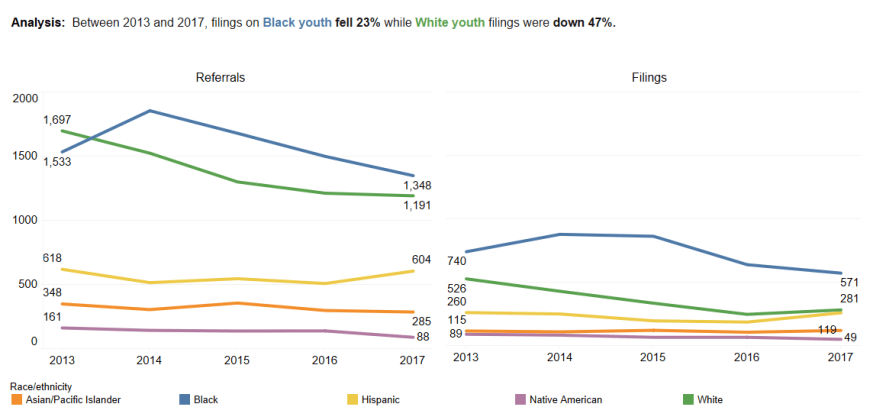
King County is pleased to announce the first release of the Zero Youth Detention data dashboard. The dashboard provides the data about the juvenile legal system in King County including specifically highlighting racial disproportionality. The dashboard will show progress on the full range of efforts to achieve the goal of Zero Youth Detention.
This dashboard is a work in progress. The first release of the dashboard highlights data around juvenile detention and sets the stage for adding new measures. The process is iterative – the County and its partners will collaborate on definitions of success as strategies, policies, and practices get underway. Future releases of the dashboard will include measures and targets for analyzing the impact of this work toward achieving Zero Youth Detention.
Read more and view the dashboard at Zero Youth Detention

Share this:

Deputy Prosecutor gives TEDxSeattle talk
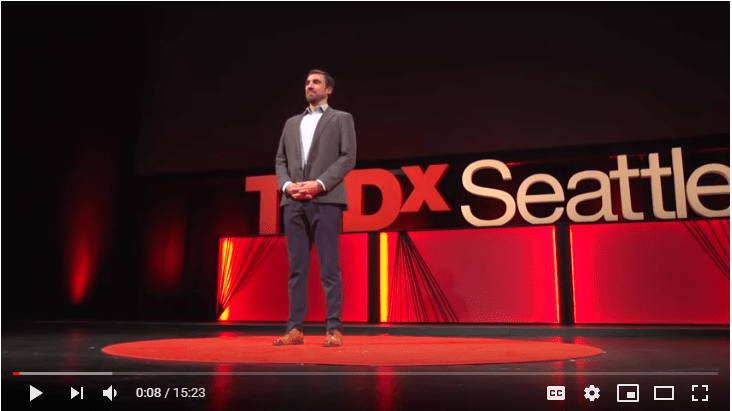
King County Deputy Prosecuting Attorney Sam Dinning was recently featured In this TEDxSeattle talk, discussing the difference between equality and equity in criminal justice reform. Sam works within the Juvenile Division and explores how to prosecute cases considering equity instead of equality.
“Criminal justice reform depends on our willingness to reexamine fundamental principles. Pursuing equity, rather than equality, would produce more just and more effective outcomes.”
Share this:

Fleet Administration Division celebrated with Performance Excellence Award for Cost
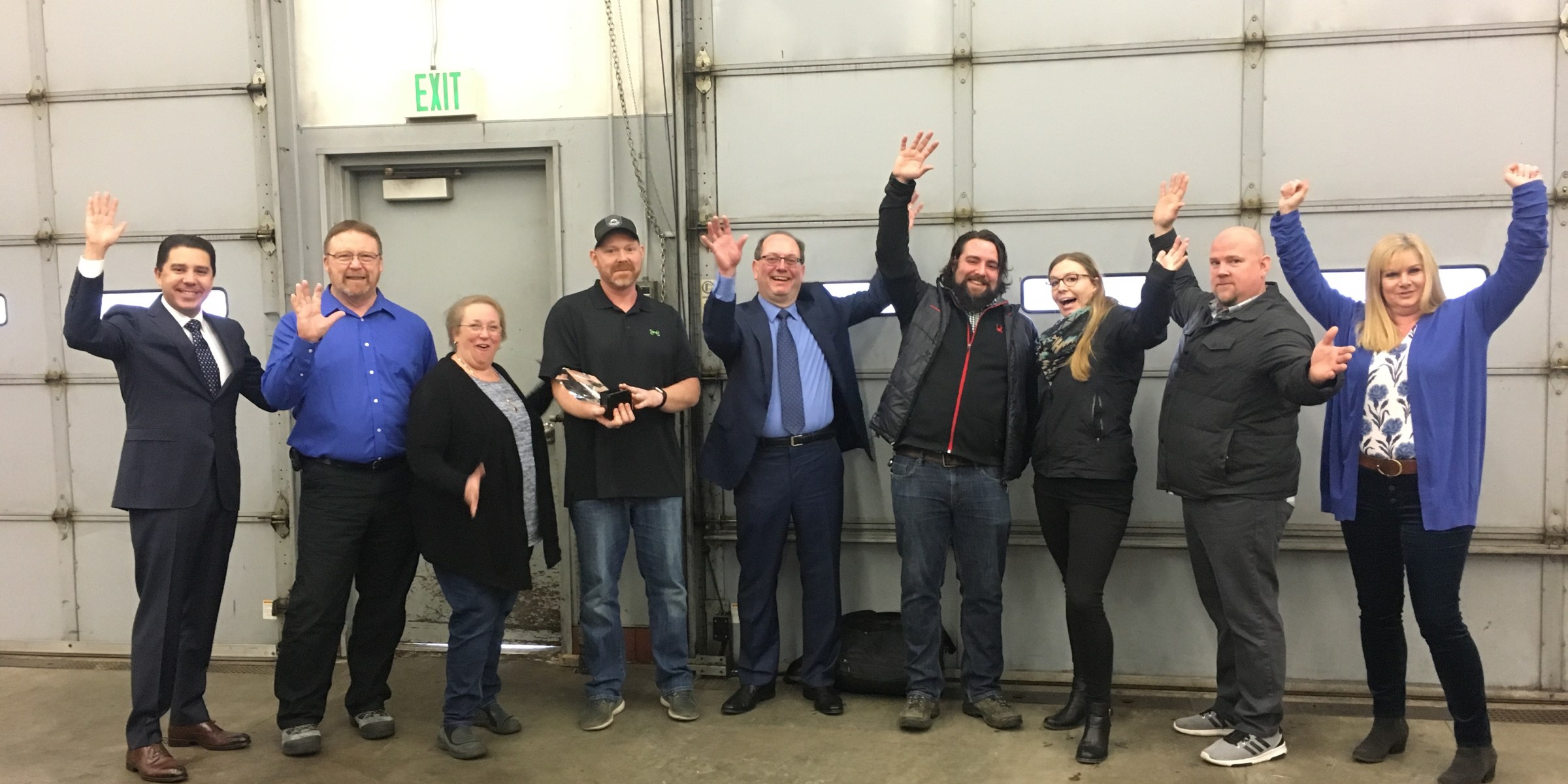
On Dec. 12, Chief Operating Officer Casey Sixkiller and Budget Director Dwight Dively visited employees at Fleet Administration Division in Renton to formally present the Executive’s Performance Excellence Award for Cost. Fleet field service mechanics saved 124 hours just in travel time, or $12,300 in savings, in the first six months by adding diagnostic software to field service computers.
Field service mechanics are assigned to various areas of the county including Black Diamond, Fall City, and Redmond to support field crews. When needed, bringing vehicles and equipment into the Renton Shop for repairs is costly considering travel time, effort, and customer downtime.
In most cases, heavy-duty vehicles with a “check engine” light have to be diagnosed before they can be driven, so non-drivable vehicles are towed to the Renton Shop or the field mechanic has to go to the Renton Shop to get the diagnostic computer. Because it was the only location with diagnostic software, every time the diagnostic computer was taken to the field, it hampered the shop’s ability to diagnose vehicles and equipment. This meant per each instance a vehicle needed to be diagnosed, travel time back and forth took approximately four hours.
To address this issue and improve cost impact, mechanics analyzed alternatives from leasing additional computers to adding diagnostic programs to existing computers. The end result was Fleet added software licenses to the four field mechanics computers, ultimately saving $12,300 in the first six months of this practice.
Receiving the Executive’s Performance Excellence Award for Cost celebrates the creativity of the project team and their commitment to ensuring services are provided in an effective, cost-effective manner. Thank you to team members Erik Ferkingstad, Chris Gavigan, Cindy Kittleson and Isaac Wisdom!
Pictured: Chief Operating Officer Casey Sixkiller (far left) and Budget Director Dwight Dively (center) celebrate with members of the Fleet project team who received the Executive’s Performance Excellence Award for Cost. From left to right, the Fleet staff are Chris Gavigan, Cindy Kittleson, Isaac Wisdom, Ben Pritchard, Nora Jagielo, Erik Ferkingstad, and Jennifer Lindwall.
Share this:

Moving a step closer to one million trees at annual planting event


Pictured: Rachel Smith, Executive’s Office Chief of Staff, and DNRP Director Christie True participate in the planting one million trees initiative.
King County is planting one million trees with partners by 2020 to capture carbon pollution and better prepare for climate impacts. Department of Natural Resources and Parks moved a step closer to this goal by hosting the third annual native tree and shrub planting event for employees.
Planting one million trees in King County by 2020 in cooperation with public and private partners is one of the key strategies in King County’s Strategic Climate Action Plan (SCAP). Currently, King County and partners have planted more than 452,000 trees in King County since 2016. These trees also improve salmon habitat, filter water, and reduce flooding.
The tree and shrub planting event took place November 27 at Finn Hill Park where Rachel Smith, Executive Constantine’s Chief of Staff, joined around 80 Department of Natural Resources and Parks (DNRP) employees in planting native species.
“We’re seeing the devastating effects of climate change across the world and here at home with more severe storms, hotter, drier summers, rising seas, and destructive wildfires, and we need to act now to respond to these changes” Smith said. “Climate Change is one of the Executive’s top priorities and our One Million Trees campaign is one of the many actions that King County is taking to face the greatest environmental challenge of our generation.”
The SCAP serves as King County’s road map to reducing greenhouse gas emissions and preparing for the impacts of a changing climate. It outlines an ambitious agenda of actions that King County government and partners are taking to achieve an 80 percent reduction in countywide greenhouse gas emissions by 2050, a goal adopted by the King County Growth Management Planning Council.
“The Strategic Climate Action Plan sets a path with clear, obtainable goals that enable employees and the public to better share in the County’s commitments,” said Smith.
Find out more about the One Million Trees campaign here and the Strategic Climate Action Plan here.


Share this:

Go Public with Celia
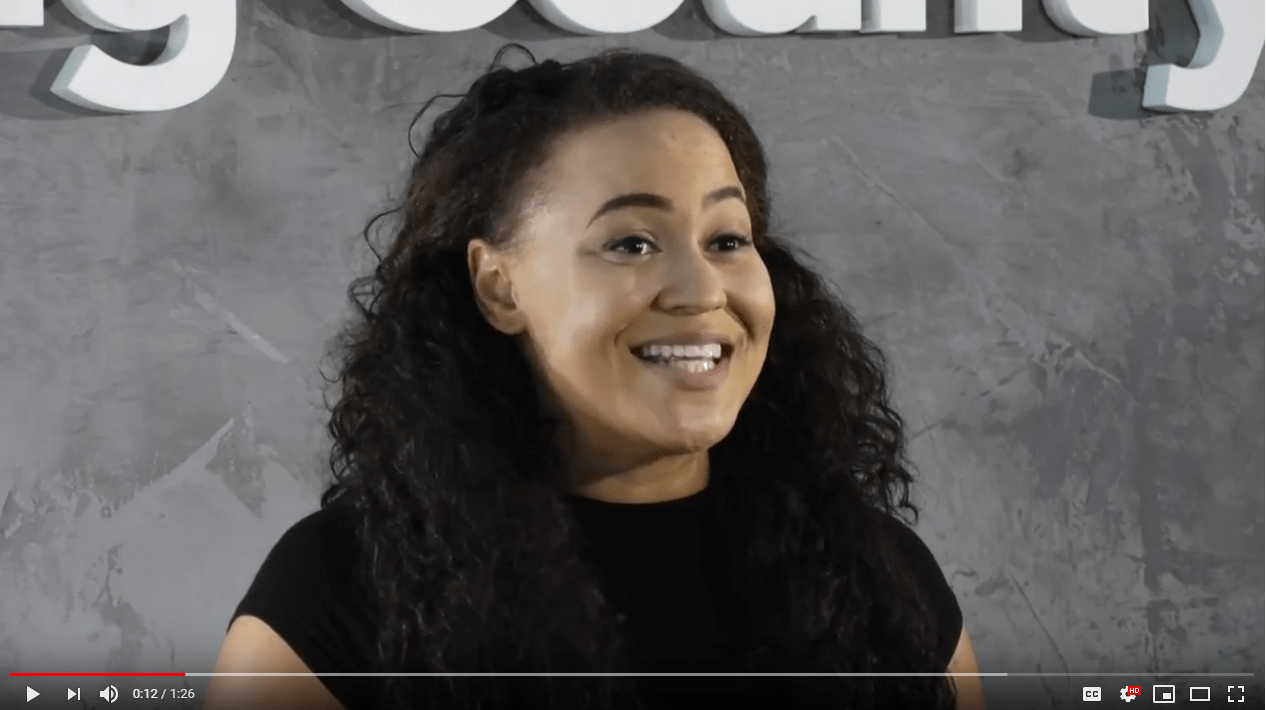
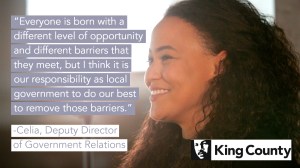 Our final video in our Go Public video series features Celia Jackson, Deputy Director of Government Relations. She also shares about the real impact public service can make.
“Everyone is born with a different level of opportunity and different barriers that they meet, but I think it is our responsibility as local government to do our best to remove those barriers.”
Learn more about our careers at www.KingCounty.gov/jobs.






 Employee News