
Employee engagement, health and well-being at DNRP

When the Department of Natural Resources and Parks’s Wastewater Comprehensive Planning and GIS group sat down to review their engagement survey results, they kept coming back to one thing – improving their well-being. To support each other in this engagement goal, they posted a list of 25 things they can do together, or alone, and place a check next to the item when they’ve done it so the team can encourage each other and hold each other accountable.

John Conway, Water Quality Planner and Project Manager
“There are so many things I love about this engagement action plan,” said Employee Health and Well-Being Manager Janna Wilson. “We know from research that when people share their goals and progress with each other, they are more likely to achieve those goals. And, studies have shown that your own behavior can inspire changes in the health habits of those around you. It’s so powerful that this group is finding a way to build a positive team dynamic through their shared interest in well-being. This is a great marriage of employee engagement and health and well-being, two things that are important to the county’s culture.”
This group of planners well understands the impact of managing risk upstream. They are in charge of looking into the future to ensure that our wastewater system and infrastructure can accommodate the complex and interdependent demands placed on it by population growth, climate change and aging systems. And now they’ve turned this same talent to personal well-being, where the behaviors we engage in daily can have a huge impact on our future health.
“We wanted help managing our own health,” said John Conway, Water Quality Planner and Project Manager. “We wanted to have fun reducing stress. We wanted to build bonds with other staff, promote happiness, improve our diet and help our mental and physical health.”
The group chose well-being from a list of three possible items. First, they met as a staff and reviewed the survey results together and talked about which questions they wanted to focus on. At the end of the discussion they had 11 on the wall and each person got 3 dots to identify their top choices to focus on. Three rose to the top. The team felt the first was not actionable. The others focused on applying equity and social justice skills and health and well-being. To tackle equity and social justice, the team joined in department wide efforts to implement the ESJ strategic plan. To get at well-being, they brainstormed a list of 25 ideas team members could do together or alone. Things on the list include playing ping pong in Occidental Square over lunch, sharing a recipe, and giving someone a compliment.
“We’re a group of planners so we think outside of the box,” said Susan Kaufman-Una, Manager, Comprehensive Planning, Inspection, Modeling, Mapping and Monitoring. “Sometimes we can’t even find the box!”
The list is posted on a “Health and Wellness Tracker” in the work group, where members of the group can anonymously mark when they have completed one of the healthy activities. The most popular things on the list? Walking, exercising and drinking 8 glasses of water.
The most unusual? Coloring, which is attracting participants from workgroups elsewhere on their floor who contribute their own creations to the expanding gallery.

The team coloring area

A completed well-being project
Share this:

Executive Constantine visits KCIT to learn from and thank employees
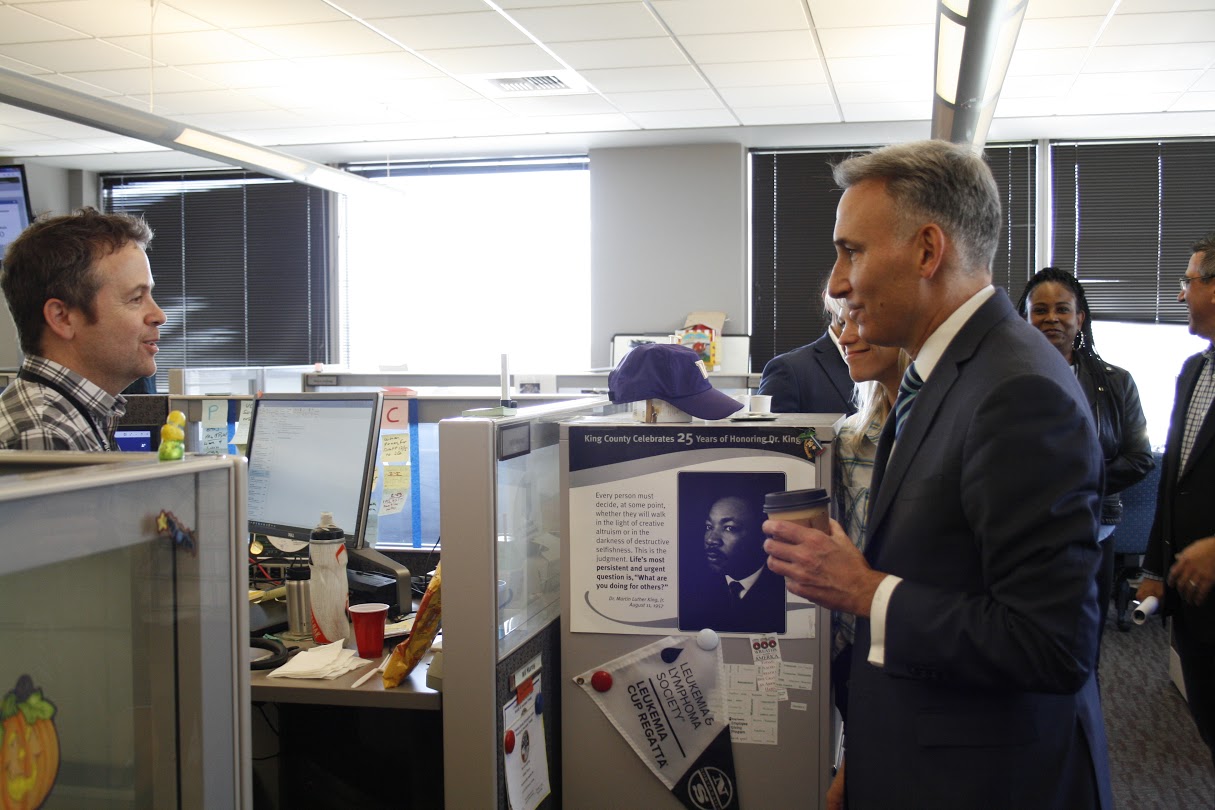
King County has recently been experiencing a wave of phishing attacks on its data and information systems, so King County Executive Dow Constantine visited the County employees who are working to protect our data to learn more about the attacks and thank them for their efforts.
Executive Constantine met with King County Information Technology Operations and Security, Risk, and Compliance staff in the Chinook Building to learn more about how KCIT handles cybersecurity before, during, and after an incident and get an update on KCIT’s security strategy and vision to be better positioned to protect the County from emerging threats.

Executive Constantine visits with KCIT employee Steve Coffing
“The threat from cybercriminals is constant, and KCIT is remaining vigilant to protect our data, technology platforms, and reputation so we can continue to serve the diverse needs of our customers,” Executive Constantine said. “I am thankful for the dedication and sophistication of KCIT employees and their 24/7 efforts to safeguard our data and IT capabilities.”
KCIT has seen a big increase in phishing and spam emails sent to King County employees in recent months. Phishing is an attempt to obtain information from you which gives outsiders access to King County systems.
KCIT’s Security, Risk and Compliance team has completely transformed itself into a frameworks-based unit that allows a more nimble, rapid response to threats while at the same time focusing resources on areas that will deliver the most reduction of risk going forward. New capabilities were brought online within days of the most recent phishing attacks, strengthening KCIT’s ability to protect our employees and assets.
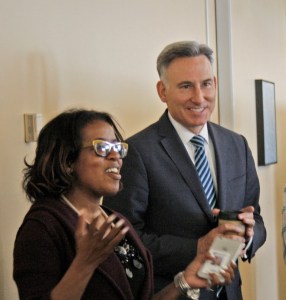
Executive Constantine and CIO Tanya Hannah spend time with KCIT employees
Executive Constantine also met with Customer Support Services staff – who are on the front line responding to customer inquiries and issues and providing IT support – and Network Services employees, who help employees connect to email, SharePoint, Skype for Business, the Internet and other applications.
“Listening in to a customer support call I was struck by the care and knowledge that employees put into making sure their customers quickly get the solutions and answers they need to get back to their work.”
If you have IT concerns or questions, please contact the KCIT Service Center at 206-263-HELP (4357) or log a ticket at helpticket@kingcounty.gov.
Share this:

Tech Tip: Username format for new employees

King County changed the username format for new employees in March 2017 to a single, universal sign on. The new format is simpler to remember, easier to automate for new account creation, and it increases the county’s ability to protect against phishing, scams and other cyber threats.
What is the new username?
For PCs or email, it is the first letter of first name plus the last name. For example, Juan Hernandez would be JHernandez to sign into a PC, laptop, all work stations, and – eventually – PeopleSoft. Juan’s email address would be JHernandez@KingCounty.gov. Not Hernandezj, HernanJ, or any other combination. Simply JHernandez.
What if multiple employees share the same name?
The second employee will use the first and second letter of the first name plus the last name, and the third employee will use the first three letters of the first name, and so on; JHernandez becomes JuHernandez becomes JuaHernandez.
This only affects new employees. Current employees will continue to use the existing naming conventions for the foreseeable future.
Share this:

Expanding mental health services in King County middle schools

Crossposted from Best Starts for Kids
From coping with stress and social pressure to the appearance of mental health needs, many middle schoolers benefit from mental health support as they find their way through adolescence.
We’re thrilled to announce that beginning this fall, middle school students in over 40 King County schools will have more access to mental health screening and services at their school. Best Starts for Kids and the Mental Illness and Drug Dependency levy will combine funds to invest $12.6 million over three years to expand Screening, Brief Intervention, and Referral to Services (SBIRT), a school-based tool to promote mental health and prevent substance use for middle school students. The program will reach as many as 35,000 students each school year.
To learn more about brain development in middle school and the importance of early mental health screening and support, we sat down with a Maggie Milligan, a Prevention Intervention Specialist at the Center for Human Services, and Dr. Meg Cary, Child and Adolescent Psychiatrist at the Department of Community and Human Services. Check out this video to hear from these experts and learn more about SBIRT.
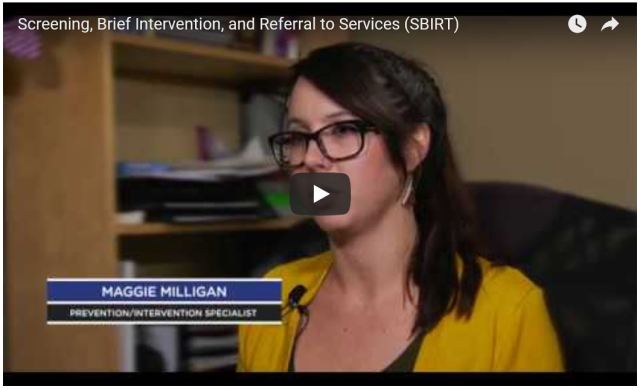
Read the rest of the story on the Best Starts for Kids Blog.
Share this:

Voter Education Fund kickoff was a success!
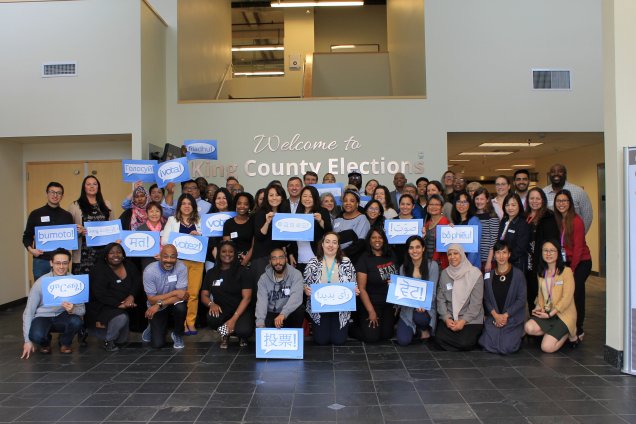
Crossposted from Election Connection
It was a long day of training and information but the recipients of our Voters Education Fund program were happy to participate!
Thank you to every organization who came to our kickoff today and who is doing great things to help expand voter education and outreach to underserved communities throughout King County!
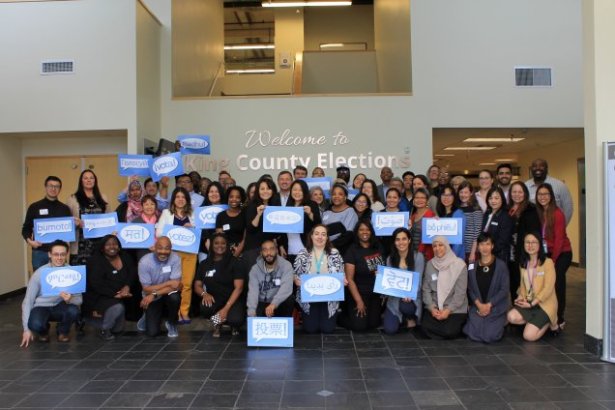
The Voter Education Fund is a government, philanthropic and community partnership led by King County Elections and Seattle Foundation to remove barriers to voting in underserved and underrepresented communities. Through this partnership, 33 organizations are receiving grants totaling more than $460,000 to increase voter engagement in underserved communities.
Big shoutout to our partner the Seattle Foundation and King County Councilmember Rod Dembowski for leading the group and speaking about the importance of this program!
Read the full article for more information on the grantees, to read the press release, and more!
Share this:

Kudos! to Judges Helen Halpert and Veronica Alicea-Galván

Judge Helen Halpert
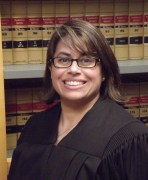
Judge Veronica Alicea-Galván
King County Superior Court Judges Helen Halpert and Veronica Alicea-Galván will be honored at the 2018 Judicial Appreciation and Honors Luncheon sponsored by the King County Chapter of the Washington Women Lawyers. Judge Halpert will be receiving the Judge of the Year Award, and Judge Alicea-Galván will be receiving the Vanguard Award. The luncheon will be held Wednesday, June 27 at the Fairmont Olympic Hotel.
Share this:

The unique niche (and diverse roles) for Public Health nurses
Crossposted from Public Health Insider
When nurses come to work at Public Health – Seattle & King County (PHSKC), they come with a purpose.
“The nurses who choose public health as their practice are strongly rooted in service. They want to be of service to those who are vulnerable,” says Amy Curtis, a Registered Nurse who leads recruiting efforts for Office of Nursing at PHSKC. “There is a strong commitment to equity and social justice.”

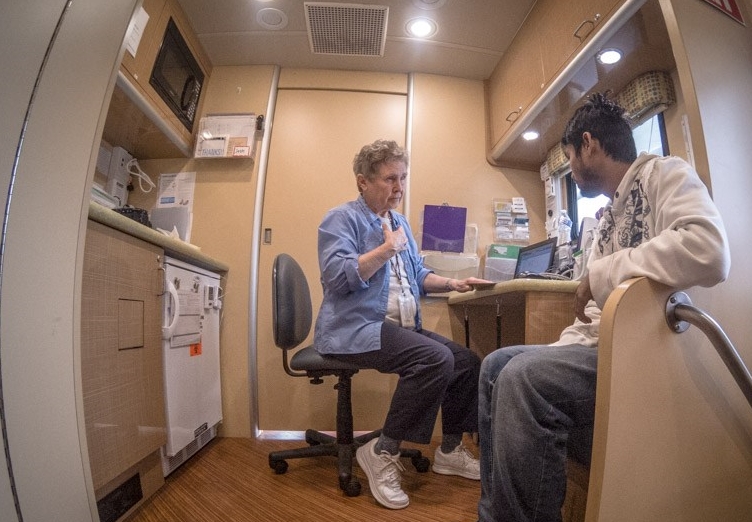
Barbara Huffman, registered nurse on board the Seattle Mobile Medical Van
Despite the national shortage in nursing, we are still finding extraordinary nurses for PHSKC because the work holds so many unique rewards. And with more than 320 Public Health Nurses, it’s one of the largest job classes at the agency.
Public Health nurses are frequently working with King County’s most vulnerable people – whose health is impacted by income, homelessness, addiction, age or other factors. The nurses draw on a combination of technical and interpersonal skills as they:
- Mentor and build trusting relationships with women who are pregnant or new moms who are identified to be at high risk (through First Steps-Maternity Support Services or Nurse-Family Partnership programs)
- Deliver primary care in unique settings, such as inside schools and on mobile medical vans, and at clinics that serve people living homeless
- Educate people with tuberculosis or other communicable diseases, and assist in investigative-work to prevent diseases from spreading (with the tuberculosis clinic or communicable disease team)
- Treat individuals who end up in the County jail and may have injuries, wounds or ongoing health conditions, such as diabetes or hypertension
The breadth of work spans from family planning and sexually transmitted disease clinics, to the Breast, Cervical and Colon Health program.
For National Nurses Week this year, the Office of Nursing is launching a new blog to raise the visibility of public health nursing and encourage nurses to share their stories.
The blog (which is in soft-launch mode this month and is running a contest to help pick a name), features a story from the Associate Dean of Undergraduate Nursing at Seattle Pacific University, Antwinett O. Lee:
“Over the years, many people have asked me why I did not become a doctor and I always tell them that I was called to be a nurse. I chose nursing because of the diversity of roles, experiences, and settings available to the profession of nursing.”
Public Health nursing is considered a sub-specialty within nursing, with a focus on prevention and the social context that impacts an individual’s health – factors ranging from access to healthy food to transportation to education.
“For example, I’m thinking of a recent client with an eight-month-old baby,” says Curtis. “This family had just lost their housing, and they called one of our Public Health nurses, who worked tirelessly to help them find resources and housing. It was emotional, and the impact is lasting for both the client and the nurse.”
Share this:

Deadline for US – The Untold Story Project submissions extended to June 1

US – The Untold Story Project invites employees of color to share their untold story of racism, and has extended the deadline for story submissions to June 1. Stories can be submitted online or hand-delivered to project team members John Miller, Donna Miscolta or Julia Yen.
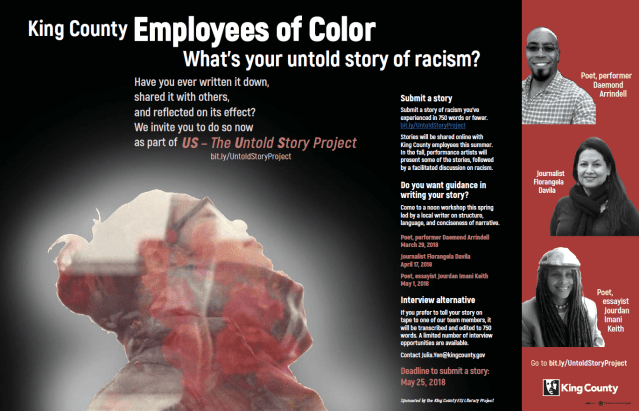 Stories will be available to all King County employees this summer on the project site.
The purpose of the project is to provide an opportunity for King County employees of color to share their experiences of racism in a space dedicated to their voices, and it is part of the ESJ Literary Project sponsored by DNRP’s Solid Waste and Wastewater Treatment Divisions.
For more information, contact Julia or Donna.
Share this:

Social Media Spotlight: King County DNRP Wastewater Treatment Division’s Facebook page

 The #GoPublic employees of King County’s DNRP Wastewater Treatment Division protect public health and enhance the environment by treating and reclaiming water, recycling solids and generating energy.
Sitting behind a desk all day definitely isn’t for everyone! @kingcountywtd hires mechanics, electricians, treatment plant operators and more. Besides great pay & benefits, the skilled trades offer a rewarding career path.
Follow King County Wastewater Treatment Division on Facebook today.
Share this:

Featured Job: Transit Systems (HASTUS) Business Lead (Functional Analyst IV)

Closing: 5/23/2018 11:59 PM Pacific
Salary: $94,320.51 – $114,026.43 Annually
Location: Seattle, WA
Job Type: Career Service, Full Time, 40 hrs/week
Department: Department of Transportation – Transit Division
Job Number: 2018RL08095
Description: This position will be a representative of Metro’s “business side” needs. It will be located in Metro’s Scheduling group, but with clear organizational ties to all logistical/operational support teams including, but not limited to, Scheduling, Operations Systems Support, and Rail) involved with the HASTUS suite of products. The position requirements include leading, facilitating, and organizing Metro’s HASTUS User Community, sometimes remotely, and sometimes directly, in person.
Contact: For more information, contact Sr. Human Resources Analyst Reeshema Lewis at (206) 263-8413 or Reeshema.Lewis@KingCounty.gov.
Learn more about this position or all available jobs.






 Employee News