


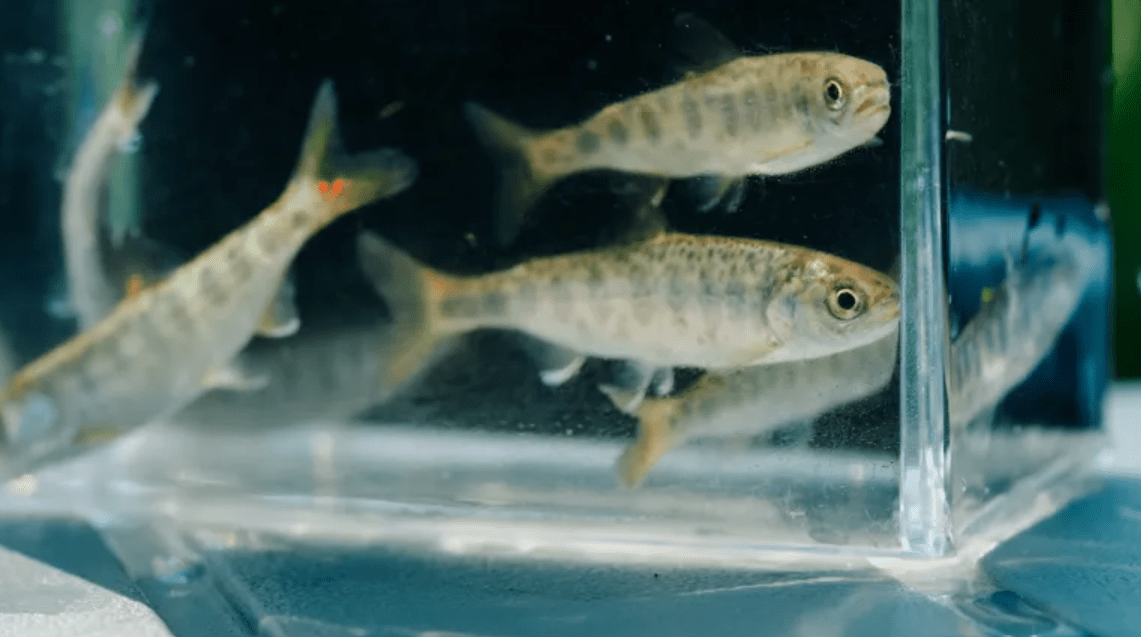
A unique partnership created 25 years ago in King County has so far reconnected 730 acres of floodplain, completed 719 salmon recovery projects, and planted nearly 1,500 acres of native vegetation in riparian areas. The partners recently signed a new agreement that will sustain the effort for at least the next decade. Read more.
Join State Attorney General and County Executive at event recognizing Black History Month, Feb. 3

Employees are invited to join Washington State Attorney General Nick Brown and King County Executive Girmay Zahilay at an online event recognizing Black History Month on Tuesday, Feb. 3.
Attorney General Brown will talk about key milestones in Black history for our region and discuss his own journey into public service. He will be welcomed and introduced by King County Executive Girmay Zahilay.
- Tuesday, Feb. 3, 11:30 a.m. to 1 p.m. on Zoom. Register here.
This is a County-sponsored event and King County directors, managers, and supervisors are encouraged to permit employees to join, if possible. Please refer to the Employee Attendance at County-Sponsored Events HR Policy for more information about employee attendance at County-sponsored events.
Share this:
Discount available to upcoming Seattle Kraken hockey games and Cirque du Soleil ECHO performances

Employees are now able to take advantage of additional Seattle Kraken hockey games. Below are the available dates and information. Purchase tickets here.
- Monday, Jan. 19 at 2 p.m. Seattle vs Pittsburgh Penguins
- Wednesday, Jan. 21 at 6:30 p.m. Seattle vs New York Islanders. Additionally, this evening is Pickleball Night. Every ticket purchased comes with a limited-edition Kraken pickleball paddle case.
- Friday, Jan. 23 at 7 p.m. Seattle vs Anaheim Ducks
- Tuesday, Jan. 27 at 7 p.m. Seattle vs Washington Capitals
Additionally, employees can also purchase discounted tickets for Cirque du Soleil ECHO, being performed at King County’s Marymoor Park from Jan. 30 to March 22. Use this link to save up to 20% off select seats/dates. For VIP Packages and groups, contact Sarah.Hudson@cirquedusoleil.com for details and added savings.
See all available discounts on the Employee Discount intranet page.
Share this:
Calling all artists! Create a Metro bus shelter photomural

Crossposted from Metro Matters
Are you a photographer or artist interested in adding beauty to a King County Metro bus shelter? Metro is teaming up with Photographic Center Northwest (PCNW) in a call for images to be installed as public art in our bus shelters.
The theme, “Show Us Your World – Cultural Heritage,” is intended to explore personal, cultural identity, and connection, or anything meaningful and important in your life. While all submissions will be considered, artists who want to submit images that represent their interpretation of “Show Us Your World” can present photos that express:
- Culture, values, and traditions that have been passed down from previous generations,
- Contributions of women and gender-diverse people,
- Shared bonds within a community,
- One’s history, identity, and bond to the past, present and future.
Submissions will be reviewed by a panel of jurors from King County Metro and PCNW.
Entries can be submitted Jan. 12 to Feb. 8, through the Online Competition Application Form link. Read more.
Share this:
View your W-2 form

A paper copy of your 2025 W-2 form was mailed to you by ADP on Friday, Jan. 9, 2026, at the address you have listed in PeopleSoft. Your W-2 will also be available to view and print from PeopleSoft starting tomorrow, Jan. 16, 2026.
To view or print your W-2, log in to PeopleSoft, choose the Payroll tile, then go to “View W-2/W-2c Forms.” You can also access W-2 forms from any device by registering at the ADP website using these instructions: Access W-2s through ADP.
Your Form 1095-C — Employer-Provided Health Insurance Offer and Coverage — will be mailed to your home address by ADP by Jan. 31, 2026. This form is informational only — it shows whether you were offered health insurance by King County last year.
For questions about the information on your W-2, please see W-2 Form Guide. Information is also available on the IRS website. Reprint requests for 2024 W-2 forms are accepted after Feb. 15. If you need help with PeopleSoft, call the IT Service Center at 206-263-4357. If you have questions about Form 1095-C, please see About Form 1095-C or contact Benefits, Payroll and Retirement Operations at 206-684-1556 or KC.Benefits.
Share this:
Dr. Martin Luther King, Jr. holiday is Jan. 19

King County offices are closed on Monday, Jan. 19 to observe the Dr. Martin Luther King Jr. Day holiday. All offices will be back to normal schedule on Tuesday, Jan. 20.
Click here for Metro Transit holiday bus schedules.
If you have questions about your holiday schedule, please speak to your supervisor. Have a safe and healthy holiday.
Share this:
2026 Professional Development Scholarship launches Tuesday, Jan. 20

New this year, the Scholarship Program is now open to non-represented employees, in addition to employees represented by one of the unions in the Coalition.
The Professional Development Scholarship Program is designed to assist eligible employees with their professional development by providing financial assistance towards obtaining training, certificates, degrees, licenses, and certifications.
The first application period for the 2026 Professional Development Scholarship Program opens Jan. 20 to Feb. 27 for training that begins in 2026.
Applicants should visit the scholarship intranet page to familiarize themselves with the revised application submission process, rating criteria, and frequently asked questions.
Share this:
HR communications professionals make lasting impact through their work
By Greg Wilson, Environmental Health Services Division, Public Health – Seattle & King County
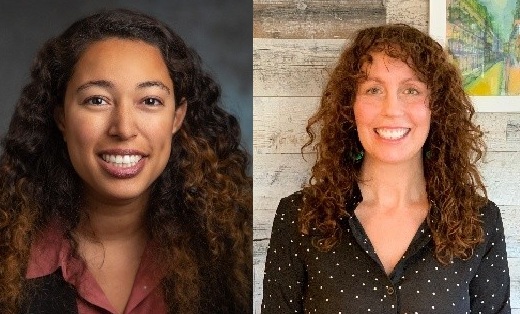
When individual talent meets genuine care for community, extraordinary things happen. This is evidenced through communications specialists Lilia Cabello Drain and Joanna Gangi, within the Department of Human Resources (DHR). Their daily work demonstrates how authentic commitment transforms routine tasks into meaningful community service. Read more.
Share this:

Monitoring in action: DPD builds a workforce that values belonging and shared vision
By Priscilla De Andrade, Administrative Staff Assistant, Public Health
Ava Michler spoke with Matt Pang and Jeannette Quintero about the Department of Public Defense’s (DPD) new outreach initiatives for recruiting prospective applicants and a cohort model for new hires. Their recruitment initiatives resulted in a dramatic increase in the number of successful applicants.
Outreach is a collaborative process across DPD teams, where they actively use continuous improvement strategies, metric tracking, and innovation to find and hire lawyers that align with their mission. They are also invested in creating a workplace culture that breaks down silos and invests in employees. Read the full story here: DPD Builds a Workforce that Values Belonging and Shared Vision
Take a moment to check out this story, and explore others in the Monitoring in Action section to see how King County programs are turning data into impact.
|
|
Share this:

MRJC hosts ceremony for 30 high school grads
Crossposted from the DAJD Employee Newsletter
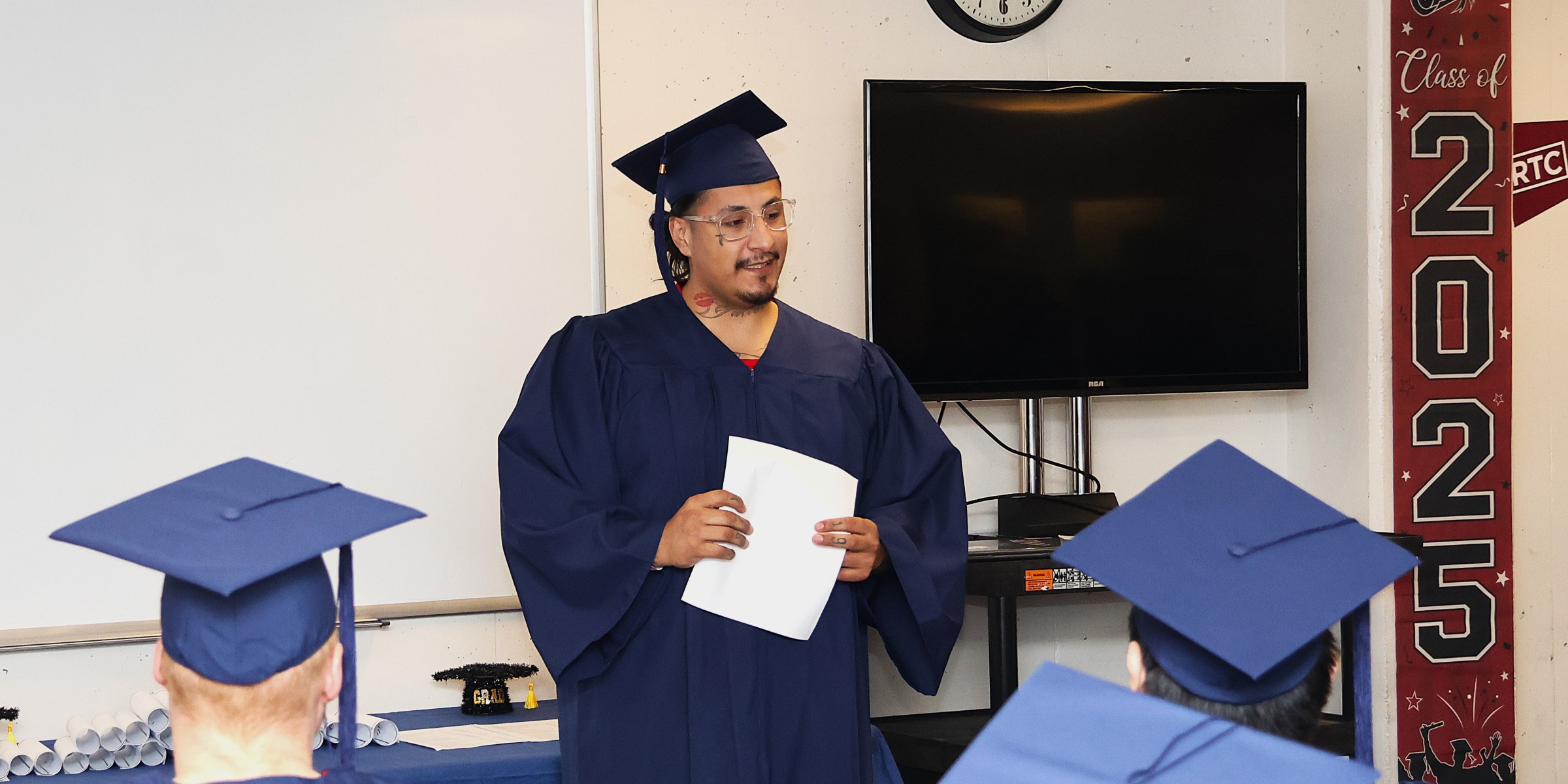
Twenty-six men and four women attended graduation ceremonies inside the Maleng Regional Justice Center (MRJC) on Dec. 10, 2025. The jail hosts the high school equivalency program in partnership with Renton Technical College. Read more.






 Employee News