Employee Transportation Program gets you moving
Did you know that your King County ID and Orca card open doors on buses, trains and ferries across Puget Sound? As an employee, you have access to nine modes of transportation – covering land and water – from bus services to trains, water taxi to ferry. Get with the Employee Transportation Program (ETP) to reap the benefits of zero cost for fare, gas and zero wear and tear on your vehicle.
Watch the video below to learn more about your ETP benefits. For more information, contact Hossein Barahimi, ETP Program Manager, at 206-477-5853 or Hossein.Barahimi@kingcounty.gov.
Seeking submissions: Love notes to King County’s natural resources
Crossposted from Keeping King County Green
What connects us? The beauty of our region. And what better time to celebrate our region’s beautiful natural resources than on Valentine’s Day.
King County Department of Natural Resources and Parks wants to learn what you love and appreciate about our region’s natural resources. We want to see your love notes to and about your favorite trail, hike, lake, river, natural area, scenic view or environmental action to take. Did you know that King County Parks has 200 parks, 215 miles of backcountry trails, 175 miles of regional trails, and 28,000 acres of open space to pay homage to?
Read more at Keeping King County Green
Kudos! Factoria Redevelopment Project receives awards
The King County Solid Waste Division’s recently completed Factoria Recycling and Transfer Station redevelopment project has been honored with two awards that exemplify King County’s commitment to sustainable building. In late November 2017, the project receive the “Green Project of the Year Award” from the Northwest Construction Consumer Council, and in late January, the project received the “Environmental Silver Award” from the American Council of Engineering Companies. Judges cited the project’s commitment to sustainable design and construction, as well as the innovative use of recycled materials, enhanced recycling services for customers, and the projected LEED Gold certification as reasons for the awards.
A multi-year project, the new facility, located in Bellevue, offers a wide array of recycling services, a new household hazardous waste facility that allows customers a place to dispose of these materials in an environmentally-responsible way, and two pre-load compactors that increase the efficiency of loads transported to the landfill by about 30 percent, thereby reducing the number of transfer trailer truck trips to and from the station. The facility also has sustainable design features that improve energy efficiency, including translucent skylights and window panels that allow natural light into the building, rainwater harvesting, recycled content building materials such as steel, asphalt, and concrete, and landscaping with drought-tolerant plants.
Upcoming Lunch and Learns hosted by Department of Public Health on Feb. 21
The Continuous Journey for Civil Rights Employees are welcome to attend this Lunch and Learn to hear reflections from participants in Project Pilgrimage’s Fall 2017 civil rights pilgrimage to the Deep South. Project Pilgrimage builds interracial and intergenerational communities in Washington state and beyond by studying, understanding, and gaining inspiration from transformational movements and individuals. This presentation will describe Project Pilgrimage, experiences of the Fall 2017 cohort, and discuss ways to engage in and support civil rights. This Lunch and Learn is presented by Devon Love with Vroom Activation and Help Me Grow Systems Manager, and Audrey Vaughan, Program Manager with 98point6 Inc. This event will take place Wednesday, February 21 from noon to 1:00 p.m. Chinook Building, Rooms 121/123.
Orlando Medical Examiner’s Response to the Pulse Nightclub tragedy with Dr. Joshua D. Stephany, M.D. King County employees are also welcome to attend this presentation by Dr. Joshua Stephany, the Chief Medical Examiner in Orlando. Dr. Stephany will present the medical examiner response to the Pulse Nightclub tragedy. Dr. Stephany received his M.D. in New York and trained in Forensic Pathology in Miami. He is certified in Anatomic and Forensic Pathology by the American Board of Pathology. In his presentation for the King County Medical Examiner’s Office Forensic Pathology Conference, Dr. Stephany will walk attendees through the response and challenges that he and his staff faced through the days following the mass fatality incident. Dr. Stephany hopes his analysis of the tragedy and response will help other cities and their medical examiner offices prepare for a similar occurrence. This event will take place Wednesday, February 21 from 11:00 a.m. to noon at the Harborview Medical Center Research and Training Building Auditorium, 300 Ninth Ave, Seattle, WA.
All King County employees welcome, but space is limited. For more information contact Olga Alexander at Olga.Alexander@kingcounty.gov.
RASKC’s 2017 Year in Review
Crossposted from Tails from RASKC
Over the last few years Regional Animal Services of King County (RASKC) has gone through several transformations, putting more emphasis than ever before on connecting with the community and improving quality of life for the animals in our care. By the end of 2016, RASKC had officially reached a 90% Live Release Rate (LRR), meaning nine out of ten animals that come through the door are adopted to new families or returned to their original owner. By the measure of many in the animal welfare field, this is an important milestone in our journey to help the animals in our shelter’s care. While being thrilled to have reached this milestone, we asked: What’s next? How can we help even more animals? What other impacts can we have on the community?
Read more at Tails from RASKC
Careers that matter: We’re accepting applications for paid summer internships through Feb. 25.
Crossposted from Clean Water Stories
It’s never too early to make plans for summer break. This year, why not get paid to come and make clean water with us?
WTD is now taking applications for our 2018 summer college internship program through Feb. 25. These aren’t the “get my coffee, do my filing” kind of internships, either. From construction management to communications and everything in-between, WTD’s paid internships offer hands-on professional experience and an opportunity to explore careers in the clean-water field.
With the guidance of a mentor, you’ll work on real projects with real responsibilities, all while earning a paycheck and enhancing your studies. The best part about working with us? You’ll get to do something awesome for the environment every single day.
Read more at Clean Water Stories
County ambassadors: Our platform, your voice
Do you love public service? Do you enjoy sharing your workplace accomplishments? Employee Communications has the social media platforms. You have the story.
How does it work?
Our team is looking for County employees to share their stories via our social media to promote King County as a great place to work, live and play. Email us a selfie (photo of yourself), your position and a one to three (1-3) sentence blurb about why you love working here. Our team will share your testimonials on our social media accounts in Employee News.
Who can participate?
Social media posts are public, and all current King County employees, regardless of employment type, are eligible to share their experience about working for the County.
What topics can I talk about?
Ask yourself, “Why do I love coming to work?” The following are a few ideas to get you started:
- Individual workplace accomplishments
- Colleagues
- Professional development opportunities
- Your customers
- Aligning to your values
To participate as a King County ambassador, email the following to KCEmployees@kingcounty.gov:
- Selfie (photo of yourself)
- Your workplace role
- One to three sentence blurb explaining why you enjoy working for King County.
Getting on the tech curve is a straight line to solutions
New online scheduling tool smooths out in-person visitation at Maleng Regional Justice Center (MRJC)
This article is shared from the Department of Adult and Juvenile Detention’s In Depth column and is featured courtesy of Linda Robson, Communications Specialist with the Department of Adult and Juvenile Detention.
When we walked into the reception area at MRJC on a Thursday morning, the area that would have been bustling with people lining up for in-person visitation just a few days before was now as vacant as a ghost town, the blue-white glow from the video visitation kiosks and the vending machines casting an almost eerie pall on the empty room.
“Oh, even just a few weeks ago, there would be times during the day when you’d have people lined up out the door,” said Terri Tewey, Business Fiscal Specialist at DAJD.
It turns out that just a little bit of technology can go a long way in smoothing out jail operations. The empty reception area is thanks to a new online scheduling tool for in-person visitation at MRJC, and the goal is to get it set up at KCCF by the end of March.
According to DAJD’s Chief Financial Officer Vicki Day, it’s a move that’s been a long time coming, but definitely was worth the wait. “People really like it a lot better,” says Day. “The whole idea is to offer the public more options, more access, cheaper access, and at the same time offer our staff smoother, easier operations, and a more predictable schedule.”
A web-based scheduling program sounds like a deceptively simple bit of tech, but the rollout of this new online scheduling tool has been several years in the making, and the project has had several fits and starts before finally crossing the finish line and going live at MRJC in December. Launching the online scheduling tool was actually part of the contract awarded to Securus in 2015, but it wasn’t until Securus acquired a company called Archonix Systems that the platform was finally available to implement that part of the contract.
On DAJD’s side of the equation, the project also bounced around between a few different staff members before finally landing on Terri Tewey’s desk. “How it all started was that Pat Presson, who was the CFO, was the project manager for this because (at the time) all of the project managers were on the mainframe re-host project, so there were no project managers available,” says Tewey. “And then she brought me in for training purposes, and to be her eyes when she couldn’t be on it herself. And then, well, she retired…”
Tewey says the project floated for a while between various staff members, an orphan that seemed to be generally in the wheelhouse of many, but not a really good fit for any one staff member.
“For me, I’d done the video visitation part (of the Securus contract) and this was the last piece, so I wanted to see it through,” said Tewey on her decision to adopt the project herself. “I also knew that the director wanted this to happen.”
For his part, Director Hayes is glad to see the project rollout has finally arrived. “Actually, I wanted this part more than the video visitation because of the obvious operational benefits,” said Hayes. “I always knew this was the way to go.”
In just a matter of weeks, the technological investment is already paying dividends. The empty reception area bathed in dim blue light is proof positive that it’s working.
“Before, the public used to come in same-day, based on a schedule,” says Tewey. “They would say, ‘I’m here to visit this person,’ and then they’d have to stand in line and wait until a booth was available, if there ever was one available, and they had to wait while their warrants and no contact orders were researched and all of that. Now they just have to show up 15 minutes before their visit time and put their stuff in the lockers and just go through, because they’ve already been run for all that stuff the night before.”
The old system limited visiting hours based on an alphabetized schedule—a schedule that could be difficult to understand and adhere to for family members and loved ones. The new system allows visitors to schedule in advance, and is no longer limited based on how the last name of the inmate is spelled.
“You know, we’d have a lot of people complain that their visits were only one day during the week and their family could only come on the weekend, or vice versa,” said Day, “but now they can come anytime, and they can reserve up to two weeks in advance.”
Tewey adds, “The benefit is that they know they have a scheduled visit at a certain time on a certain day, where they didn’t know before if they could even get in.”
The benefits of the new system are big, and they’re not just logistical improvements. The new online scheduling system has improved the overall mood and stress level for everyone involved.
“Sometimes, you’d have grandma taking three buses to get here to visit her grandson, and then she gets here and she can’t get in and get a visit time. Or she came on the wrong day. There was a lot of that,” Day said. ”And confusion—like ‘is it the letter of their last name or my last name?’ or they’d miss the time, that kind of thing.”
Day says, “Imagine how you’d feel if you came from Eastern Washington to visit your kid, drive five hours to get here, and they said, ‘no, his day’s not for three days.’”
Tewey adds, “Yes, yelling at you because they traveled for hours and now can’t get in.”
The new system has added a lot of flexibility for visitors, and the speed and ease of check-in has reduced the anxiety and tension that before could easily boil over into confrontations and heated exchanges with staff. Both visitors and staff members have noticed the difference.
“The visiting control officers have so far been really positive. Those are the staff members who are impacted the most by this,” says Tewey. ”There’s not a big crush of people at one time waiting to get in, and getting angry when they can’t.”
When asked if he’s seen an improvement in how in-person visitation runs on a daily basis, Officer Chris Santos says, “Oh yes, this is much easier.”
“On first shift we get a lot of professional visits,” he says as he stands next to the idle screening station in the vacant reception area. “This system makes it a lot easier to manage both them and (family visitors) at the same time.”
While web-based scheduling systems are not necessarily new on the technology scene, in the law enforcement industry, the King County Department of Adult and Juvenile Detention is one of the first clients to deploy the Securus platform. Tewey reports that other than Travis, Texas, she doesn’t know of any other jail system that’s using an online self-serve scheduling system like this one. “If anyone else has it,” she says, “it’s an in-house product that they’ve developed themselves.”

Pictured: DAJD Chief Financial Officer Vicki Day speaking with corrections technicians in the reception area.
Beyond controlling the basic flow of in-person visits at the Kent facility, the new system now gives staff the capability to track the visits an individual inmate receives, and make sure no one is getting more than their fair share of face time with their loved ones. It means the new system makes visitation not just more efficient, but also more fair and equitable.
“We wanted to be able to track window visits on the administrative side,” explains Tewey. “We’re trying to track and limit visits, and we couldn’t do that before. It means that someone can’t come in and get 10 visits in one week when they’re not supposed to, and then they’re taking up those 10 slots and other people can’t get visits because there aren’t any slots left for them.”
“It’s an automated way of being able to track visitations to make sure they’re not getting more than they’re allowed,” adds Day. “It makes it fairer.”
Beyond ensuring that visitation is evenly distributed, the new technology also improves the fairness of the overall jail system, and breaks down the barriers of distance and income that can stand in the way of inmates keeping the family connections and support systems they’ll need when they return to the community.
“From a social equity and social justice perspective, it really kind of levels the playing field,” says Day. “Providing access to the community that’s free and convenient is huge.”
“It’s the public access that’s the big thing.”
Even when the barrier to access is the use of technology itself, DAJD project staff have made great strides and worked closely with the vendor to make sure that people have multiple avenues to access the online tool and get help when they need it.
“You can use a computer, a tablet, a smartphone—really, any mobile device, because it’s done through a simple website,” says Day. “If they don’t have a phone, they can go to a library and use the computer.” There’s even a small laptop computer station in the MRJC reception area that the public can use that was set up specifically to give people access the tool and schedule their in-person visitation appointments. “They can come here to the laptop, or they can do it from home.”
Day continues, saying, “We (also) get a lot of elderly people who don’t have an email address, so we’ve had people here help them set up an email address” to access the online tool. For those who simply don’t have the computer skills or wherewithal to do it themselves, corrections technicians can assist them with the web tool and get their account set up.
“I think it says a lot about DAJD that we are working to try and make it more user friendly and provide more access to the public,” says Day.
Officer Kurt Hansen has noticed the difference in the operation and in the attitude of visitors. “They used to be lined up out the door,” he says. “And it could get complicated at the end of visiting hours. Sometimes it would be 9:45 before a booth would open up, so the person finally gets checked in and sent back to the booth, and then five minutes later we’re telling them they have to end it because we’re closing, and they’re yelling, ‘I just got here, I’m not done!’”
“Now, you just walk up, go through the metal detector, over to the window, get your booth, and you’re on your way.” Hansen says the new system makes the operation a lot more predictable now, and it makes the interactions between officers and visitors a lot more predictable, too.
Officer Santos sums it up with just two words, a gleam in his eye, and a flash of a smile. “I approve.”
Interview with Erin James, Outreach Marijuana and Opiate Prevention Coordinator
Shared from the DCHS Touching Base Newsletter
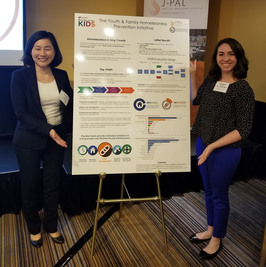
What do you do in the Department of Community and Human Services?
As part of the Youth, Family, and Prevention Section of the Behavioral Health and Recovery Division, my role is to focus on both opioid prevention and youth marijuana prevention and education.
My opioid work is funded through Mental Illness and Drug Dependency (MIDD), and consists of staffing the Primary Prevention workgroup (one section of the holistic body of work implemented by the King County Heroin and Prescription Opiate Task Force) and implementing its recommendation strategies. The Primary Prevention workgroup focuses on “preventing” opioid related problems before they start through the strategies of education, promoting King County’s permanent secure medicine take-back program, and supporting Screening, Brief Intervention, and Referral to Treatment (SBIRT) programs implemented by the MIDD and Best Starts for Kids (BSK) initiatives focusing on youth and adults. One of the most exciting pieces of this work has been to coordinate an opioid education series with the King County Library System, where Task Force members, partners, and treatment providers provided panel presentations at seven community locations on seven topics of interest.
Moreover, I have had the privilege of supporting overdose prevention and education through MIDD funded Naloxone education and support programming. This work coordinates training of providers and partners (law enforcement, Emergency Medical Services, homeless housing, and others) in how to recognize the signs of opioid overdose and how to reverse opioid overdose using the life-saving drug, Naloxone.
My youth marijuana prevention work is funded by the Department of Health Youth Marijuana Prevention and Education Program (YMPEP) and is done in partnership with Public Health – Seattle & King County. Together, we connect with individuals, partners, and communities to develop regionally informed and culturally appropriate strategies to address youth risks which increase the likelihood that they will engage in substance use, and specifically, youth marijuana use, which can be problematic to the developing brain and can get in the way of academics and other core youth activities.
What’s something about yourself that people may not know?
I used to do community theatre (musicals), when I lived in Quincy, Washington. While in Quincy, I got to be involved in lots of fun and rewarding experiences, such as serving on the worship team as a singer, being a youth group leader, and helping co-lead Girl Scouts and Campfire groups. My favorite work is in youth leadership and the mentorship that naturally goes along with it. Lastly, I really like dance fitness. If anyone knows of a place where I can do “Mixxedfit” every day, I am interested to know… and then I will move there!
To learn more about what DCHS is doing in our community, read the most recent issue of the Touching Base Newsletter (on SharePoint).
US – The Untold Story Project invites stories from employees of color
As someone who identifies as a person of color, what is your untold or unheard story? This is the question US—The Untold Story Project asks King County employees of color.
US-The Untold Story Project is part of the ESJ Literary Project sponsored by the Solid Waste and Wastewater Treatment divisions. The purpose of US is to provide an opportunity for King County employees of color to share their experiences of racism in a space dedicated to their voices. In a system in which they may have felt marginalized as other, employees of color can shift the traditional narrative to center their story.
To participate, employees of color can submit their story of 750 words or fewer at bit.ly/UntoldStoryProject. Stories are due by Friday, May 25, 2018.
The project has three components: Optional story development workshops, story submittal and presentation on website, and live performance of selected stories.
Optional story development workshops
Before submitting their stories, employees can attend a workshop led by a local writer. To help guide employees in identifying a story that can be told in 750 words or fewer, the workshop leader will cover the following:
- Discovering the story
- How to identify the key element in your story
- Scene vs. exposition
- How to edit your own story
Employees can sign up for the workshops, held from noon to 1 p.m., at the links below.
- March 29, King Street Center, with poet and performer Daemond Arrindell
- April 17, King County Elections, with journalist Florangela Davila
- May 1, Chinook Building, with poet and essayist Jourdan Imani Keith
Workshop leaders Daemond Arrindell, Florangela Davila, and Jourdan Imani Keith are accomplished local artists who are also dedicated to social justice and elevating voices that might otherwise go unheard.
A few participants at each workshop will be randomly selected for the opportunity to submit a draft of their story to the workshop leader for additional general feedback. Drafts must be submitted to the workshop leader within a week following the workshop. The artist will provide written comments within two weeks of receiving the draft.
Story submissions
Stories are due Friday, May 25 to the Untold Stories website. Stories will be shared online with King County employees. If preferred, stories can be published anonymously.
Employees who prefer not to write their story, may request to tell their story in a taped interview with a project team member. The interview will be transcribed and edited down to a 750-word story. A limited number of interview opportunities are available. For more information, contact Julia Yen.
Performances
In the fall, performance artists will present some of the stories. Following each performance, a facilitator will guide the audience in a discussion on how we respond to racism and how we listen to stories by those affected by racism.
Members of the King County ESJ Literary Project are John Conway, Ericka Cox, Kimberly Diaz, Kirsten Garcia, Donna Miscolta, De’Sean Quinn, Debra Ross, and Julia Yen.