
DPD’s Lorinda Youngcourt elected to national steering committee
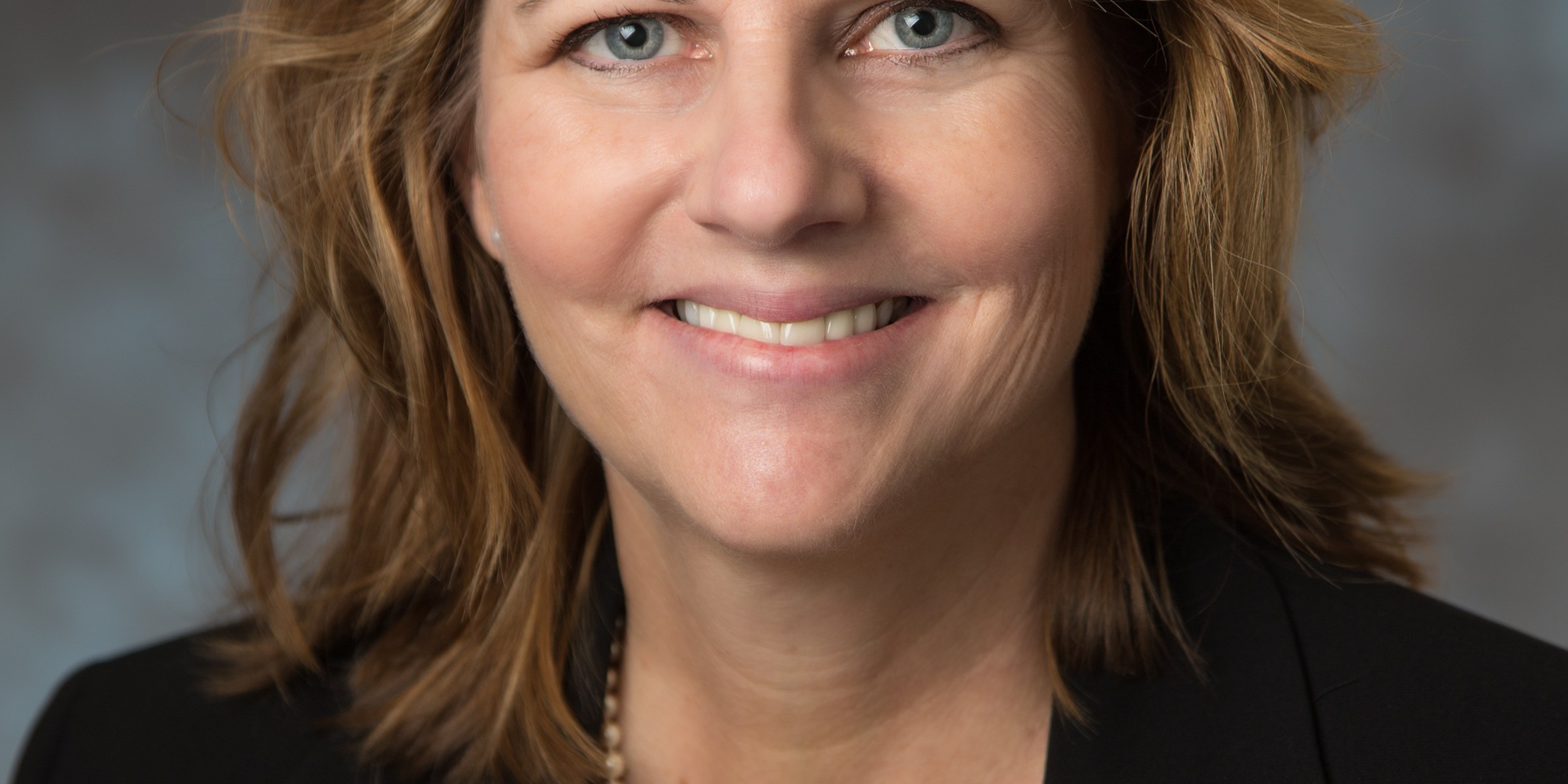
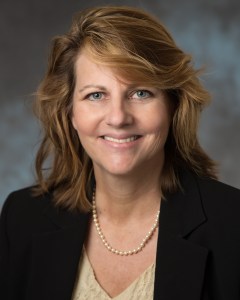 Congratulations! Lorinda Youngcourt, the King County Director of the Department of Public Defense, has been elected to the Steering Committee of the National Association for Public Defense.
The Steering Committee is comprised of member-leaders who have risen to distinction through their contributions to the National Association for Public Defense NAPD. It guides the organization with a primary goal of shaping it into a self-sufficient and self-governing entity.
Lorinda was a unanimous electee, and her term is effective as of January 18.
Share this:

PSB deputy director receives rare boats and chance of a lifetime

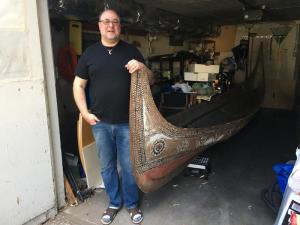 Recently Michael Jacobson, the Deputy Director for Performance and Strategy with the County’s Office of Performance, Strategy and Budget (PSB), was highlighted in a radio and online piece by KNKX. The piece, entitled “Almost 30 years In The Making, A Seattle Man Gets Ahold Of Two Boats From Taiwan,” shared Michael’s passion for the tatala, an indigenous boat from Taiwan.
“It is made up of 21 pieces of wood that have been very carefully custom carved to fit together. There’s pegs holding these pieces of wood together. You see the puzzle shaped nature of this. There’s no nails. There’s no glue.”
Learn more about this rare boat and Michael’s new connection to a community half way around the world in the original article here.
Share this:

Breaking down the Employee Survey Results: Leadership

The results of the 2017 Employee Survey are out and we’re sharing some of the findings in key areas of the survey. This week we’re looking at leadership.
- Q5. County leadership has/have a clear vision for the organization: 56% agree | 25 % neutral | 12% disagree. This is a 4 percentage point increase from last year.
- Q6. County leadership communicate(s) the organization’s mission and goals: 58% agree | 24% neutral | 12% disagree. This is a 4 percentage point increase from last year.
- Q7. County leadership is/are visible to employees: 39% agree | 29% neutral | 28% disagree. This is stable from last year.
- Q8. County leadership communicate(s) openly and honestly: 39% agree | 35% neutral | 18% disagree. This is a 3 percentage point increase from last year.
- Q9. County leadership model(s) the behavior they expect of me: 41% agree | 34% neutral | 15% disagree. This is a 2 percentage point increase from last year.
We are now acting on what you told us and are launching our action planning process to ensure we are addressing these and other issues you said are important to you.
You can see the full survey results here (intranet). Employees in all branches and departments of King County, except the Superior Court, District Court and the Sheriff’s Office, and employees who are not Short Term Temps, interns or started before August 25, 2017, were invited to participate in the survey. Note: numbers may not add up due to “I don’t know” and “Not applicable” choices.
Share this:

From the Hip: Christie True, Director, Department of Natural Resources and Parks
Let’s get growing: One million trees by 2020

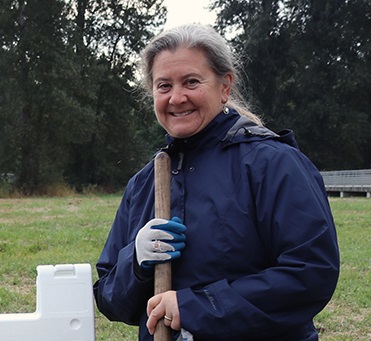
Pictured: Christie True, Director, Department of Natural Resources and Parks
As someone who has lived her whole life in the Evergreen State, I have always had a strong affinity for the trees that define our landscape and so much of our lives. As a kid I remember being amazed that you could determine the age of a tree by counting its rings. As a college student learning about our Native American history and the first settlers, I was struck by photographs of enormous Douglas firs that grew right up to the edge of the water, like giants protecting the shoreline.
Trees just make life better: They offer shade, clean the air and water, contribute to healthy habitat for fish and wildlife, prevent flooding, and just by their presence can make an area feel nicer. What’s more, they efficiently store carbon and play an enormous role in our department’s efforts to cut carbon pollution and respond to a changing climate.
This is why I’m so happy that Executive Constantine launched the effort to plant a million trees in our county by 2020, coordinating with local governments, non-profit organizations and private companies. Planting 1 Million Trees is something we can all make happen and is a fundamental part of King County’s Strategic Climate Action Plan to reduce carbon pollution and prepare for climate impacts.
Whether you plant a tree by yourself or with colleagues, friends, or family, it feels really good. I hope all King County employees will have the opportunity to plant a tree. For the 2017 planting season our volunteer program planted more than 26,200 native trees and shrubs at 35 different King County Parks sites. This effort included planting nearly 17,000 trees for the 1 Million Tree campaign. This is an increase of 5,000 trees over 2016 effort for this program. More than 1,200 individuals put in nearly 4,300 hours of effort to make this happen.
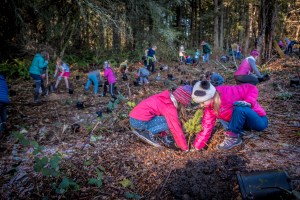
Pictured: Child volunteers planting trees.
One of my favorite planting events from this year involved 70 fifth graders who came to Big Finn Hill Park in Kirkland to plant trees and shrubs in an area that used to be overgrown with blackberry vines. These amazing students and chaperones managed to plant 34 trees and 193 shrubs in the park that day. I’m proud of these numbers and equally proud of all the people in the Department of Natural Resources and Parks who facilitate these events, often multiple times a week.
Part of the reason we are seeing strong volunteer participation is because of how easy it is to plant a tree in one of our parks. We provide everything you need, shovels, gloves and, of course, trees! We just need people who are unafraid to get their hands dirty and spend a few hours doing something great for our environment. It’s also a fun team-building opportunity for employee groups, community organizations and friends and family. A big benefit to planting trees in our parks is that our employees will work to make sure those trees are happy and healthy for their entire life, meaning that years from now there is a stronger chance that you can see the sapling you planted all grown up.
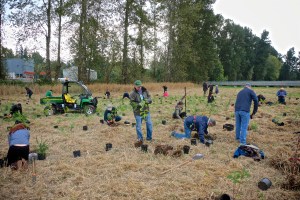
Pictured: Volunteers planting trees.
We need people to really root for our trees and support them. Trees require year-long care, not just during planting season. There are many opportunities to care for our trees and prepare for the next planting season. Mulching, trimming, clearing land and other stewardship projects are completed by volunteers and our coordinators every year.
If you’re like me and this is a project you’re passionate about, too, I encourage you to visit the 1 Million Trees website and explore the opportunities to help with this campaign. We’re always happy to work with groups and tailor events that work for their size, timing and needs.


Share this:

Enhancing service delivery in unincorporated King County
Dear fellow King County employee,
 Today I am announcing a proposal to create a new Department of Local Services that would enable us to provide more effective services to the 250,000 people who live in unincorporated communities in King County.
Serving the people of this incredibly vast and diverse area is challenging, with its mosaic of rural communities, urban neighborhoods, farmland and forests, islands and mountains. Our employees work hard every day to deliver the services that residents rely on, even as General Fund revenues struggle to keep up with population growth and inflation due to structural revenue limitations imposed by the state.
By creating a department with a focus on unincorporated King County, we would be better able to ensure that the residents of this area receive the County services they need, that their voices are heard, and that they have a single entry point for services.
In consultation with members of the County Council, I am proposing the creation of a Department of Local Services that would include the following services:
- The existing Department of Permitting and Environmental Services,
- The Road Services and Airport Divisions of the Department of Transportation,
- The Community Service Area program of the Department of Natural Resources and Parks, and
- The On-site Septic System and Plumbing & Gas Piping programs from the Environmental Health Division of Public Health-Seattle & King County.
The proposed department would be headed by a Cabinet-level leader reporting directly to me as County Executive. In the interim, I have named Department of Transportation Director Harold Taniguchi to manage the transition to the new organization.
As part of the proposed creation of this new department, the Marine Division of DOT, which operates the King County Water Taxi, would become part of the proposed new Metro Transit department to be led by Rob Gannon. The Fleet Administration Division, as an internal service agency currently in DOT, would be merged into the Department of Executive Services led by Director Caroline Whalen.
Existing revenues could fund the Department of Local Services. My proposal calls for establishing it effective Jan. 1, 2019, on the same date with my previously announced proposal to stand up Metro Transit as its own department. I will address more details in the formal legislation I plan to send in February to the County Council, and in the development of the Executive Proposed Budget for the 2019-2020 biennium.
This proposal is based upon the recommendations of an internal initiative led Senior Deputy Executive Fred Jarrett that studied ways to improve how the county delivers direct and contracted services, including roads, public safety, clean water, and increased access to opportunities.
The proposal, of course, would bring about change and we are committed to working closely with our labor partners, Councilmembers, department leadership and employees in departments involved in the proposal to make this a positive and smooth transition. Any change can cause stress, and our free Employee Assistance Program (EAP) is always available to you to assist with any concerns you may have about this proposal or any work-related issues.
Thank you for your continued work to deliver quality services to the people of King County.
Sincerely,

Dow Constantine
King County Executive
Read more in the official press release.
Share this:

Social Media Spotlight: King County Environmental Lab Instagram

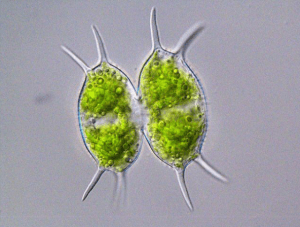 The kcenvirolab page highlights how King County is helping safeguard the region’s water quality green2.kingcounty.gov/marine/Photo
Follow kcenvirolab on Instagram today.
Click here to view all King County social media pages.
Share this:

Featured Job: Personal Recognizance Investigator

Closing Date/Time: Sun. 01/21/18 11:59 PM Pacific Time
Salary: $32.54 – $41.24 Hourly, $67,683.20 – $85,779.20 Annually
Job Type: Career Service, Full Time, 40 hrs/week
Location: King County Correctional Facility – Downtown Seattle or Maleng Regional Justice Center – Kent, Washington
Department: Department of Adult & Juvenile Detention
Description: Incumbent will work within the secure perimeter of an adult detention facility and will have direct contact with the inmate population. Duties include conducting one-to-one interviews with persons who have been newly booked into jail to determine release eligibility and make appropriate program and release recommendations. Staff works collaboratively with a variety of stakeholders including inmate references and agencies. Screening/intake interviews are conducted within the booking area and inmate housing areas of the correctional facility, and entails working with a diverse population of inmates, departments and court personnel. Duties are performed within adult detention facilities which are secure facility environments requiring the ability to navigate ramps, narrow hallways, opening and closing heavy doors and working in confined areas. Population includes potentially volatile individuals with emotional, mental health, and alcohol and/or substance abuse related problems.
Contact: For more information contact Kristen Jones at 206-477-1624 or Kristen.Jones@kingcounty.gov.
Learn more about this position, or view all available jobs.
Share this:

Kudos! King County recognized for Excellence in Financial Reporting

 For the 36th year in a row, King County has received the Certificate of Achievement for Excellence in Financial Reporting from the Government Finance Officers Association (GFOA). The award focuses on superior performance in producing the Comprehensive Annual Financial Report (CAFR).
In addition, GFOA also recognized King County with the Popular Annual Financial Reporting Award (PAFR) for the seventh year running. The review committee lauded King County for producing a useful report for its residents that is easy to understand and accurate in summarizing complex financial information.
Congratulations to Cheryl Lee and her Financial Management Section accounting team, as well as contributions from many other finance and accounting staff across King County.
Share this:

Employee discount to UW Local Government Appreciation basketball game, February 3

King County employees are welcome to take advantage of a discount on tickets to the UW Husky basketball game against the University of Arizona Wildcats on Saturday, February 3 at 7:30 p.m. The event is for Local Government Appreciation Day.
To access the discount visit this link here. For more information contact JRothbaum@pac-12sales.com.
See all available discounts on the Employee Discount webpage.
Share this:

Celebrating our county’s namesake
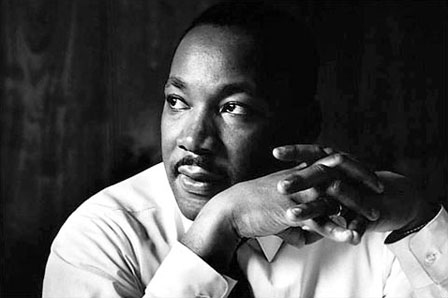
Approximately 400 people attended King County’s annual Dr. Martin Luther King, Jr. Celebration at The Sanctuary in downtown Seattle on Thursday, January 11.
The celebration acknowledged the life and contributions of Dr. Martin Luther King, Jr., and emphasized the need to continue pursuing peace, equity and justice for all.
The event featured keynote speakers King County Executive Dow Constantine and King County Councilmember Larry Gossett, as well as a musical performance by King County employees. Deputies Michael Hepburn and Jill Higgins Hendrix from the Office of the Prosecuting Attorney performed a medley of the songs “We Shall Overcome” and “Lift Every Voice and Sing.”
For more information about the 31st annual celebration of King County’s namesake, visit the King County website.
View the entire 2018 MLK Celebration in the video below.






 Employee News