
Environmental education programs and resources

King County’s Department of Natural Resources and Parks has made it easy for educators and students to find guidance on habitat, invasive plants, clean water projects and more in curricula that meet state and federal education requirements, that is customized for our Pacific Northwest environment, and that offers students ideas for future careers.
The guides provided list resources that include curricula, transportation, in-class trainers, workshops, costs, presentations, camps, and grant and professional development opportunities.
The Stormwater Runoff Education Resource Guides, the Green Schools Program, internships and more are in the Environmental Education section of our Services website.
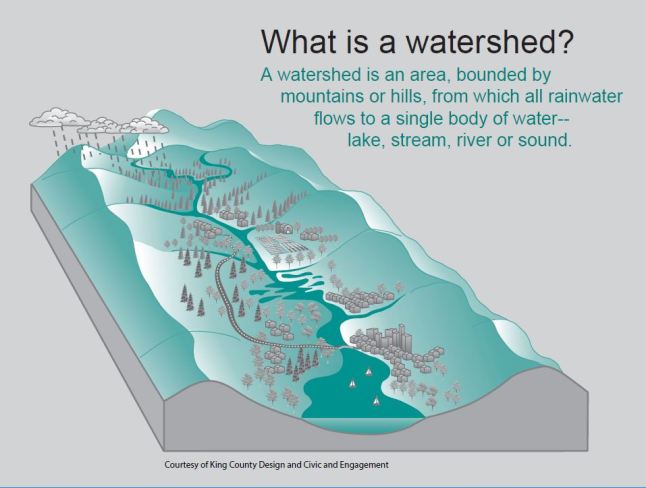
Graphics like this are just some of the many resources available.
Share this:

Kudos! to Deputy Joshua Lanich, King County Sheriff’s Office, for restoring faith in humanity!
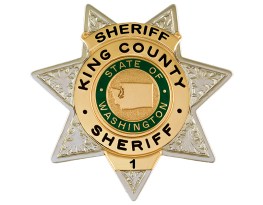 Donna Wright sent a great, public Thank You tweet to Deputy Lanich of the King County Sheriff’s Office for his assistance Friday in helping an incapacitated driver who had driven the wrong way onto a freeway ramp. “…such an inspiring example of what a public servant should be … you restored my faith in humanity. Thank you for your professionalism and your service!”
Thank you, Donna!
Kudos, Deputy Lanich!
Share this:

Save the Date: 44th Annual Seattle Pride Parade
The King County Pride T-shirt orders have been placed, and the parade kicks off at 11 a.m. Sunday, June 24 at 4th Avenue and Union Street.
Lasting about 2.5 hours, the parade will end near Seattle Center at 2nd Avenue and Denny Way.
Viewers are encouraged to watch the parade from the sidewalks, leaving the street open for the parade. No parking will be permitted in any area along the parade route and all vehicles must be registered, must display an event pass and must have a driver in the vehicle at all times. Unattended vehicles will be towed at the owner’s expense.
Visit the Seattle Pride website for more information.

Share this:

Noxious weeds to watch for in June

Crossposted from Noxious Weeds Blog

Giant hogweed’s 2-foot-wide umbrella-shaped clusters of tiny white flowers are starting to appear.
If you’ve made it outside on a recent sunny day, you’ve probably noticed the abundance of flowers blooming in gardens, parks, forests, and throughout King County right now. Unfortunately, the noxious weeds are out there, too—many of them bolting, flowering, and even going to seed already.
Below are some of the top regulated noxious weeds to keep an eye out for this month. Please let us know if you see one of these high-priority invasive plants, so we can make sure they’re controlled or eradicated in time! Report locations and share photos with us easily on our new and improved Report a Weed online form.
Read the rest of the story on the Noxious Weeds Blog.
Share this:

Social Media Spotlight: King County Parks on Facebook

 Summer is just around the corner, and Your Big Backyard is ready!
King County Parks – Your Big Backyard – enhances quality of life and communities by providing environmentally sound stewardship of regional and rural parks, trails, natural areas, and recreational facilities, supported by partnerships and entrepreneurial initiatives.
Whether it’s the BBY5K, movies in the park, Chomp!, or any of the other countless opportunities Parks provides, you can connect with @iheartkcparks on Facebook and stay informed!
Follow King County Parks on Facebook today.
Share this:

Featured Job: Director, Legislative Analysis

Closing: 06/27/18 11:59 PM (GMT -8:00)
Salary: $153,814.75 – $194,969.01 Annually
Location: King County Courthouse, Seattle
Job Type: Appointed
Department: King County Council
Job Number: 2018-08195
Description: The Metropolitan King County Council is seeking a dynamic leader to manage the King County Council’s policy staff team and ensure staffing and policy endeavors are consistent with the Council’s vision for Equity and Social Justice. The Director of Legislative Analysis will develop and administer analytical standards for staff, as well as assign staff to policy and budget topics. Policy staff support the Council in fulfilling its mission to set policies, enacts laws and adopt budgets that guide an array of regional services for the residents of King County. The ideal candidate will be a practiced manager, adept at policy, providing and presenting impartial analysis, politics and relationships.
Contact: For more information, contact Tracy Calderon at 206-477-0979 or Tracy.Calderon@KingCounty.gov.
Learn more about this position or all available jobs.
Share this:

Let’s talk about: Financial Wellness

Crossposted from Balanced You
 This summer, Balanced You is serving up programs, resources, and tools to keep you financially fit because you told us financial wellness is important to you.
Over the next few months, we’ll shine the spotlight on financial wellness resources. We want to help you reduce financial worries and feel more confident about your financial future, so if there’s a specific topic you’d like us to feature, let us know.
There’s a variety of information to help relieve some of your financial stress. Check out the many options and consider trying something new.
- Want to learn to manage your finances and make a debt-free game plan? Sign up today for a free, convenient financial wellness class from My Secure Advantage, coming to several King County worksites in late June.
- June is National Homeownership month. Here are some home buying resources—in person, online, and in your community.
- Many King County employees planning for retirement are eligible to participate in a health reimbursement arrangement by the voluntary employees’ beneficiary association (HRA VEBA), which is elected by employees by union or as a non-represented group. Learn how this tax free, post-retirement medical expense account can assist you in planning for a comfortable retirement.
- Check out this summary of all of the financial wellness benefits offered to King County employees.
Give us feedback
What does financial wellness mean to you? We think of it as knowing your financial situation, and creating a plan to help you reduce financial stress now and in the future. We look forward to hearing what it means to YOU.
Let us know about your experience—what financial resources are helpful, what financial topics you’d like to see offered, and what we can do differently.
Contact us at BalancedYou@kingcounty.gov or (206) 263-9626
Share this:

Pet of the Week: Smokey
Crossposted from Tails from RASKC
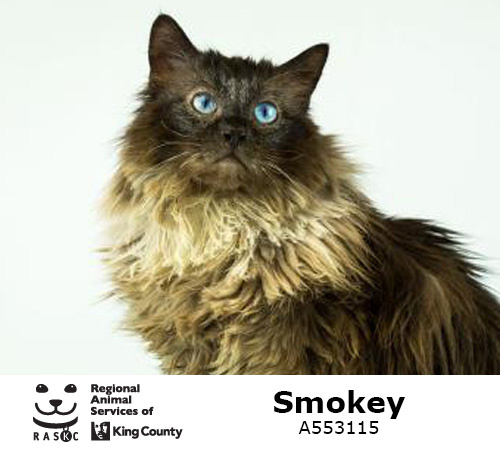
This handsome gent is Smokey, our Pet of the Week!
 Smokey was brought in by his previous family due to allergies. They described him as shy and loving. He does well with other cats, and was initially brought in with his brother Pisely (who has already been adopted). Smokey has a gorgeous thick coat that could benefit with nice brushing!
Smokey is more confident when he is surrounded by confident buddies. He has a “Bashful Blue” personality, meaning he is gentle and loving, and likes to take things slow. He may get nervous in new situations, and is looking for a family who understands he might need some time to warm up. Once he does however, Smokey will be a very devoted friend!
Smokey tested positive for Feline Leukemia Virus (FeLV). Cats with FeLV can live long, fulfilling lives, but they may need some extra care. Our staff and volunteers would be happy to discuss his needs with you when you visit. Because he is FeLV+, Smokey should be an indoors-only cat.
Smokey is neutered, litter box trained, current on vaccinations, and microchipped. His adoption fee includes a certificate for a free veterinary exam and 30 days of free pet insurance through Trupanion.
See Smokey’s profile on our website at kingcounty.gov/AdoptAPet, or visit him at the Pet Adoption Center in Kent.
Share this:

Metro’s 42nd Annual Metroadeo Saturday

ICYMI: join Metro General Manager Rob Gannon and Metro’s Safety team Saturday from 9 a.m to 2 p.m. to recognize the skills of our fantastic bus operators!
 There are three ways King County employees can participate in the Metroadeo:
- Bus operators can sign up now to compete.
- Employees can bring their antique, classic or special interest cars, trucks, motorcycles – or any other vehicle – to the 30th Annual Employee Car Show.
- Save the date and attend the event. Bring your family and friends!
Visit the Metroadeo website for more information on the event and the employee car show.

Share this:

Community Owned Data series

Crossposted from Best Starts for Kids
During the month of June, we will be running a “community owned data” blog series. This is our kick off post! Every other year, Best Starts collects community data that helps guide our funding strategies. To ensure that we are truly partnering with communities and sharing data ownership, Best Starts partnered with specific communities to have conversations about the data and help us understand it. We learned a lot from this process and want to share our learnings with our larger community here.
Best Starts for Kids Approach to Data
To measure impact and ensure accountability for public funds, Best Starts for Kids allocates 5 percent of all levy money towards data and evaluation. All Best Starts strategies strive to answer the question, “Is anyone better off?”
Best Starts’ data efforts are guided by three principles:
- Accessibility
- Partnerships
- Collaboration
Accessibility
Best Starts for Kids inspires innovation and actively contributes to an evidence base that will equip King County and its partners to improve equity in outcomes for King County residents. In 2017, Best Starts made data available on the Best Starts website. The 45 data indicators help to answer the question of “is anyone better off” by assessing the well-being of children, youth, families and communities throughout King County with interactive maps, graphs, and trends. This is the portion of the website that we encourage funding applicants to draw upon when developing their Best Starts funding applications.
Making the data available is only one part of achieving accessibility. We must also help people find the data and ask for feedback so that we know the data makes sense to others.
Partnerships
Best Starts for Kids values multiple kinds of data so applicants are strongly encouraged to draw upon not only quantitative data but also share qualitative stories to demonstrate how they propose to affect change. Data collection is a partnership between Best Starts staff and partners to show results.
The Best Starts for Kids Health Survey is the product of many partners contributing. Initially conducted between September 2016 and January 2017, the survey provides baseline data and informs Best Starts activities. The survey produced valuable new information, including data on diverse communities rarely represented in data collection.
The groundbreaking new methods we used in the Best Starts Health Survey lead the nation in ensuring our data reflects the strengths and needs of all King County kids and families. A nation-wide panel of epidemiologists selected the Best Starts for Kids Health Survey for the Robert Wood Johnson Foundation (RWJF) National Award for Outstanding Epidemiology Practice in Addressing Racial and Ethnic Disparities.
However, as the Best Starts data team began analyzing the data, we knew that we needed to develop feedback loops with the communities the data represented in order to be truly equitable in our process.
Collaboration & Communal Learning
A shout out to Fakequity as this blog post on weaponizing data came out right around the time we were thinking of how best to analyze and share our Best Starts for Kids Health Survey data. As government, we knew we had to be proactive to avoid unintentionally using data to harm communities. We also heard this message clearly from members of the Best Starts Children, Youth, and Advisory Board. And so our series of “Data Dives” were born.

Data Dive participants of all ages contributing.
Alongside community partners including Community Café Collaborative, United Indians of All Tribes Foundation, Open Doors for Multicultural Families, and local grassroots leaders, Best Starts hosted a series of participatory community meetings, coined “Data Dives,” to facilitate joint learning and interpretation with specific cultural and linguistic communities. These collaborative meetings took place between November 2017-April 2018 and built trust, relationships, and shared ownership of the findings. The specific communities included: Latino/a, Black/African-American, Somali, Vietnamese, Chinese, Samoan, American Indian/Alaska Native, and Lesbian, Gay, Bisexual, Transgender, Queer/ Questioning, and Two Spirit families.
In spaces tailored for specific languages and food preferences, participants “dove into data,” sharing unique community perspectives on Best Starts data. Parents and caregivers asked questions about the data, discussed how it related to their lived experiences, and shared their viewpoint on survey results. Children of all ages were welcomed and led through a separate play-based discussion.
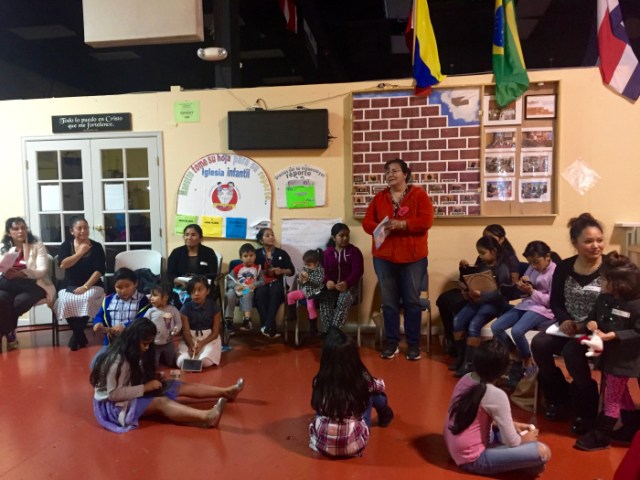
Children participating in a Data Dive.
The King County Equity and Social Justice Fund provided a $7,500 grant to partially fund the Data Dives. The overarching themes we heard reaffirmed Best Starts strategies and will inform continued implementation.
Takeaways
We are so grateful for all the participants who contributed to our Data Dives. We will be sharing what we learned over the next few weeks and want to continue learning with you all. Data Dive participants requested that the two-way dialogue continue, and we are excited to continue learning together. You can expect us to cover the following topics over the next few weeks:
- Methodology we used to help interpret the data
- What specific communities said about the data
- Feedback on messages and words used
Stay tuned!






 Employee News