
Upcoming SharePoint page changes
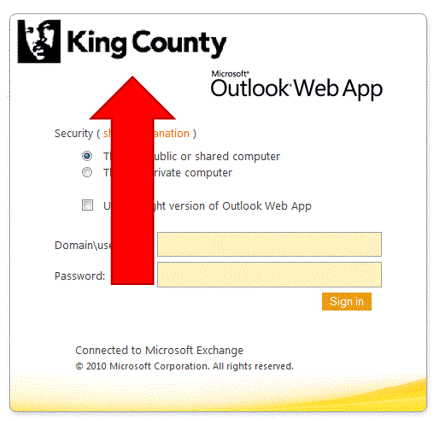
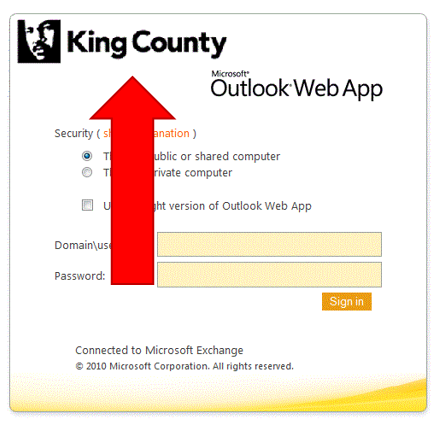 KCIT is making changes to Outlook Web Access/OWA (https//owa.kingcounty.gov) and the Office 365/SharePoint Online logon pages to help you identify potential cyberattacks and reduce security incidents. The new OWA logon page will have the King County logo and the Office 365/SharePoint Online logon page will have the King County logo and a scenic King County photo. This change will take place Feb. 22.
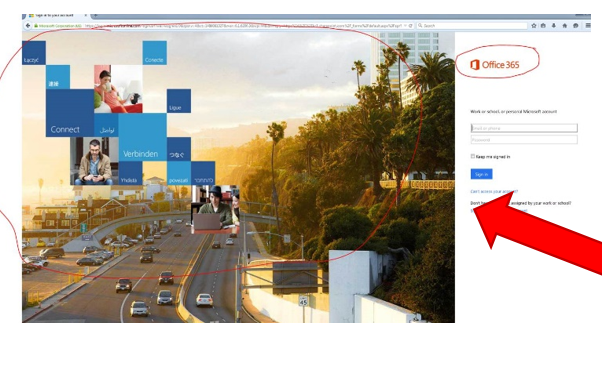 Many cyberattacks use fake portals that look like “typical” Microsoft portals (see below) which convince users that it’s ok to type in the username and password. By changing out the photo and adding the King County logo to brand the pages, employees will more easily identify the secure King County site. As of Feb. 22, you should see this change. If you see your old welcome screen, send an alert to the Helpdesk because it could be a phishing attempt.
Apart from the visuals, these changes will have no effect on the sites or how users login to SharePoint or Office 365.
Share this:

Tech Tip: Skype for Business: Switching handset to headset

Do you want to switch from your desk phone to a headset in the middle of a call? It’s no problem with Skype for Business! Let our friendly IT ambassador Jamie Holter walk you through it.
Share this:

Social Media Spotlight: RainWise Facebook

 The RainWise incentive program provides rebates that cover most or all of the cost of installing cisterns and rain gardens on your private property. The average rebate has been around $4,000. Check your eligibility and the list of RainWise certified contractors to get a bid today!
Follow RainWise on Facebook today!
Click here to view all King County social media pages.
Share this:

Latest edition of King County @ Your Service show

How does the county’s new Food Safety Rating System work? Fighting back against the Opioid Epidemic and new high tech Collaboration Spaces means services on-line instead of in line.
View this video to get the latest information on a few of the most recent King County hot topics. Join host Tim O’Leary for King County @ Your Service.
Share this:

Forest Carbon/Forest Health Lunch and Learn March 8

 Hear from the Water and Land Resources Division Rural and Regional Services team about how the County’s Forest Heath plan is preparing us for climate change.
Wednesday, March 8, from noon to 1 p.m. King Street Center, 6th Floor, King and Chinook Rooms
All King County employees welcome, but space is limited. Please sign up here.
Share this:

Yesler Bridge Rehabilitation Project: Update, February 2017
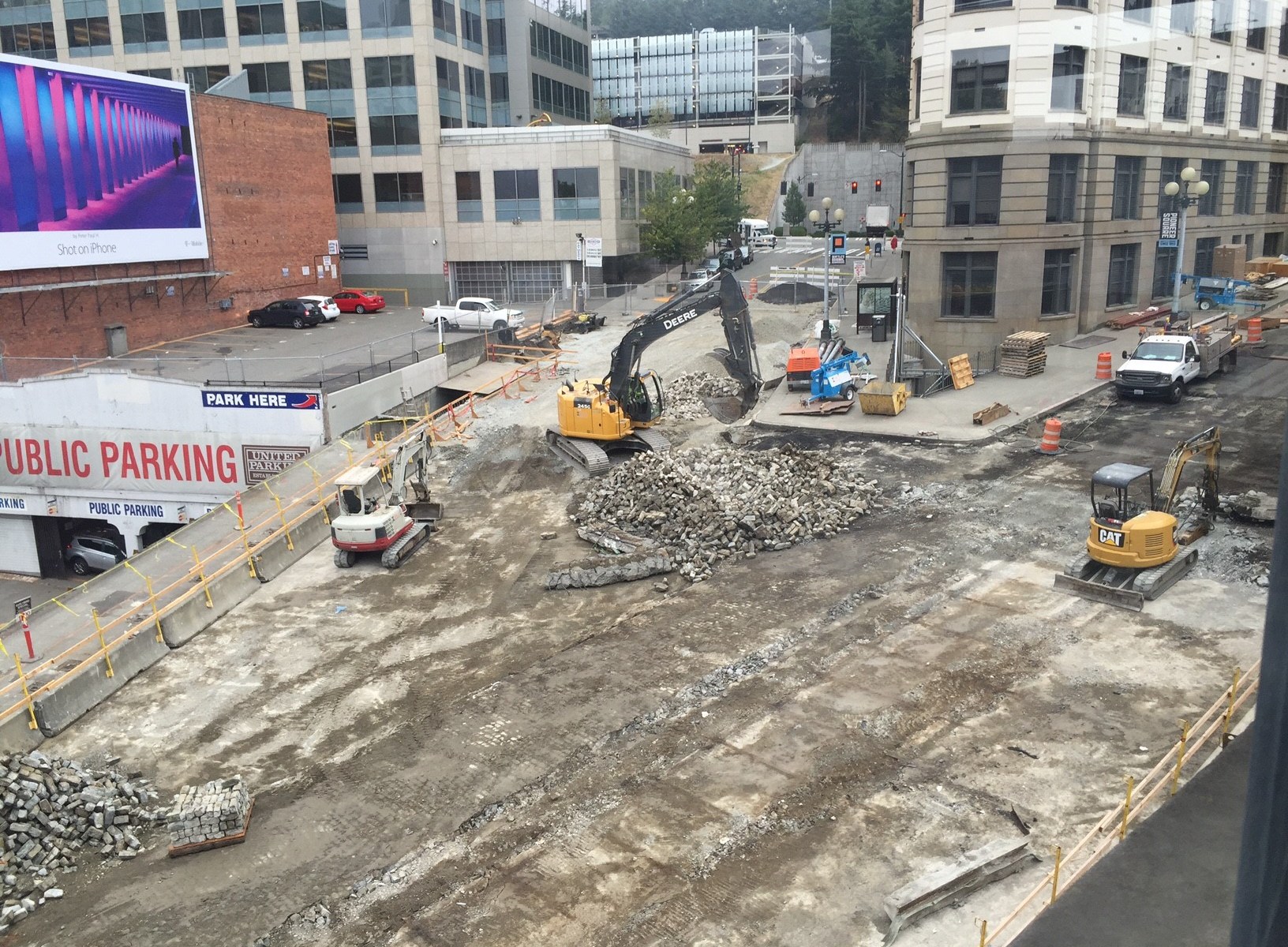
The Yesler Way Bridge Rehabilitation Project has been going quite well, and is now preparing for a major milestone—the placement of new girders across 4th Avenue. Carefully putting these structures into place will require the full closure of 4th Ave S between Washington and Jefferson Streets several nights this month.
Crews will close 4th Ave S to all traffic on Monday, February 20 through Friday, February 24 from 7 p.m. to 5 a.m. Pedestrian, bicycle, vehicle, and bus detours will be placed around the 4th Ave S closure. Check out the detour map to see alternate routes.
Please expect the following:
- Closure of 4th Ave S between S Washington and Jefferson Streets from 7 p.m. to 5 a.m. from Monday, February 20 through Friday, February 24
- Large construction vehicles, lights noise from trucks, back-up alarms, and other equipment
- Pedestrian, bicycle, vehicle, and bus detours around the closure
The Yesler Way Bridge Rehabilitation Project, which will improve safety and reliability while preserving the bridge’s historical elements, will continue through fall of 2017. If you have any questions or would like to discuss the project further, please contact YeslerBridge@seattle.gov or 206-684-8684. To learn more about the project, visit the project website.
Share this:

Featured Job: Project Program Manager IV

Closing Date/Time: Wed. 02/22/17 11:59 PM
Salary: $90,521.60 – $114,753.60 Annually
Job Type: Career Service, Full Time, 40 hrs/week
Location: King Street Center – 201 S Jackson St, Seattle, Washington
Department: Department of Natural Resources & Parks – Water and Land Resources Division
Description: This senior level, limited supervision position provides an exciting opportunity to help extend King County’s long legacy of preserving the natural and working resource landscape. The position will serve as the lead staff for the interjurisdictional Conservation Futures Tax grant process. The position will also serve as a team member on the emerging King County Land Conservation Initiative to protect the remaining high conservation value lands in King County within a generation.
The successful candidate will be a creative thinker with a proven track record of collaborating and forming partnerships. The position will require an aptitude for effectively managing complex and technical data, as well as an understanding of how CFT funding and the annual allocation process can be most effectively leveraged to advance landscape scale conservation with far-reaching and long-lasting benefits to the residents of King County. The successful candidate will have a vision for what it means to implement a long-term goal of conservation in King County and the ability to identify and implement steps toward realizing the vision.
Learn more about this position or view all available jobs.
Share this:

Public Health Division Director featured in Green Line Series Interview
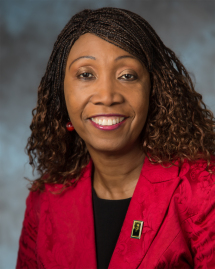
GoGreen, one-day sustainability conference focusing on green practices, recently profiled Ngozi Oleru, Division Director of the Environmental Health Division for Public Health Seattle and King County.

Ngozi Oleru, Division Director of the Environmental Health Division for Public Health Seattle and King County
Our Green Line Series interview this week features Ngozi Oleru, Division Director of the Environmental Health Division for Public Health Seattle and King County. She is responsible for leading and managing the environmental health programs serving a population of over 2 million residents and has been instrumental in bringing a public health and equity focus to the impacts of the built environment both locally and nationally in policy and programmatic roles.
Ngozi will be a featured speaker at the GoGreen Conference session on March 16th entitled Building Healthcare and Business Climate Resilience.
You have been working on health equity for ten years now. Why is health equity important? The question shouldn’t be why is health equity important, it should be why ISN’T health equity important. Equity should be the norm. Equity is where/how/when everyone gets to participate in life with full access to opportunities and consequences that are distributed not necessarily equally, but equitably. Does everybody need to be the president of a university? No. Does everyone need to be an engineer? No. But everyone should have access to the opportunities for health and well-being to do whatever it is they are called to do. That’s why it is important.
Share this:

When the unexpected unfolds: Protecting people after wastewater overflows
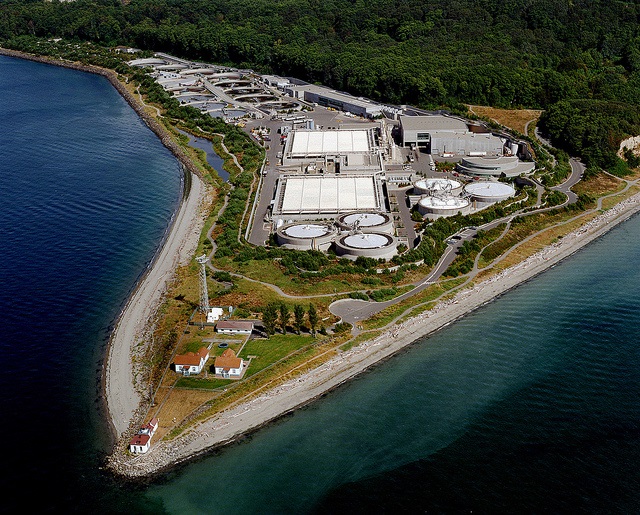
Crossposted from WTD Clean Water Stories
 When conversations in our region circle around to water quality, the trigger is usually bad news. Puget Sound’s resident orca whales had a tough year because they couldn’t find enough salmon to eat. Shellfish harvests and beaches close due to toxic algae in the water. Fingers point at polluted stormwater runoff, combined sewer overflows, leaking septic systems, and more.
At King County Wastewater Treatment Division (WTD), our mission focuses around being part of the solution. We pride ourselves on the hard work we do treating our region’s wastewater, recovering resources from the wastewater system, and planning for a sustainable, resilient future.
The last thing we want to happen is an unexpected spill into the waterways we are trying to protect.
Operating a large regional wastewater system in an area like the Central Puget Sound means that overflows are always a potential. King County operates 3 regional treatment plants, 2 local treatment plants, 4 combined sewer overflow treatment plants, 47 pump stations, 26 regulator stations, almost 400 miles of pipe, and even a community septic system.
Read more at WTD Clean Water Stories
Share this:

We put ourselves in tight spots to care for our system

Crossposted from WTD Clean Water Stories

At 6’2”, Randy Westendorf fit right in as a linebacker for the University of Colorado football team. Imagine that same man, now a facilities inspector working for King County Wastewater Treatment Division (WTD), squeezed into a 48” wide manhole. That visual caught the eye of a coworker, and became a feature in an industry organization’s annual calendar.
What was Randy doing in that manhole, anyway?
Read more at WTD Clean Water Stories






 Employee News