Second 2025 Professional Development Scholarship application period ends July 3

The second application period for the 2025 Professional Development Scholarship Program ends at 11:59 p.m. on Thursday, July 3.
The Scholarship Program is a benefit offered as part of the 2025 Coalition Labor Agreement and is only open to employees represented by one of the unions in the Coalition.
The Scholarship Program is part of the County’s commitment to Investing in YOU, and is designed to assist eligible employees with their professional development by providing up to $3,000 annually towards obtaining training, certificates, degrees, licenses, and certifications.
Awardees for this period will be notified via email between August 1 – 8, 2025. Please check the scholarship website for important dates, scholarship information, and the link to apply.
For questions email ScholarshipFund@kingcounty.gov.
Share this:

‘We still brace ourselves, but now we can breathe easier’: Operators at West Point Treatment Plant credit new battery system for delivering reliable power during its first year
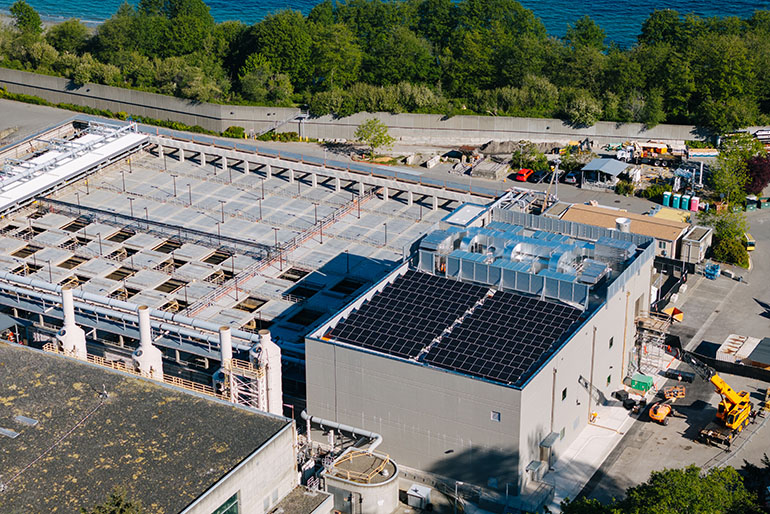
Operators at King County’s West Point Treatment Plant credit the new onsite battery system for providing reliable power during its first year of service, ensuring critical pumps operated during 78 power disruptions.
Engineers estimate that 15 of those power disruptions were severe enough to potentially cause an emergency bypass of untreated wastewater into Puget Sound had the onsite batteries not been activated in June 2024. Pumps at the state’s largest treatment plant were powered exclusively by the 16.8-megawatt battery system during each of those disruptions.
King County Executive Shannon Braddock praised the West Point employees who successfully built and are now operating this first-of-its-kind battery power system.
“What began as an award-winning engineering marvel is now an operational success,” said Executive Braddock. “The onsite battery system we installed at West Point Treatment Plant is delivering exactly what we promised: providing reliable power that protects Puget Sound, even when our region experiences catastrophic weather events.” Read more.
Share this:

John Parrott named Airport Director of the Year by WAMA
Crossposted from DES Plane Talk
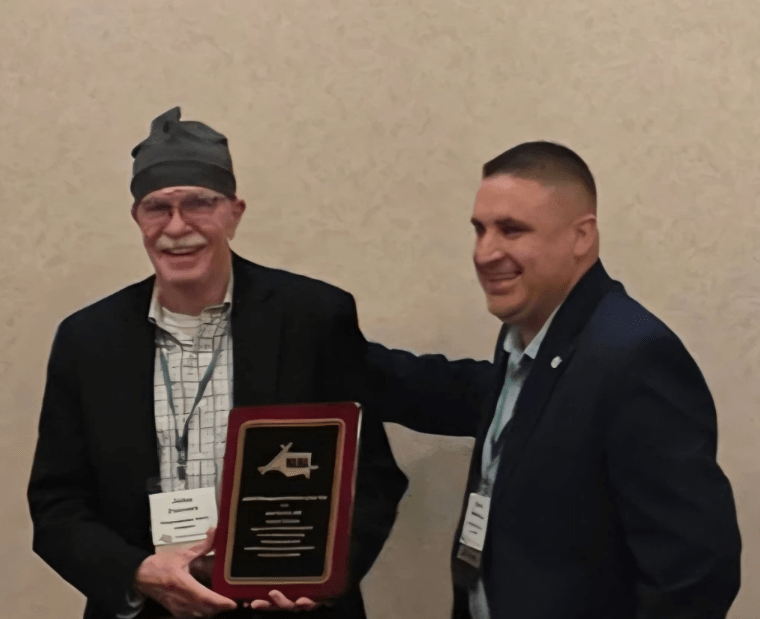
The Washington Airport Management Association (WAMA) named John Parrott the Airport Director of the Year at its annual conference last month. Parrott has served as director of King County International Airport since 2019. He has nearly 40 years of commercial airport, general aviation and military aviation experience from aviator to airport CEO.
What’s his secret?
“Hire great people and then get out of their way,” Parrott said upon receiving the award.
Pictured: John Parrott, Director of King County International Airport, left, with Dave Decoteau, Deputy Director.
Share this:

New data shows King County DCHS’ Health Through Housing initiative helps residents maintain stable housing and improve health
Crossposted from Cultivating Connections
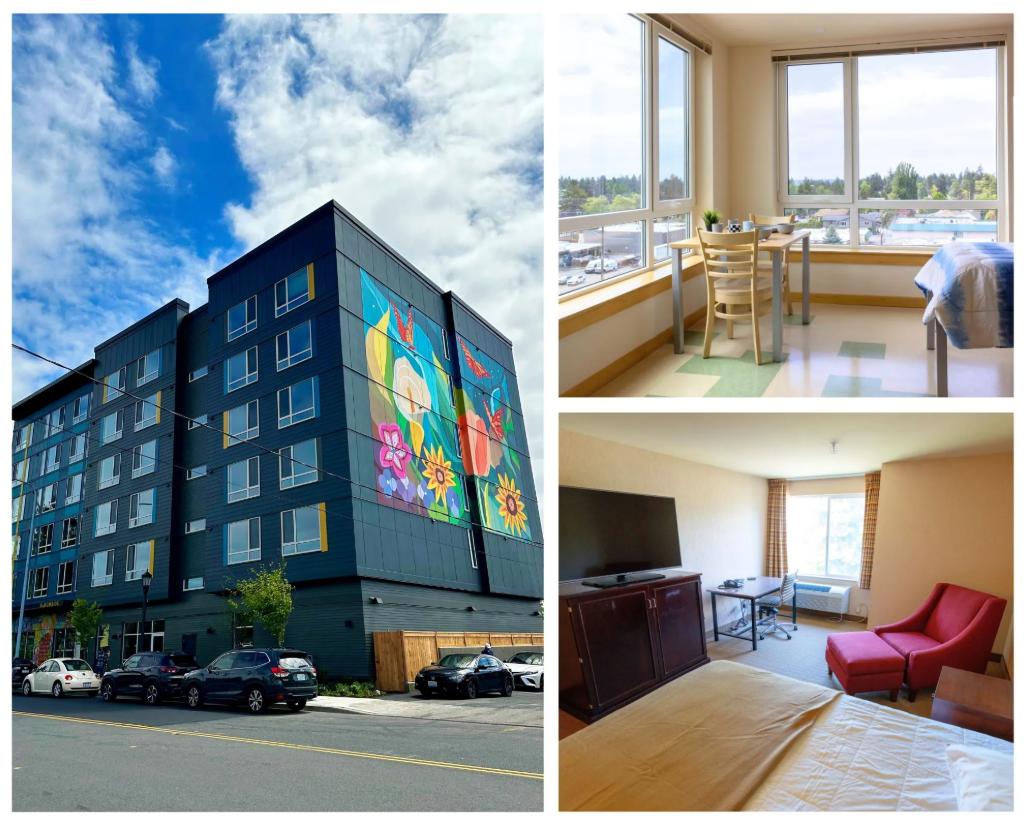
King County Department of Human and Community Services (DCHS) today released new data on the Health Through Housing (HTH) initiative, showing improved housing and health outcomes for people living in Health Through Housing buildings throughout last year. Health Through Housing transforms former hotels and other underutilized properties into permanent supportive housing with onsite services, including physical and behavioral health care, for people experiencing chronic homelessness.
In 2024, Health Through Housing served 1,281 people across all 11 open locations in Auburn, Burien, Renton, Redmond, and Seattle. Encouragingly, 95% of permanent supportive housing residents were able to maintain a stable home. The vast majority of residents( 97%) have previous ties to the neighborhood where they live.
“After being homeless for over 20 years off and on, I can finally shut my door,” shared a Health Through Housing resident. “I can use my bathroom and take a shower without asking for permission. I have a laundry room and have clean clothes. I’m finally able to go to all my doctor appointments. I even started a garden to grow vegetables and flowers for everyone.” Read more.
Share this:

Building the local economy through clean water projects

When Georgetown Wet Weather Treatment Station went up in one of Seattle’s oldest neighborhoods, you could say it took a village to raise it. Among the tradespeople deployed to construct our newest clean water facility were electricians, concrete finishers, welders, and ironworkers.
For four whole years, the site buzzed with power tools and expertise – in no small part from the surrounding community itself. The project generated hundreds of construction jobs and brought on more than 40 women-and-minority-owned businesses as subcontractors who did everything from installing underground utilities and pouring concrete walls to installing cisterns and conducting community outreach. Read more.
Share this:

Suggest an audit topic for the King County’s Auditor’s Office by July 1

Do you have ideas for how King County government could work better? The King County Auditor’s Office wants to hear from you!
The King County Auditor’s Office is looking for input as it plans its work for the next biennium. To gather that input, they have launched a new website where employees and community members can share their experiences and suggest potential topics for future audits.
The King County Auditor’s Office conducts oversight of county government through independent audits, capital projects oversight, and other studies. Every other year, the Auditor assembles a work program for approval by the King County Council.
Submit your ideas by July 1, 2025, for them to be considered for inclusion in the Auditor’s 2026-27 work plan. You input can help ensure government works effectively, efficiently and equitably for everyone.
Share this:

Voices of Hope and Healing: King County’s inaugural Summit on Crime Survivors marks a pivotal moment

Crossposted from Converge Media
June 13, 2025, will be remembered as a landmark day for King County, which hosted its first-ever Summit on Crime Survivors at the Sea Mar Museum of Chicano/a/Latino/a Culture. The event convened a broad spectrum of individuals—survivors of violent crime, families of victims, elected officials, law enforcement, victim advocates, community organizations, and mental health experts—to confront the profound impact of crime and the urgent need for robust community support. This inaugural summit was not merely a meeting; it was a poignant and transformative experience marked by raw emotion, powerful testimonials, and a unified dedication to fostering real change.
The summit’s agenda centered on several critical themes: victim-centered solutions, accountability, trauma healing and support, resource allocation and funding, justice system improvements, and community engagement. Survivors ardently emphasized the importance of being “heard, believed, and included in decision-making processes that affect their lives. They expressed a strong desire to actively contribute to solutions rather than being passive recipients of aid. Accountability for harm and the need for interventions to prevent future violence were repeatedly stressed. Read more.
Share this:

White Center Coffee with a Cop

Crossposted from the King County Sheriff’s Office newsletter
Last week, we had a great time connecting with our White Center community during Coffee with a Cop!
Community members showed up to talk with the Sheriff and other department members. Meanwhile, PCT 4 Captain Przygocki was in the back slinging drinks and working the drive-through window, to the surprise of customers.
Overall, it was a successful event! We thank all the department members who showed up, and a special thanks to Starbucks and our White Center community members for the opportunity. We can’t wait for the next one!
Watch here to see the highlights!
Share this:

Sunday, June 29: Pride Parade!

Join us at the Seattle Pride Parade on Sunday, June 29.
King County’s contingent will meet at 10:45 a.m. on 4th Avenue between Seneca Street and Spring Street. The parade begins moving at 11 a.m. and ends at 3:30 p.m.
If you need assistance getting to the staging area you can meet Metro’s Pride bus on 6th Avenue, between S. Royal Brougham Way and S. Atlantic Street, across from the parking garage, at 9:30 a.m. on Sunday. The bus will leave at 9:45 a.m. and will return to 6th Avenue once it reaches the end of the parade.
Additionally, King County officially recognizes June to be LGBTQ+ Pride Month. In the Pride Month Proclamation, Executive Braddock announced “I urge everyone to honor the fight against discrimination and the contributions of lesbian, gay, bisexual, transgender, and queer people to our County and our society.” View the full proclamation here.
Additional details for attending the 2025 Seattle Pride Parade
This Sunday, June 29, King County colleagues, family, and friends will march in the Seattle Pride Parade. It will be a wonderful opportunity to honor and celebrate the LGBTQ+ community.
To ensure all attendees have a safe and enjoyable time, here are a few tips:
- Meet on the corner of Seneca St. and 4th Ave at 10:45 a.m.
- The parade route is 1.75 miles from start to finish.
- Expect to be at the staging area and marching for 1.5-3 hours.
- King County swag will be provided for handing out to spectators.
Share this:

Making the most of your P-card

Crossposted from the DES Express
Standard P-Cards issued in King County come with a $10,000 single transaction limit and a $20,000 monthly transaction limit, but this can vary among departments and divisions based on different needs.
Splitting purchases to bypass the transaction limits is not an approved use of your P-Card. Read more.