
A DPD mitigation specialist begins to use videos to tell clients’ stories

 By Leslie Brown, Department of Public Defense
At a recent sentencing of a client represented by the Department of Public Defense (DPD), the judge heard a compelling story about the father of two at the table before him – but not only from his public defender. He also watched a 20-minute video, a film that showed how much the man was loved and supported despite addictions that had led him down a troubled path.
His mother spoke about his empathy. His best friend said he’d offer him a job. His fiancée discussed how much she needed him to help raise the baby they shared and their stepson, a 7-year-old boy from a previous relationship. Even the stepson spoke, saying softly into the camera, “He takes good care of us.”
The prosecutor was seeking the highest possible sentence – seven years in prison – a sentence she said was called for because the defendant reoffended while he was out on bail earlier this year. DPD’s defense team was seeking a Drug Offense Sentencing Alternative (DOSA), three years in prison followed by three years of enhanced supervision.
Superior Court Judge John McHale expressed concern about the defendant’s offenses while his previous case was pending, calling them both sophisticated and extensive. All told, he was facing more than a dozen felony counts. But the judge also cited the video and the many observations he heard from those who love him. “They all see real potential in you,” he told the defendant.
Minutes later, he ruled in the defense’s favor. DPD’s client, if he gets time off for good behavior, could be back with his family in 18 months.
The video was only the second one made by Kyle Ankeny, a mitigation specialist (or social worker) in one of DPD’s divisions. In both instances, the video seemed to have an impact – largely, Kyle says, because of the powerful and evocative medium film is, the way a video can capture a person’s humanity and hold the viewer’s attention.
“When people are handed a mitigation report, they tend to skim through it. They’re not as engaged,” Kyle said. “A video is much more interesting. I think it’s far more compelling.”
Rose Duffy, the public defender representing DPD’s client, said she also believes the video made a difference. “When we were talking about the hearing afterwards, we noted that all the specific facts the judge mentioned seemed to be from the video.”
“Psycho-social reports are still very important,” she added, referring to the kinds of mitigation reports DPD most commonly uses. “But when you have the right type of case and the right type of family support, a video can take it to the next level.”
Mitigation videos are relatively new at DPD. They’re routinely used by the Federal Public Defender’s Office, which has long had the resources for high-quality equipment and training. But at DPD, only a few such videos have been made over the years, and most often they’re done with out-of-house expertise.
Kyle, who has been a mitigation specialist in public defense for 10 years, is also a photographer on the side, so the leap to film was one he found he could make. He decided to try his hand at it a few months ago, when two public defenders asked him to consider a mitigation video for a murder 2 case that they all knew would be difficult to mitigate.
Kyle borrowed a camera and tripod from Rose, was able to get the department to install a basic film editing software package on his computer, and proceeded to make his first video, interviewing four people for the product. He interviewed four people for the DOSA video, as well.
Though his equipment is rudimentary – he still needs a decent mic and some lighting equipment – he feels he now has the tools in place, as well as some experience, to begin doing mitigation videos for those cases that seem to call for it.
“We’re just making our way into this arena,” he said. “So far, it’s great. Over time, I expect it will be very much the future of our mitigation reports.”
Share this:

2020 CPR/AED training dates available

Registration is open to all King County employees for Basic CPR classes offered in the Chinook Building. Classes cover Adult, Child and Infant CPR, AED, and Choking Rescue. To register and view the full schedule, visit www.kccpr.eventbrite.com.
Additionally, registration is open for the BLS for Health Care Provider classes. This class is intended for Public Health- Seattle & King County employees who are required to have BLS for Healthcare provider card as a condition of employment. To register and view the full schedule, visit www.kcbls2020.eventbrite.com.
For questions or more information, contact Laura Miccile at 206-477-8664 or Laura.Miccile@kingcounty.gov.
Share this:

What’s happened to traffic since SR 99 tunnel tolling started
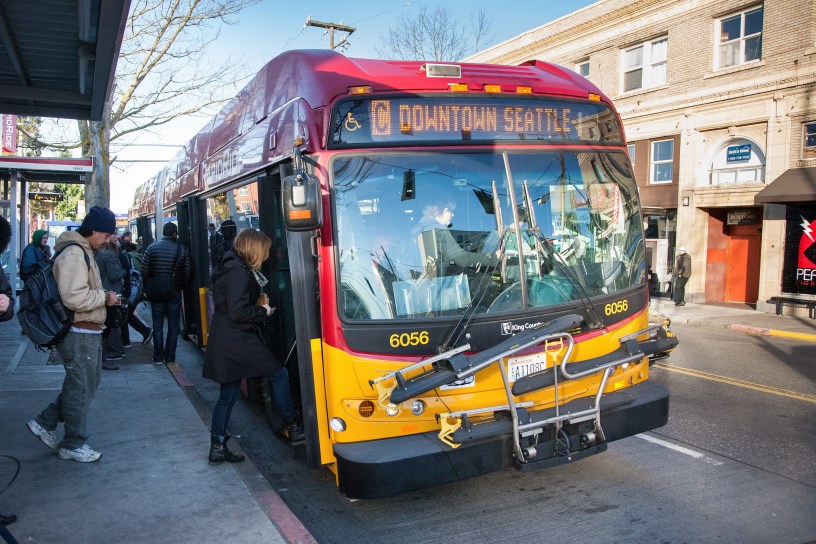
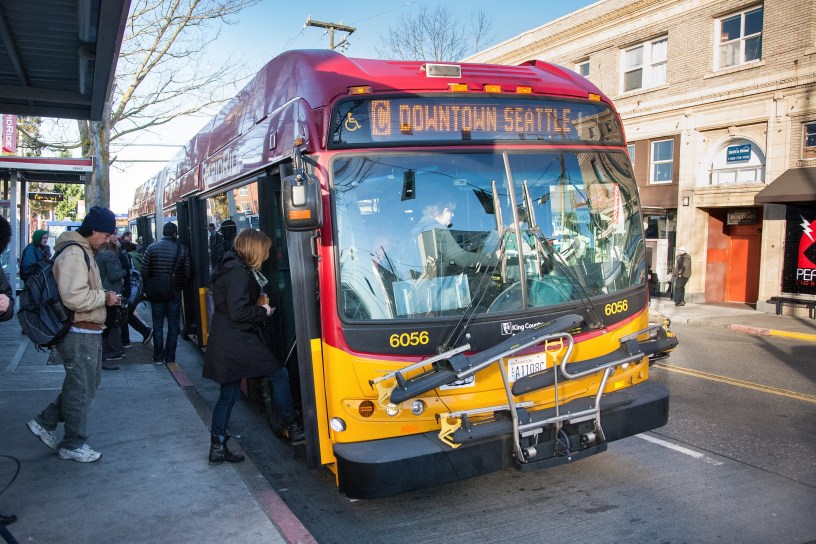 Crossposted from Metro Matters
One month after tolling began in the State Route 99 tunnel, we’re getting our first few weeks of traffic data. While it’s still early, SR 99 tunnel usage remains high and exceeds forecasts. Traffic volumes were within normal ranges on I-5 and ridership on King County Metro Transit remained consistent.
Initial information from Seattle-area transportation partner agencies reflects weekday data between Nov. 12 and Nov. 22. (Thanksgiving week was excluded as it is an unusual travel week). Traffic patterns vary and we expect they will continue to change as drivers look for best routes to reach their destinations.
Read more from Metro Matters
Share this:

Making Life Easier offers webinars throughout the year to King County employees

The King County Making Life Easier program offers webinars throughout the year to King County employees, free-of-charge. Topics include mental health, support for caregivers, healthy communication, and more. Employees interested in improving relationships with others can tune into Making Life Easier’s next webinar, “Creating Strong Relationships: Examining Healthy vs. Unhealthy,” which will be released Dec. 17.
Webinars are available on-demand. Employees can access webinars via the Making Life Easier portal, using username King County. For more information contact Balanced You at BalancedYou@kingcounty.gov.
Share this:

Leadership Series+ A Training opportunity now accepting applications

The Office of Equity and Social Justice in partnership with Our BODHI Project presents the Leadership Series+ A Training on Belonging, Racial Equity, Co-liberation, & Health. This series is for King County employees leading efforts towards greater racial equity and social justice and is rooted in Our BODHI Project’s Embodying Belonging and Co-liberation Frame. Participants will engage with expanding their racial equity and social justice analysis, deepening their purpose, and centering collective well being.
Employees must be able to attend both dates in one of the cohorts. Both cohorts also require attendance at the three follow up sessions.
- Cohort 1: Tuesday, Feb. 18 and Wednesday, Feb. 19
- Cohort 2: Tuesday, March 10 and Wednesday, March 11
- Follow up sessions: Monday, April 27, Thursday, May 28, and Tuesday, June 9
View the application and learn more here. For questions or more information contact Tynishia Walker at 206-263-0534 or TWalker@kingcounty.gov.
Share this:

New employee discounts available to Seattle Symphony holiday performances and airport parking

King County employees are welcome to take advantage of discounts for upcoming Seattle Symphony holiday performances. Use code HOLIDAY20 to receive 20% off performances of Handel’s Messiah on Friday, Dec. 20, Saturday Dec. 21, and Sunday, Dec. 22. Use code CELEBRATE to receive 30% off the New Year’s Eve performance and party Tuesday, Dec. 31. Visit www.seattlesymphony.org to purchase tickets and for more information.
Parking Access is now offering a $10 Parking Reward Credit when you sign up and reserve at any participating parking lot, including parking at SeaTac International Airport. Visit https://parkingaccess.com and enter coupon code KINGGOV10.
Shuttlefare.com offers Uber and Lyft pre-arranged rides, in addition to SuperShuttle and Shuttle Express shared-ride van services at SeaTac International Airport and 300+ airports worldwide. Enjoy a $10 Ride Reward Credit when signing up and booking your first ride. Visit www.shuttlefare.com and enter coupon code KINGGOV10.
See all available employee discounts at www.kingcounty.gov/employeediscounts.
Share this:

Featured Job: Senior Applications Developer – Two Openings

Salary: $95,494.08 – $120,229.44 Annually
Location: Seattle, WA
Job Type: Regular, Full time, 35 hrs/week
Department: KCSC – Superior Court
Job Number: 2019-10982
Closing: 1/17/2020 11:59 PM Pacific
Learn more about this position or view all available positions.
Share this:

Pet of the week: Taser
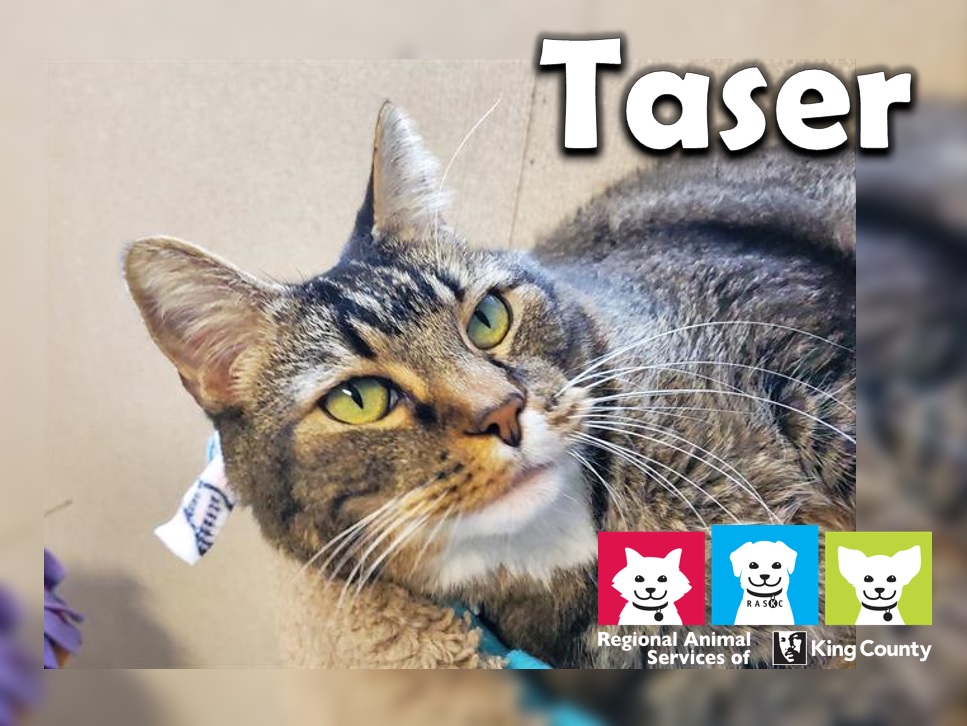
 Taser is an 8 year-old, male, brown tabby, shorthair cat (A074252). His personality color is BLUE, meaning he is a gentle and loving cat who likes to take things slow. He might need some time to warm up to new people and new environments. Once he feels comfortable with you, he will really come out of his shell! Taser likes being petted on his head and neck. He can be sensitive further down his back, but don’t let that fool you: this affectionate boy just loves being petted.
Read more and view all available pets at http://www.kingcounty.gov/adoptapet.
Share this:

Honoring King County’s active duty employees

 King County supports and thanks all who have served in the military or are currently serving in the Guard or Reserve. It is important for employers to value their military personnel and support them to take leave for military operations, while allowing for them to stay gainfully employed.
To highlight this, we have profiled a King County employee who is also currently serving in the Reserve. Elizabeth Inglese, a Visual Designer with King County’s Department of Information Technology (KCIT), shares her experience while serving as a Master Sergeant in the U.S. Marine Corps Reserve.
Prior to starting her journey with King County, Elizabeth served on active duty as a graphic designer and strategic communications specialist in the Marine Corps for approximately 13 years. She served with various tours in California, New York City, and the Pentagon. Elizabeth joined the Marine Reserves following her active duty service, where she held several roles relating to strategic communications. She then started her current position as a visual designer with KCIT’s Design and Civic Engagement team in January 2018. In this role she works with customers from various King County departments to visually communicate their programs, initiatives, and projects to the public.
“We are the storytellers for the thousands of hard-working, behind-the-scenes employees of King County, ensuring we connect the County’s services and stories to all people living throughout the region who need those services and are impacted by them,” Elizabeth said.
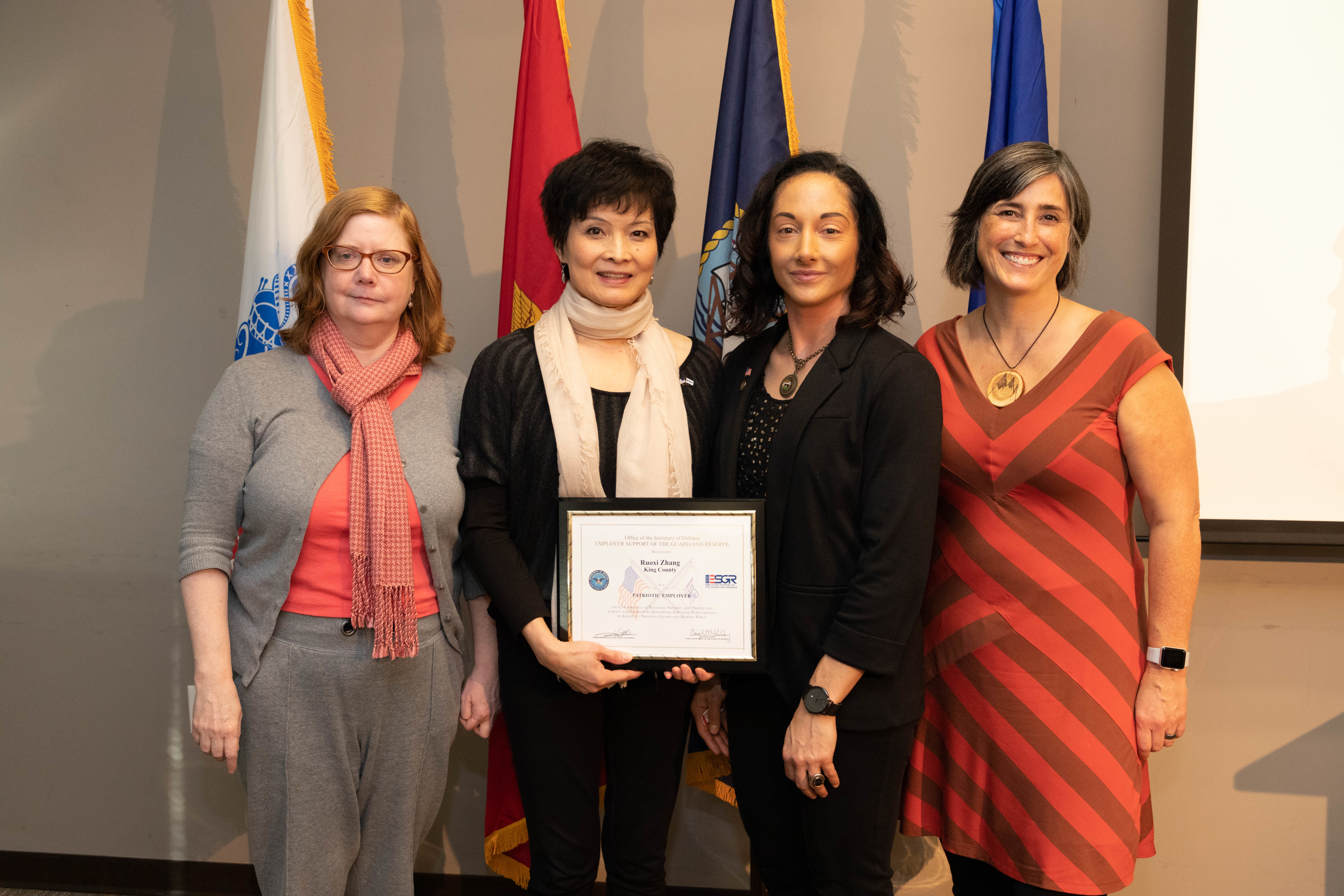
Pictured: Elizabeth Inglese, second from right, with her supervisor and coworkers at the 2018 ESGR Award Ceremony.
While serving both King County and being a Master Sergeant in the Marine Corps Reserve, Elizabeth shares how she must stay on top of her military training and annual requirements. Her current Reserve unit is made up of small detachments throughout the West Coast, and as a result, she often needs to travel for her military duties. This includes service responsibilities such as medical readiness, marksmanship, fitness, educational requirements, and more. Elizabeth typically spends one weekend a month, two weeks a year, and occasional weeknights devoted to her military commitments.
“I’m not going to lie; it can be tough to have both a fulltime job and serve in the Reserves,” Elizabeth said. “It’s like they say, ‘Part time job, full time commitment.’”
Elizabeth shares her gratitude in having a supportive work team and understanding supervisor when it comes to fulfilling her military obligations. She gratefully relies on the 21 days of paid military leave offered as a King County benefit, in order to obtain absence from work. She also recognizes the unique perspectives service members bring to the workplace and is proud to work for an employer who understands this.

Pictured: Elizabeth Inglese, third from left, with members of her unit.
“I firmly believe that those of us who serve or who have served bring another element of character to our work teams, whether it be our dutifulness, diligence, or our diverse experiences,” Elizabeth said.
By working for King County, Elizabeth appreciates that she can share her military experiences with fellow employees, as well as acknowledge other service members who are currently serving while working at King County.
We honor and thank our Reserve and Guard employees for their continuous service, and all of our military personnel here at King County.
Share this:

Making diversion programs more culturally responsive
 Crossposted from Zero Youth Detention
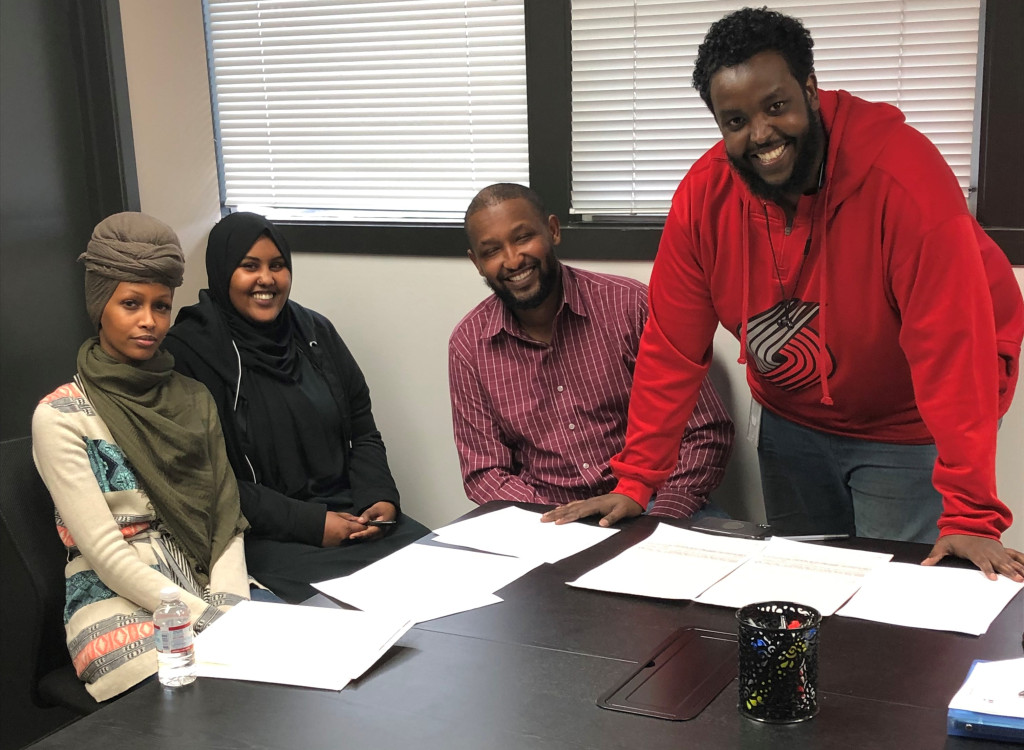
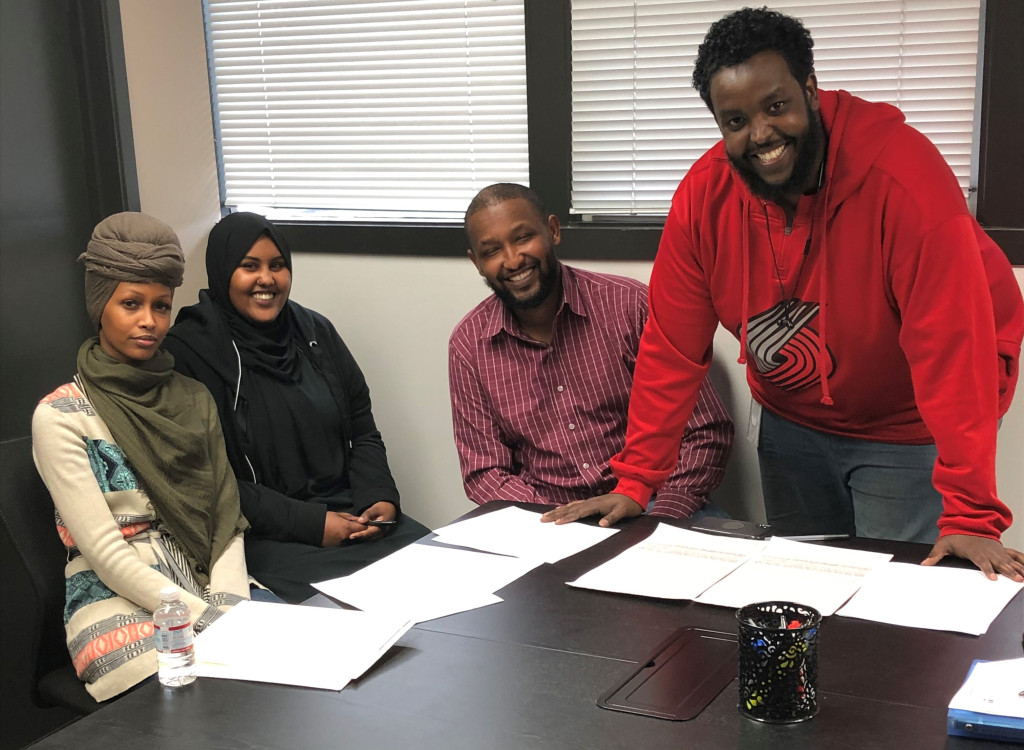
Community Accountability Boards (“CABs”) have served as a diversion program – or alternative to the formal court process – for first-time juvenile misdemeanor cases in King County since 1959. CABs are made up of trained community volunteers who hear juvenile cases and devise a tailored plan of accountability for each young person.
Read more from Zero Youth Detention






 Employee News