
KCIT update: Transitioning to Windows 10

The push to upgrade all Windows 7 operating system computers to Windows 10 operating systems continues, and King County Information and Technology (KCIT) is on track to meet a Jan. 14 Microsoft deadline. On that date, Microsoft will stop supporting the Windows 7 system. Only a limited number of county devices will be allowed to continue with the Windows 7 system, as they run specialized software not compatible with the Windows 10 system.
Because of the switchover to Windows 10, KCIT will not allow devices with the Windows 7 system to connect to King County’s VPN network as of Jan. 9. Users should expect to see a banner notifying them about this change on the VPN connector soon. It is important to note King County does not support personal devices, and it is up to users to ensure their operating system is current with all county requirements.
For questions, contact the KCIT Help Desk at 206-263-4357 or submit a Help Desk ticket.
Share this:

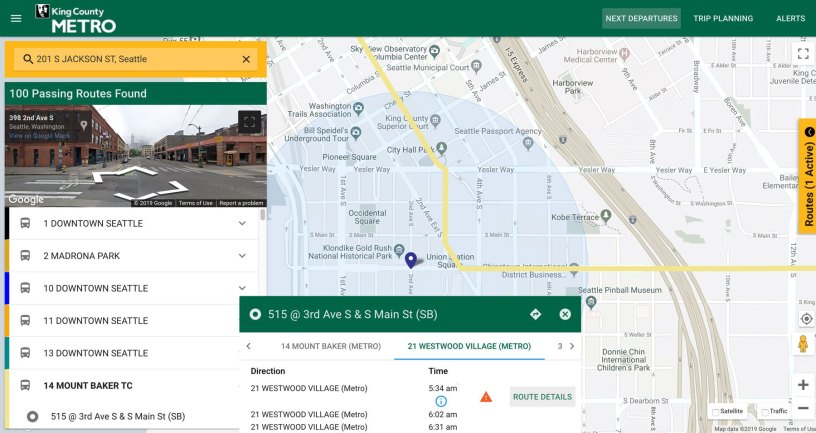
Metro’s updated web-based Trip Planner offers better searching, real-time departure predictions, plus a whole lot more!
Crossposted from Metro Matters
King County Metro continues making your transit experience better and easier with the launch of its improved web-based Puget Sound Trip Planner. The new site includes upgraded accessibility features and a responsive design for mobile users, along with a list of other notable enhancements. The new web-based Trip Planner is live and ready for use now.
Read more from Metro Matters

Share this:

Featured Job: Communications Coordinator (Communications Specialist IV)

Salary: $88,416.84 – $112,073.11 Annually
Location: Seattle, WA
Job Type: Career Service, Full Time, 40 hrs/week
Department: DNRP – Natural Resources & Parks
Job Number: 2019MK10902
Closing: 12/10/2019 11:59 PM Pacific
Learn more about this position or view all available positions.
Share this:

Pet of the Week: Smalls

 Crossposted from Tails from RASKC
You’re killin’ me Smalls – with your cuteness!
Our Pet of the Week is a seven-year-old pittie mix. This handsome boy came to us in early October. At the Pet Adoption Center, Smalls is a bit scared of his surroundings. However, when you talk to him and take him for walks, his nervousness eases a little. He does take a bit of time to relax around new people, but once he does he’ll stick to you like glue.
Read more from Tails from RASKC
Share this:

Happy Thanksgiving to all our employees

A heartfelt thank you to each and every one of our King County employees. The work you do, supporting one another and enriching our community, makes a real difference in creating a beautiful, welcoming region for everyone to thrive. Enjoy this time with loved ones and know that we appreciate you.

Share this:

King County’s Peter Keum given state GIS Day award

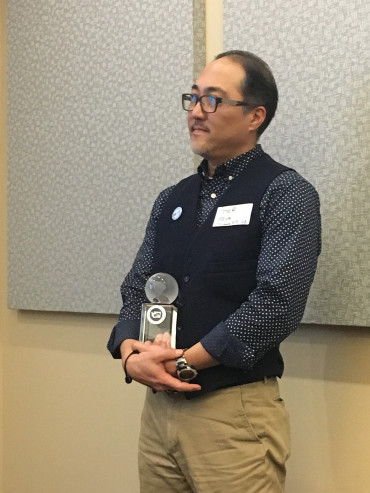
At the State of Washington GIS Day event in Olympia last week, King County’s Peter Keum was awarded the first ever ‘Government Helping Government GIS Recognition Award.’
The award recognizes extraordinary GIS professionals who work for a government agency, but who go beyond their normal duties and outside their normal working days and hours to help other government agencies in Washington State. Peter was nominated by his peers for volunteer activity that included organizing user groups, promoting the use of drones for spatial data collection by government agencies, and supporting Native American Tribes to implement GIS solutions.
Peter is a GIS Analyst who works for King County’s Wastewater Treatment Division.
Read more from GIS & You
Share this:

Seattle Public Safety Survey runs through Nov. 30

The City of Seattle is seeking feedback from people working or living in Seattle in its annual Seattle Public Safety Survey.
The survey is conducted independently by Seattle University researchers, and asks a series of questions to determine safety and security concerns in Seattle. The results of the survey will be reported to the Seattle Police Department and “be used in conjunction with crime data to direct Seattle police resources and services to target unique needs of Seattle’s micro-communities,” according to the City of Seattle.
The survey is open to people 18 years of age or older who live and/or work in the city of Seattle. It runs through Nov. 30 and all responses are confidential. It is available in 11 languages and will take approximately 20 minutes to complete. Learn more at publicsafetysurvey.org.
Share this:

Civil contempt: More than dollars and cents
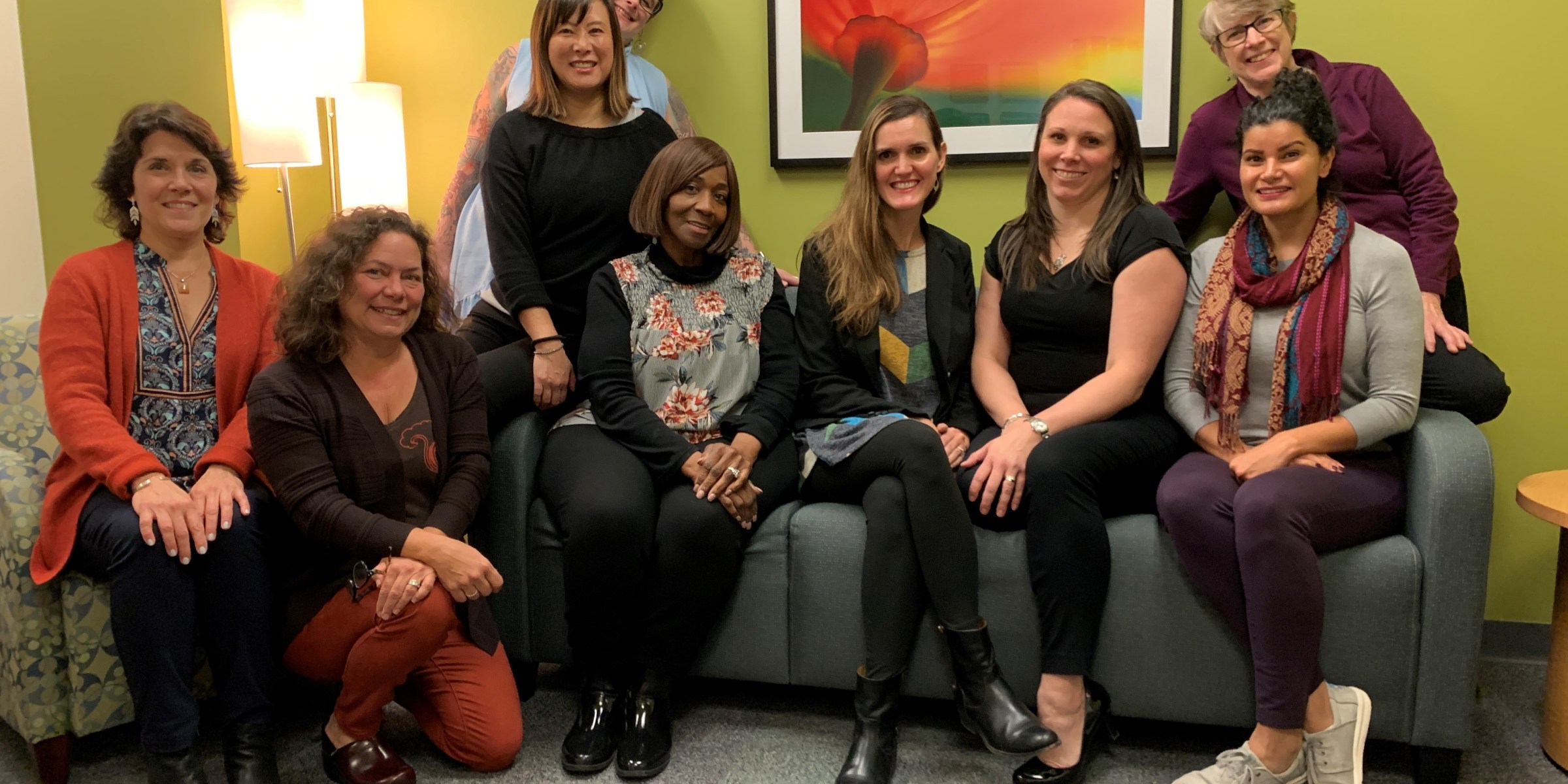
The Family Support Division (FSD) in the King County Prosecuting Attorney’s office had some good news recently. In the third quarter of 2019, they collected more than $900,000 in child support from non-custodial parents which brings the total collections for 2019 to just over $2.6 million dollars. FSD team members said that this figure is great news for families in our caseload who need the money, but said that focusing on this number is not the most important part of the story.
The backstory

Pictured: Several members of the Seattle Contempt Unit
Child support collection has historically been very cold, almost draconian, with a sole focus on the dollars collected.
When a parent fails to pay child support, that parent comes to the legal system’s attention through a civil action for contempt of court. When an individual fails to come to court in response to a contempt order a bench warrant may issue for their arrest. Having an outstanding warrant can lead to arrest or the loss of a job opportunity and that can affect a parent’s ability to pay child support. But veterans of the FSD realized, over time, that this one-size-fits-all approach didn’t work for everyone and, in the long run, may actually deprive the families of the financial support they desperately need.
In fact, some non-custodial parents simply do not have the ability to pay. To address that, FSD dug into the barriers that prevent individuals from being able to meet their court-ordered obligations.
Addressing barriers
A parent can’t meet a financial obligation if he or she is homeless, incarcerated, addicted, or having mental health challenges. Arresting them over and over again won’t likely change things. To address this, FSD uses a team approach and leverage diversion units to help parents.
They can:
- Help a parent secure gainful employment and address issues that may prevent a parent from maintaining that job.
- Modify child support obligations that more accurately reflect a parent’s earning history and ability to pay.
- Work within the system to reduce or waive back support and debt owed to the state if the parent has no realistic ability to repay or has an obligation that should never have been established.
How to get people back on track
The FSD collaborates with the Special Support Enforcement Unit (SSEU) comprised of two dedicated King County Sheriff’s Detectives to manage the outstanding warrants. Det. Scott Richter has been doing this work for 15 years. His partner, Det. Charles Hossner, about 18 months.
This two-person unit, dressed in plain clothes, goes into the field to meet these people where they are and start work addressing the backlog of warrants. They have choices.
- Some warrants are quashed due to a debt being uncollectible.
- Some are managed by contacting the individual and urging them to come into the office to negotiate a new support order and the warrant is quashed.
- Some warrants are managed with a relatively new tool, a field genetic testing kit that addresses issues of parentage. Once the alleged parent is swabbed, the warrant issued for failure-to-test is quashed.
The 18-month-old field genetic testing kit has been a game changer, according to the detectives.
“It used to be, we’d have a related warrant, bring the parent in. The Prosecutor’s Office would have to call a lab. Sometimes, the incarcerated parent would bail out before we got lab over. So we’d never get a swab. Then we’d have to start the entire process all over again,” said KCSO Det. Scott Richter.
According to Det. Richter, DNA field testing has made a big difference in the prosecutor’s abilities to bring the more challenging parentage cases to a successful conclusion.
“We no longer have to bring a parent into the office for testing,” added Det. Charles Hossner. “That trip alone results in time off the job and lost wages for a parent.”
A guiding principle within the FSD contempt unit is to, whenever possible, facilitate the self-sufficiency of the paying parent. Over time, personal accountability and positive self-esteem in a parent leads to predictable and reliable support for the children.
This unit costs less to run and has more effective outcomes than bringing a delinquent parent to court and putting them back in jail. “In the last six or seven years, we have become more money-recovery focused and less about putting-people-in-jail focused,” said Det. Richter.
Addressing the back child support
If a parent is arrested and posts bail, that bail is almost always sent to the Child Support Registry and applied toward the debt. Sometimes the only money a custodial parent ever receives on his or her case is the bail proceeds. Bail amounts can range from $500.00 per warrant up to $5,000 depending upon the number of prior warrants the parent has had over the life of the case.
While the dollars collected for child support are incredibly helpful and the number of warrants managed by the SSEU detectives impressive, the FSD and SSEU detectives are most excited to see the successful outcomes for families as a result of implementing new and innovative ideas into the program. It’s the change in philosophies and the ability to meet people where they are that are the real stars of this successful child support program.
Learn more about this important work at the King County website.
Share this:

Featured Job: Senior Customer Information Specialist (Sr CIS)
Salary: $47,340.80 – $67,620.80 Annually
Location: Seattle, WA
Job Type: Career Service, Full Time, 40 hrs/week
Department: MTD – Metro Transit
Job Number: 2019AH10877
Closing: 12/1/2019 11:59 PM Pacific
Learn more about this position or view all available positions.
Share this:

Standing room only crowd talks storm season prep

A record-breaking crowd of 170+ attended the 8th annual Winter Weather Seminar on Oct. 29, hosted by King County Emergency Management and regional service providers.
As critical partners in winter weather preparedness, response, and recovery, the event brought together businesses, non-profits, and public professionals to discuss preparations for the coming winter storm season, review lessons learned from “Snowmageddon”, and talk about building partnerships to stay resilient. Fresh on everyone’s mind was flooding on the Tolt and Snoqualmie rivers and forecasts for possible early snow, which may have contributed to the high turnout.
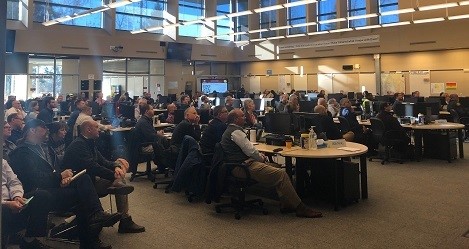
Participants were welcomed by King County Executive Dow Constantine and Councilmember Kathy Lambert. Executive Constantine used the occasion to praise King County Search and Rescue efforts during last winter’s snow emergency and linked current preparations to the County’s update to our Strategic Climate Action Plan. Councilmember Lambert stressed the value of both personal and community preparedness.
Timely and helpful information presented by National Weather Service-Seattle, Puget Sound Energy, King County Emergency Management, Metro Transit, King County Roads, the Flood Warning Center, and Public Health highlighted available resources and reaffirmed the importance of agencies working closely together in battling whatever this winter season brings.






 Employee News