
Learn more about Metro’s Shared Employer Shuttle program

Crossposted from Metro Matters
By Scott Gutierrez

Have you heard about Metro’s “Shared Employer Shuttle” program? On Aug. 15, employers who are interested can learn more during an informational meeting at Metro’s main office.
Metro launched the program earlier this year to work with groups of employers interested in sharing transportation services for their workers. This represents a great opportunity for employers to improve the coverage or frequency of their transportation services, lower the cost of providing service, and help improve regional mobilty. Read more.
Interested groups of employers need to submit a proposal to Metro to offer shared employer shuttle services. Only workers at those companies would be eligible to ride shared shuttles.
All proposals will be reviewed and approved by Metro to ensure the service is safe and complements Metro’s fixed route network. Metro intends to collaborate with interested parties to develop the best solution possible. If a proposal is not accepted upon first review, Metro will provide technical feedback with the option of resubmitting an updated proposal for additional review.
Metro now accepts proposals on a year-round basis, a change we made based on feedback from employers and mobility providers. Proposals should not target existing transit routes or schedules. They should be targeted to riders who would experience considerable travel improvements due to the implementation of this service.
The informational meeting will be held from 3:30 p.m. to 5 p.m. on Aug. 15 at Metro’s office at the King Street Center at 201 South Jackson Street, Room 4C.
Questions can be submitted in advance to SharedShuttles@kingcounty.gov until 12 p.m. on Aug. 14.
Proposals also will be reviewed for:
- Names of the service provider and companies participating in the shared employer shuttle service
- Proposed routes, stop locations, and schedules
- ADA accessibility solutions
- Insurance and indemnification provisions
- Data-sharing agreement
Visit Metro’s Shared Employer Shuttle website for more information about the program and how to submit a proposal.
Share this:

Employee Discount: Seattle Symphony

King County employees can receive 15 percent off most Seattle Symphony concerts this year by using Discount Code CONDUCTOR19. The first offer this season is for 15 percent off the Nine Piano Concerto Concerts happening throughout the year. The promo code Conductor19 will also work on the National Geographic Live presentations, which begin Oct. 23 with Social By Nature. To order tickets:
Order online: www.seattlesymphony.org Enter your Promo Discount Code, CONDUCTOR19 prior to selecting your seats.
Order by phone: Call and order by phone. 206-215-4747 or 1-866-833-4747 and give the operator your Promo Code.
Order in person: Purchase tickets at Benaroya Hall Box Office located at the corner of Third Avenue and Union Street, Monday through Friday 10 a.m. – 6 p.m., Saturday 1 – 6 p.m.
See all available discounts on the Employee Discount webpage.
Share this:

Weed of the Month: Brazilian Elodea
Crossposted from Noxious Weeds Blog
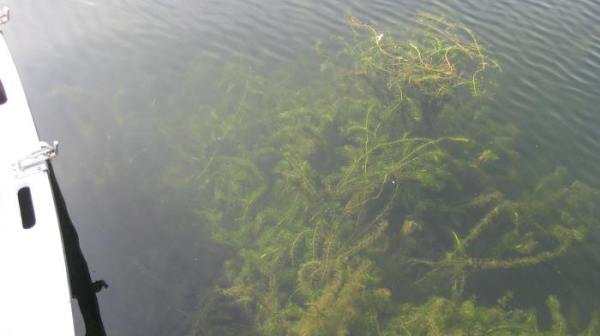
A patch of Brazilian elodea (Egeria densa) starts to top out at Fishermen’s Terminal, Seattle.
Have you visited a lake or river to swim on one of these hot summer days, only to find the water thick with submerged plants? Some of those aquatic plants are natives, but others are nasty invasive species that can quickly dominate a waterbody. One of King County’s peskiest submerged invasives is Brazilian elodea (Egeria densa), a regulated Class B noxious weed. Originally from parts of South America (including Brazil), Brazilian elodea was introduced to the U.S. as an aquarium plant. When people dumped their aquariums into natural waterbodies, Brazilian elodea took over. You can now find it in most U.S. states, as well as in Europe, Asia, Australia, New Zealand, and southern Africa. Washington State has banned the sale and transport of Brazilian elodea, but it still occurs throughout the western part of the state, with the highest concentrations in King County.
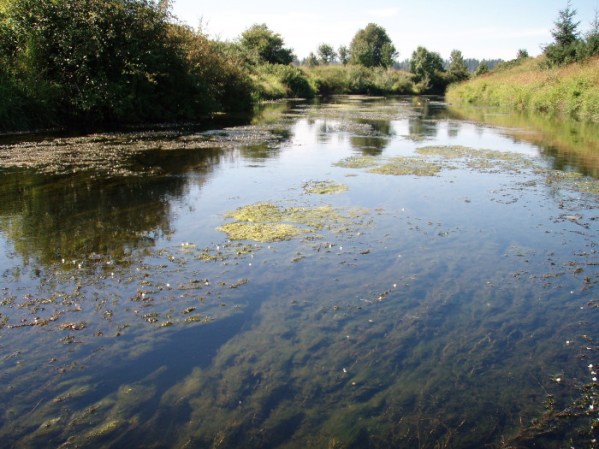
Brazilian elodea is a perennial plant that occurs in still or slow-moving water up to 20 feet deep. In addition to growing underwater, it can also form dense floating mats at the water’s surface.

On the lower parts of the stem, densely packed leaves, smooth to the naked eye, appear in whorls of 3. Higher up, leaves grow in whorls of 4-8.

Brazilian elodea has two major growth periods, in the spring and fall. Some individuals often persist through the winter.

Mature plants produce flowers with three white petals and yellow centers that float on the water. Only male plants have been found in North America, so the species seems to spread here exclusively through plant fragments.
Hitching a ride on boats and trailers is one of the easiest ways for Brazilian elodea fragments to spread among King County’s waterbodies. After using a boat in a waterbody that might have Brazilian elodea, be sure to carefully remove all plant material from the boat, motor, and trailer, and check bilge water for plant fragments. And of course, never dump unwanted aquarium or water garden plants or animals into a natural waterbody.
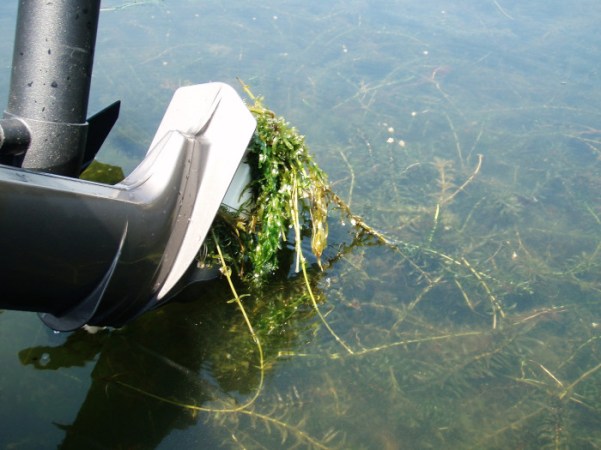
Boats and trailers are some of the major vectors for Brazilian elodea fragments to spread among King County’s waterbodies. Always clean your boat, motor, and trailer after entering a waterbody that might have Brazilian elodea.
Where it shows up, Brazilian elodea causes big problems. Its dense stands can reduce biodiversity and change predator-prey relationships. Recreationally, it can ruin swimming areas, harm boat motors, and snag fishing lines. Mats on the water’s surface can serve as breeding grounds for mosquitoes, deplete water oxygen, and increase water temperature. When plants die back in the fall, they not only use up the water’s dissolved oxygen but also pump it with nutrients, potentially increasing algae growth in the area.

Dense stands of Brazilian elodea can reduce biodiversity and change predator-prey relationships in a waterbody.
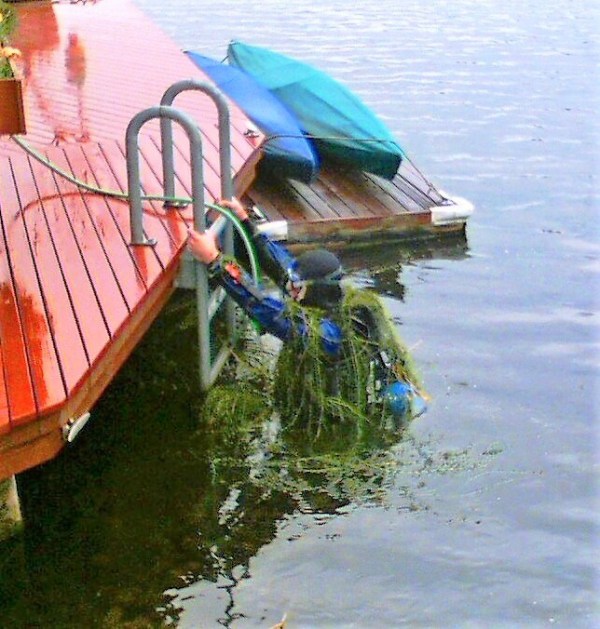
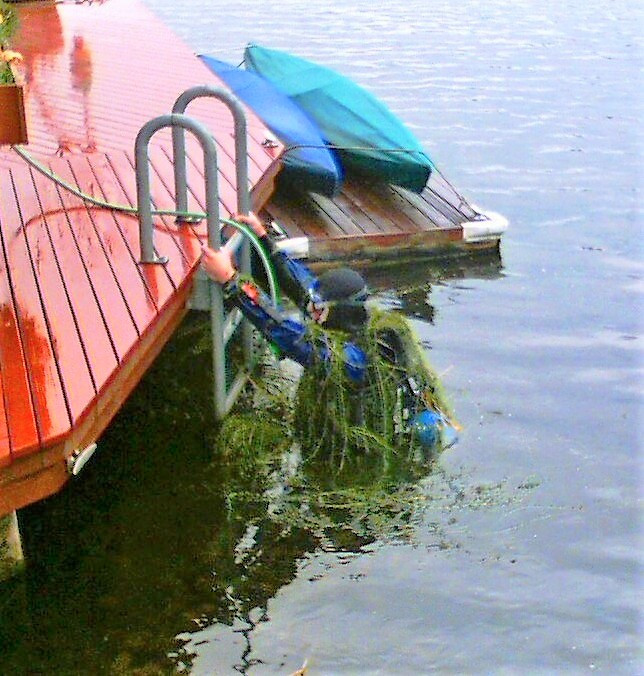
It’s not fun to swim—or dive—around Brazilian elodea.
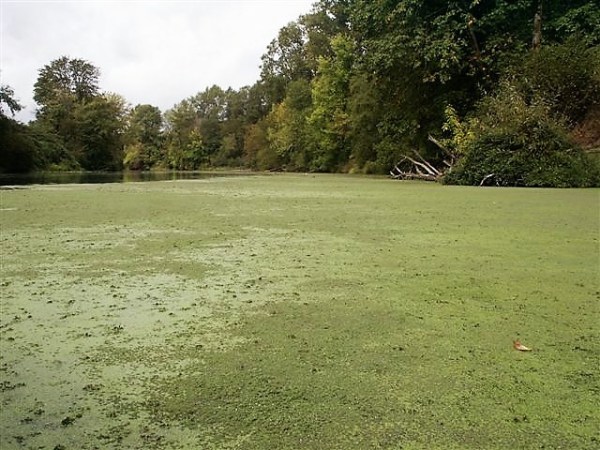
When Brazilian elodea plants die back, they can use up the water’s dissolved oxygen and increase water nutrients, potentially increasing algae growth in the area. Photo by the Thurston County Noxious Weed Control Board.
That said, not all submerged aquatic plants are Brazilian elodea, or even invasive. Brazilian elodea is easily confused with its native look-alike, American waterweed (Elodea canadensis). American waterweed resembles and grows much like Brazilian elodea, but it’s smaller and less robust, with smooth-edged leaves usually in whorls of 3.

American waterweed (Elodea canadensis) (left) resembles and grows much like Brazilian elodea (right), but it’s smaller and less robust, with smooth-edged leaves usually in whorls of 3.
Brazilian elodea also looks somewhat like hydrilla (Hydrilla verticillata), a Class A noxious weed. However, hydrilla has visibly toothed leaves that grow in whorls of 3-10. It reproduces not only through stem and rhizome fragments, but also via seeds, tubers, and turions. Hydrilla has only been found once in King County, in 1995, when it occurred in two small lakes. It has since been eradicated from the county.

Hydrilla looks somewhat similar to Brazilian elodea, but it has noticeably toothed leaves that grow in whorls of 3-10. Photo by the Washington State Noxious Weed Control Board.
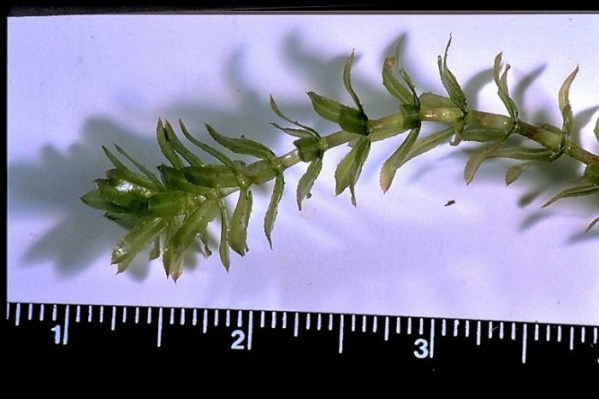
Hydrilla reproduces not only through stem and rhizome fragments, but also via seeds, tubers, and turions. Photo by the Washington State Noxious Weed Control Board.
For information on Brazilian elodea control, visit the following pages:
- Brazilian Elodea Best Management Practices
- Brazilian Elodea (King County Noxious Weed Control Program)
- Brazilian Elodea (Washington State Noxious Weed Control Board)
As always, if you have any questions about Brazilian elodea or another noxious weed, feel free to contact us at 206-477-WEED (206-477-9333) or noxious.weeds@kingcounty.gov.
Share this:

Kudos! to Public Health for innovative use of comics for emergencies
During a severe disease outbreak or bioterrorist attack, people will likely experience stress levels that will make it difficult to process emergency information. Public Health’s Preparedness and Communications sections worked with a professional comic artist to produce illustrations to help the public quickly comprehend what to do in a public health emergency that requires them to get emergency medications or vaccinations. The premier public health publication, American Journal of Public Health, included an article about the innovative use of these comics in its July issue, Medical Countermeasure Comics: Visualizing a Public Health Emergency Response.

Share this:

A Photo Finish for 2018 Clean Team Ambassador of the Year Scott Siemers

Shared from King County Superior Court and Downtown Seattle Association
King County Superior Court has several treatment programs. One of the programs is Family Treatment Court. The Downtown Seattle Association recently voted a 2016 Family Treatment Court graduate Scott Siemers the DSA Clean Street Ambassador of 2018! Enjoy!

The judge asked for a picture of Scott Siemers. Not for legal reasons, but to celebrate his graduation from the treatment program that successfully reunited Siemers with his three-year-old daughter and fiance. It was a good day, and Siemers ended it by getting married.
Siemers has stayed sober since and, in June, his dedication to a sparkling downtown earned him recognition as 2018 DSA/MID Clean Team Employee of the Year.
The recognition coincides with the first anniversary of Siemers’ hiring. Prior to joining the Clean Team, he was living in transitional housing in Maple Valley and struggling to find work. A fellow resident told him about the Metropolitan Improvement District. Siemers interviewed on June 20, 2017, and was hired on the spot.
Coworkers say Siemers is a joy to work with, crediting his sound decisions, professionalism and skill training new team members. MID ratepayers and DSA members praise his customer service and consistent, quality work.
After joining the maintenance department, Siemers worked his way to field supervisor and lead ambassador – promotions that make sense when you learn about his management experience directing food and beverage services at Marriott hotels and as executive chef at Bellevue’s Hilton Hotel.
What does he think about the change from hospitality and fancy food?
“I feel more at home here than in any job I’ve ever had,” Siemers says. “There’s so much positivity here. Lots of people are trying to improve their lives; it’s like a family.”
Downtown ambassadors are on the sidewalks and streets every day, and they often interact with those experiencing homelessness and struggles with addiction. For Siemers, it’s a reminder of where he was and what he once faced.
Says Siemers, “It helps keep me sober. That’s my old life. I don’t want to go back.”
Days off are all about family. He often hikes, fishes and enjoys nearby trails with his wife and now six-year-old daughter. Tiger Mountain is a favorite route.
“Everywhere I go I try to work hard,” Siemers says. “I feel blessed by God every day. I do the best that I can and have a great attitude.”
And the family photo snapped on graduation day? It’s still hanging in the King County courthouse.
Share this:

Workforce Magazine Presents 2018 Game Changer Award

For someone new to HR, Zackary King has the drive, humility and forethought of a true Game Changer.
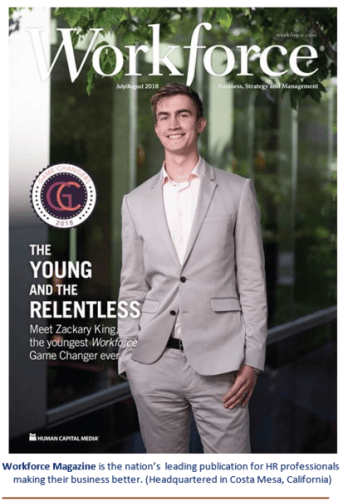 The Public Health, Seattle & King County Education Engagement Strategy (EES) Program nominated Public Health Human Resources Analyst Zack King for Workforce Magazine’s Game Changer Award. King is now one of 25 recipients of this national recognition.
The Game Changer Award recognizes King’s support of strategic plans for Public Health Environmental Health Services Division’s Office of Equity. The EES Program conveyed appreciation and seeks to expand its partnership with Public Health’s HR team.
Zack’s activities supported:
- Public Health’s focus and priority areas of strengthening collaborations with academic partners to promote excellence in public health practices and workforce development.
- Environmental Health’s emphasis on STEM awareness, employee and community engagement, workplace enrichment, and morale.
Congratulations, Zack! We celebrate you and the continuation of our working together.
Read the Workforce Magazine article here.
Share this:

Social Media Spotlight: King County Environmental Lab on Instagram

Welcome to the King County Environmental Lab’s Instagram!
This is the SoundGuardian, King County’s high-tech, fully equipped research vessel. If you visit the Ballard Locks on the right day, you might see it and the crew on their way to collect samples out in Puget Sound. (Photo: Vigor Ballard)
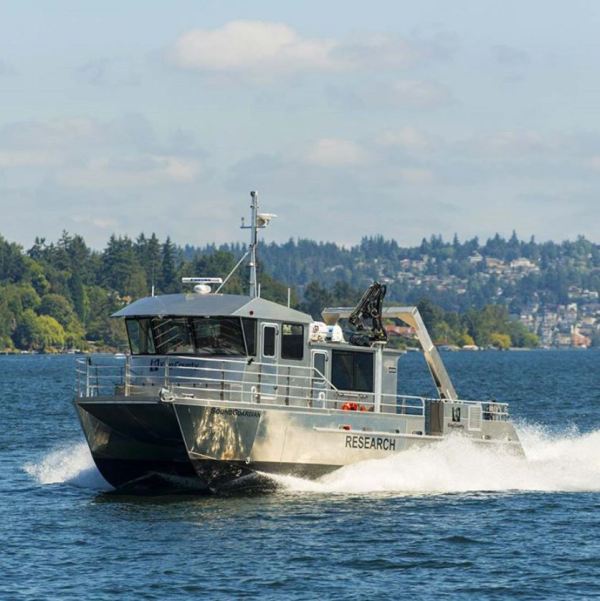
King County Environmental Lab helps safeguard the region’s water quality, and the Environmental Lab’s research vessel SoundGuardian plays a significant role in that effort. SoundGuardian is currently deployed in the north Puget Sound area supporting the orca recovery efforts!
Follow kcenvirolab on Instagram today!
#onaboat #researchvessel #waterquality #pugetsound #science #soundguardian #kcenvirolab
Share this:

Featured Job: EMS Instructor I and II – Short Term Temporary

Closing: 09/09/18 11:59 PM
Salary: $38.06 – $48.25 Hourly
Location: Multiple locations in King County
Job Type: Short Term Temporary, Part Time, Standard Weekly Hours Vary
Department: Public Health – Seattle & King County
Job Number: 18NH08502
The EMS Instructors I and II will teach basic Emergency Medical Services (EMS) skills to students completing basic Emergency Medical Technician (EMT) and CPR Training.
This recruitment will be used to build a pool of Short Term Temporary EMS Instructors level I & level II.
Who May Apply: This position is open to the general public.
Work Location: Various locations throughout King County.
For more information, contact Nic Horea at 206-263-8736 or Nicolae.Horea@KingCounty.gov.
Learn more about this position or all available jobs.
Share this:

Pet of the Week: Mark
Crossposted from Tails from RASKC
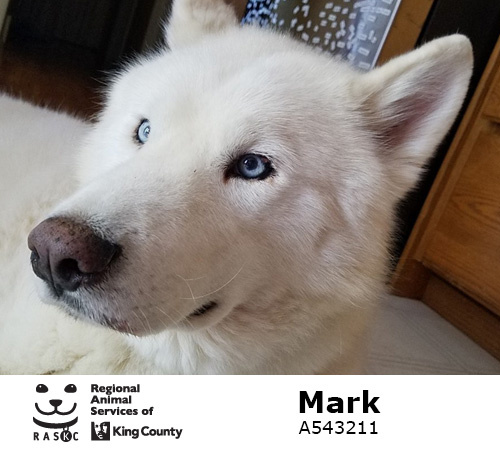
Gentle giant Mark is our Pet of the Week!

This five-year-old Siberian Husky loves to be around people. His personality color is “Bashful Blue,” meaning he can be a little shy at first. But, once he gets comfortable, Mark is a very happy and easy-going boy.
Mark has been in a foster home for a few months while he was recovering from some digestive issues. He lived with two dogs, a cat, and children ages 9 and 15. He got along well with everyone, but did want to play a bit too roughly with the cat, so he may do best in a home with no cats. Since Mark isn’t a big fan of being alone, he would prefer to have a predictable routine if he is home without people for long periods of time.
In addition to hanging out with his people, Mark’s favorite things include playing with stuffed animals and riding in cars. This handsome boy is neutered, current on vaccinations, and microchipped. His adoption fee includes a certificate for a free veterinary exam and 30 days of free pet insurance through Trupanion.
You can learn more about Mark on our website at kingcounty.gov/AdoptAPet. We hope to see you soon!
Share this:

Finding hidden value at the bottom of a sediment tank

Crossposted from Clean Water Stories

A big mechanical job at our West Point Treatment Plant replaced a special part of our sedimentation tanks. The sedimentation tanks are part of how we clean everyone’s sewer water.
What’s the real cost?
Have you ever been undecided when buying an appliance, trying to choose between a standard or select model? You probably wished you had some data to help you make an informed choice. Well, by studying costs and crunching the numbers, maintenance engineers at West Point determined that what looked like a higher priced option for certain replacement parts was actually the best value in the long run.
The cost of equipment isn’t just the cost of buying it. We work on being smart about how we take care of all our “stuff” and look at all of the costs, or “life-cycle” cost. We ask questions like:
- What does it cost to buy it – or design and build it?
- What does it cost to maintain / operate it – including labor and energy costs?
- How long does it last?
- What does it cost to recycle or dispose of it when we eventually replace it?
Investing in performance
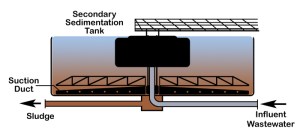
Suction ducts sweep the floor of the tank, scooping up the particles that settle out of the sewer water (sludge) to move it to a different part of the plant for more treatment.
When we clean wastewater, one of the steps is to let it flow slowly through sedimentation tanks, also called a settling tanks or clarifiers. It allows particles in the water to settle to the bottom as the water flows slowly through the tank.
At the bottom of the tanks, where all those particles are collecting, suction ducts sweep the floor, scooping up that settled sludge to move it to a different part of the plant for more treatment.
The now “old” suction ducts were a standard type back when they were installed. But their ‘plain steel’ was rusting and corroding – and the ducts were failing.
Our maintenance teams at West Point helped the ducts last longer by repeatedly applying galvanized and epoxy protective coatings over the years, but eventually they needed to be replaced.
Initially, it seemed that new stainless steel suction ducts might cost too much, but they’re highly resistant to corrosion, eliminating the need for overhauls and coatings every few years. Virtually rustproof, the amount of money we would save in lower maintenance offset the cost of the higher grade steel.
Cultivating mastery

Workers inspect the alignment of the new ducts.
Replacing heavy, crumbling, decades-old ducts requires technical expertise, and West Point maintenance crews were up to the task. Patrick Perrin, industrial maintenance mechanic, devised a method, with a few extra welds, that allowed a two person team to do the work of four. The work also provided valuable service time for industrial maintenance mechanic and project lead Mike Wallace to earn his Master Mechanic certification.
Working on our values
Replacing West Point clarifier suction ducts with cost efficient, stainless steel upgrades shows our employee’s commitment to finding innovative maintenance solutions and being responsible stewards of taxpayer dollars.






 Employee News