
Closed captioning now available for budget, ESJ videos
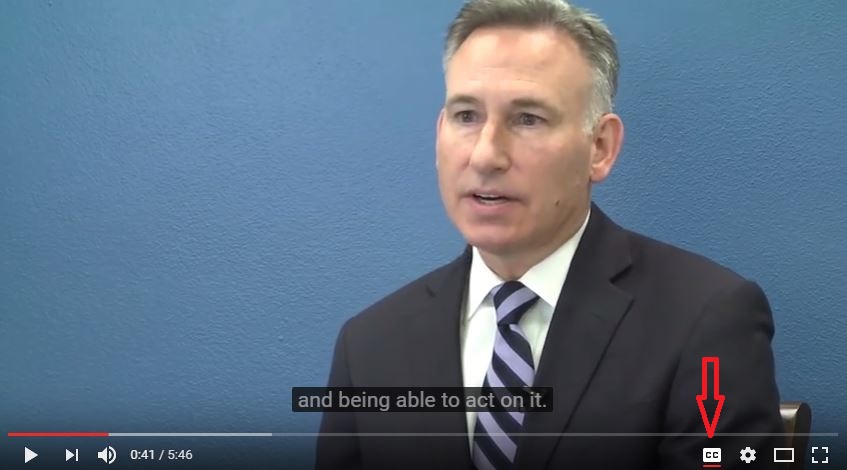
Our recent videos on the 2017-18 Proposed Budget and the 2016-22 Equity and Social Justice now have closed captions.
You can watch the three videos below:
- 2017-18 Proposed Budget Preview with Executive Constantine
- King County Equity and Social Justice Strategic Plan 2016-2022
- Dwight Dively 2017-2018 Budget Overview
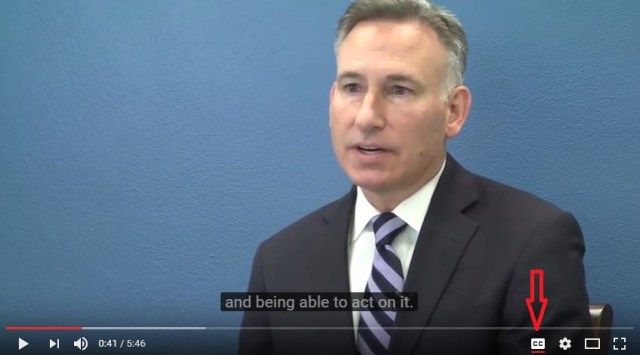
To turn on or off closed captions, click on the CC button in the bottom right of the video player (see below).
Share this:

Worksite flu clinics have started

Flu shot clinics are coming to many county worksites this September and October, ending on October 21. Protect yourself and those you love by getting a flu vaccine. Check out the flu clinic schedule for a site that’s convenient for you, and mark your calendar today.
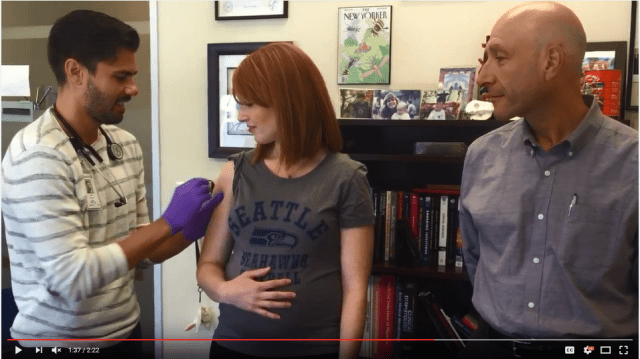
In the video below watch Dr. Jeff Duchin, our King County Health Officer, put out the call for employees to get their flu shots.
Visit www.kingcounty.gov/flu to learn more and find an upcoming flu clinic near you.
Share this:

A new video addresses voting rights of citizens with felony convictions
Crossposted from For The Defense
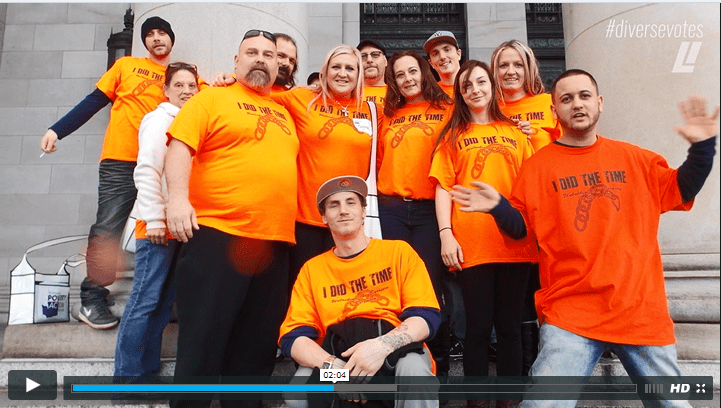
A powerful new video underscores what many persons with felony convictions in Washington state are never told: Once out of custody and no longer under the supervision of the state Department of Corrections, he or she can register to vote.

Two DPD employees – Dua Abudiab and Raymond Delos Reyes – are in this year’s WLI class and helped to produce the video.
The 4-minute video – with clips from persons with felony convictions who said they went years thinking they had permanently lost the right to vote – was released by the 2016 graduates of the Washington Leadership Institute (WLI), a program that recruits, trains, and develops minority and traditionally underrepresented attorneys for future leadership positions in the legal community.
Two DPD employees – Dua Abudiab and Raymond Delos Reyes – are in this year’s WLI class and helped to produce the video.
View the video below and read more at For The Defense

Share this:

Let your poetry travel by bus: Poetry on Buses

 Many of us have chosen to live here because of – or despite – the streams, waterfalls, Puget Sound, snow and yes, even rain. Share your soggy celebrations of our watery region – the deadline is Sept 30!
Theme: Your body of water
Who: Only King County residents are eligible
Length: 50 words or less
Languages: Amharic, Somali, Tlingit, Vietnamese, Chinese, Punjabi, Spanish, English
Deadline: Sept 30, 2016 11:59 PM
For more information go to: www.poetryonbuses.org/submit-a-poem
Brought to you by the many groups that appreciate clean water: 4Culture, Seattle Office of Arts & Culture, Sound Transit, King County Metro, Wastewater Treatment Division, Water and Land Resources Division, Seattle Public Utilities, Amazon Literary Partnerships, King County Library System, Seattle Public Library and Seattle Escribe.
Share this:

Attorney to be honored for a major federal court win for immigrant detainees
Crossposted from For The Defense
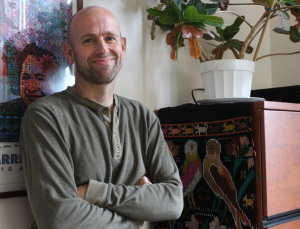
 The win last year was a game-changer. Thanks to a class-action lawsuit brought by several public interest attorneys, a federal judge ruled that immigrants with mental disabilities facing deportation proceedings are entitled to a lawyer, a first-ever affirmation of the right to appointed counsel for immigrant detainees.
One of the lead attorneys was Matthew Adams, legal director at the Northwest Immigrant Rights Project (NWIRP) in Seattle and a member of the King County Public Defense Advisory Board. He’s now about to receive the Washington State Bar Association’s Award of Merit – its highest honor – at WSBA’s annual dinner in Seattle on Sept. 29.
Read more at For The Defense
Share this:

Email to participate in 2016 Employee Survey

On Monday, September. 26, you will receive an email from 2016KCEmployeeSurvey@orcsurvey.com with the subject line “King County Employee Survey – 2016” inviting you to participate in the King County 2016 Employee Survey. It will look similar to the example email pictured below:
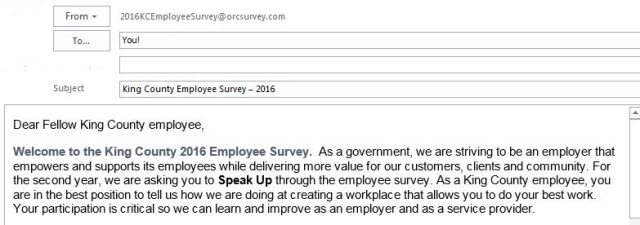
This year’s survey is open from September 26 through October 21, 2016. The survey should take about 15 minutes and can be completed during working hours. Your responses are totally confidential and cannot be traced back to you. The survey link cannot be forwarded to coworkers because each survey link is unique. Each person must use the survey link they were emailed.
Please take the time to provide your feedback on how we are doing as an employer and where we can make improvements. How are we doing now? What should we work on next? Changes happen from your suggestions.
This survey is a great opportunity to let the County know what’s on your mind.
For FAQs and more information about the survey visit www.kingcounty.gov/employeesurvey.
Share this:

Saying goodbye to a public health hero, “Uncle Bob” Santos

Crossposted from Public Health Insider
 By Kalayaan Domingo, Healthy Eating and Active Living Project Manager at Public Health
A celebration and remembrance in honor of Robert “Uncle Bob” Santos will be held on Friday, September 23 from 3 p.m. to 6 p.m. at WAMU Theater at CenturyLink Field (800 Occidental Avenue S., Seattle, WA 98134), located on the corner of S. Royal Brougham Way & Occidental Avenue S. The public is invited to attend.
On August 27th, 2016, Seattle lost one of our hometown heroes, Bob Santos, or Uncle Bob, as he was affectionately called.
If you’ve visited Seattle’s International District, there is a good chance that you met Uncle Bob. I am fortunate enough to have known Uncle Bob since I was a child. My father was one of the many Asian-American activists he inspired and mentored during the 1970s and throughout his lifetime.
A lifelong resident of the neighborhood, Bob Santos was born in 1934 to a Filipino immigrant father and a Native American/Filipino mother and raised in what was then called Chinatown.. The International District was Uncle Bob’s home, and he fought tirelessly to preserve and improve the area for its residents and the larger Asian-American community. He focused on many issues, but was particularly committed to racial equity, including health equity.
Read more at Public Health Insider
Share this:

Following the line to inspiration

Crossposted from King County WTD
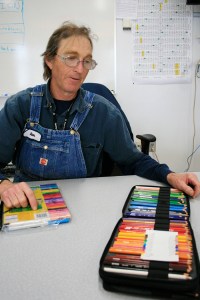 Senior Gardener Jim Davis can be considered the artist-in-residence at South Plant. If you stop into the lunchroom in the Annex Building you’ll see his unique and interesting contour drawings hanging on the wall. While Jim finds inspiration in dramatic subjects like Seattle Seahawks players, most of his drawings installed at South Plant are of his coworkers.
“There’s something about an ordinary person doing an ordinary thing that is inspiring to me,” he says.
Jim has been an artist ever since his third grade teacher complimented one of his pictures. He’s been drawing ever since, but it wasn’t until he spent some time studying architecture that he chose his preferred style of contour drawing.
Cover photo: Each of Jim Davis’ drawings can take anywhere between 20 and 30 hours to complete, and some have even taken 50 hours.
Read more at King County WTD
Share this:

Employees change work environment, open up to new opportunities

Photo by Paul Israel
Working with strong personalities can be challenging, especially when they’re all on the same team. To help create understanding and better work flow, it’s important to recognize what is impacting the group dynamics and address these concerns directly.
One construction crew in the Parks and Recreation Division of King County DNRP is taking on this challenge, working to improve the culture for themselves and build a better, more efficient work environment.
Aaron Hall, the supervisor for this group, worked with staff after the 2015 King County Employee Survey to identify communications as a key area for their work group to improve on.
“We went through our survey results and using the action plan sheet looked at the questions one-by-one,” Aaron said. “We wanted to identify something to work on and realized communications and team building were important to us.”
Using the action planning survey tool, Aaron and his team began to pinpoint areas where there were communications breakdowns. Noticing that these issues happened when interacting with other workgroups, the group decided to start having short all-staff meetings. While it didn’t seem like much, these brief check-ins have dramatically changed the outcome and impact of work being done.
“We’re having more preconstruction meetings and holding smaller safety meetings with our four different work groups,” explains Aaron. “These tailgate meetings go over the safety, workflow, goals for the day and expectations.”
If needed, the group meets at the end of the day as well, to recap the day’s events and issues, as well as go over what will happen the following day.
“It’s our goal to provide a structured opportunity for everyone to be engaged and provide input on project decisions. We’re hoping that this will increase personal influence and team cohesiveness.”
To build on this work, Aaron and his work crew are planning to take the “King County Four Generations in the Workplace” training, use Myers-Briggs tests to identify personal work styles and organize regular team building activities.
“I thought it would be great for our workgroup to attend the Four Generations trainings because it’s beneficial in the long run,” Aaron said. “It would be pretty insightful too since we have people from every age group in our crew.”
“The Myers-Briggs tests will also help us improve our communications between such different personality types.”
While Aaron admits that people seemed initially hesitant to participate, over the last year his crew has come around, and are interested in the meetings and upcoming trainings. He looks forward to the crew growing closer as a team and excelling at their work even more through open, clear and honest communication.
“We had a little bit of pushback, but it’s been nice to get something going,” he said. “This is a great place to work, with good people who want to do their best.”
“It’ll be nice to do some team building events too, like go kart racing or baseball games.”

This DNRP crew is benefiting from improving communications and team building. Pictured left to right: Top row: George Anselmo, Scott Baker, Clayton Peck, Doug Munroe, Rodger Clow, Alex Sirotinskiy, Jason Waters, Charles Kobs, Bottom Row: Aaron Hall, Tim Eldridge, Scott Hill, Heather Simon, Paul Israel, John Jeppesen, Tyler Thompson, Not pictured: Scott Ayers
Share this:

Public Health teen sex education program expanding nationally, making difficult conversations easier
“We have been doing this for so long now that kids in King County just call their sex ed FLASH.”
Andrea Gerber says this matter-of-factly. She has good reason to be proud of both the longevity and the quality of the FLASH curriculum. Along with her colleague Kari Kesler, the two led a three-day training in May that attracted 35 leaders and health educators from 14 states across the U.S. to become experts on FLASH, showcasing the success of the curriculum and its far-reaching impact.
“It was amazing to have people from all over the U.S. attend the training. It was really great,” said Kari.
FLASH is a widely-used, and incredibly popular sexual health education curriculum developed by Public Health – Seattle & King County employees. Its four main goals focus on preventing teen pregnancy, STDs and sexual violence, and increasing family communication about sexual health. It is also LGTBQ friendly and designed for use with students from all walks of life. The curriculum covers elementary, middle and high school as well as special education classrooms.
“Many districts in the County use FLASH in some way or another,” said Kari. “So to the kids, sex ed is FLASH.”
Originally created in the in the mid-1980s by Family Planning Health Educator Beth Reis, the curriculum has been updated and revised many times by Health Educators at Public Health as well as by community partners in schools and agencies. The High School curriculum underwent a major overhaul in 2011, and then again in 2014. During this most recent makeover Kari and Andrea worked with another Family Planning Health Educator, Becky Reitzes, as well as community partners Rebecca Milliman from the Harborview Center for Sexual Assault Traumatic Stress and Mo Lewis from the King County Sexual Assault Resource Center to redevelop and improve the curriculum. A comprehensive overhaul of the curriculum was done, with a focus on bringing it to a larger audience through national endorsement.
“We want to bring the curriculum to a wider audience, so we’ve changed the scope slightly and added some new components,” explained Andrea. “There’s been lots of new research on teen pregnancy and STD prevention, and new standards for sexual health education. We wanted to put FLASH in alignment with current research and these new standards.”
“The results from our evaluation will determine if can be listed as an evidence based program, instead of a promising program as we are now.”

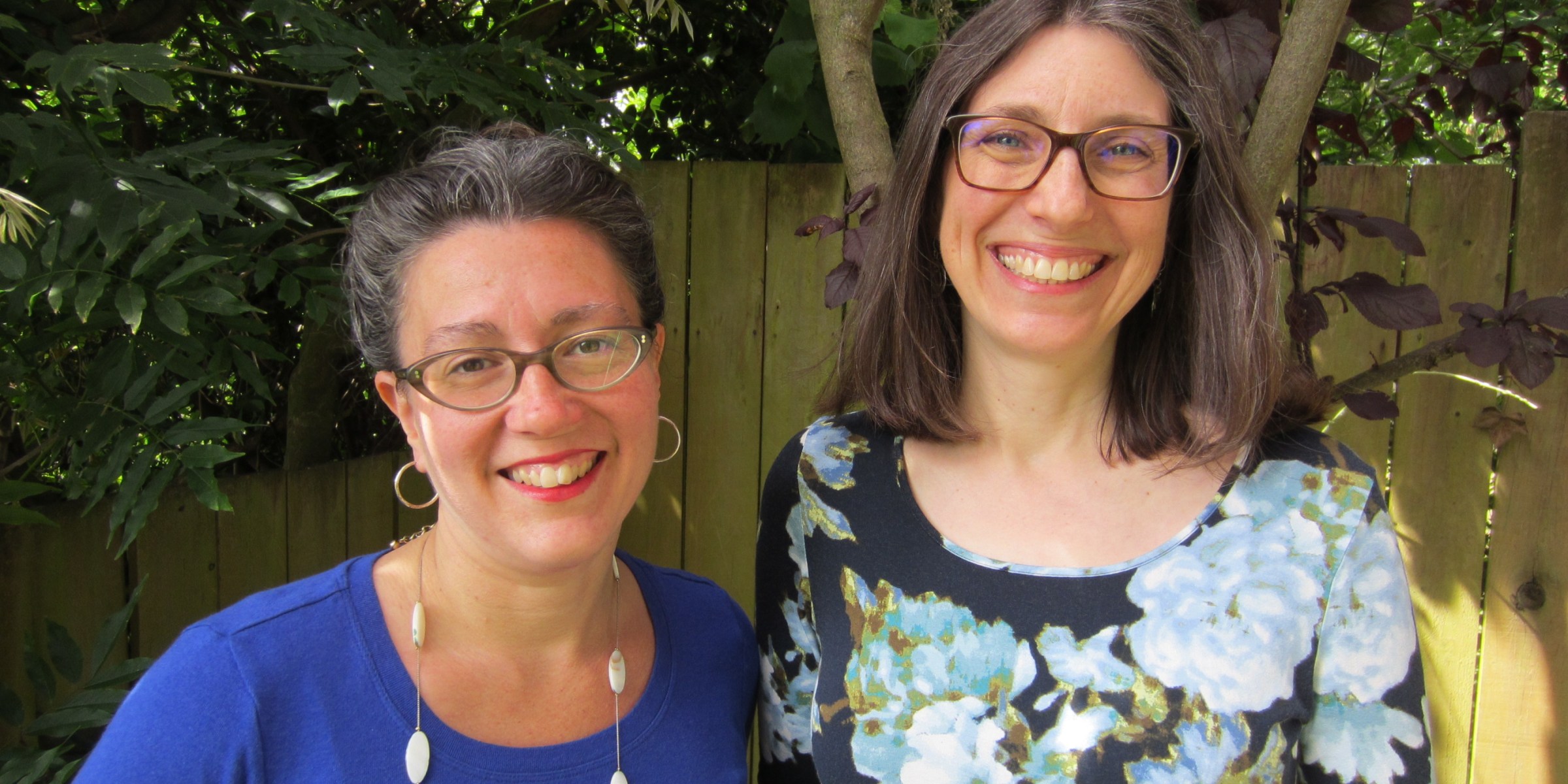
Andrea Gerber and Kari Kesler are working to revise the FLASH curriculum for national endorsement.
Andrea is referring to the five-year grant FLASH was awarded by the U.S. Department of Health and Human Services, Office of Adolescent Health (OAH) to evaluate and improve the curriculum. While broadly used since its inception, FLASH will now undergo a formal evaluation process to prove its success in preventing teen pregnancy. This is necessary for it to be included in the elite list of national programs identified by the OAH as evidence-based models of education.
In its second year of the five-year evaluation, the curriculum is still going strong, gaining momentum and followers on its course to becoming one of these “proven” programs.
“It’s comprehensive in scope and covers everything needed in a classroom, like many text books,” said Kari. “It’s just that few sex ed programs have the advantages of a textbook, as well as being practical, which is probably why it was identified as the most ready program to fill that gap.”
“The curriculum is designed with a lot of scripting, which is a big support for teachers who may be anxious about teaching sex ed.”
A topic that can be overwhelming for adults to bring up with teenagers, it is important to provide health educators with the tools needed to do so in a safe and comfortable environment. Andrea and Kari explain that having competent, capable educators means youth are more likely to feel comfortable as well, and open up about their experiences, including those most difficult to speak about.
“FLASH is meaningful and resonates for all students in the classroom,” said Andrea. “We’ve actually heard stories from other states, where people have been using FLASH, where kids came forward and said they were currently experiencing sexual abuse.”
Andrea and Kari share that due to its ability to connect with youth, the curriculum has been used not only by teachers, but also PeaceCorps volunteers, home school programs and parents. It has even received interest from California to become a state-approved curriculum for school-led mandatory sex education classes. While the current version is used in many places, once it is a fully vetted, evaluated program with national endorsement then it can also be used by programs that require an evidence-based curriculum.
“FLASH is already being used in every state at every level, and even internationally,” said Kari.
The two employees look forward to continuing their work evaluating the curriculum and leading the educator trainings. Andrea and Kari understand the work of Public Health as a department and their input on the program are measured not just in awards and national recognition, but in the community impact it has on youth and families.
“This has brought positive attention to King County in such a great way,” said Andrea.
“We love to hear from students and teachers who have enjoyed the curriculum because it was meaningful to them,” said Kari. “It’s very satisfying to do this work. We are lucky we get to do it.”






 Employee News