
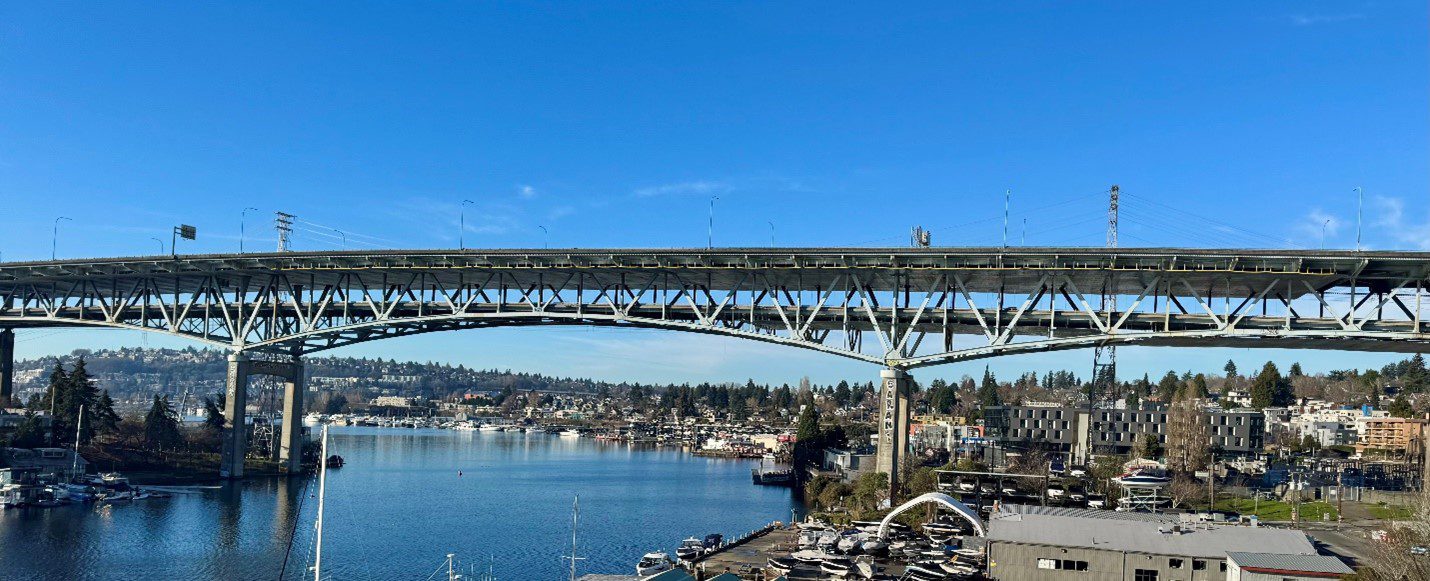
Construction to clog northbound I-5 this summer
WSDOT is launching “Revive I-5” work this summer to rehabilitate I-5 and the Ship Canal Bridge in Seattle. Major construction begins this July, lasting about four weeks. Work will continue over the next two years, ending in 2027.
There will be significant northbound I-5 traffic disruptions this summer. During the northbound closures and lane reductions, Express lanes will stay open 24/7 in the northbound direction.
2025 key dates
- June 20 – 23 (Friday night to Monday morning): Northbound I-5 two-lane reduction across Ship Canal Bridge.
- July 18 – 21 (Friday night to Monday morning): Full northbound I-5 closure from I-90 interchange to Northeast 45th Street.
- July 21 – Aug. 15: Northbound I-5 across the Ship Canal Bridge will be reduced to two lanes, 24/7 for four weeks. The speed limit will be reduced to 50 mph.
- Aug. 15 – Aug. 18 (Friday night to Monday morning): Full northbound I-5 closure from I-90 interchange to Northeast 45th Street.
- Aug. 18: All northbound I-5 lanes reopen: Early Monday morning all northbound I-5 lanes will be open to traffic.
Getting to downtown Seattle
- To access downtown Seattle during the full closures, people need to use Edgar Martinez Drive or the Dearborn, James or Madison Street exits (see alternate route map). All other northbound I-5 exits to downtown Seattle will be closed.
- People traveling north of downtown Seattle should use the express lanes or other alternatives.
- People should expect delays in both directions on I-5 during these closures and lane reductions (see map of lane reductions).
Plan Your Commute
- Ride transit: Use your county-issued ORCA card on buses, light rail, some ferries, and more
- Shift your schedule: Travel off-peak hours when you can
- Plan ahead: Explore alternate routes and bypass I-5 detours
- Stay informed: Check live traffic and construction alerts
Resources:
- Learn more about theRevive I-5 Project
- Employee Transportation Program
- WSDOT travel app and social media
Service Alerts – Stay informed about delays, reroutes or closures that may impact transit.
- King County Metro – Service Alerts
- Sound Transit – Service Alerts
- Community Transit – Rider Alerts
- Pierce Transit – Detours and Rider Alerts
- City of Bellevue Transportation – Traffic Advisories
Photo: Courtesy of Seattle Department of Transportation.






 Employee News