
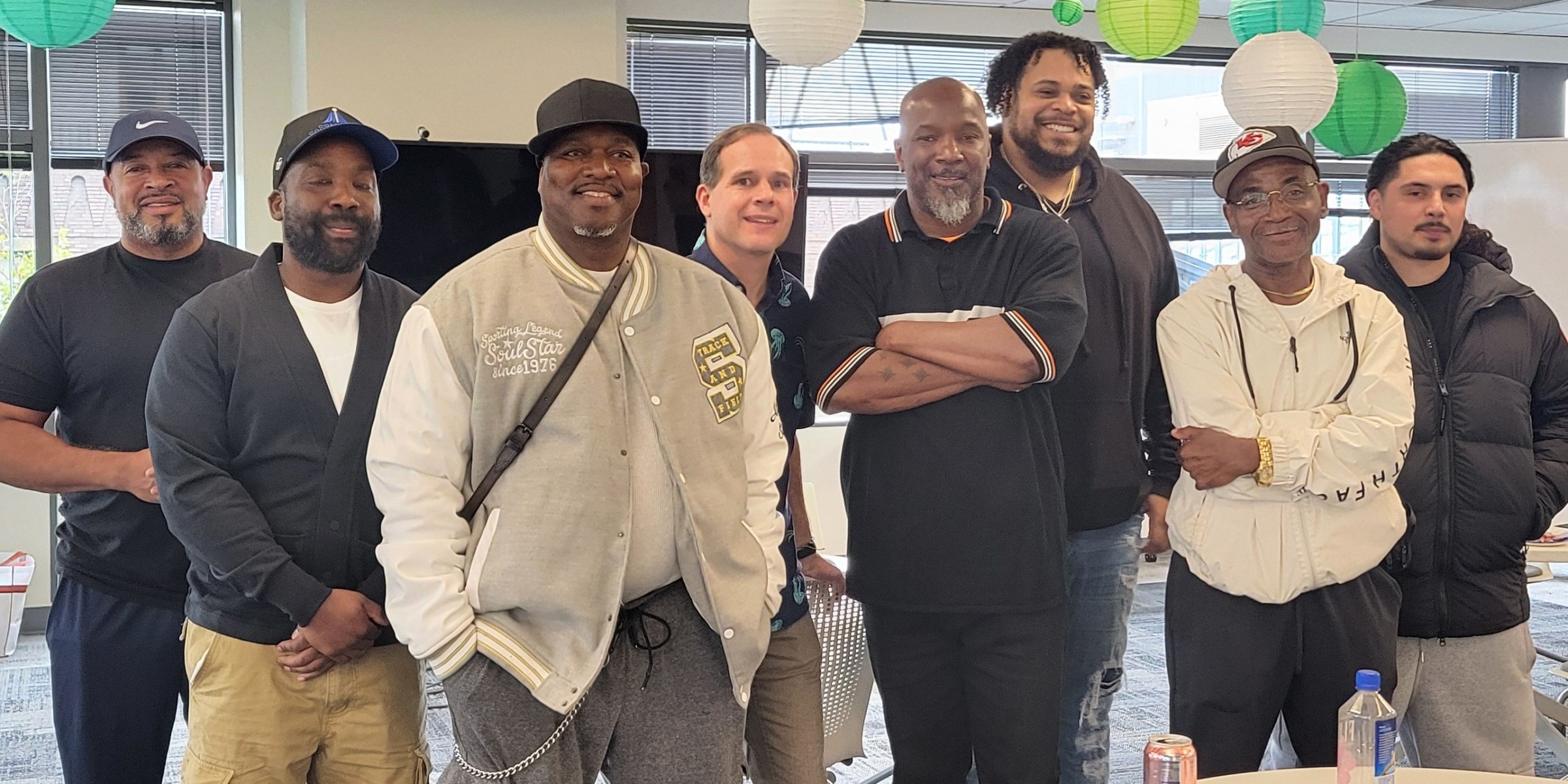
Green Workforce Development Training receives Innovation Award for Equity and Racial and Social Justice
The recipient of the 2024 Best-Run Government Innovation Award for Equity and Racial and Social Justice is the Green Workforce Development Training program. Developed by the Solid Waste Division in the Department of Natural Resources and Parks – with a big assist from community-based organizations – the innovative job training program protects the environment, provides high-demand job skills to BIPOC and frontline communities, and helps the building industry meet requirements to deconstruct buildings and salvage materials that may still have value. Eighteen participants have completed the training, and several have moved into jobs in the demolition-and-construction industry. The Green Workforce Development Training Project Team comprised Brody Abbott, Kinley Deller, Quest Jolliffe, Nori Catabay, and Jesse Gonzalez.
In developing the training program, the Solid Waste Division identified a connection among several factors in our region:
- An increased demand for skills in environmental protection and an increase in green job opportunities in deconstruction and related fields
- Not enough skilled workers with expertise in deconstruction and salvage to meet the industry demand
- Disparities in household income, with BIPOC (Black, Indigenous, and People of Color) households earning below the county average
“Our forward-thinking team created a training program that helps the building industry address a worker shortage in deconstruction and salvage services and provides skills to BIPOC and frontline communities that can lead to better paying jobs and help close the economic and wealth gap,” said Rebecca Singer, director of the Solid Waste Division. “This serves both Solid Waste’s long-term business goals and the County’s equity and racial and social justice priorities.”
Monisha Harrell, director of the Office of Equity and Racial and Social Justice and sponsor of the award noted, “The Green Workforce Development Training focuses on several of King County’s Determinants of Equity, including community and economic development, equity in County practices, health and human services, healthy built and natural environment, and jobs and job training. It moves us closer to our True North of being a thriving community on multiple fronts.”
King County contracted with three BIPOC community-based organizations (CBOs) that work with previously incarcerated individuals to recruit trainees interested in deconstruction, salvage, and reuse of materials. A key to the success of the program was the CBOs willingness to partner on all logistics, including transportation, case management, wrap-around services, equipment, classroom and digital infrastructure, language, insurance, liability, and stipend payments.
A notable feature of the training program was compensating trainees for their classroom time and onsite work during training. Receiving a living wage while attending training increased the likelihood a participant would finish the program. Also, the training was not limited to English speakers; training materials were provided in other languages as needed.
Staff also worked closely with Contract Management, Risk, Finance, and the Prosecuting Attorney’s Office to resolve challenges. “The project team didn’t do this alone,” said Brody Abbott, project program manager in the Recycling and Environmental Services Section. “We had support within the County and the community to develop an innovative training program that benefits individuals, the building industry, and the environment.”
Feedback from CBOs indicates this training is not offered anywhere else to the frontline community. Two cohorts of the Green Workforce Development Training have been held, and 18 individuals have graduated. All are interested in continuing in the construction and demolition industry. As part of their hands-on instruction, trainees helped divert an estimated 40,100 pounds of re-usable building materials from landfills – the equivalent to a greenhouse gas reduction of 24.9 metric tons of CO2 or conserving 2,750 gallons of gasoline.
In 2024, the training was expanded to include a certified apprenticeship program – Roots of Success – that offers job readiness and general environmental stewardship skills that will help launch participants into careers in the growing deconstruction industry. Learn more about the Green Workforce Development Training program here.






 Employee News