
King County, Plymouth Housing, and City of Kirkland celebrate opening of new permanent supportive housing community, Sheila Stanton Place
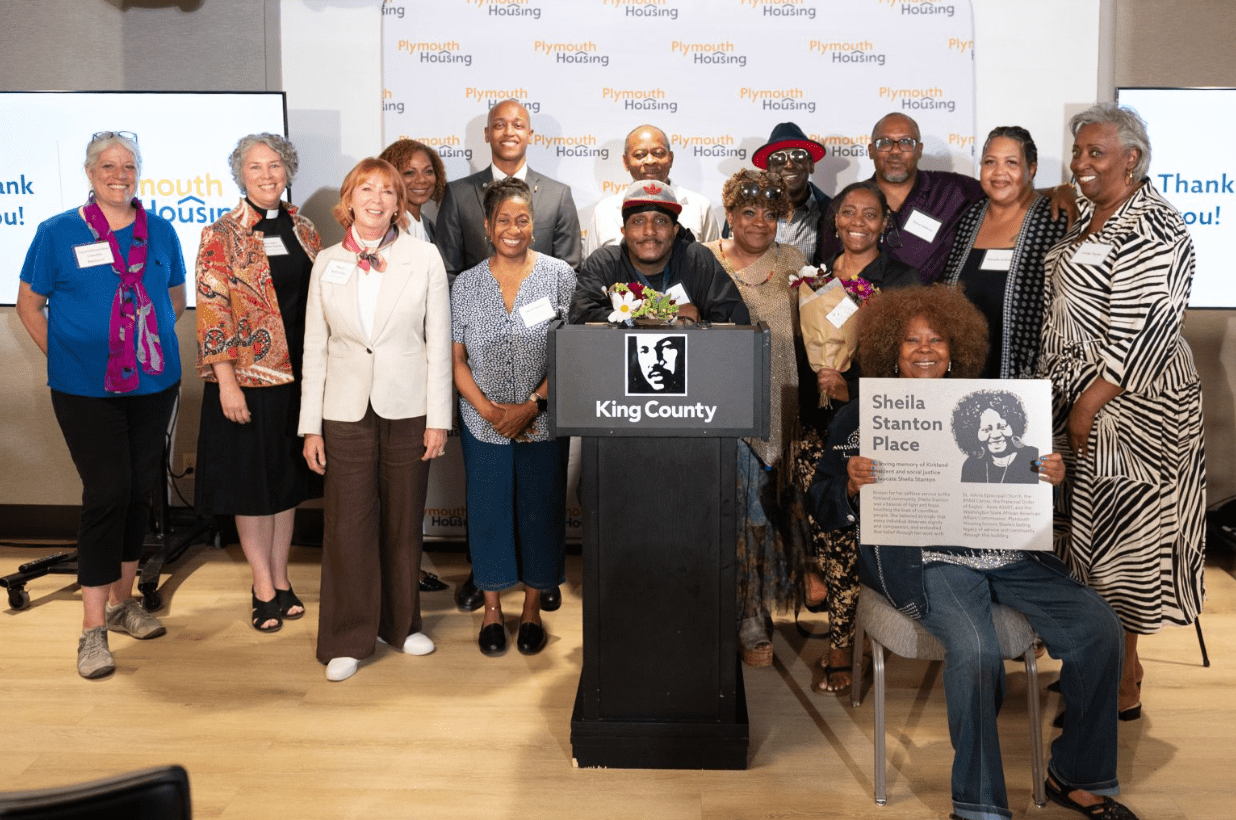
On July 8, King County, Plymouth Housing, and the City of Kirkland celebrated the grand opening of Sheila Stanton Place, a new permanent supportive housing community providing 101 homes for adults exiting homelessness. Developed through the King County Department of Community & Human Services’ Health Through Housing initiative and operated by Plymouth Housing, the community combines affordable housing with on-site services designed to help residents maintain stability, improve health, and build meaningful connections in the communities where they live.
Sheila Stanton Place is the result of years of collaboration between King County, Plymouth Housing, the City of Kirkland, service providers, faith leaders, and community partners working toward shared solutions to homelessness on the Eastside.
“Too often, homelessness is treated as a series of individual crises instead of the systems challenge it is. Our administration is building a coordinated response that expands housing, strengthens behavioral health services, and helps people get the support they need to regain stability,” said King County Executive Girmay Zahilay. “Sheila Stanton Place is part of that long-term commitment, and I’m grateful to the City of Kirkland, Plymouth Housing, and our Department of Community and Human Services (DCHS) for helping deliver this investment. Together, we’re expanding access to permanent supportive housing on the Eastside while building a stronger housing system for all of King County.” Read more.
Share this:

IT accessories for employees now available for purchase at KCIT walk-up windows
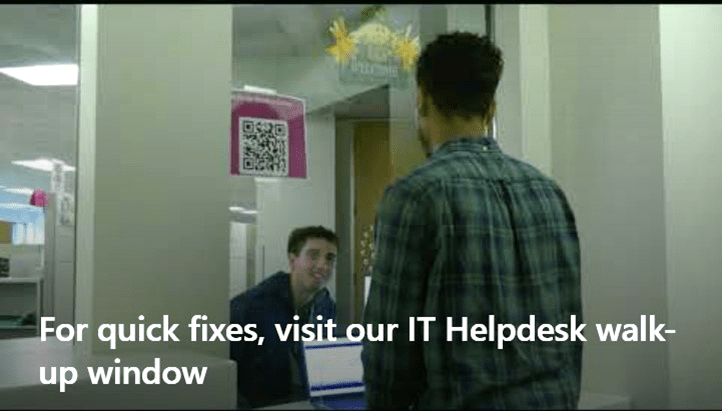
Executive Branch employees can now purchase basic IT accessories directly at KCIT’s walk‑up windows at King Street Center (2nd floor) and the Chinook Building (7th floor). This quick, convenient option is designed for urgent needs—like a broken headset or a misplaced charger—for purchases under $200. To buy an item, simply tell the KCIT staff at the window what you need and provide your POETA number. You’ll receive your accessory on the spot, and billing will occur at the end of the month. Employees in DNRP or DLS Roads should check with their management, as their process may be different.
Walk‑Up Window purchases offer another convenient option, but do not replace the Help Desk order form or KCIT Amazon portal. For a full list of available items and step‑by‑step instructions, read more.
Share this:

Now is a great time to designate your beneficiaries!

When it comes to planning for the unexpected, one of the simplest and most meaningful steps you can take is designating beneficiaries for your financial and insurance benefits.
As a King County employee, you have life insurance, accidental death and dismemberment (AD&D) insurance, a deferred compensation plan, and a state retirement plan. Keeping your beneficiary information up to date for these benefits ensures that your wishes are honored and your loved ones are protected.
If you haven’t reviewed your beneficiary information recently, consider setting aside a few minutes to check and update each plan to:
- Ensure your benefits go exactly where you intend. Without a designated beneficiary, certain benefits may be delayed, distributed according to default rules, or even require legal processes to settle. Taking a few minutes now prevents potential confusion or hardship later.
- Remove unnecessary stress for the people who matter most to you. Losing a loved one is already incredibly difficult. Clear and accurate beneficiary designations spare your family from complicated paperwork and guesswork during an emotional time.
- Keep pace with life changes. Marriages, divorces, new family members, or changes in financial priorities can impact whom you want to receive your benefits. Reviewing your designations regularly ensures they reflect your current wishes.
Share this:

King County ETP E-bike subsidy pilot

Interested in leasing or purchasing an e-bike? The King County Employee Transportation Program (ETP) is accepting applications for an e-bike subsidy program with lease to own options (up to 12 month lease subsidy with credits that can be applied towards purchase). Multiple vendors and e-bikes are available from Ridepanda, Rybit, Wombi. Apply here at tinyurl.com/kcebikes.
Spaces are limited, but if selected, you will receive a follow up email with concierge support to help identify which bike and vendor may work best for you. Options to purchase during or at the end of your lease will be offered.
Please visit the ETP News and Promotions intranet site or view this flyer for more information.
Share this:

King County offers new toolkit to make homes and neighborhoods more resilient to increasing wildfire risk

Crossposted from DNRP Field Notes
King County, in a partnership with Eastside Fire and Rescue and King Conservation District, developed a customized toolkit to help residents better prepare their homes and communities for increased wildfire risks.
The new Wildfire Ready Toolkit is tailored to the specific conditions King County communities face, featuring customized actions to help reduce risk and build resilience. Climate, forestry, and emergency management experts at King County worked with local partners and first responders to develop the toolkit, based on the wildfire action plan created by the California Department of Forestry and Fire Protection, known as Cal Fire.
“The climate crisis has exacerbated the threat of wildfires in our region, making community preparedness and resilience more important than ever,” said King County Executive Girmay Zahilay. “King County is committed to making tools and resources available to residents so they can prepare their homes, families, and communities for increasing wildfire risk. I’m grateful to our King County experts and partners who developed this accessible toolkit and encourage everyone living in a wildland-urban area to utilize it.” Read more.
Share this:

PeopleSoft homepage coming July 27
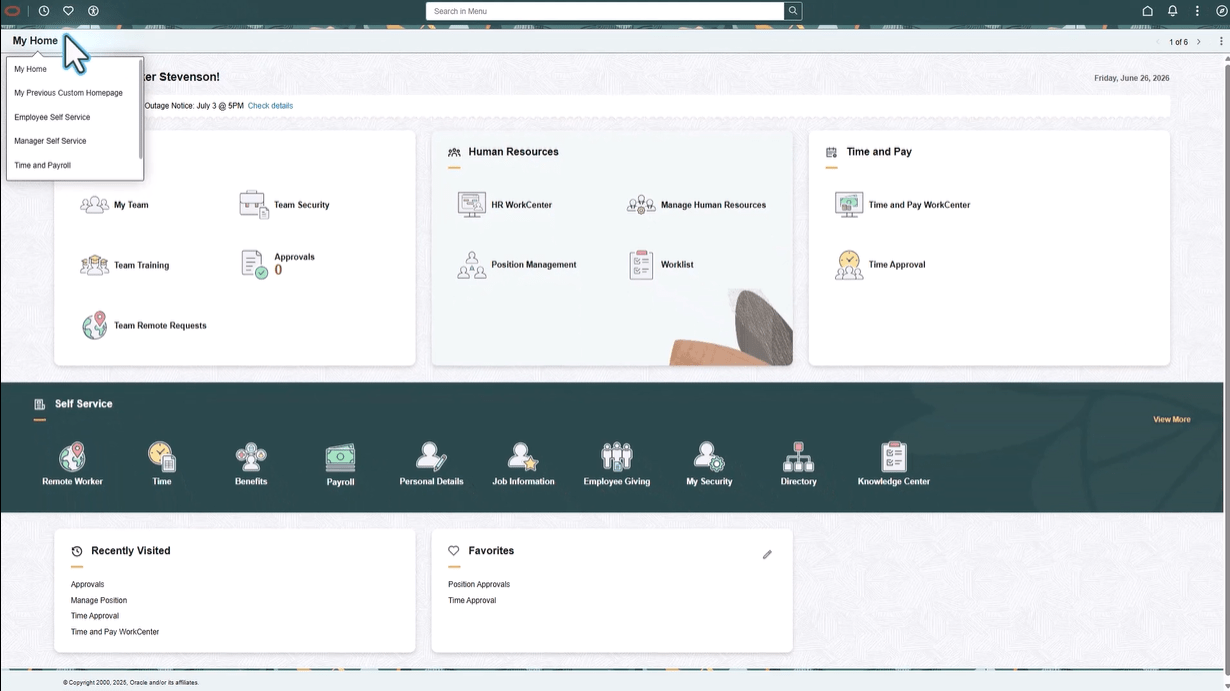
An update to PeopleSoft will be made on Monday, July 27. When employees login to PeopleSoft, they will notice the new homepage design with an updated color scheme and navigation options.
Check out the video below on the updated way to navigate PeopleSoft, or look over this helpful training document to learn more about the new changes. For other PeopleSoft resources, visit the PeopleSoft Knowledge Center.
For help with any technical issues after the update, employees should first clear their browser cache using these instructions. If issues persist, please submit a help ticket at helpdesk.kingcounty.gov.
Share this:

New video introduces Employee Assistance for Supervisors programs and Making Life Easier refresh

King County’s Employee Assistance Program (EAP) and Making Life Easier (MLE) went through a refresh on July 1, 2026. This was the result of feedback from employees, supervisors, leaders, and HR staff. Watch this video to learn more about the refresh.
The following changes took place on July 1:
Making Life Easier: Historically, Making Life Easier (MLE) has focused on helping King County employees with home- and life-related stress and concerns. On July 1, MLE expanded its services to also help employees with workplace issues. This all-in-one counseling is provided by King County’s external vendor Curalinc. Read more.
Share this:

Korean Consul General Eunji Seo visits the Sheriff’s Office
Crosssposted from the King County Sheriff’s Office Newsletter
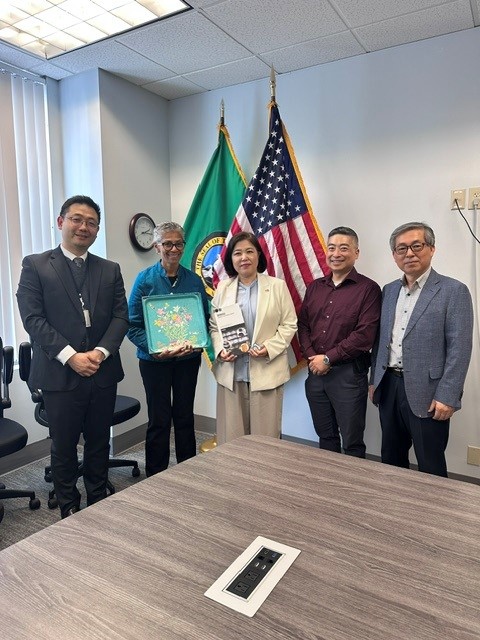
Sheriff Patti Cole-Tindall and Support Services Division Chief Cheol Kang recently had the pleasure of meeting with Consul General Eunji Seo from the Republic of Korea’s Seattle consulate.
The visit was a wonderful opportunity to exchange ideas and discuss ways we can continue strengthening safety and support for the Korean community throughout King County. The conversation was engaging, collaborative, and forward-looking — exactly the kind of partnership that helps our communities thrive.
Consul General Seo presented Sheriff Cole‑Tindall with a beautifully crafted tray designed by a native Korean artist from Jeju Province — a thoughtful symbol of friendship and cultural connection.
Pictured: From left to right, Consul Kim, Sheriff Cole‑Tindall, Consul General Seo, Chief Kang, and Mr. SB Park.
Share this:

July is Disability Pride Month – The voices of lived experiences, part one

To celebrate Disability Pride month, the King County Disability Equity Network (KCDEN) gathered reflections from employees living with hidden and visible disabilities about how their disabilities are an asset in the workplace, and how those attributes allow them to effectively serve King County residents.
In part one of a multi-part series, KCDEN is sharing these first-person experiences to highlight the contributions of employees with disabilities. Because disability status is often stigmatized, the thoughts are shared anonymously and have been edited for brevity and clarity.
“My disability is an asset at work because it’s made me more empathetic to everyone I work with. I wish people knew that so much about living with a disability is invisible. Some of the smartest people see the world differently and do things differently…embrace that. It’s ok to be different and play to your strengths and work on your weaknesses. Life really comes down to serving others best you can.” – An employee from King County Metro
“My disability is an asset at work because it’s made me highly observant and detail oriented. I naturally notice changes, inconsistencies, and potential risks that others may overlook. I wish people knew that asking for an accommodation is not about receiving special treatment; it is about having an equal opportunity to succeed. Believing people when they describe their own experiences is one of the most meaningful forms of inclusion.” – An employee from the Department of Natural Resources and Parks
Every day, King County employees with disabilities provide critical services to our community. As we strive to achieve our vision to make King County a vibrant, inclusive, and resilient region where every individual and community is safe, connected, housed, healthy, and empowered to succeed, the important contributions of our employees with disabilities does not go unnoticed. To learn more about KCDEN visit the Employee Resource Groups webpage, or reach out to us at DisabilityEquity@kingcounty.gov.
Share this:

Community Corrections: ‘A unique role. We wear many different hats’

Crossposted from the Department of Adult and Juvenile Detention Employee Newsletter
Meet some of the caseworkers who monitor clients on supervised release. July offers a special chance to recognize these professionals and more than 90,000 of their community corrections peers throughout the country. National Pretrial, Probation, and Parole Supervision Week runs July 19 to 25. King County’s Community Corrections Division has plannned an appreciation event from noon to 1 p.m. on July 20. It’s in room 123 of the Chinook building, and everyone is welcome to join. Read more.






 Employee News