
Next steps for Better Government: Customer Focus survey

We appreciate every employee who took part in the recent Better Government: Customer Focus survey. Your feedback will help us better understand how to support employees so they can more effectively serve our customers.
While the Employee Engagement team is heads down in data analysis and reporting, check here for a quick look at what’s ahead, and to learn about employee engagement, action planning, and more: Employee Engagement intranet page.
Share this:

Sobering Center to temporarily move to King County Administration Building
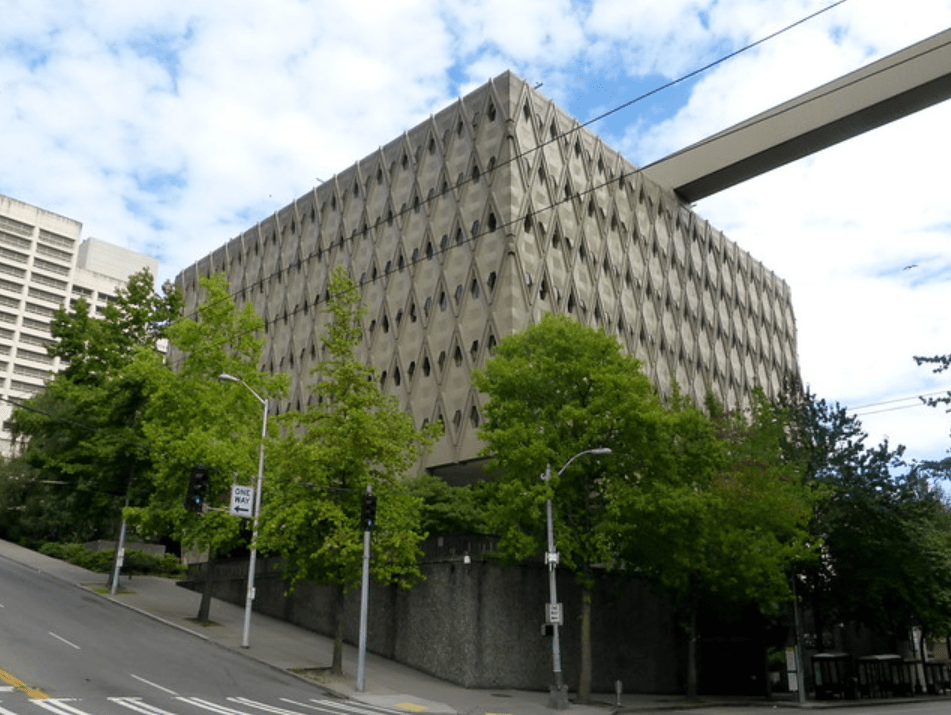
Crossposted from Cultivating Connections
The King County Department of Community and Human Services (DCHS) is moving the Sobering Center from the Yesler Building to the downtown Administration Building on a temporary basis. Effective this month, the new site will provide a safe location with an improved layout for clients and staff. Pioneer Human Services, the County’s longtime sobering center operator, will continue providing the essential onsite services needed for this specialized setting.
Part of the County’s crisis services available to residents, the Sobering Center provides a safe space for people to sleep off the effects of acute alcohol or drug intoxication or opiate overdose, while also reducing strain on emergency rooms and jails. King County’s Emergency Service Patrol provides 24/7 triage and transportation for people who use substances in the downtown Seattle area and can bring individuals in need of support to the Administration Building. Read more.
Share this:

Scammers targeting lost pet owners by phone and text

Scammers are contacting owners of lost pets in our area, claiming their pet has been found needing surgery and demanding immediate payment. Some are using AI-generated images of an animal in surgery as “proof.”
These are scams! Regional Animal Services of King County (RASKC) will never ask you for payment by phone or text to treat your sick or injured pet! Do not send money, provide bank or card info, or use payment apps.
If you think your lost pet is in our shelter, visit kingcounty.gov/LostAPet or stop by in person weekdays from noon to 6 p.m. or weekends noon to 5 p.m. RASKC is located at 21615 64th Ave. S. in Kent.
Share this:

Attend a Deferred Compensation Plan Board meeting

The King County Deferred Compensation Plan helps employees save for retirement through automatic pre-tax and post-tax contributions. The plan is governed by a nine-member board of current and retired King County employees with the assistance of an independent financial consultant.
The board monitors fund performance, ensures effective and inclusive communication, makes plan policy and design decisions, and ensures compliance with King County’s Strategic Plan for Equity and Social Justice.
The King County Employees Deferred Compensation Plan Board meets on the second Wednesday of every month and all employees and participants are welcome to attend either virtually or in-person.
During a board meeting, you will:
- Learn about the annual work plan
- Hear the quarterly report from Morgan Stanley and T. Rowe Price
- Provide your opinion about the deferred compensation plan
- Have the opportunity to ask questions
Meeting details and location information are posted online a few days before each meeting at Deferred Compensation Plan Board Meeting Agenda. If you have questions about Deferred Compensation Plan Board meetings, or would like a calendar invite, please contact plan administrators at 206-263-9250 or KC Deferred Comp.
Share this:

IT Helpdesk (Cherwell) ticketing blackout Aug. 14 to 16, as Neurons prepares for launch

King County’s current IT service management system, Cherwell, will soon be replaced by a new system called Neurons. As part of the cutover, Cherwell will go offline the evening of Aug. 14, creating a temporary ticketing blackout from Friday, Aug. 14 to Sunday the 16. During this time, employees will not be able to submit new tickets or view existing tickets. After‑hours support will still be available for urgent IT issues.
All tickets submitted before Aug. 14 will be automatically moved into Neurons and will be available again when the new system launches on Monday, Aug. 17.
KCIT will share FAQs and short how to videos to help employees get familiar with Neurons before the launch. Read more.
Share this:

Accessing Naloxone (NARCAN®) Nasal Spray in King County

Overdose is the leading cause of preventable injury death in King County, but an easy-to-use nasal spray (naloxone) can save lives. When someone is overdosing, you can be the difference, and you don’t need to be a doctor to help. King County employees are permitted to carry and administer naloxone while on the job, if they so choose. Here’s your guide to finding naloxone in King County and Washington and how to access overdose prevention training.
For those who can, King County encourages accessing naloxone over the counter or through pharmacies with medical insurance, rather than using free sources. This helps ensure adequate availability for our community members who are less resourced.
- Pharmacies: Naloxone can be purchased over the counter or through medical insurance at most pharmacies.
- Naloxone is available over the counter, and major pharmacies like Walgreens, CVS, Walmart, and Rite Aid sell a 2-dose box for around $45.
- To use your insurance to buy naloxone, show the pharmacist your insurance card and the State Standing Order for Naloxone. Employees can use their medical benefits to cover the cost but may have a copay. Employees should ask for the generic prescription for a lower co-pay.
- People enrolled in Apple Health can get the kit for free, without a copay.
Share this:

Executive Zahilay transmits implementation plan and new name for King County’s behavioral health sales tax

Crossposted from Cultivating Connections
The legislation reflects extensive community engagement, modernizes one of King County’s most important behavioral health investments, and renames it the King County Behavioral Health Bridge.
Executive Girmay Zahilay transmitted legislation to the King County Council that would guide one of the County’s largest local investments in behavioral health through 2034, reflecting extensive community engagement to better address the county’s most pressing behavioral health needs. Read more.
Share this:

Check out the new Executive’s Corner: Your source for Executive Office updates

Team,
Every day across King County, important decisions are being made, milestones are being reached, and people are doing incredible work to serve our communities. Staying informed about that work, and the priorities guiding it, helps us stay connected as one organization.
That’s why I’m excited to introduce the Executive’s Corner, a new space on the employee intranet where you can find news, announcements, and updates directly from me and the Executive Office.
Whether you’re looking for the latest announcements from the Executive Office, information on our Executive Orders, news releases, leadership information, video messages, or our latest social media posts, the Executive’s Corner brings those resources together in one place. You’ll also find information about our ACTIVATE values, the 4 B’s, our mission and vision, and other resources that reflect the work and priorities of our administration and the work we advance in partnership with each of you. Read more.
Share this:

Stars, stripes, and second chances

We’re celebrating 250 years of the red, white, and blue! Adopt any dog or kitten from Regional Animal Services of King County (RASKC) for just $50 through July 31.
See our selection of adoptable pets here, or visit us at the King County Pet Adoption Center, located at 21615 64th Ave. S. in Kent. Adoption hours are noon to 5 p.m. weekdays, and noon to 4 p.m. weekends.
See all the adorable adoptable pets we have waiting for you at kingcounty.gov/AdoptAPet.

Share this:

Records Management Reminder: Retain each email in a thread

Each email has unique metadata, including some data we do not even see when viewing our emails in Outlook. When emails are viewed as part of a thread or chain, some of that metadata for the previous emails can be lost.
It is for that reason that state guidance and case law requires that we manage each email, even if the text of those emails are included in a single thread or chain. The exception to that is are emails that are transitory and can be deleted at any time. For more information, review the Email Best Practice guidance.
For more information, visit the County Records and Information Management Program website or contact them at Records.Management@kingcounty.gov. The County Records and Information Management Program (CRIMP), in the Department of Executive Services, provides guidance, resources, and training to all King County employees to assist them with managing King County’s public records according to state and local legal requirements and best practices.






 Employee News