
King County’s ultimate frisbee team brings employees together

This summer, King County employees formed an ultimate frisbee team for DiscNW’s corporate league (with the team name “zzGrp, KC Ulti”). King County departments represented on the team included Natural Resources and Parks (including players from Water and Land Resources Division, Wastewater Treatment Division, and Parks), Information Technology, Public Health, Executive Services, Prosecuting Attorney’s Office, plus several significant others who consistently showed up as well.
While most other teams in the league came from tech companies that sponsored them, King County’s squad was composed of enthusiastic County employees who covered league costs themselves. Games ran from June through August and were all over the Seattle area, from Ballard to Columbia City, with player experience ranging from total beginners to advanced players with decades of experience.
DiscNW’s corporate league is explicitly geared towards introducing new players to ultimate frisbee, emphasizing safety and learning over scoring and competition. “Having never played ultimate frisbee, I was a little nervous to sign up at first. After the first game, I realized just how much fun it was, and our game days soon became my favorite day of the week. I had so much fun getting to know others at the County and learning why so many people love ultimate frisbee. Can’t wait for next year!” says Beth Mende, Senior Water Quality Manager in DNRP’s Wastewater Treatment Division.
If you are interested in playing next year, contact Alicia Kellogg alkellogg@kingcounty.gov or Iris Lippert ilippert@kingcounty.gov.
Share this:

Drug Court celebrates 30 years on Sept. 16
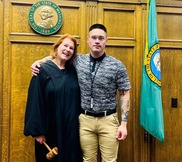
Cross-posted from King County Superior Court.
King County Drug Diversion Court (KCDDC) will hold an in-person 30th anniversary celebration on September 16 in the Presiding Courtroom (E-942) of the King County Courthouse, 516 3rd Avenue, Seattle to celebrate three decades of “Transforming Lives and Strengthening Communities.”
“Drug Court provided me with the treatment and resources that transformed my life. Since graduating, I have devoted my time to helping others by returning to work at the same program that saved me, supporting those who are facing similar struggles,” said Joe Barsana, a KCDDC graduate who now works in the program as a housing case manager.
KCDDC graduates, current participants, current and prior judges, team members, service providers, and community leaders will be in attendance. Media and members of the community are welcome to attend. Learn more.
There will also be an option to watch via Zoom: kingcounty.zoom.us/j/82170299807. Meeting ID: 821 7029 9807. Phone: 253–205–0468.
Share this:
A highly successful paint recycling program shows how extended producer responsibility reduces waste, protects human and environmental health

Cross-posted from Department of Natural Resources and Parks.
The success of a statewide rule that holds producers responsible for their own products, such as leftover paint, is a key component of Re+, King County’s initiative to prevent pollution, protect human and environmental health, and keep waste management costs in check.
A state law that went into effect in 2020 promoting product stewardship dramatically reduced the amount of oil-based paint sent to the regional landfill in Maple Valley, preventing waste and protecting the natural environment in King County.
An estimated 15,000 gallons of oil-based paint were sent to Cedar Hills Regional Landfill in 2019, a year before the state law applied the principles of extended producer responsibility. There was almost none when King County’s Solid Waste Division measured again in 2023. More than 680,000 gallons of paint were recycled statewide last year. Read more.
Share this:
All employees must complete cybersecurity training

All employees and vendors with access to King County systems must complete Cybersecurity Training by Dec. 31, 2024.
Log in here to complete your assigned training with our education partner, KnowBe4.
Training takes about 60 minutes. Annual security training is an important activity that safeguards King County systems, and the number of employees who complete training each year impacts our insurance rates. Thank you for doing your part to protect King County! For assistance, contact the KCIT Helpdesk.
Share this:
King County employee discounts for Husky Football

Husky Football is excited to offer local Washington government employees discounted tickets to three exciting games this year. This special offer is exclusively available to you as a local Washington government employee! Join UW as Coach Fisch, Will Rogers, and the Dawgs take on Weber State, Northwestern, and UCLA this season.
To purchase discounted tickets, click here.
Discounted tickets are available for the following games, UW vs Weber State, Saturday, Aug. 31; UW vs Northwestern, Saturday, Sept. 21; UW vs UCLA, Friday, Nov. 15, 2024.
See all available employee discounts on the Employee Discount webpage.
Share this:

King County employee discount for 2024 Washington State Fair

King County employees can save on admission and ride tickets for the Washington State Fair. Have a blast with tons of free entertainment, fabulous Fair food, rides, farm animals and more.
To purchase your discount tickets visit thefair.com/corporate, click the “Buy Tickets” button, enter access password: king24, under “Corporate Perks – 2024” click “Buy Tickets” for Admission & Ride deals. Get full details here.
2024 Washington State Fair takes place, Aug. 30 – Sept 22.
See all available employee discounts on the Employee Discount webpage.
Share this:
Facilities Management streamlines customer service under new section
Crossposted from the DES Express
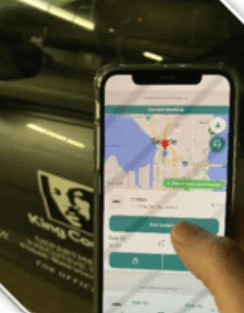
The Facilities Management Division welcomed the Customer Experience Section (CES) to their division last month. This new group oversees customer-facing services: the Customer Care Team (CCT), Print Shop, ID Access, Chinook 13 Program, and the Parking Program. From day one, CES has been dedicated to discovering ways they can improve the customer service their partners receive.
“What initially attracted me to this role was the opportunity to engage in process development within a new team structure that focuses on the experience of all those involved,” said Shannon Bradley, the new Customer Experience Section Manager. “As I’ve gotten to know my team and the customers we serve, I’m excited about what we can do here. I look forward to working with my team to establish efficient structures and processes to provide a positive and consistent experience for our customers.” Read more.
Share this:
Tech Tip: USB Sticks (User Snare Bait)

Have you ever found a USB Stick/Thumb Drive, or a CD on the ground or in a parking lot? Hopefully you did not put this into your computer.
While you may be tempted by curiosity to see what data is on there, or perhaps to identify the owner, Do Not insert any of these found objects into your computer.

You may think that it is your lucky day… ‘Hey, Free USB Stick!’, but in fact it could turn out to put you in a hot seat with your IT department.
This is a common tactic used by bad guys to infiltrate your network and steal information and to gain unauthorized access. Code can be executed simply by inserting these devices into your computer. By the time you can see what files are on it, the damage may have already been done.
Your company should have a policy on how to handle such a situation. If they do, please be sure to follow the guidelines as listed in that policy. If you are not sure, or if your company does not have a policy, ask your IT department what you should do in this situation.
The average cost of a cyber attack such as this one on a small company is $200,000.
The cost to a large public corporation can cost over $6,000,000 per day of downtime.
Remember to always refer to your company policies or consult your IT department on how to handle these situations.
KnowBe4.com is an authorized vendor for King County
Share this:

Join the Balanced You Well-being Advisory Committee

Do you have ideas on how King County can better support the well-being of you and your colleagues? Balanced You is seeking employees interested in joining our Balanced You Employee Well-being Advisory Committee! Any King County employee who is interested is invited to apply.
Inspired by employees, Balanced You equips us to live healthy and safe, know and use our benefits, and find balance in life and work. We’re Investing in YOU to help you feel good, get the most out of life, and do your best work for the people of King County. Read more.







 Employee News