
Balanced You financial resource for King County employees facing layoff

 The COVID-19 pandemic has taken an unprecedented toll on our economy, resulting in layoffs across many industries and organizations, including local governments. In the event you are facing layoff, or are concerned about potential lay-off, Balanced You has developed the following list of financial wellness resources to support you during this difficult time. Visit the Balanced You blog for more information.
Throughout this pandemic, Balanced You has been inspired by each of you and is grateful to everyone at King County. If you are facing lay-off, please remember these decisions are not a reflection of your work. The skills you brought to King County made us what we are and will be an asset for future employers. If Balanced You can be of assistance to you throughout this process, reach out any time at balancedyou@kingcounty.gov.
Share this:

Television programming that celebrates the Americans with Disabilities Act, July 26 and 27

The American’s with Disabilities Act (ADA) is turning 30 on Sunday, July 26, 2020. The ADA prohibits discrimination against people with disabilities in several areas, including employment, transportation, public accommodations, communications and access to state and local government programs’ and services.
In honor of this groundbreaking legislation, King County, the City of Seattle and the Northwest ADA Center have put together a three-hour block of television programming that highlights individual stories about disability, ways to support accessibility, and challenges that remain for individuals with a disability in our community.
Please join us on the Seattle Channel on Sunday, July 26 from 2 – 5 p.m. and King County TV on Monday, July 27 from 5 – 8 p.m. All programming will be accessible. For the list of programs, view this flyer.
Share this:

Pet of the Week: Bert

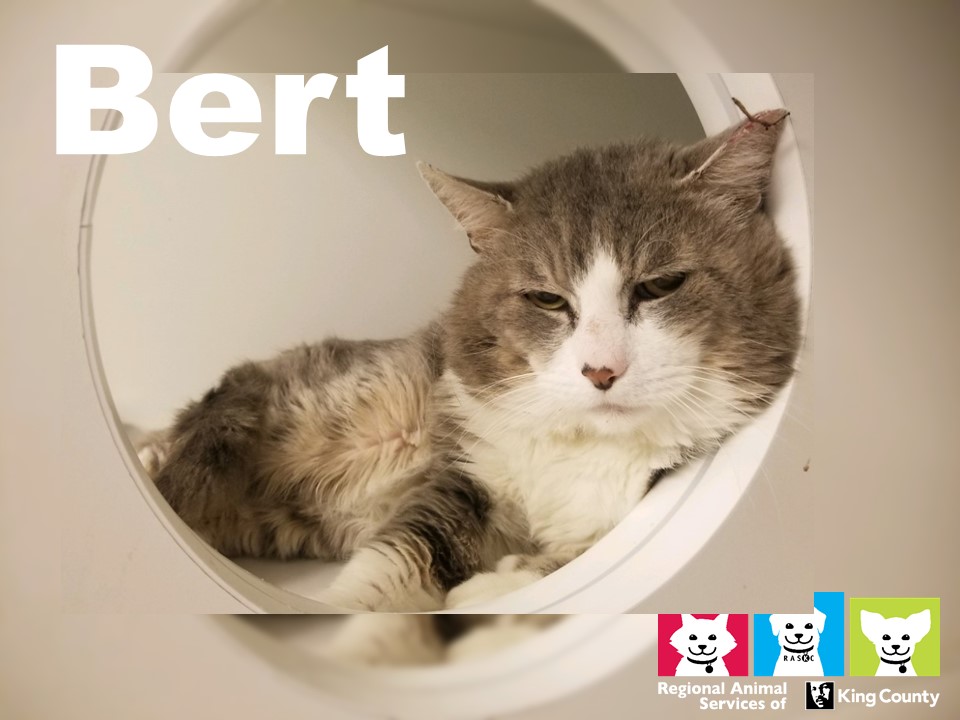 Hi! My name is Bert and I am available for adoption. My personality color is BLUE. I am a gentle and loving cat who likes to take things slow. I may get nervous in new situations, so I am looking for a family who understands that I might need some time to warm up. Once I get to know you, I will be a very devoted friend! I am an independent kitty who likes to do my own thing! I like getting attention on my own terms. I can get overstimulated with petting, so please move carefully with me and keep an eye out for signs that I might need a break. Because of my shy nature, I would do best in a calm, quiet home.
Read more and view all available pets at www.kingcounty.gov/adoptapet. Have you or someone you know adopted a pet from RASKC? Let us know. We’d love to tell your story.
Share this:

Public Health-Seattle & King County receives national recognition for advancing environmental justice

By Sinang Lee, Program Manager
 Public Health’s Environmental Health Services Division’s Fun to Catch, Toxic to Eat Program for the Duwamish River Superfund site was one of 21 programs across the country to receive this year’s prestigious Model Practice Award by the National Association of County and City Health Officials (NACCHO). The award, as determined through a competitive, peer-reviewed process, celebrates local health departments for programs that demonstrate exemplary and replicable best practices in response to a critical local public health need.
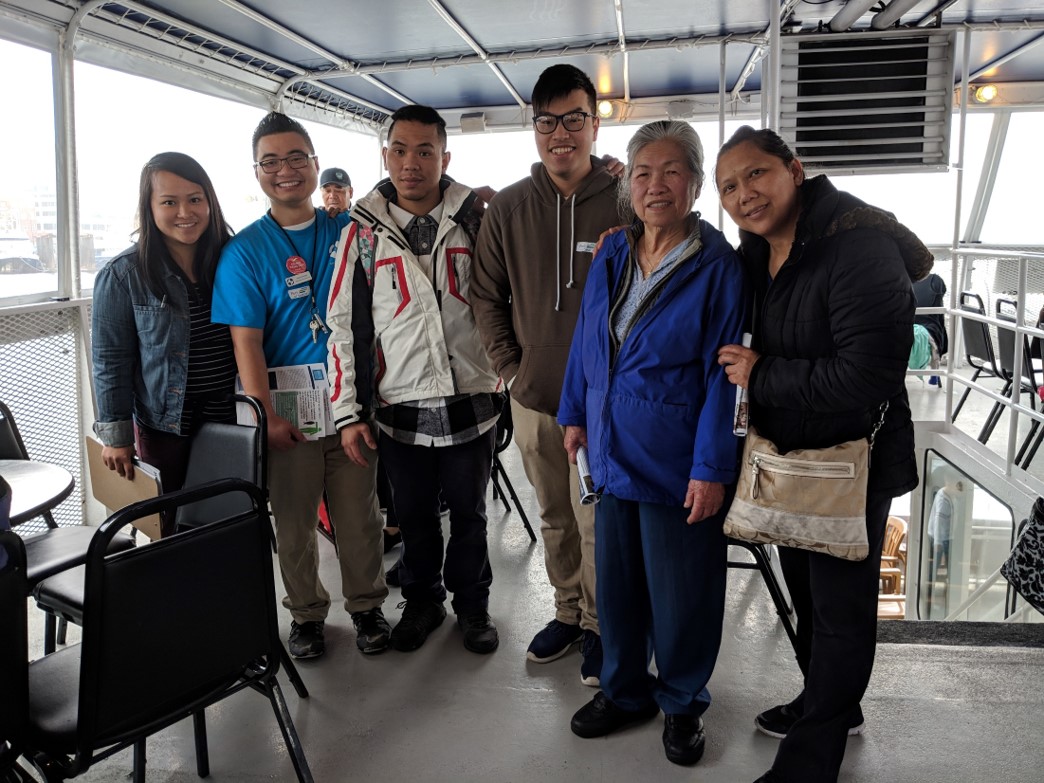
Pictured: Khanh Ho, far left, with the Vietnamese Community Health Advocates on a boat tour outreach of the Duwamish River in 2018.
The program was recognized for building an innovative community participatory practice to advance environmental justice (EJ) at the Duwamish River Superfund site – reflective of the EJ principles of capacity-building, meaningful involvement, and empowerment. For decades, the historic polychlorinated biphenyls (PCB) pollution in south Seattle’s Duwamish River Superfund site has disproportionately impacted immigrant and refugee fishing communities. Health warning signs alone have not been effective in raising awareness among fishers who speak little to no English.
Since launching the program with the U.S .Environmental Protection Agency (EPA) in 2017, the Public Health team – made up of Sinang Lee, Program Lead, Khanh Ho, Community Engagement Coordinator, and Kim Tippens, Program Evaluator – have centered the voices of affected fishing community members in guiding program development, implementation and evaluation. In 2018, Public Health trained 23 Community Health Advocates (CHA) from the Cambodian, Latino and Vietnamese immigrant fishing communities, a partnership with Just Health Action and Environmental Coalition of South Seattle (ECOSS).

Pictured: Kim Tippens facilitating the Community Steering Community session to develop a program plan in 2018.
Since then, the CHAs have prepared a program plan for the U.S. EPA, led over 70 community-based outreach and education reaching over 1600 community members, co-designed over 10 multilingual health promotion tools, such as this newly launched video series done in partnership with the Washington State Department of Fish and Wildlife, and advocated for community recommendations at the U.S. EPA’s Healthy Seafood Consumption Consortium.
“We are deeply honored to receive NACCHO’s Model Practice Award. The award is evident of our value as a government agency in fostering collaborative and power-sharing spaces with communities. If it can be done within a Federal regulatory context, it can be done anywhere,” says Sinang Lee. Through direct engagement with CHAs and their networks, Khanh Ho also highlights “the importance of public agencies to invest in meaningful involvement, capacity-building and creating collaborative spaces with community members and organizations.”
On July 8, 2020, Sinang, along with Emma Maceda-Maria, who co-leads the Latino Community Health Advocate team, presented at the NACCHO Virtual 360 Conference about the program’s work, particularly how it has supported the advocates’ self-empowerment and collective power to address a longstanding environmental injustice in their communities.
Learn more about the Fun to Catch, Toxic to Eat Program at www.kingcounty.gov/duwamish-fishing. View more photos below.


Share this:

How to keep your cool when working

It’s finally feeling like summer! A wave of days over 80 degrees, perhaps into the 90s, are in the forecast next week. But things are different this year with COVID-19. Going to a movie theater, a mall, or the library to cool off after work aren’t possible for most of us in King County in this phase of the state’s Safe Start reopening plan. Remember to let safety be your guide. Check with your supervisor or manager for specific information or directions related to your job.
 Tips from Public Health specific to COVID and heat:
COVID-19 risk adds an additional concern during hot weather. Unlike the flu, hot weather does not decrease the transmission of COVID-19.
- Cities will not be able to set up cooling centers this summer with the increase in COVID-19 spread.
- Many swimming beaches may be closed or lifeguards may not be present. Never swim alone, use lifejackets in or near rivers and lakes, and heed Public Health warnings about crowded parks. Get more information about safe swimming in COVID times.
- Wearing a mask is a key measure to prevent the spread of COVID; in hot weather, wearing a mask can also contribute to overheating. Avoid spending time in hot indoor and outdoor locations where you would have to wear a mask. Take a safely distanced “mask break” if you are getting too hot and uncomfortable:
- Go outside and make sure you are distanced from others by at least 6 feet.
- Remove your mask to breathe and cool down.
- Put the mask back on before returning to the venue or activity where the mask is required.
For everyone:
- Keep window blinds or curtains closed when outdoor temperatures skyrocket. This reduces indoor temps and reduces the strain on the HVAC equipment, if in use.
- Keep windows and doors closed in locations with HVAC.
- Drink plenty of fluids (but avoid alcohol, caffeine, or lots of sugar that can make you lose body fluid).
- Dress in layers to manage varying temperatures.
- Minimize extended time outside.
- Turn off unnecessary lights and unplug unused electrical equipment.
- Take a tepid shower or bath to cool down.
- Avoid hot and heavy meals that can raise your body temperature.
- Check on vulnerable family or neighbors by phone or text to make sure they are safe and cool.
- NEVER leave pets or children in a hot car. Call 911 if see a child or pet in a hot car.
- Learn the warning signs of heat illness that happens when the body can’t cool down. If someone has heat stroke, they need to call 911 or go to the emergency room immediately.
For those who work in county buildings:
- The county recommends against using indoor fans inside county buildings, as they can create “hot zones” in other places in the building and can create a fire hazard. Please don’t block or manipulate air vents or returns.
- The County standard for building temperature range is 70-74 degrees.
- As a reminder, feel free to print out and post the FMD Summer Heat Reminder Flyer (PDF) in your workspace.
- FMD staff will help close the blinds on unoccupied floors of county buildings.
Think outside the box if you’re teleworking and it’s hot:
- If you can, buy a portable or window air conditioning unit for your telework location. Now might be the best time to make the investment.
- Box fans, usually about $40 or less, can help if you don’t have AC.
- Take a break and run through the sprinkler or buy an inexpensive wading pool and dip your feet in.
- Ice cubes in a wash cloth feel wonderful on the back of your neck!
- Ventilate and cool your house off in the evening and night when temperatures are cooler.
If you must be outside:
- The most important thing to do is to drink lots of water. When it’s really hot, drink up to a quart of water every hour with moderate to heavy physical activity.
- Carry a water bottle.
- Consider sports drinks for electrolyte replacement when sweating a lot.
- Wear loose, light clothing with materials designed to wick sweat.
- Wear a hat with a brim.
- Check with your supervisor about adjusting your work hours to start earlier, when it’s cooler.
- Stop all activity if you become lightheaded, confused, weak, faint or have a pounding heart or trouble breathing. Tell your supervisor if you or a colleague experience any of these symptoms of heat-related illness.
The county offers training for supervisors about how to help employees deal with the heat and keep employees safe. Keep in mind that personal factors, such as fitness level, age, obesity, alcohol use (even the night before), nicotine use, etc., affect an individual’s susceptibility to heat illnesses.
For more information, visit the King County Emergency News blog post “Keep your cool this summer.”
Share this:

Governor Inslee COVID-19 press conference today at 2:30 p.m.

Governor Jay Inslee will hold a press conference to provide an update on the state’s ongoing response to COVID-19 today, Thursday, July 23, at 2:30 p.m. The governor will accompanied by Washington Secretary of Health John Wiesman.
You can watch the livestream here at 2:30 p.m. today.
Share this:

Celebrating 30 years of the ADA

This year marks the thirtieth anniversary of the Americans with Disabilities Act (ADA), signed into law in 1990 by former U.S. President George H. W. Bush. Here at King County we’ve worked to provide everyone equal access to employment, transportation, housing, education, health care, recreation, and community life.
On July 26, 2020, we celebrate thirty years of progress in access and inclusion, and renew our commitment to making King County a welcoming community where every person can thrive. For more information about the ADA and how can get involved in King County’s efforts to celebrate and support it, contact DisabilityServices@kingcounty.gov.
Share this:

Disability history virtual tour, July 23

 The U.S. Department of Defense’s Diversity Management Operations Center, Disability Programs Directorate, a partner in the Office of Disability Employment Policy’s Workforce Recruitment Program, will host a virtual tour of the Smithsonian Institution’s disability history collection on Thursday, July 23 from noon to 1:30 p.m. Eastern Time.
During this celebration of the 30th anniversary of the Americans with Disabilities Act, Smithsonian historian Dr. Katherine Ott will show the National Museum of American History’s disability exhibit.
Register for the event and request accommodations by emailing dodhra.dmoc-dpd@mail.mil. For more information, visit the National Museum of American History’s disability history website.
Share this:

Waiting for your COVID-19 test results? Here’s what you can do

Crossposted from Public Health Insider
In the past few weeks, we have heard reports of longer wait times to get COVID-19 tests and delays in receiving test results in some instances. For most labs, the average time from testing to results being available has typically been one to three days, but recently it has been taking five to six days for tests done in some settings. Healthcare providers (or testers) then report results to patients. Because these are averages, some people may wait longer than these times.
We believe these delays are largely due to both recent increases in the number of people seeking testing for COVID-19 which is creating increasing workloads for laboratories, and limited supplies called reagents needed for COVID-19 laboratory testing. This is an issue nationally, not just in Washington state. Large outbreaks of COVID-19 in areas across the U.S. with high demands for testing are a factor impacting the ability to obtain the needed supplies.
Public Health is working with the Washington Department of Health and regional laboratories and healthcare providers to develop strategies to decrease the time between testing to results and to minimize disruption of the availability of COVID-19 testing locally. Labs are also working hard to increase their staffing and equipment to be able to run more tests.
Importance of testing
While there are shortages and some delays, this should not prevent people from seeking testing. To prevent COVID-19 from spreading to family, friends, and the community, Public Health – Seattle & King County continues to recommend that anyone with COVID-19 symptoms or anyone who has been in close contact with someone with COVID-19 seek testing promptly. If you’re not sure about whether your symptoms might be COVID-19, contact your healthcare provider.
“Access to rapid testing is crucial to identify cases and infected close contacts in order to prevent further spread of illness and in some cases help with medical decisions. Adequate access to testing across our community is necessary for effective public health contact tracing and can also help identify hot spots experiencing higher levels of disease so that we can inform the community on actions to prevent transmission,” said Dr. Jeff Duchin, Public Health – Seattle & King County.
“Although testing for COVID-19 in King County has more than doubled since June and continues to increase, we still do not have the number of tests or access throughout the county we think we need. The current national reagent shortage further complicates our ability to meet our expectations.
“Our healthcare partners, Community Health Boards and community organizations are helping us to expand access to testing, and we are actively working with Washington State Department of Health to find laboratories that can provide the volume of testing our community needs.”
Testing is one very important piece of the COVID-19 response. To decrease transmission, illnesses, hospitalizations and deaths we also need to remember the importance of limiting our activities outside of the home, decreasing the number, duration and closeness of contact with others, remembering to always wear a face mask in public, and frequent hand washing.
Free testing
Our list of free testing is updated each Wednesday. Bookmark this link to our map of testing sites to see the most up-to-date list of sites. Call ahead to confirm hours & availability.
If you do not have a healthcare provider or have further questions about testing, call the King County COVID-19 call center between 8 AM – 7 PM PST at 206-477-3977.
Share this:

Americans with Disabilities Act 30th Anniversary celebrated by ODEP
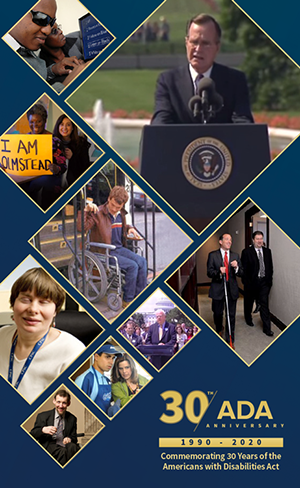 The Office of Disability Employment Policy (ODEP) posted information on the Americans with Disabilities Act (ADA) in commemoration of the 30th anniversary of its signing on July 26, 1990. Featured is a timeline highlighting disability employment legislation enacted since the signing of the ADA and other notable related events from the past 30 years. Also included are suggestions on ways for organizations and individuals to celebrate ADA30.
View the timeline here, and visit the ODEP’s ADA30 webpage.






 Employee News