
BECU discount available for employees

With BECU, King County employees who apply by Sept. 30, 2020, can receive a $150 statement credit on cash back credit cards. There is also a 0% intro APR for 12 months. This offer is valid July 1 – Sept. 30, 2020. Find out more. Free financial education webinars are also available: self-paced and in-person.
View all available discounts at www.kingcounty.gov/employeediscounts.
Share this:

Featured Job: Positive Family Connections Program Manager – PPM II TLT

Salary: $37.42 – $47.44 Hourly
Location: Seattle, WA
Job Type: Term Limited Temporary, Full Time, 40 hrs/wk
Department: DCHS – Community & Human Services
Job Number: 2020SC11822
Division: Children & Youth Services
Closing: 7/19/2020 11:59 PM Pacific
Learn more about this position or view all available positions.
Share this:

Pet of the Week: Mouse
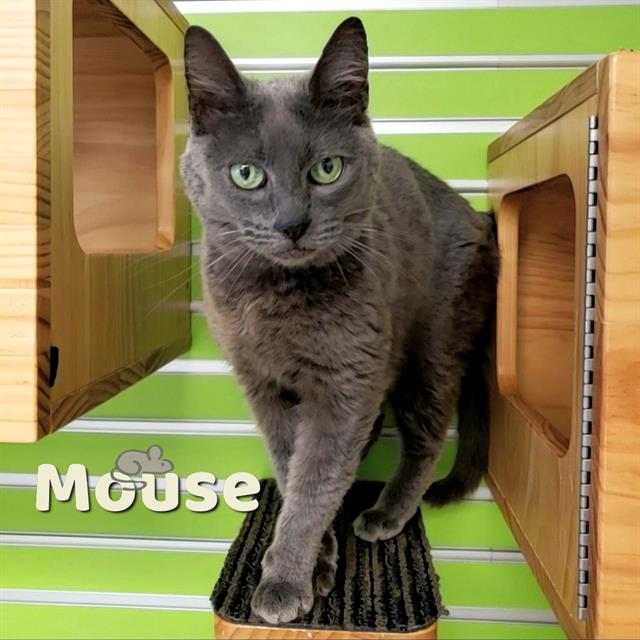
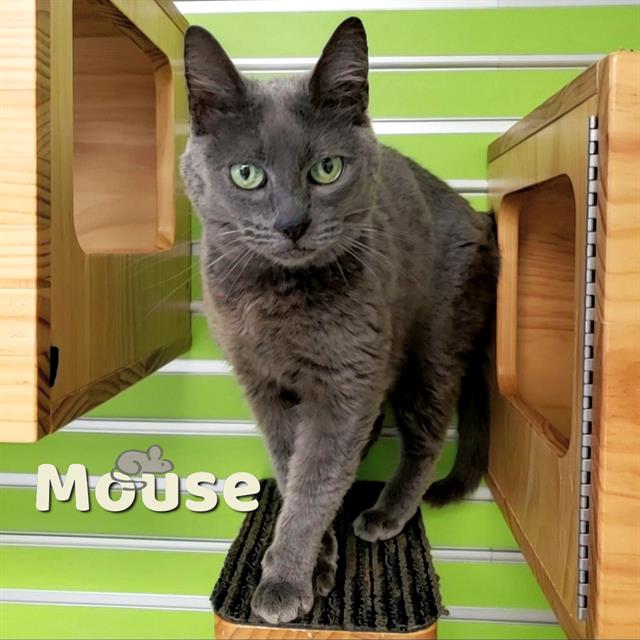 Hi! My name is Mouse and I am available for adoption. Generally, I’m a nervous kitty and I like to hide in the back of my kennel. But if you go slow and give me little scratches, I’m super duper friendly! With that being said, if you give me lots of awesome hidey spots at my new home I will be even friendlier because I will feel safer! My personality color is BLUE. I am a gentle and loving cat who likes to take things slow. I may get nervous in new situations, so I am looking for a family who understands that I might need some time to warm up. Once I get to know you, I will be a very devoted friend!
Read more and view all available pets at www.kingcounty.gov/adoptapet. Have you or someone you know adopted a pet from RASKC? Let us know. We’d love to tell your story.
Share this:

Increasing cases of COVID-19 in King County highlight the need to limit close contact

Crossposted from Public Health Insider
Public Health—Seattle & King County continues to monitor cases, hospitalizations and deaths from COVID-19 and has noted an increase in cases over the past two weeks. Public Health expects to see some increase in cases as we get back to work and other activities in the community because there are more opportunities for COVID-19 to spread.
It’s been one week since King County moved into Phase 2 of the Governor’s Safe Start plan. With more re-opening of businesses, community activities and contact with one-another, Public Health—Seattle & King County is warning that the risk for infection has increased.
As more businesses re-open and people get back to work and other activities in the community, there will be more opportunities for COVID-19 to spread, leading to an increase in cases. Public Health has already noticed an increase in cases the past two weeks.
Share this:

I have Pride!

With social distancing, Pride may look and feel different this year. In our “I Have Pride” video, King County Metro riders, employees, and family members show we can still Ride with Pride! For more ways to engage with Metro and 2020 Pride, go to visit the King County Metro Matters blog.
Share this:

Webinar for employees: How are you?: A Conversation on Emotional Health, July 8

 As we continue to navigate life during the COVID-19 era, our mental and emotional health is likely shifting. We may experience waves of different emotions, ranging from fear and anxiety to grief and gratitude. And, we may struggle with how to understand or regulate them.
Join Shawna Johnson, Balanced You Employee Health Specialist, and Heather Steffensen, Interim Employee Assistance Program Manager, for How are you?: A Conversation on Emotional Health. During this live, interactive webinar facilitators will share some of the feelings that may be arising during the pandemic, techniques and tools to regulate them, and benefits and resources available to support King County employees.
- How are you?: A Conversation on Emotional Health, Wednesday, July 8, from 10 – 11 a.m. Register here.
For questions or more information, contact Balanced You at BalancedYou@kingcounty.gov or call 206-263-9626.
Share this:

Guidance for Workforce, Operations, and Customer Service Recovery

Dear employee:
These unprecedented times have challenged us in ways we never imagined. Throughout, you have demonstrated unfailing commitment to our community and personal and professional resilience in the face of massive change. You have proven time and again your expertise and dedication to public service, inspiring the country to follow your lead and inspiring me daily with your efforts.
We have a True North guiding vision to make King County a welcoming community where every person can thrive. Our value of Racial Justice is foundational and will guide us in all that we do. We are the sole provider of many services that are the bedrock of a healthy community. The restoration of services that had to be modified or curtailed during the emergency is a milestone in our recovery and a mark of the return of stability to our community.
This milestone requires that some employees return to the worksite. This is both a moment of celebration to have reached this milestone in our recovery, and a moment that may cause some fear and anxiety. The health, safety, and emotional security of our employees and customers is our highest priority. The purpose of this “Guidance for Workforce, Operations, and Customer Service Recovery” is to provide the information and resources you need to do your work more safely.
 The guidance in this resource was developed based on:
- What we heard are your greatest concerns. We conducted a random sample survey of over 2,000 County employees and listening sessions with frontline workers and Affinity Groups. We heard about your fears and hopes for returning to the worksite, and developed this guidance to make your work safer, while allowing you to perform your essential work.
- The latest research on the most effective ways to stop the transmission of COVID-19. We consulted our own public health experts along with national leaders in disease transmission on guidelines that take into account the most up-to-date knowledge of stopping the spread of COVID-19.
- Best practices from around the world and across all industries. We learned from those who are slightly ahead of us in their recovery efforts about what works best and adapted it for our worksites.
This guide will be updated as we continue to listen, learn, and adapt to ensure that staff, the public, and volunteers can conduct business more safely.
Additionally, to complement this guide, some operations will require more specific safety measures.
Right now, our purpose as public servants is vastly meaningful and impactful. I am deeply grateful for your ongoing dedication to public service, and I am proud to be in this recovery effort with you.
Sending you my best, (virtually) –

Whitney Abrams,
Chief People Officer
Share this:

Consider donating to the Emergency Leave Program

The Emergency Leave Donation Program was developed so that King County employees who have been affected by COVID-19 can request donated leave. When the program debuted, many employees generously donated personal leave to support their colleagues. Now, the program is asking employees to again consider donating personal leave to the program, as the paid leave available is running low.
Employees interested in supporting colleagues affected by COVID-19 can donate accrued sick and vacation leave in two different ways:
- Using PeopleSoft to make donations. Learn how by viewing this PeopleSoft Emergency Leave Donation guide (SharePoint), or viewing this short video (also below) from the King County Business Resource Center to help with PeopleSoft entries.
- Completing the Emergency Leave Donation Form, which is a fillable PDF and can be submitted electronically without printing. The completed PDF form can be emailed to EmergencyDonation@kingcounty.gov.
For more information about supporting one another through the Emergency Leave Donation Program, visit the webpage here. See the FAQ information on how to mail or interoffice mail any completed forms.
Share this:

If you’re living with a long-term health condition, these free programs can improve your quality of life

 We know that for many people, daily life looks a little different right now. As we continue to adapt, it’s more important than ever to take care of ourselves — especially if you’re living with a long-term health condition. According to the Centers for Disease Control and Prevention, 6 in 10 adults in the United States have a long-term health condition (also known as an “ongoing condition” or a “chronic disease”). Doctors generally define long-term health conditions as lasting three or more months, and many don’t have cures. Diabetes, cancer, heart disease, and asthma are a few common examples.
If you have a long-term health condition, you already know how it can affect your body. Ordinary things like going to work, running errands, taking care of your house, and even spending time with friends and family can be challenging or painful. They can also take a toll on your mental and emotional well-being. Frequent doctor’s appointments and the cost of treatment may cause extra stress. An activity you used to enjoy might drain your energy. And the uncertainty of your health can make you feel irritable or sad, which can affect your relationships
For many people with long-term health conditions, small lifestyle changes can result in big improvements. If you’re not sure how to get started, Kaiser Permanente’s Living Well programs can help. These programs are free to employees and dependents. Visit the Balanced You blog for more information.
Share this:

A call to #RecreateResponsibly guides reopening of King County’s parks and trails, and encourages ways to enjoy the outdoors safely
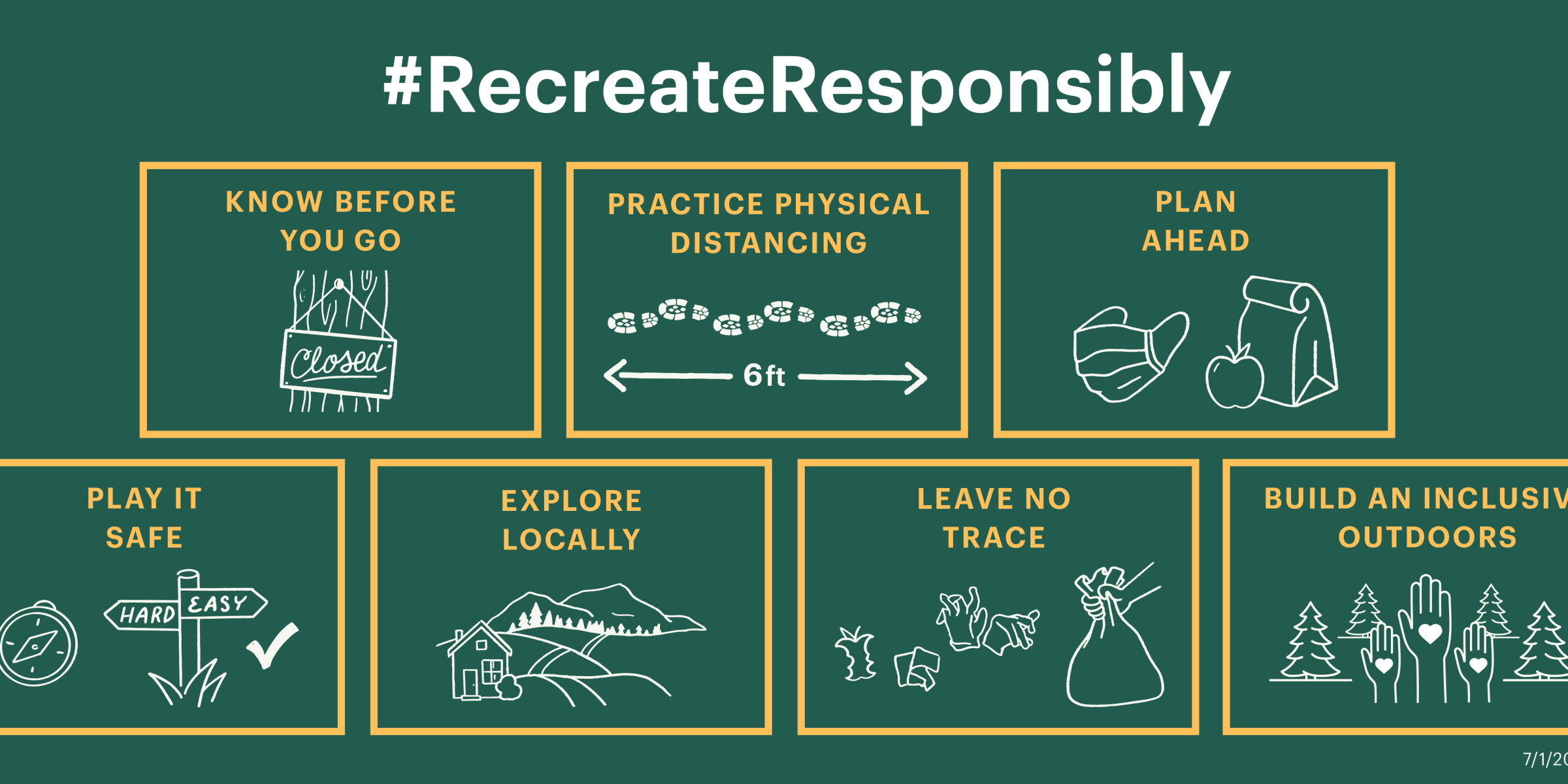
King County moved into Phase 2 of the state’s Safe Start plan on June 19. For the Parks Division of the Department of Natural Resources and Parks (DNRP), going through these phases has meant taking steps to encourage new habits while re-opening its parks and trails following the COVID-19 closures. As it re-opens, King County Parks has put several measures in place, including on-site signs, recreation policies, and operational adjustments. Parks is also part of the Recreate Responsibly Coalition, a statewide group that has come together during the pandemic to educate the public about the new rules of recreating during the coronavirus.
Frana Milan, who has been with King County since 2007 and currently supervises Parks’ Communications Team, shared about this work and the efforts to keep all County residents safe when enjoying the outdoors. “Our role has been to help make sense of what is happening, and how these different COVID-19 guidelines handed down by the State affect activities in parks and on trails,” she said.
Parks has been dealing with COVID-related issues since February, but made the tough decision on March 25 to suspend or postpone all events. They also closed all parks, trails, restrooms, trailheads, and indoor facilities at that time to align with the Governor’s “Stay Home, Stay Healthy” order.
She explains that as the pandemic has evolved, public health guidance started adjusting, so that in the beginning of May, the division was able to re-open some parts of its system.
“We tried to communicate certain measures a person should take when going to a park or trail to walk around,” Frana said. “There are ways to recreate responsibly in this time of COVID-19.”
“When the stay-at-home order was put in place, the directive was to stay at home and keep your exercise and outdoor activities close to home, but this highlighted some of the deficiencies we struggle with every day. What if you live in an area where you don’t have access to parks and trails?” Frana said. “These challenges are things we need to tackle today and in the future as a parks agency.”
It was during this time, when land managers across the state were struggling to communicate about the effects of the pandemic on recreation, that a great opportunity came about. Community partner organizations and land managers like Parks came together with outdoor retailer REI in a coalition, titled Recreate Responsibly, to deliver accurate, safe messaging about the new realities of enjoying the outdoors in the time of COVID-19. This guidance was developed and released to the public in time for Memorial Day weekend, allowing all of the groups in the coalition to push out a single, strong message.
“The coalition includes all of the organizations and agencies that represent key constituencies in the outdoor recreation world,” said Frana. “Lots of people have been involved in that work, and it has mobilized quickly to clarify and reinforce these new ways of recreating.”
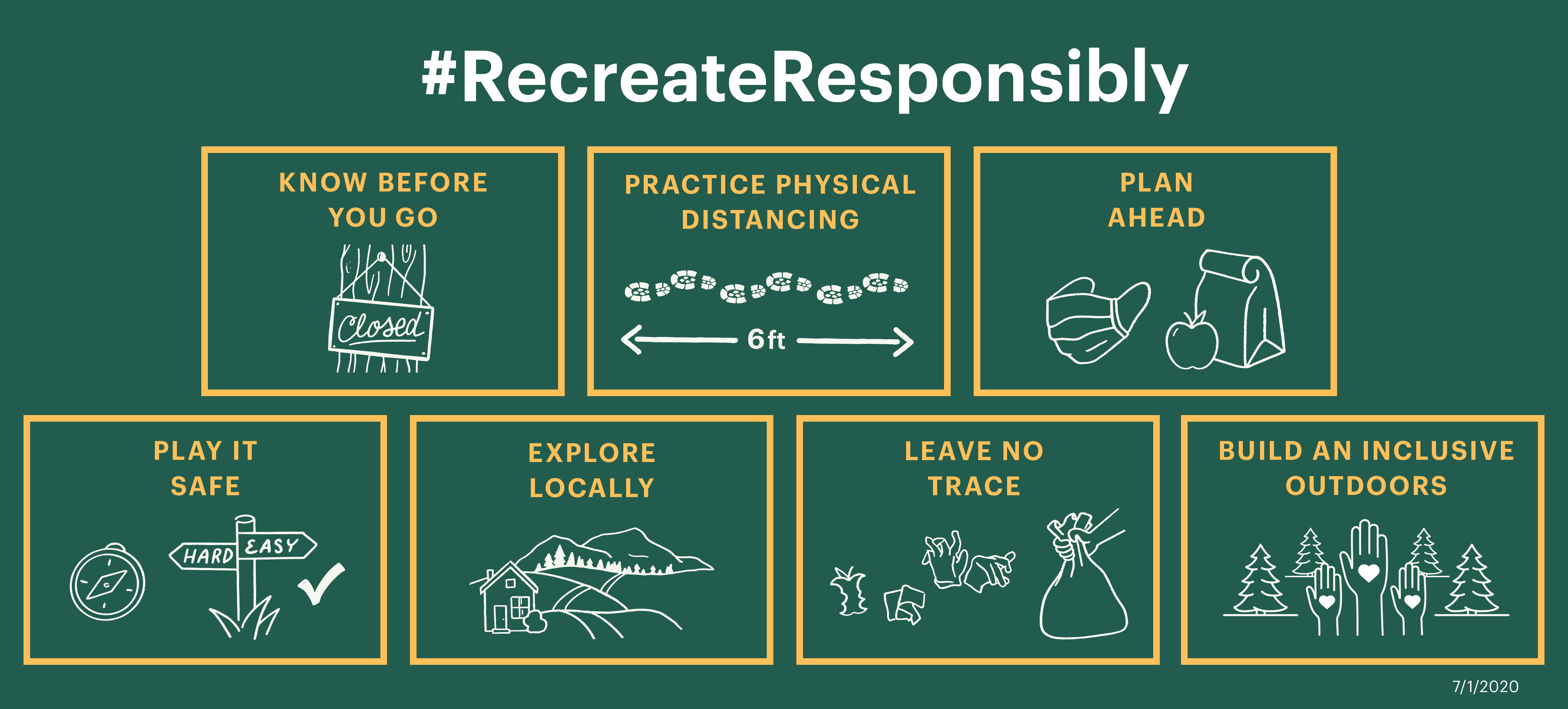 The seven main points of the Recreate Responsibly Coalition are below. Consider saving the image for future reference.
- Know Before You Go: Check the status of the place you want to visit. If it is closed, don’t go. If it’s crowded, have a back-up plan.
- Plan Ahead: Prepare for facilities to be closed, pack a lunch and bring essentials like hand sanitizer and a face covering.
- Explore Locally: Limit long distance travel and make use of local parks, trails, and public spaces. Be mindful of your impact on the communities you visit.
- Practice Physical Distancing: Keep your group size small. Be prepared to cover your nose and mouth and give others space. If you are sick, stay home.
- Play It Safe: Slow down and choose lower-risk activities to reduce your risk of injury. Search and rescue operations and health care resources are both strained.
- Leave No Trace: Respect public lands and water, as well as Native and local communities. Take all your garbage with you.
- Build an Inclusive Outdoors: Be an active part of making the outdoors safe and welcoming for all identities and abilities.
Frana notes that it can be a challenge to reinforce these new guidelines, but it is important for the public to abide by these tips. This is especially important right now, since Parks is balancing a limited workforce capacity and new, additional safety protocols while trying to ramp up for the busy season. Parks usually hires seasonal employees starting in March. Not only was seasonal hiring delayed this year, but the division can only bring on a fraction of its normal seasonal staff due to COVID.
“We are hoping to change people’s habits, but it can be a struggle. We simply have to continue reminding people that things are different,” Frana said. “There are a variety of land management agencies, like our own, that are in similar situations with lower levels of seasonal staff, so we are unable to do tasks, like mow the grass, at the same frequency.”
“We are asking people to be aware of this, and when they are enjoying the outdoors, to only bring what they need, not expect everything to be open, and take their garbage with them. And remember that only small gatherings are permitted at this time – if a large group drops in to use a picnic shelter, for example, it creates a challenge for our employees. They can’t do their job taking care of that area of the park if physical distancing can’t be maintained.”
Closed parks reinforced for many the importance of access to nature and the benefits of public lands. It also emphasized the essential nature of this work, and Parks employees as essential workers.
“During the stay-at-home order, our staff continued to take care of lands in our stewardship, making sure our parks and trails would be ready when people could start enjoying them again,” Frana said.
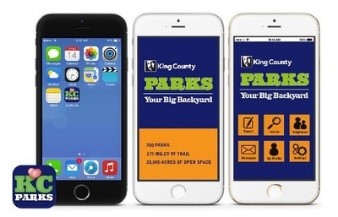 As Parks turns the dial on re-opening its facilities, it will continue to rely on the public to do their part to recreate responsibly. Frana adds how residents can get involved, “People can use our SeeClickFix app to report an issue in our parks or trails. During this time, the tool is a way for share if there is crowding or congestion going on,” Frana said.
To learn more about the Recreate Responsibly Coalition, visit www.recreateresponsibly.org. To learn more about what’s open and how Parks is responding to the pandemic, visit Parks’ COVID-19 response page.






 Employee News