
Youth engagement program provides resources and voice to Latinx students
King County is committed to being a place where every person can succeed and fulfil their potential. It is important to further work being done that allows every community here to thrive and have the opportunities it deserves. A current program in the Department of Community and Human Services (DCHS), through the Employment and Education Resources (EER) division, seeks to do this for underserved Latinx youth.
The King County Reengagement System, working closely with the Road Map Project, coordinates with local partners to reduce education and employment disparities faced by youth and young people in King County. As part of this effort, Hannelore Makhani, Reengagement System Manager within DCHS, is overseeing the Latinx Youth Engagement Project. This project seeks to understand how Latinx youth are being served by reengagement programs in King County and how to improve services and increase graduation rates by speaking directly to them and gathering feedback.
“One of my responsibilities is to help the system understand our performance—both areas worth celebrating and places where we need to focus our improvement energy,” Hannelore said.
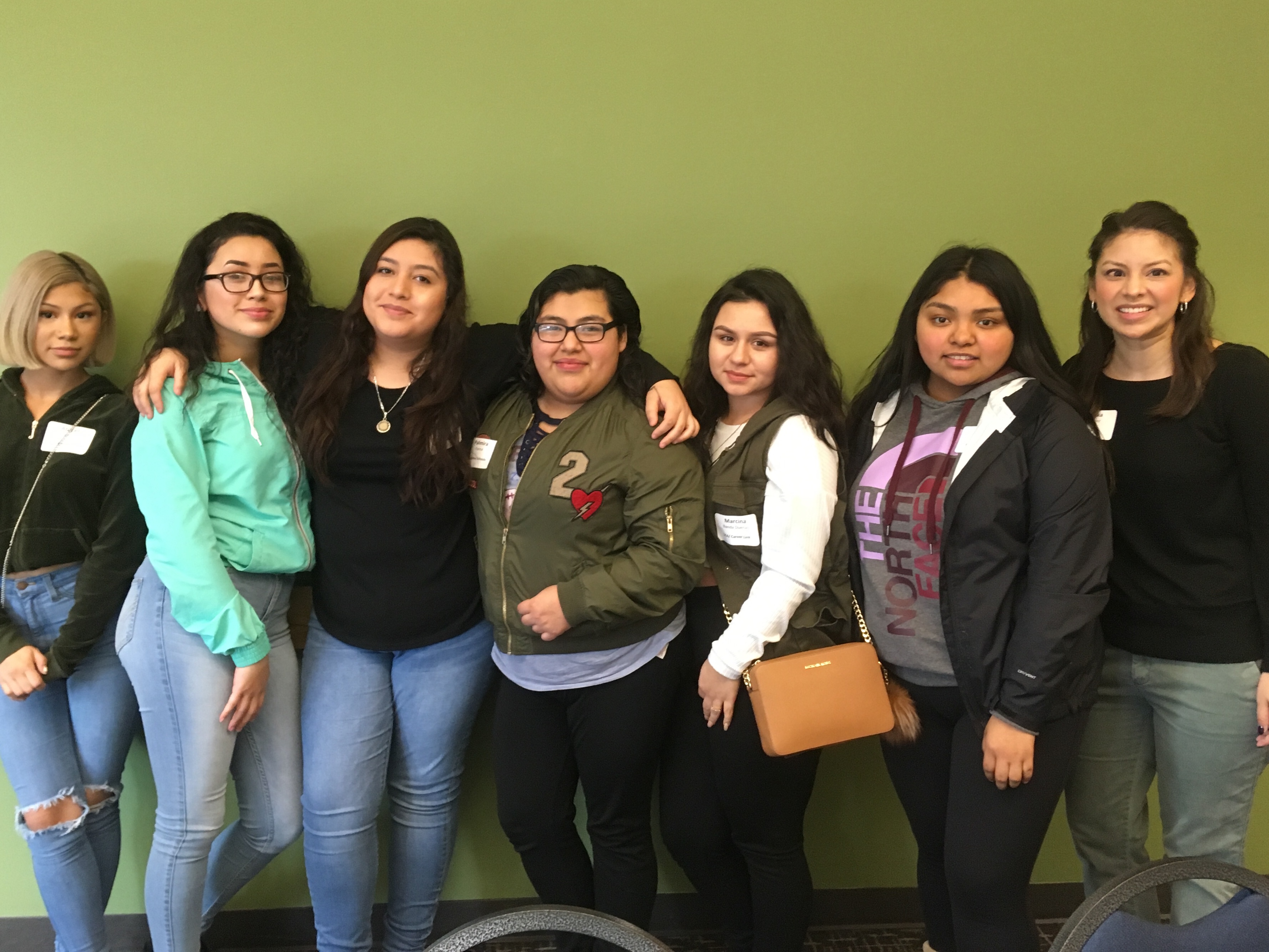
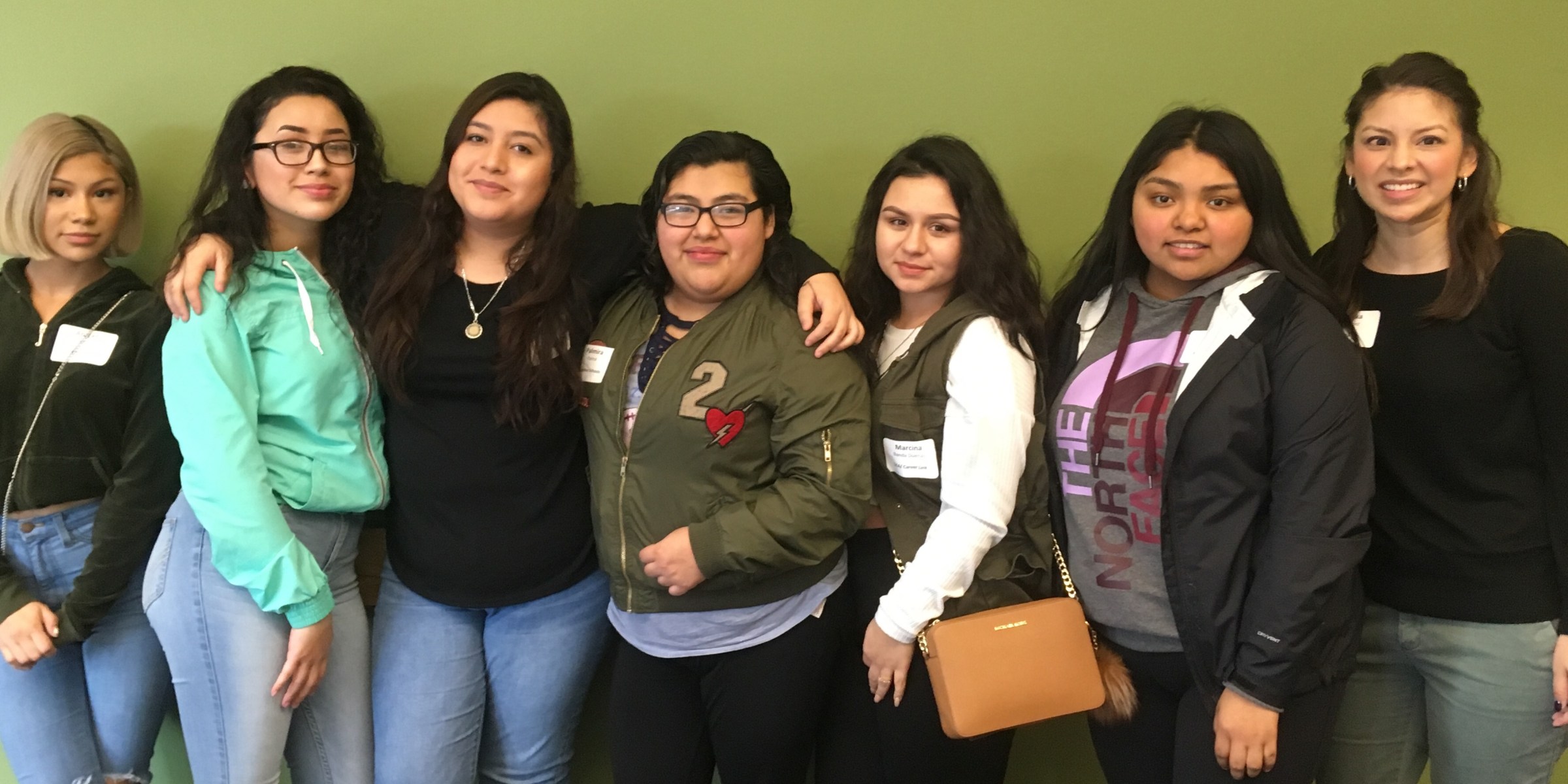
Pictured: Several Latinx youth who participated in the Jan. 2018 listening sessions and then were featured in a panel at the all-day Racial Equity Institute held by King County in February last year.
In 2018, Hannelore held six listening sessions and spoke with over 40 Latinx young people. Themes were identified within their discussions and professional development efforts were launched for staff in hopes of improving youth experience and achievements.
Through analyzing the data submitted by 28 community partners providing education reengagement services over an extended period, Hannelore was able to see the disconnect between services and outcomes. It was discovered Latinx students had the highest need for reengagement when the data was separated out in various ways, including race.
“For over two years now, I have been collecting program outcome data each quarter,” she said. “This is how we uncovered that Latinx students as a whole are so much less likely to graduate than other racial groups in reengagement.”
“Because there are limitations to what information data can provide, the next logical step was to go to young people and ask youth for feedback directly,” she added.
Hannelore explains that many times, service providers look at the data about their services and make assumptions about how to improve them, often at the expense of those receiving the services. The Latinx Youth Engagement Project wanted to avoid that misstep, and hear directly from the youth themselves.
“I have loved this part of the project and the youth have found it empowering as well,” she said.
Now with this feedback and new funding from the Raikes Foundation and United Way of King County to continue the research project, it will move forward with Latinx youth leading it. Hannelore explains they will be trained and conduct at least 30 interviews, learn to analyze the data and communicate the findings with the overall community.
“This project is an example of our commitment to ESJ and to learning how to better serve young people and communities of color,” she said.
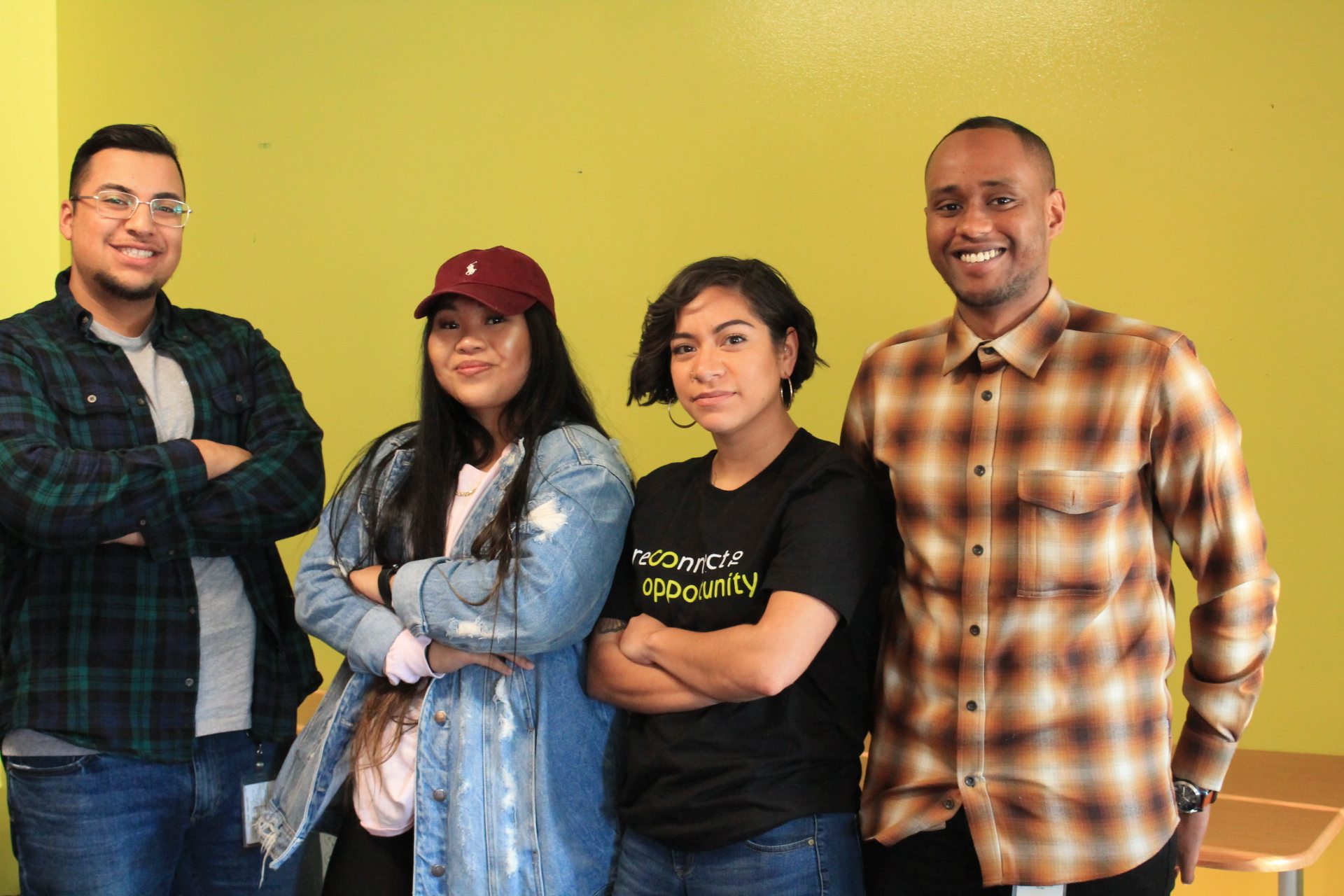
Pictured: Current King County Peer Connectors, whose role is to find disconnected youth in the community and support them in finding education or employment connections that are the best fit for them. From left to right, Omar Aldaco-Silva, Shannen Antolin, Maria Gonzalez, and Mohamed Ahmed.
Within King County there are approximately 11,000 youth between the ages of 16-24 who are disconnected from school and do not have a high school diploma. These young people, who live primarily in south Seattle and south King County, often face exclusion from the many opportunities available in our growing region. Hannelore shares that while it can be challenging to develop programs like this, the work is needed – and ultimately rewarding – as it provides opportunities to those who need it most.
“We know that access to resources gets even more limited based on race,” Hannelore said. “Because of this, we feel strongly that research which allows us to improve upon or create new approaches to education or social services will help historically disenfranchised groups.”
“We can achieve equitable outcomes for young people in King County. It can be done, and this group is small enough that we can do the project, learn from it, and then replicate it to positively impact even more people.”
For information about the Latinx youth Engagement Project, contact Hannelore Makhani at Hannelore.Makhani@kingcounty.gov. To learn more about the Road Map Project visit www.roadmapproject.org.
Share this:

County Council condemns intolerance, supports religious freedom
They are your co-workers, friends and neighbors. They serve in the military, are in law enforcement and work in King County government. They are Muslims, a faith with over 1-billion worshipers, and they are increasingly under attack.
Responding to the growing acts of religious intolerance not only in King County, but around the world, the Metropolitan King County Council condemned acts of violence against those exercising their constitutionally protected right to worship. The proclamation recognizes the killing of 50 worshipers inside two mosques in Christchurch, New Zealand on March 15 by a self-proclaimed white nationalist. Read more.
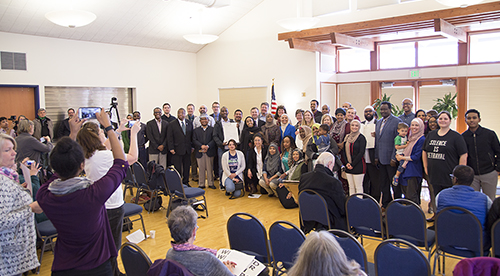
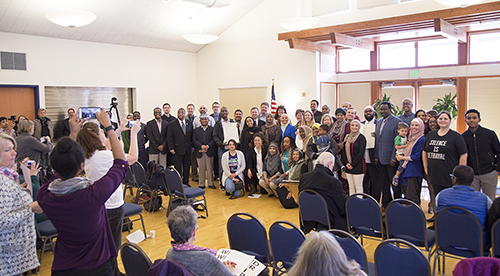
Pictured: Councilmembers join the audience at the Tukwila Community Center after the council read a proclamation condemning both acts of violence against the Muslim community, and religious intolerance against all seeking to exercise their faith
Share this:

Pet of the Week: Kona
 Crossposted from Tails from RASKC
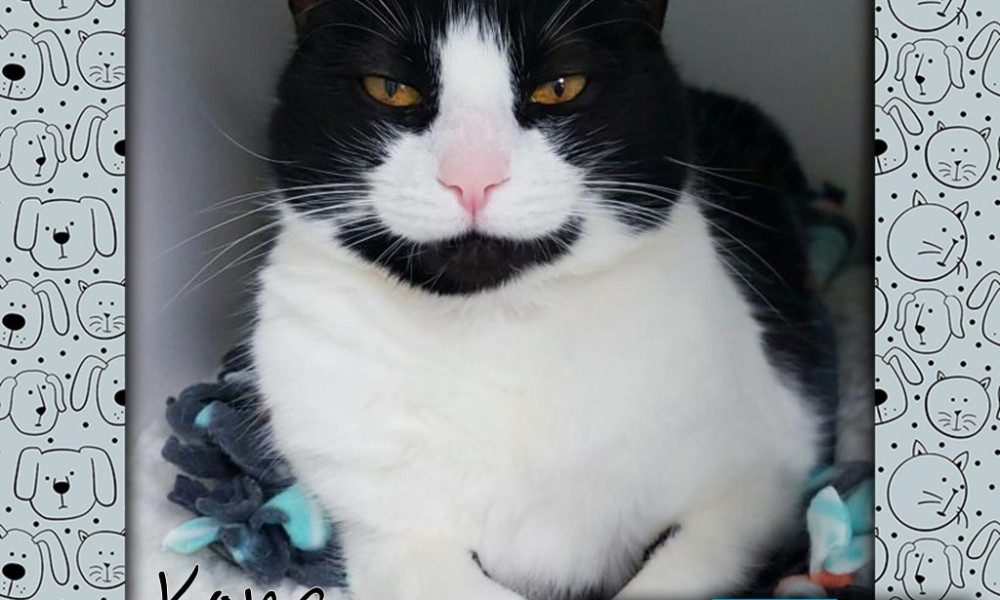
Kona is a 3 ½ year-old, female, black and white, domestic shorthair cat (A527477). Her personality color is RED, meaning she is fun-loving and very spirited! Kona’s previous family described her as adventurous and playful. She may need a little time to warm up to new people, but once she does she is a big sweetheart!
Read more from Tails from RASKC
Share this:

Behind the Robe: Chief Criminal Judge Sean O’Donnell
 Crossposted from Superior Court’s podcast series.
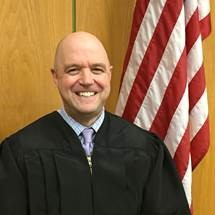
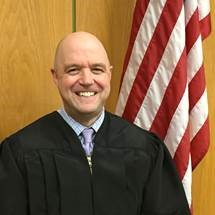
Not only is he the tallest judge in Washington, he used to be a speech writer at Boeing. Now he presides over the busiest courtroom in Washington State. Every day, sometimes every five minutes, he makes custody and release decisions that impact defendants and our community. Judge Sean O’Donnell’s story.
Share this:

Training Spotlight: Grammar Refresh and Lominger Competency and Skill Assessment

Grammar Refresh, April 10: Confused about grammar and punctuation? This fun, hands-on class will help you master the latest rules, avoid common errors, and write with confidence. We’ll cover apostrophes, verb tense, word usage, subject/verb agreement, commas/semicolons, style guides, how to avoid the 10 most common grammar and punctuation mistakes, and more. Register and learn more.
Lominger Competency and Skill Assessment, July 17: During this class, you will have the opportunity to evaluate your professional skills and generate a list of self-identified competencies that reflect your towering strengths and challenges. Next, based upon the next job you want, you will compare your skills to the Experience, Qualifications, Knowledge and Skills required for your next desired position. Register and learn more.
Share this:

Roads uses survey data to launch Roads Career Academy

King County uses its employee survey results to act on what employees have to say through a process called action planning.
See how the Roads Services Division used its 2017 Employee Survey data to act on a theme that consistently came up among its employees: career development.
Share this:

New King County enhanced shelter opens at West Wing
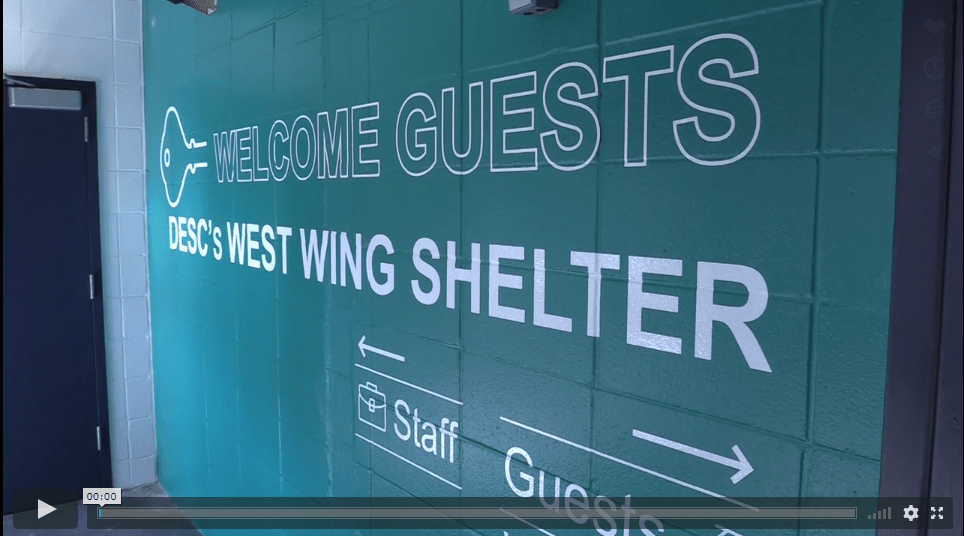
King County Executive Dow Constantine announced the opening of a 40-bed men’s shelter in a former work-release space at the King County Correctional Facility in downtown Seattle.
The facility renovation, which took place after King County held a series of focus groups with advocates and those who have experienced homelessness, cost $2 million. It included upgrades to facility internal systems, new sinks and other plumbing fixtures, new fiber optic cables, paint, laundry, and other improvements, including removing security signage and infrastructure.
DESC will provide services, including behavioral health treatment, housing counseling and employment services. Clients will be contacted by DESC and referred individually to the shelter. Unlike other shelters, this enhanced shelter will specifically reach out to and engage people who have been on the streets longer, and those with mental health or substance use issues. Read more.
Share this:

Thanks to you, Employee Survey hits new heights

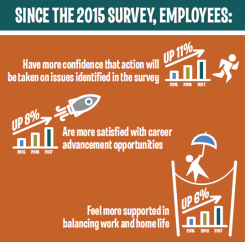 King County hit its highest response rate ever in this 2019 employee engagement survey and is narrowing in on its goal of 70%. As of today, the countywide response rate is 69%, an increase of 2% over 2017 and an increase of 10% since the first annual survey in 2015. All of the paper surveys will be counted and final response rates will be available next week when contest winners will be announced.
Survey reports will be available the week of May 13. King County Executive Dow Constantine will communicate countywide results to employees and Department and Division Directors will follow up with their results within a day. Team or unit results will be communicated by managers and supervisors.
Action planning will begin shortly thereafter. Again a training for action plan leaders will be offered. This year’s training will focus on best practices learned over the past 4 years with a focus on the #1 most effective best practice, integrating action planning into daily work.
This year’s survey ran from March 11 – 29 (March 11 – 22 for Metro paper surveys), and employees in all branches and departments of King County were eligible for the employee survey, except employees in Superior Court, District Court, and the Sheriff’s Office, employees who are short term temporary (STT), and employees who have not worked at the county for at least 6 months prior to the survey period. For 2019, employees must have started before September 11, 2018 to be eligible.
Share this:

Local Services hires Service Partnerships manager

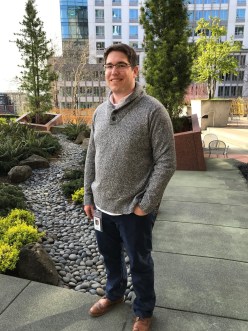 One thing that’s different about King County’s new Department of Local Services is the Service Partnership Agreements it’s making with other King County agencies. The agreements will allow Local Services to serve as a “one-stop shop,” helping residents and businesses in unincorporated areas connect with county services while also gathering information about those services.
On March 25, Jesse Kent joined the department as its Service Partnership Agreement Manager. He’ll oversee this part of the new department’s approach, managing working relationships with other King County departments and looking at the data they collect to support continuous improvement.
Jesse comes to the county after serving in the U.S. Army intelligence Corps in Arizona, South Korea, and Colorado and serving in the National Guard while studying Physics at the University of North Texas. As a graduate student in Southern Methodist University’s Particle Physics program in Dallas, he analyzed data collected at the CERN (European Organization for Nuclear Research) Large Hadron Collider in pursuit of the fundamental structure of nuclei.
Asked how this background brought him to King County, Jesse said, “I started to realize that maybe physics wasn’t the most important thing in my life.” Instead, he decided to get back into public service. A friend who was working here praised the county, both as a workplace and a place that was doing good work. “There’s sort of an energy and enthusiasm,” Jesse said. “The county believes in itself as an organization.” In other places he’s lived, he hasn’t seen the same sort of buy-in at public agencies.
“King County really seems to invest in people,” he added. “It’s nice to know the organization is buying into you as well as you buying into the organization.” And the county’s Equity and Social Justice work, he said, “really resonated with me.”
If you run into Jesse, please take the opportunity to welcome him to the area and to King County!
Share this:

Executive Services uses All Hands to discuss values and priorities

Department of Executive Services (DES) employees got together last week to welcome new colleagues and learn more about King County’s priority initiatives at their sixth annual All-Hands Meetings.
The All-Hands Meeting, held across a morning and afternoon session to facilitate as much participation as possible, was hosted at the Seattle Central Library’s auditorium in downtown Seattle.
DES Director Caroline Whalen kicked off each session by welcoming members from the Fleet and Airport Divisions, who officially joined DES in January.

Employees spent some time learning about some of King County Executive Dow Constantine’s key priorities – Equity and Social Justice, Confronting Climate Change, and Best-Run Government – and heard from some subject matter experts on how the County is tackling these areas.
They also played an interactive game show-style activity called “Name That Value,” which gave them a sneak preview into the Executive’s values for the County, which will be launched later this year.
Executive Constantine attended the morning session with Chief Operating Officer Casey Sixkiller, and spoke about his True North, a single guiding statement that gives direction to the County’s work and ties all of it together. Deputy County Executive Rachel Smith attended the afternoon session and provided her insight into the True North statement. The True North will also be rolled out later this year.
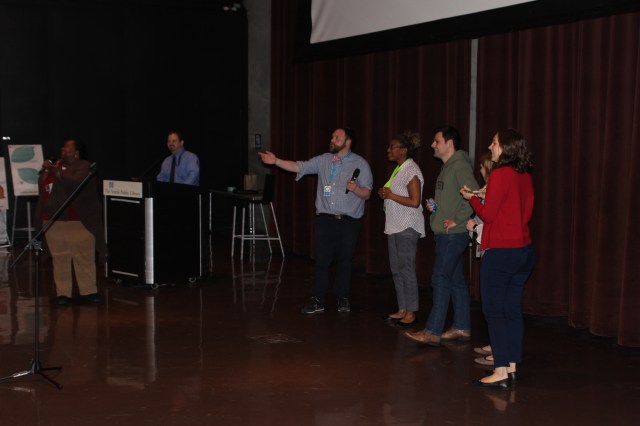
Playing the Name That Value game.






 Employee News