
Mark your calendars: King County worksite flu shots coming soon!

Crossposted from Balanced You
 2018 King County worksite flu shots for employees start next month! Brought to you by Balanced You, onsite flu shots are open to all King County employees and flu shots are provided at no cost to benefits-covered employees. Employees with no health benefits may self-pay for the vaccine (flu shots are $30 each). Flu shots are on a first-come, first-served basis.
In response to employee feedback, we’ve added additional worksites to this year’s schedule: Kent East Hill Public Health, Brightwater Treatment Plant, Power Distribution and Dexter Horton Building. We’ve also adjusted clinic times at some of the transit bases, so be sure to check out the full calendar below and mark your calendars for the location most convenient for you.
If you’re unable to take advantage of worksite flu shots, they are also available through your primary care physician and many local pharmacies.
Flu shot coordinators will provide more information before your worksite’s scheduled date.
Remember to come prepared:
- Bring your medical insurance card with you.
- Wear short sleeves, a sleeveless shirt or clothing that bares your shoulder easily. This makes for speedy service and short lines!
- If you need a receipt, please tell the clerk when you check in.
For more information regarding influenza, visit the Centers for Disease Control and Prevention’s (CDC) Influenza resource page.
View the entire schedule of dates, times and locations in the Balanced You post.
Share this:

Cirque du Soleil’s ‘Volta’ coming to Marymoor Park Sept. 7 – Nov. 4, employees save 25 percent!

Volta by Cirque du Soleil will be at King County’s Marymoor Park Sept. 7 thru Nov. 4.
Now through Sept. 9, employees can save 25 percent on tickets using this special link to purchase them. This great offer is valid only until Sept. 9.
Additional offers for Volta are available here.
See all available discounts on the Employee Discount webpage.
Share this:

Results for America praises King County’s revolutionary new approach to creating community partnerships

Results for America, a national research and policy organization dedicated to advancing evidence-based policymaking, praised King County’s revolutionary new approach to creating community partnerships. Researchers cited the county’s Best Starts for Kids initiative as an effective model for making contracts with service providers more accessible, collaborative, and outcome-focused.
The nonpartisan Washington, D.C.-based organization is sharing its case study of King County’s new approach with cities, counties, and states, encouraging other metropolitan regions to adopt a similar model.
“We made a commitment with Best Starts for Kids to transform the way we partner with community organizations to make the process more inclusive and more focused on outcomes,” said Executive Constantine. “We are honored that researchers at Results for America consider our new approach to be an effective model for improving the quality of life for the people we serve.”
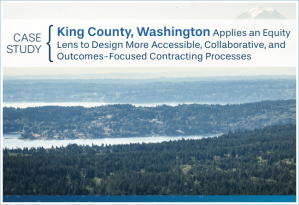
Click on the image to view the case study.
“For too long, state and local government contracting has been more focused on compliance than outcomes,” said Results for America CEO and Co-Founder Michele Jolin. “We are encouraged by King County’s efforts to shift toward a more data-driven, collaborative, and outcomes-focused contracting process.”
Researchers found that King County’s approach led to a greater diversity of service providers, enhancing equity in service delivery in one of the most diverse regions of the country.
The case study notes that King County’s new contracting practices promote outcomes-focused, preventive, and early intervention services based on rigorous evidence of impact while simultaneously allowing the county to test and build evidence for innovative and community-based approaches.
One of Executive Constantine’s goals with Best Starts for Kids is to increase the number of community-based partners that compete for funding to help the county achieve better health and well-being outcomes, such as increasing the number of babies born at a healthy weight and increasing access to healthy food.
Smaller nonprofit organizations – particularly those that serve communities of color – experience challenges applying for public funding because they do not have the same capacity as larger organizations with resources and staff time dedicated to grant writing. With Best Starts for Kids, King County provides technical assistance to help them compete for funding and actively encourages more nonprofits to participate.
Preliminary results from one of Best Starts for Kids’ request for proposals show that 124 organizations have accessed the technical assistance resources King County now offers, such as data analytics support. Of those organizations, 52 percent had never applied for King County funding before, and 33 percent had never applied for any grant before.
Researchers also praised King County’s focus on delivering measurable results that improve the health and well-being outcomes for its constituents. Unlike the traditional approach to human service contracts that mainly provide funding, Best Starts for Kids partners with funded organizations to provide ongoing guidance and continually measures each program’s performance to ensure it delivers the desired outcomes.
Results for America’s mission is to help decision-makers at all levels of government harness the power of evidence and data to solve the world’s greatest challenges.
Executive Constantine’s Chief of Policy, Carrie Cihak, is one of 16 Results for America local government fellows from metropolitan regions that are advanced in their use of data and evidence to produce results for their communities.
Promoting healthier, more resilient children, youth, families and communities
Best Starts for Kids is a voter-approved initiative led by Executive Constantine to help put every baby born and every child raised in King County on a path toward lifelong success.
It invests in prevention and early intervention strategies that promote healthier, more resilient children, youth, families, and communities. It is considered the most comprehensive approach to childhood development in the United States, starting with prenatal support, sustaining the gain through teenage years, and investing in safe, healthy communities that reinforce progress.
Read more in the official press release.
Share this:

Executive’s modular housing announcement generates interest

King County Executive Dow Constantine announced plans for three pilots of modular construction in a news release that was distributed Aug. 22. Several outlets picked up the story:
King County will try modular housing to shelter homeless KUOW, Aug. 21
King County orders modular units for shelters and housing, Curbed Seattle, Aug. 21
Despite hurdles, King County moves ahead with $12M in modular housing for homeless, The Seattle Times, Aug. 23

Share this:

Kudos! to DPER for process improvements
In the last 12 months, about 60 percent of Department of Permitting and Environmental Review’s single-family building permits have been approved in less than six weeks, a marked acceleration from the preceding 12 months in which 35 percent of the same permits were approved in less than six weeks.
Additionally, card payments was launched at DPER during June 2017. Today, 45 percent of payments received for permits are made with Visa credit cards.
Kudos, DPER!
Share this:
AngaLee Alexander and her path to financial wellness
Crossposted from Balanced You
You may think financial coaching isn’t relevant to you. You think, “I don’t need any financial help.” Like many, once you really stop and look at your personal finances, there are many ways to improve.
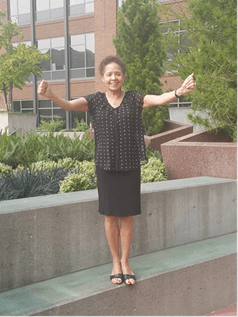
AngaLee Alexander, a King County Business and Finance Officer, is a Health Hero. Like many of us, Alexander thought she had a handle on her finances until she decided to learn more about King County’s My Secure Advantage program.
My Secure Advantage (MSA) is a free benefit available to all County employees that provides tools and personal coaching to help you achieve your financial goals. “I didn’t really think I needed any help with my finances. However, I kept seeing the MSA information pop up and decided to talk to someone and see what they have to say,” said Alexander.
The road to financial wellness is just a phone call away. MSA provides 90 days of free, confidential telephone-based coaching. Money Coaches are unbiased, financial experts who can provided guidance and other resources to employees and their spouses or partners.
After initially signing up for the program, Alexander had some doubts until she met her MSA Money Coach, Derek. “I thought we were doing a good job saving for things like retirement, but Derek gave us homework to do and exercises that helped us identify additional ways to save,” Alexander stated. “We learned how small changes can make a big difference!”
One of those changes included swapping out the daily $4 lattes at the coffee shop for a coffee machine at home. “I didn’t think my husband would budge on his daily coffee habit. But once Derek helped us see how much money we could save by brewing our own cup of java in the mornings, he gave in!” Alexander laughs.
After several sessions with Money Coach Derek, Alexander is pleased with how she and her husband are more conscious about their financial wellness. “I think the MSA program is a wonderful thing for King County to offer employees. I plan on checking in with Derek again soon!”
Want to learn more about My Secure Advantage? Contact a Money Coach by calling 1-888-874-7290 or learn more online.
Do you have a Health Hero story to share? Call us at 206-263-9626 or email BalancedYou@kingcounty.gov.
Share this:

King County Water Taxi sets single-day record

Crossposted from Captain’s Blog
By Brent Champaco, King County DOT
Event organizers for Sub Pop Record’s 30th anniversary celebration on Alki Beach praised King County Water Taxi’s flexibility for helping thousands of concert-goers enjoy the biggest one-day event in West Seattle’s history without having to fight traffic congestion.

spf30.subpop.com
King County Water Taxi set a single-day ridership record during Sub Pop Records’ 30th anniversary celebration on Alki Beach, working with event organizers to provide additional service for the biggest one-day event in West Seattle’s history.
It is the latest milestone for King County’s water taxi service, which set a monthly ridership record on its West Seattle route in July.
“Thousands of people enjoyed a scenic trip to Alki Beach for a major celebration without having to fight traffic or search for parking,” said King County Executive Dow Constantine. “Our successful collaboration with Sub Pop Records reflects our commitment to being nimble and responsive so we can deliver outstanding customer service.”
The water taxi staff worked with event organizers to add a second vessel to the West Seattle route for the peak hours of the festival. Sub Pop encouraged attendees to take King County’s water taxi and free shuttle to Alki Beach, reducing traffic congestion in the surrounding neighborhoods.
“It would have been impossible to bring that many people to our festival without the help of the King County Water Taxi,” said Sub Pop CEO Megan Jasper. “They understood our needs and created a flexible and efficient plan for our region’s music fans. Many of these folks rode the Water Taxi for the first time, and we’ve heard from many of them how enjoyable their commute was.”
“Music is one of those treasured experiences that brings people together,” Jasper added. “The Water Taxi is a local treasure. We are so grateful for the partnership and the experience they provided.”
More than 7,600 passengers sailed on King County’s water taxis on Aug. 11. Between 9 and 11:30 p.m., the MV Doc Maynard and the MV Sally Fox – which can carry 278 passenger each – carried more than 2,000 passengers from West Seattle to Pier 52.
The previous single-day ridership record was set in 2014 when 4,592 passengers sailed to and from the the Seattle Seahawks’ Super Bowl victory parade.
King County Water Taxi offers free daily shuttle service from its dock in West Seattle to the Admiral District and another to Alki Beach. It also offers service from downtown Seattle to Vashon Island.

Share this:

Social Media Spotlight: King County Metro on Twitter

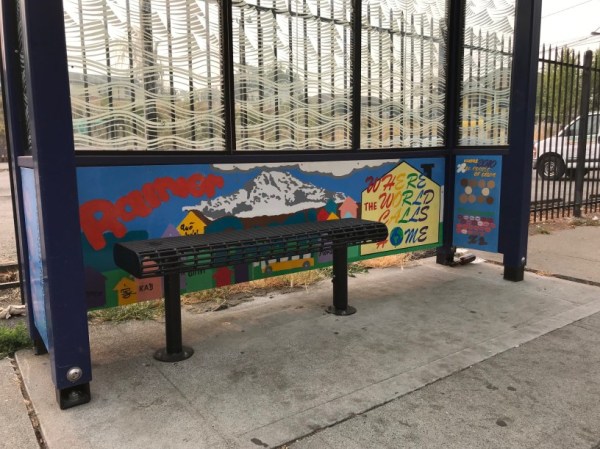
@kcmetrobus shared Metro Matters Youth mural returns to Rainier Beach, and it’s a great story!
It’s great to see this mural back in #RainierBeach! Thanks to the Transit Justice Youth Corps @rainierbeach @SenSaldana @KCCouncil Larry Gossett @kcexec http://bit.ly/2MzCRoB
Follow King County Metro on Twitter today.
Share this:

Featured Job: Travel & Expense Fiscal Specialist III

Closing: 09/10/2018 11:59 p.m.
Salary: $22.99 – $29.28 Hourly
Location: Chinook Building, Seattle, WA
Job Type: Career Service, Full-Time, 40 hours per week
Department: Executive Services – Finance & Business Operations Division
Job Number: 2018-LW08542
The Procurement and Payables Section of the Finance and Business Operations Division is looking for a Travel and Expense Specialist who will work as a Fiscal Specialist III in Accounts Payable. FBOD is looking for a detailed-oriented candidate who has expertise in expense report or employee reimbursement processing, is a team player, can work independently, and enjoys finding solutions. This position is responsible for providing great customer support to internal employees who request or approve reimbursements or payments. The work hours for this position begin between 6 and 7 a.m.
First-round phone interviews will be held the week of Sept. 17.
For more information, contact HR Analyst Liz Wilson at Liz.Wilson@KingCounty.gov.
Learn more about this position or all available jobs.
Share this:

Employee Giving Program first ambassador training Tuesday at Chinook
Build your resume AND make a difference? Yes, you can have it all.
The first training is next Tuesday, Sept. 4 from noon to 4 p.m. at the Chinook Building!
Join our rock star Ambassador team and celebrate 30 years of Giving Together!
Ambassadors are the most important element of our Employee Giving Program team. You will be the key to making sure that every King County employee has a quality opportunity to support a cause they care about through the program. Literally bringing transformative moments of meaning to your colleagues.
You get to:
- Meet new people,
- Advocate for your favorite cause, and
- Build rock star skills.
Average commitment:
- 4-6 hours of training and prep
- 1-2 hours per week during Annual Giving Drive
- Done at work-site in your current position
Get your supervisor’s approval and then sign-up for training!
Read more about the ambassador program.






 Employee News