
King County Drug Court serves as international model

King County Superior Court’s Drug Court is an international model, and recently had two international visits to capture what Superior Court is doing right to help manage the opioid epidemic.
On Monday, the U.S. State Department sponsored a high-level delegation from Haiti. Visitors spent several hours speaking with Drug Court Supervisor Mary Taylor and Judge Dean Lum about how it works and the success rate.
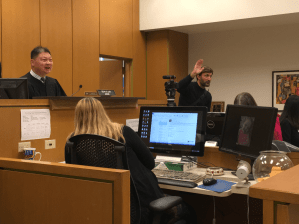
On Tuesday, French journalist Romain Bolzinger from the French version of 60 Minutes captured how drug court impacts just one person as he followed a participant through the process. He shared that there is also an opioid epidemic in France and officials there are looking for scalable solutions to manage the problem.
Superior Court is proud to be an international model and thanks all the participants – from DPD, the prosecutor’s office and the candidates themselves – for participating in a program that is difficult, but works.
Pictured: French journalist Romain Bolzinger following a participant through the Drug Court process.

Share this:

New department focused on helping employees succeed
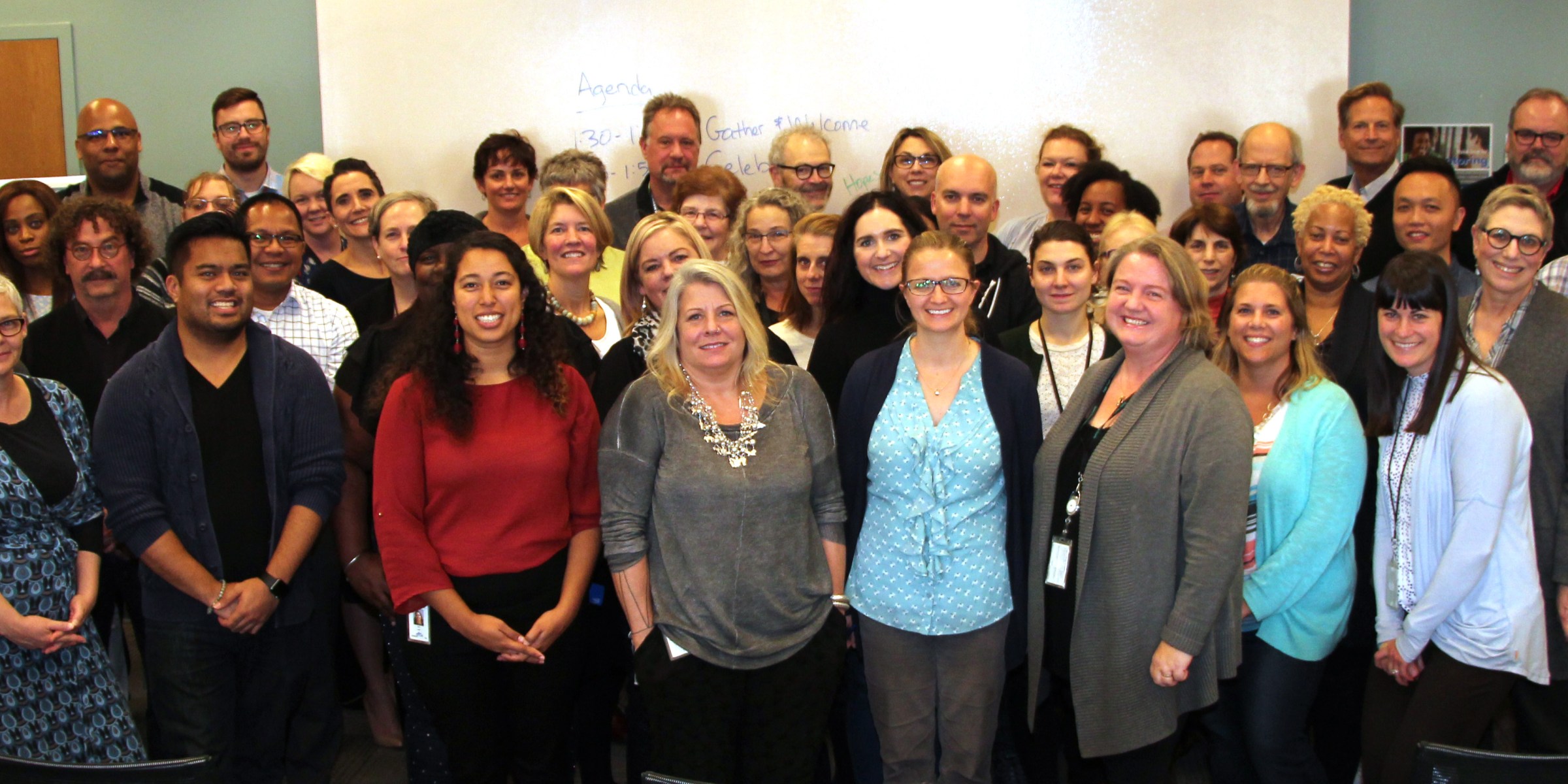
A new standalone department focused on building a workplace culture where every employee has the tools, support, and opportunity to do their best work was created on October 3 when King County Executive Dow Constantine signed a Council-approved Ordinance to establish the Department of Human Resources (DHR).
Executive Constantine proposed the new department in April to focus on serving, supporting and developing King County’s current and future employees so they can more effectively meet the changing needs of the people who live and work in King County.
“As we embark on building this department and bring together all of our employee-facing work into one place, we can and will make this a better employer and a place that is recognized outside of our walls as being the best place to work,” Executive Constantine recently told DHR employees. “Having all of our employee-facing services working together means that we will be able to provide greater clarity and better service to our employees, to elevate problems and solve them.”
The Department of Human Resources (DHR) brings together the Human Resources Division, The Office of Alternative Dispute Resolution, and selected staff from Benefits, Payroll, Retirement Operations (BPROS) and reports to Chief People Officer Whitney Abrams in the Executive’s Office.
 “The culture we’re building here, the expectations we set for ourselves, the way we treat one another, and how we support and empower our employees is important work,” Abrams said. “By elevating it to a department level, we are signaling that our employees are a priority and this work deserves a dedicated seat in the Executive’s Cabinet.”
The work of the new department is guided by the Executive’s Investing in YOU strategy that is focused on creating a culture where every employee can be at their best and do their best work, feels empowered to try new ideas, has equitable opportunities to develop and grow their County careers, feels supported and safe, and is treated with respect.
For Abrams, creating an employee-focused department is about putting employees in the best position to “pursue the work that they are passionate about here.”
“I firmly believe that valuing public service means valuing public servants, and in order to serve our customers better, we have to serve our employees better,” she said. “That’s what Investing in YOU is all about. And that’s why we are creating this new department.”
Share this:

Behavioral Health Legislative Forum: A community conversation about mental health and substance use recovery, Nov. 8
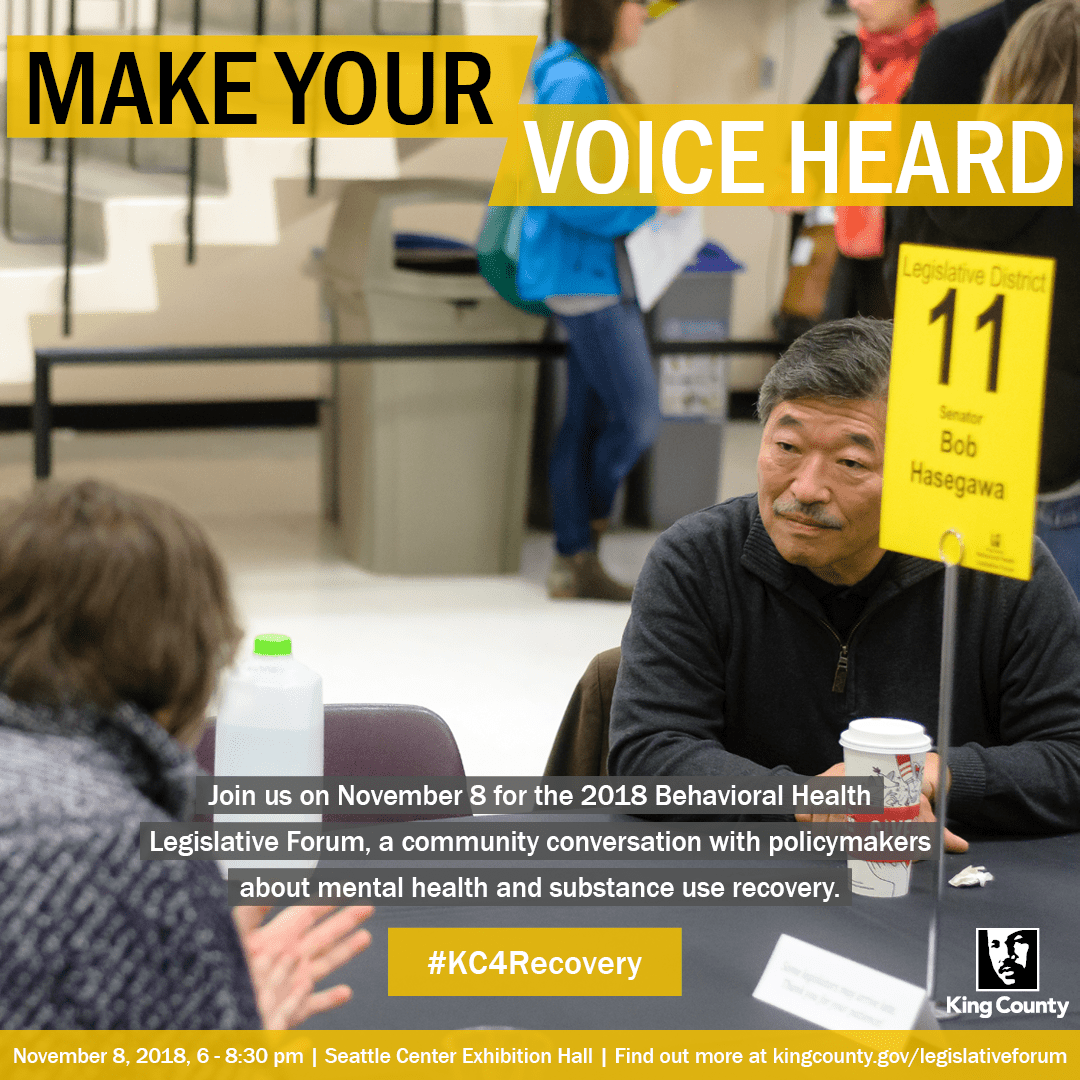
Are you interested in learning more about funding and services for mental health and substance use disorders? Come to the 2018 Behavioral Health Legislative Forum at Seattle Center on November 8.
Thursday, November 8, 6-8:30 p.m. Program begins at 7 p.m. Seattle Center Exhibition Hall – 301 Mercer St, Seattle
The forum will include:
- Opportunities to meet with legislators before the program
- Remarks by King County Executive Dow Constantine and King County Prosecuting Attorney Dan Satterberg
- King County’s proposed 2019 behavioral health legislative priorities
- Compelling personal stories from individuals in recovery
- Legislative Round Table
Interpretation available in Spanish, Vietnamese, Russian, and American Sign Language.
For those who can arrive early, an interactive Recovery in Action event will begin at 4:30 p.m. Event is free – registration requested but not required.
Share this:

“Who has the best job? I do!”
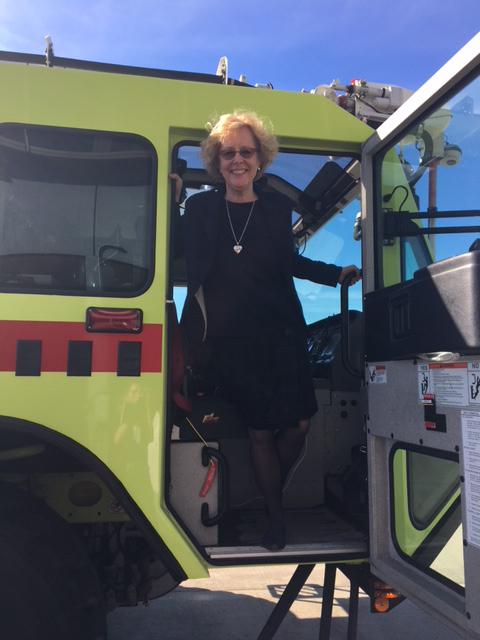
 Chief Administrative Officer Caroline Whalen recently toured King County International Airport, and posted this ‘thank you’ on LinkedIn: “Who has the best job? I do! Today I got a tour of King County International Airport (aka Boeing Field) from the cab of the Crash Truck. Thanks Captain Greg Thomas of the Airport Rescue and Firefighting Unit for showing me around. KCIA joins the department I direct at King County in January and I’m stoked! #kingcountyisagreatplacetowork”
Share this:

CPR/AED Training registration available

Registration is open to all King County employees for Basic CPR classes offered in the Chinook Building. Classes cover Adult, Child and Infant CPR, AED, and Choking Rescue. Spots are still open for the November class and classes in 2019.
- Wednesday, November 7 , 2018 from 9 a.m. to noon, Chinook Building, Room 126
- Tuesday, January 29, 2019 from 1-4 p.m., Chinook Building, Room 126
- Monday, February 11, 2019 from 1-4 p.m., Chinook Building, Room 126
To register, go to www.kccpr.eventbrite.com
Share this:

Q&A with Elections translators: Nhien Huynh, Vietnamese

Crossposted from Election Connection
We’re highlighting the great work our translators do helping to make our elections and services accessible to every member of the community. Here we sit down for a brief Q&A with Nhien Huynh, our Vietnamese language translator.
What is your background and what brought you to working in local government at King County?
I was the Student Government Community Service Chair at South Seattle College. That experience taught me the importance of being involved and making a difference in the community. For that reason, I was attracted to working in local government. Additionally, King County was a good fit for me, because we share many of the same values, particularly those related to diversity and inclusion.
Read more at Election Connection
Share this:

Prepare for winter weather conditions before a storm hits

It’s that time of year again. Fall and winter months typically bring a variety of weather conditions to our region – flooding, freezing temperatures, high winds, snow and ice – that can impact your home, commute, and workplace with little notice. King County Emergency Management urges everyone to take time now to get ready and stay informed.
Take action now
Your safety, and that of your family, is a top priority. Taking a few steps now to plan ahead will give you peace of mind and help you make good decisions in an emergency:
- Talk to your supervisor about your role in an emergency and know how to contact them.
- Ask your supervisor about workplace policies, procedures, and how you will be notified if there are weather-related impacts to your worksite. (Also check out HR policies linked below.)
- Learn what your child’s school and daycare policies and procedures are for possible early release and facility closures.
- Locate flashlights, radio, and extra batteries should you experience a power outage at home.
- Store non-perishable meals for your family that don’t require a stove-top, microwave, or oven to prepare.
- Make sure pets have appropriate shelter to stay warm and safe.
- Get more tips, utility contacts, and weather preparedness checklists at takewinterbystorm.org.
Stay Informed
During a severe weather event or other emergency, make sure you’re getting the latest King County information on how you are affected, at work and at home:
- Call the Employee Hotline—206-205-8600 (save it to your phone now!).
- Check your King County email for specific directives and updates. Log on at outlook.kingcounty.gov.
- Go to kcemployees.com/emergency-info for answers to frequently asked questions.
- Contact your supervisor for instructions.
- Follow King County on Twitter—@kcemployees, @KingCountyWA, and @kcmetrobus.
- Check your agency website or Intranet (if applicable), and monitor local media channels.
- Visit the Emergency News page at kcemergency.com for regional impacts.
- KCInform: Make sure you can be reached in a major emergency. If you haven’t yet registered your personal contact or work cell information in KCInform, please contact kcinform@kingcounty.gov anytime or 206-296-3830 between 8:30 a.m. – 4:30 p.m. Monday – Friday to request your unique registration link. Watch this short video to learn more or visit our website.
HR Policies: When an agency remains open, but conditions prevent you from reporting to work or from reporting on time, notify your supervisor as soon as possible. You may request leave, subject to approval by your supervisor. If you have no leave accrued, your supervisor may approve leave without pay to cover absences. Sick leave may not be used. Refer to HR Bulletin 2011-0009 County Operations During Emergency Situations and Inclement Weather (Sheriff’s Office employees refer to KCSO Inclement Weather Policy; Superior Court and District Court employees please see check court policies).
Share this:

Training Spotlight: Basic Data Visualization and Critical Thinking

Basic Data Visualization, Nov. 8: Our ability to gather and collect data has steadily increased over the past decade. But data alone is not information and does not easily convey a compelling story. This half-day introductory course will allow participants to understand why data visualization is important, explore ways to tell a story with data and mock up data visualizations in whiteboard exercises, using tips explored in class. Register and learn more.
Critical Thinking, Nov. 8: Critical thinking is one of the most valued skills in today’s workplace. Employers need employees who can analyze situations, gather the facts, generate creative solutions, use good judgement and turn mistakes into new opportunities. In this workshop, learn the Critical Thinking 6 stage model, the 7 powers of questions, and focused brainstorming techniques to critically analyze problems and situations. Register and learn more.
Share this:

Superior Court CASA Program needs volunteers, open house Nov. 7

If you are looking for a volunteer opportunity that will have an impact on a child’s life, the King County Court Appointed Special Advocate (CASA) Program is calling your name.
The program will be holding an informational open house on Wednesday, Nov. 7 at 1401 E. Jefferson, Suite 500 from 10 a.m. to noon.
CASA volunteers are the independent voice that judges and others depend on to represent the best interest of children under 12. Currently, there are more than 600 children who need someone to speak for them in court.
CASA welcomes all applicants and is actively recruiting people of color and men. To make a difference, or refer someone who would like to become a CASA, contact the Annie Williams at Ann.Williams@kingcounty.gov, at 206-477-4245 or visit the website.
Share this:

Exec discusses Zero Youth Detention on King County Connects
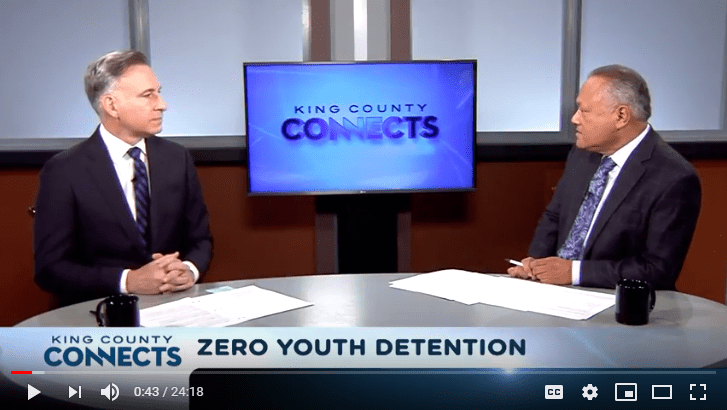
Could there be a time when we no longer need to incarcerate youth? Executive Constantine outlines his plan to help the County reach its goal of Zero Youth Detention in this episode of King County Connects.






 Employee News