Women’s History Month proclaimed by Council
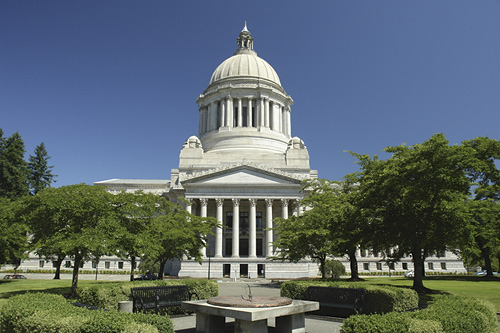
The King County Council is proclaiming March as Women’s History Month. The vote occurred on the same day the council took yet another significant step in making the county code gender-neutral.
The council took the opportunity to celebrate the historic contributions that women of every race, ethnicity, and socioeconomic background have made, and continue to make, in the growth, and strength of King County, Washington State, our nation, and around the world.
“While celebrating how far we’ve come we must also acknowledge the work that remains to be done,” said Councilmember Jeanne Kohl-Welles. “We must work to ensure that all women, regardless of socioeconomic status, age, racial and ethnic background, sexual orientation, or ability, are treated equitably.”
Celebrating International Women’s Day
Today, March 8, is International Women’s Day, and King County Executive Dow Constantine has signed a Proclamation recognizing and celebrating the day.
In King County we join the global community today to celebrate “the economic, political, and social achievements of women around the world… and to recognize the obstacles women still face in the struggle for equal rights and opportunities and their central role in creating positive change,” Executive Constantine said in the Proclamation.

You can read the Executive’s International Women’s Day Proclamation here.
What honor means
This article is shared from the Department of Adult and Juvenile Detention’s In Depth column and is featured courtesy of Linda Robson, Communications Specialist with the Department of Adult and Juvenile Detention.

Pictured: The Honor Guard awaits the arrival of Deputy McCartney’s casket.
The sudden blare of the dispatch radio jolted the silent crowd inside the packed auditorium. The words crashed down like giant shards of glass from the arena’s loud speakers, cutting and wounding every ear.
“Pierce County Unit 4-8-4………”
“……… Pierce County Unit 4-8-4………”
“……… 4-8-4, no answer..…Out of service.”
“……… Gone, but not forgotten.”
As the final radio call for Pierce County Sheriff’s Deputy Daniel McCartney still echoed, an audible gasp rose up from the family section of the crowd—a loved one was just hit by the terrible truth that Daniel was never coming home.
Her cry was a split-second sound that pierced the heart of every law enforcement officer in the room who had come to honor a comrade and brother who lost his life in the line of duty. The rows of dress uniforms and mourning badges seemed almost infinite—dark blue police uniforms, brown and green deputies’ tunics, the characteristic French blue uniforms of the Washington State Patrol, and the unmistakable shocks of red of the Royal Canadian Mounted Police.

Pictured: Images from the funeral service for Pierce County Deputy Daniel McCartney on Jan. 17, 2018.
Sprinkled amongst the crowd of thousands were a few officers from the Department of Adult and Juvenile Detention. They may not have known Pierce County Sheriff’s Deputy Daniel McCartney, but in these moments of tragedy and loss in the law enforcement community, there’s an undeniable feeling of kinship with other officers there, even if they’ve never met before.
Along with a handful of DAJD officers and civilians in the audience, several members of the DAJD Honor Guard were also in attendance to lend their talents to the funeral ceremony.

Pictured: Officers with flags from dozens of law enforcement agencies stand at attention at Deputy McCartney’s funeral.
Anyone who has ever witnessed a memorial service for military personnel, a firefighter or law enforcement officer who died in the line of duty surely has been struck by the magnitude of the symbolism and ceremony of the event. It is at once awe-inspiring, achingly beautiful, impressively intricate, and charged with emotion. Being a part of the event is a sacred and heavy burden to bear for those who wear the Honor Guard uniforms and who must perform with the utmost precision, reverence, and respect.
“When you come to take care of a lost one, a lost brother or sister, you do the best you can to support them and do anything you need to do,” says Officer David Henry , who represented DAJD in the vast honor guard contingent at Deputy McCartney’s funeral service. “Casket watch, standing by the family, escorting the family—it’s about honor and respect, and that’s the biggest thing for me.”
“It doesn’t get any easier. No, it gets harder and harder and harder,” says Officer Ramil Pagulayan, the longest serving member of DAJD’s Honor Guard. “But we all know what we have to do, and we all know why we’re there, and we’re all there for the right reasons. For me the bottom line is honoring the family and paying my respects. And, like I said, it doesn’t get any easier. There’s nothing routine about any kind of funeral or service. “
When DAJD Honor Guard officers don the full dress uniform, they know the full weight of the expectations that come with the position.

Pictured: DAJD Honor Guard members bow their heads.
“I would offer that they represent not just everybody in the department, they represent all of King County,” says Cmdr. Gordon Karlsson, who heads the King County Correctional Facility in downtown Seattle. “And they represent law enforcement in general—they are in blue, and that brotherhood is nationwide and even worldwide.”
At first blush, one might think being an honor guard member requires little more than an eye for detail, smart fashion sense, and a knack for precision movement. But there’s much more that lies underneath the razor sharp wool tunic, gleaming golden braids and badge, and shoes with a crisp, mirror shine.
Officers must have the strength and character of forged steel to withstand the overwhelming force of emotion and symbolism when they’re called upon to serve in times of tragedy.
“You can imagine knowing the fallen officer, and then representing the department and caring for the family, caring for the kids – that kind of stuff can wreck you,” says Cmdr. Karlsson. “I think it takes a certain mindset.”
“Don’t get me wrong, when you sign up for Honor Guard, we don’t expect you to be devoid of any kind of emotion; it’s despite that emotion, you still have an obligation to perform, in a sense. You have an obligation to conduct yourself in a certain way,” says Karlsson. “There will be some services that will be much harder to attend and to be effective in, and you can’t pick and choose which ones those are. Some might come out of left field, and just affect you so profoundly… something just strikes a chord and touches you.”
“But I think that’s why the Honor Guard does what it does,” says Karlsson. “If they didn’t have that touch, I would question whether they should be on the Honor Guard.”

Pictured: Officer David Henry inspects the uniform of Officer Pagulayan.
For the members of DAJD’s Honor Guard, the reasons for serving go far beyond the superficial trappings of the position. If anything, it’s a deep sense of duty and commitment that compels them to serve and gives them the strength to endure the difficult times.
Capt. Kenneth Lollie, DAJD’s Honor Guard commander, didn’t have previous experience as an Honor Guard member, but he’s keenly aware of how important the unit’s role is to the organization.
“When I was asked if I would consider the position, I took it as an honor,” says Lollie. “I have no experience as an Honor Guard member, but, as has been mentioned, the support of the families, and to honor the family’s wishes—that’s the most important thing.”
For many Honor Guard members, as it is with many of DAJD’s officers, a connection to the military and its traditions and customs is the bond that drives them to continue to serve.
“When I was active duty Army, I was in Honor Guard,” says Officer Lance Mcintosh. “I did that for a year and a half, so it was just a natural progression for me to come here and be part of this unit for all the same reasons. It’s a respect and honor type of thing.”
For Officer Michael O’leary, the military tradition is intertwined with family tradition as well.

Pictured: DAJD Honor Guard members with the Colors.
“I grew up in the military—my father was in the military and he was Vietnam vet,” says O’leary. “He used to play the bagpipes, so he how much emotion and how much patriotism he had when doing things like this, and that I was always very impressed. It’s one way that I knew where I could assist those who are having a hard time, especially with the memorials. It’s a good way of showing respect and showing honor and your emotions.”
Officers Henry and Pagulayan also had military careers before joining DAJD. Even Cmdr. Karlsson spent time in the Marines prior to his time at DAJD, and it’s that common bond that many of the department’s officers and staff members share with the military that played a part in spurring the creation of DAJD’s own in-house Honor Guard nearly 20 years ago.
It was early December in 1999, and the massive protest against the World Trade Organization meeting in downtown Seattle had resulted in mass arrests. After violent clashes between police and some protest groups had centered near the site of the meetings at the convention center, the protestors’ ire shifted to the facility where their fellow protestors were jailed. Both Cmdr. Karlsson and Officer Pagulayan witnessed the events as they unfolded.
“The tiled courtyard out in front of the [KCCF] building became the focus of a lot of protestors,” said Karlsson. “They brought the protests to our front door.”

Pictured: Officer Michael O’leary inspects the American flag.
“And in that area, there’s a flagpole with the American flag flying proudly,” said Officer Pagulayan, “and somebody decided that they were going to take it down, and take over.”
“The symbolic nature of that flag being lowered… was profound,” said Karlsson. “We had officers and staff inside the building who took great offense to that flag being lowered. And there were even people in the protest group who took offense to the way it was being done.”
Despite the efforts of a few courageous citizens who tried to intervene, the flag was brought down. While it was eventually recovered, it had already been somewhat weather-beaten, and now had suffered even more damage. It was decided that the flag should be retired, and DAJD leaders looked to the department’s military veterans to complete the task with the proper procedure and with the dignity and reverence it deserved.
“When we lowered that flag, it was properly folded by the impromptu Honor Guard—we had officers with prior military service in their [corrections] uniform with basically white gloves and baseball caps,” recalls Karlsson. “At the time the officers and even command staff did not have full dress uniforms, we did not have proper covers—that is, proper hats for rendering that kind of stuff. But I was glad at the time that the department gave us the latitude and gave us the freedom to do what we thought was right according to military custom and proper protocol for the American flag.”
“And that’s when it was decided that we needed to form an Honor Guard and formalize it,” said Pagulayan, “that was the spark.”
DAJD’s Honor Guard unit is now 10 members strong, with stately campaign caps and finely trimmed tunics. It took a number of years to piece together a handful of budget dollars here and there to outfit he unit properly, but now the DAJD Honor Guard is admired, and even imitated, throughout the law enforcement community. “I can think of three agencies I’ve seen who have changed or, I would say, even kind of copied our uniform because they say that looks good, that looks sharp,” says Pagulayan.

Pictured: DAJD Honor Guard in formation.
It may seem like an undue amount of attention is given to outward appearances. But there’s nothing superfluous about it. It’s the symbolism that gives it all a deep significance—the uniform, the flags, the salutes, everything. These symbols matter. It is the outward expression of the officer’s professionalism, pride, integrity, and honor. Wearing it well and representing DAJD’s best is also a symbol of the respect and honor they have for each other and for all of their sisters and brothers in uniform as well. There is a time and a place for symbols and ceremony, tradition and ritual—and Honor Guard members are the chief stewards of these, serving without hesitation or complaint.
“An example of how deep our commitment is and what it means to be part of Honor Guard is the Lakewood Four,” says Pagulayan, recalling the memorial service for the four Lakewood police officers killed in November 2009. “It was 18 degrees outside, and we were out there for three and a half hours, standing, waiting for the family. 18 degrees in our tunics… and out of 1,400 honor guard personnel, not one of them complained.”
There are hardships, to be sure, but the honor and privilege of serving on Honor Guard far outweigh them. When the chips are down, they answer the call.
“I think everyone who gets into public service, police work, law enforcement and public safety, they recognize that there is always that inherent risk,” Cmdr. Karlsson muses. “But I wrestle sometimes when someone says that they sacrificed their life for their duty. To be blunt, I think the lives of the fallen are stolen from us, they are not relinquished and sacrificed for the common good. I think these lives are regrettably taken. So, simply put, I think those who are willing to step up despite that risk, to serve in public safety, that it needs to be recognized and honored when their lives are taken from them, taken from their families, and taken from all of us.
“That’s what I think the Honor Guard is about,” says Karlsson. “ Just like the military, what we are doing is serving our country, I think. Because it’s not about a uniform and waving a flag and all of that… It’s about looking out for each other, and I think the Honor Guard’s work to honor folks and pay the respects for a fallen officer, and taking care of ourselves, and how we treat one another—that’s the measure.“
DNRP employee’s multimedia story featured online
After a year-and-a-half of work, four road trips, and thousands of mile in her car, Wastewater Treatment Division (WTD) Community Relations Planner Monica Van der Vieren created three story maps that promote bison and prairie conservation: On the Trail of the North American Buffalo.
Along the way, Monica’s ESJ training at King County helped her to recognize the opportunity to reshape the narrative of the contributions of North American native peoples to bison recovery after near extermination.
“I had a truly transformative moment on the road. After five years of hearing the same bison rescue story, I bought a book that described the critical contributions of a few native peoples. Their story is largely left out of the bison recovery narrative,” Monica said.
“I felt an obligation to research this and tell this story. My ESJ training at King County has really increased my awareness of how we talk about others. Then, I attended an interpretation conference and heard a tribal panel call out the problem of “historic erasure,” Monica said. “The bison recovery story was a perfect example of how we just remove under-represented peoples from history, as if they never existed. North American tribes are still making a difference for bison today.”
After working on the project for eight months, Monica submitted her story to ESRI’s Story Map Gallery, which receives 2,000 submissions per week. On the same day, ESRI featured her story on their home page. ESRI promoted it on their social media, and continues to share it now that it has cycled into the gallery.
“ESRI features stories that are unique and high quality on their home page. Posting my story is a testament that I can tell a good story in this platform,” Monica said.
“Being featured in the gallery also gets this different perspective on North American history shared across the world.” Monica says her story was shared even by ESRI Deutschland and “rewilding Europe” groups.
GIS Specialist Shaun O’Neil volunteered his time outside of work to create a series of maps illustrating the arrival of bison in North America. Shaun and Monica are working to bring lessons learned back to King County. Shaun has already created a way for non-GIS communicators and reviewers to access the platform. Their next step is to adapt processes so County communicators can translate story maps for our diverse communities.
The Story Map platform is a powerful tool that uses multimedia content to engage broad audiences and tell compelling stories. “After working on the SoundGuardian story map, I felt it had a lot of potential for King County to tell personal, place-based stories,” Monica said.
Monica is taking what she’s learned and applying to tell the stories of capital improvement projects she supports in WTD. She is also sharing resources with her colleagues that are interested in adding this platform to their toolkit.
“I am sharing tools and templates to help with the storytelling piece and best practices for the design element,” Monica said. “Visual storytelling is where communications is going, and we have great stories to tell throughout DNRP.”
Click here to read: On the Trail of the North American Buffalo.
Click here to read: SoundGuardian: Tracking the Health of Puget Sound
Featured Job: Housing Repair Inspector – Engineer II
Closing date/time: 03/11/18 11:59 PM (GMT -8:00)
Salary: $73,132.80 – $92,684.80 Annually
Location: Chinook Building – 401 5th Ave, Seattle
Job type: Term Limited Temporary, Full Time, 40 hrs/wk
Division: Department of Community & Human Services
Summary: The Department of Community and Human Services (DCHS) provides equitable opportunities for people to be healthy, happy, self-reliant and connected to community. Join our dynamic and energetic team, the King County Housing Repair Program. We inspect dwellings for health and safety, building preservation issues and address housing code violations. We provide program information to community stakeholders and eligible homeowners within King County. We also provide financial and technical assistance to low-moderate income homeowners through the loans and grants we offer. This job requires climbing on ladders, walking on uneven surfaces, crawling under homes, and other potentially strenuous activities. This position requires working proactively with the citizens of King County, to explore, and solve a wide range of housing rehabilitation issues.
Contact: For more information contact Susan Churchill at Susan.Churchill@kingcounty.gov
Learn more about this position, or view all available jobs.
Kudos! Public Health campaign receives regional and national recognition!
The We Are 1 HIV PrEP (Pre-Exposure Prophylaxis) social marketing campaign, which was spearheaded by Public Health – Seattle & King County, received both a regional and a national award from the Public Relations Society of America (PRSA). The multi-media HIV prevention campaign, which took place in King , Pierce, and Snohomish County, received a regional Totem Award from PRSA Puget Sound for its creativity and accomplishment within the public relations industry in the Puget Sound area. This award also recognizes projects and programs that demonstrate excellence in public relations, and that rise above the competition. The campaign then went on to receive a national Silver Anvil Award of Excellence in the “Integrated Communications Government” category, which recognizes the very best in the United States public relations industry, and honors agencies and organizations that have successfully addressed a contemporary public relations issue with exemplary profession, skill, creativity, and resourcefulness.
Kudos to the We Are 1 campaign for winning these communications awards and for promoting an innovative new preventive HIV measure! That’s Best-Run Government in action!
Social Media Spotlight: King County Solid Waste Facebook
We bring the best people together to deliver value to our customers and stakeholders and continuously improve waste prevention, resource recovery, and waste disposal. King County operates eight transfer stations, two drop-boxes, the Cedar Hills Regional Landfill, and many programs to help customers recycle. Learn more about the Solid Waste Division at kingcounty.gov/solidwaste.
Follow King County Solid Waste on Facebook today.
Click here to view all King County social media pages.
Nominate an Administrative Professional and save the date for Administrative Professionals Recognition event, April 25
Recognize an exceptional administrative professional in your area or someone you work with that has gone above and beyond to provide you with exceptional service. Any King County employee is eligible to nominate an administrative professional for recognition.
All nominations are due by close of business day on Friday, March 30. Nominations can be submitted electronically here, or via or a scanned paper nomination form, and sent directly to AdministrativeProfessionals@kingcounty.gov. To review the eligibility and nomination process, visit the Administrative Professionals website.
Also save the date for the third annual Administrative Professionals Recognition Day Event. The event will be held on Wednesday, April 25 from 11:30 a.m. to 1 p.m. More information to follow.
For more information visit www.kingcounty.gov/administrativeprofessionals.
Rev Up For Retirement seminar, April 25
Are you too young to think about retirement? Think again! This retirement overview is for anyone who thinks they may retire in the next few years. With increasing concern over the future of Social Security and the stability of retirement plans, it’s a good idea to stay informed and prepare in advance.
Join us for a three-hour seminar featuring guest speaker Jean Cormier, who will discuss your Medicare choices and options, and representatives from the Social Security Administration and the Retired Public Employees Council of Washington.
We’ll also talk about the current retirement climate and projections for the future, and the resources available to you through King County.
Wednesday, April 25 from 11 a.m. to 1 p.m. Eighth Floor Conference Center, King Street Center, 201 S. Jackson St., Seattle
Registration is required. Due to space limitations, only county employees may attend. Click here to register. Please note attendance is strictly voluntary, on your own time, and non-work related. For more information, contact King County Benefits, Payroll and Retirement Operations by e-mail at KC.Orientations@kingcounty.gov.
Meet the Archives
Crossposted from Bytes and Boxes
Those of us in the archives profession are often surprised (shocked!) to discover that there are people in the world who don’t know what an archives is or what archivists do.
So, to help demystify archives in general, and to let everyone see what a friendly and approachable bunch we really are, in this post we share a series of brief interviews with us, the staff of the King County Archives.
And now, we invite you to meet the Archives team…in alphabetical order!
-
- Jill Anderson, Assistant Archivist
- Agnes Castronuevo, Archives Reference Specialist/Administrative Specialist
- Danielle Coyle, Archives Administrative Specialist
- Amanda Demeter, Assistant Archivist
- Greg Lange, Archives Reference Specialist/Administrative Specialist
- Karisa O’Hara, Archives Technical Specialist/Administrative Specialist
- Rebecca Pixler, Assistant Archivist (Retired)
- Carol Shenk, County Archivist
Read more at Bytes and Boxes

Pictured: Top row left to right, Jill Anderson, Assistant Archivist, Agnes Castronuevo, Archives Reference Specialist/Administrative Specialist, Danielle Coyle, Archives Administrative Specialist, Amanda Demeter, Assistant Archivist. Bottom row left to right, Greg Lange, Archives Reference Specialist/Administrative Specialist, Karisa O’Hara, Archives Technical Specialist/Administrative Specialist, Rebecca Pixler, Assistant Archivist (Retired), Carol Shenk, County Archivist.