
Language Access Team provides information in multiple languages to support community needs

This year saw the first time that the King County Employee Survey was translated into multiple languages – six to be exact – and the feedback about this offering has been overwhelmingly positive. The translations are primarily an outcome of a busy, dedicated team that until a little over a year ago, did not even exist at King County.

The COVID-19 Language Access Team has been receiving kudos and recognition within the enterprise as well as the community for their success in putting information into the languages that our diverse community needs. The team grew out of an urgent call to action last year to provide up-to-date, concise, and relevant information to the various people in the area that do not speak or read English as a first language. King County is known to have one of the most prolific collections of languages spoken in the country and the pandemic amplified a need that had already been identified.
In fact, Senayet Negusse had been recently hired for purpose of providing leadership for the county and operationalizing and integrating language access for the County departments and agencies in the newly created position of Language Equity Program Manager in the Office of Executive’s Equity and Social Justice. However, she was quickly tasked with helping to build a team and process that could support COVID-19 communications.
There was a strong partnership already underway with the City of Seattle’s Office of Immigrant and Refugee Affairs. Peggy Liao, Negusse’s counterpart at the City of Seattle, had been assigned to work with King County Public Health to support the language access efforts. When Negusse joined in March, they worked closely together and began creating a system for King County. Negusse developed a COVID-19 language access guide and the team co-created processes for items such as translation requests, project tracking, and invoicing translators.
“The vendors we had in place for translation were taking 8-10 days to turn around work,” Negusse stated. In the early months of COVID, this was obviously not good enough. The team began building a base of “over 100 local translators, individuals committed to making sure our communities receive information quickly, while considering their cultural needs.”
Negusse explained that this team did not just manage the translation, but also helped to provide guidance on such things as how to reach audiences. It involved connecting to people in numerous ways, like the distribution to ethnic media and by harnessing the power of targeted social media as a strategy.
It started with a call for volunteers
When the message went out that there was a need, a team of volunteers began to come together in February last year for the enormous task of reaching out across a county that is as varied in cultures as it is in landscape and structure. One of the first to join up was Francesca Collins, who was working as an Education Consultant in the HIV/STD program at the time. She was recruited by the team to work with Liao, having previously collaborated with the Communications team on health education campaigns. With the support of her manager, she offered her community health expertise to do whatever was needed.
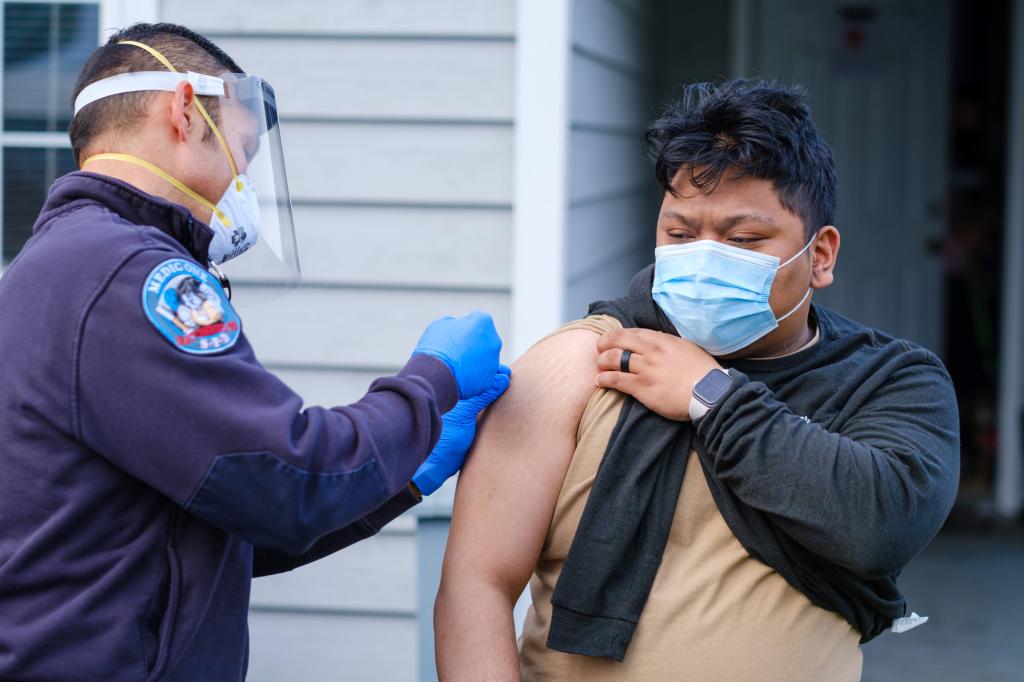
“It was bananas last year,” Collins laughed, bringing a little levity in retrospect to a serious issue. “Health and Medical Area Command (HMAC) was overwhelmed with emails, people just wanting answers to every question you can think of.” According to Collins, HMAC was serving as a hub for COVID-19 updates, tracking cases, providing reports, talking with the public, strategizing testing and response, and COVID-19 communications, “on top of managing many other COVID-related things.”
When Liao returned to her duties at the City of Seattle, “It was just Francesca and me, until Amanda came on,” Negusse said. “We all worked together and brought on more coordinator staff.”
Amanda Kay came from Communities of Opportunity in response to the call for volunteers to join the team. What started as a four-week rotation helping to operationalize the work, kept getting extended. It has since turned into a Special Duty Program Manager position. She’s also a leading evangelist for the Language Access Team.
“The team has flourished in the last year, there’s a lot of passion and encouragement,” says Kay proudly. “Our team has become a cohesive service for COVID-related materials.”
“It would be nice to see a service like this expanded in the future,” she continued, “but for now we are only funded to provide COVID-related translations and reviews through September.”
Another early team member to join was Angélica Esquivel, a contract Spanish translator and interpreter working for the City of Seattle, who was recruited last February to help with the heavy workload. She’s now a regular member of the Language Access Team, working as a Coordinator, and bringing a wealth of experience beyond just reviewing documents.
“There are multiple Spanish-speaking cultures here,” Angélica explains. “Taking into account the words and expressions requires research and review. You have to make sure the language is appropriate across cultures.” That includes elements such as other language bases or CDC resources, and even outreach for input from the translator community for direct feedback.
The work continues
Equity and accessibility are key components to the future of a thriving, successful King County. The gaps that had been identified highlighted the need for language access services to be implemented into the practices, policies, and procedures of King County. The goal is building trust and relationships with limited English proficient communities.
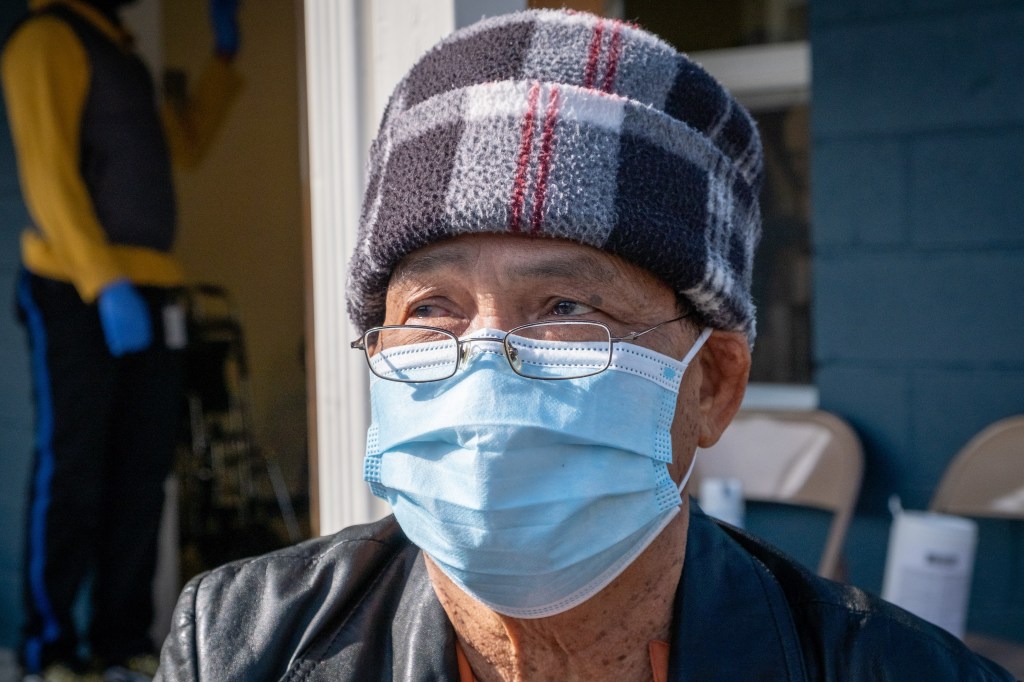
The arrival of COVID-19 accelerated the implementation of these programs, resulting in over 30 in-language website pages, plus videos and public service announcements in over 20 languages. The team’s accomplishments had other regional, national, and even global jurisdictions looking to King County as an example in how to reach out to culturally diverse constituents.
Now back in her regular role for the Executive’s Office of Equity and Social Justice, Negusse is tasked with leading policy development and operationalizing and integrating language access in collaboration with King County departments and agencies. In conjunction with her colleague Hamdi Mohamed, they have been creating a hub of materials and resources, including a training on KING COUNTY CODE 2.15 Immigrant, Refugees and Language Access Ordinance (KCC 2.15), which, in part, requires all departments to have a language access plan.
Negusse has also been working closely with KCIT to develop what will be known as the Community Engagement Translation Program. The Office of Equity and Social Justice and KCIT are preparing to launch the Community Engagement Translation Program (CETP). This program will provide funding for translation of select web content into the top six most spoken languages, and an enterprise translation management platform.
If you have COVID-related materials that need translation, or you would like to know more about the Language Access Team, please contact ESJLanguages@kingcounty.gov.
Share this:

Celebrating you during Public Service Recognition Week

from Dow Constantine, King County Executive
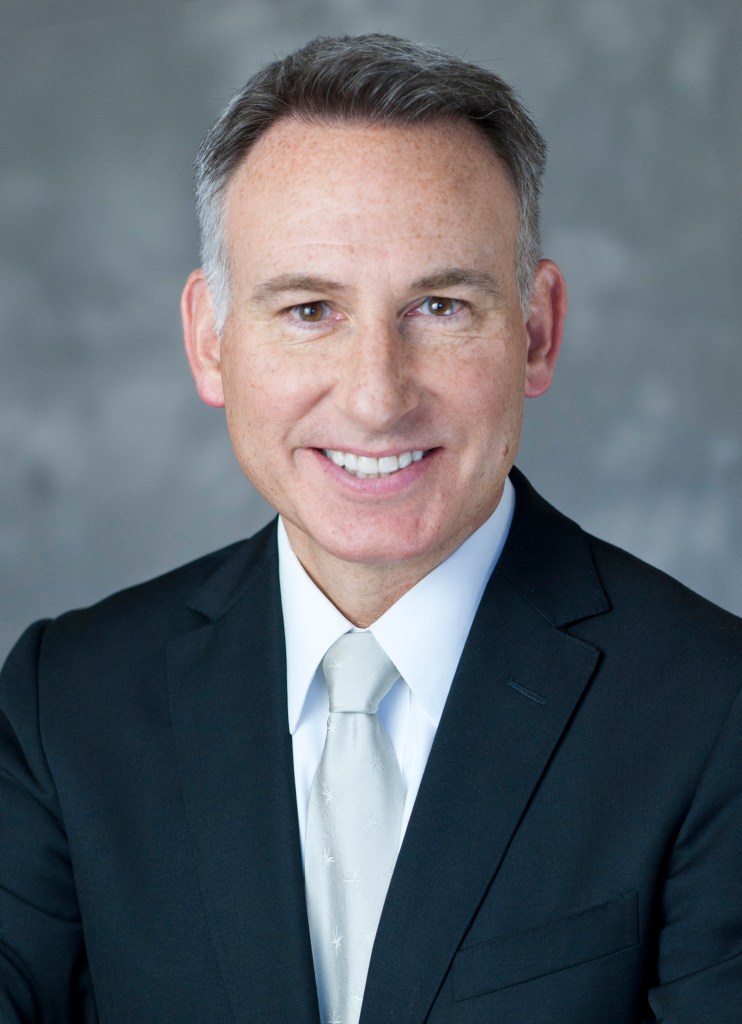
Over the past year-plus, as the nation and world responded to the COVID-19 pandemic, the importance of public servants has come into clearer focus. I want to take the opportunity this week during Public Service Recognition Week to thank you for your service.
When the pandemic struck, you stepped up to make sure that our community continued to receive the vital in-person services people count on. Our public health professionals, supported by employees and community partners across King County, provided guidance and care to help our residents protect themselves and their families from the virus. Now they are partnering again – to vaccinate our region at record rates. Other employees adjusted the way they delivered services – in-person and remotely – to ensure that people could access the support they needed while slowing the spread of COVID-19. However you have been helping to serve the people of King County during our COVID-19 response, please know that I am grateful for your efforts.
We are still in a precarious phase of this pandemic. Our vaccination program has been extremely successful, with two-thirds of King County adults already receiving their first dose, and nearly half fully vaccinated. Yet the virus continues to spread at concerning rates, and we must remain vigilant to slow its spread and end this pandemic.
This remains a challenging time, one with a lot of uncertainty, stress, and anxiety. I know we are all anxiously awaiting a return to our normal lives. An end to the pandemic is in sight and I know that by working together and supporting one another we will get there.
I am grateful for everything that you do for the people of King County. I have never been more proud to lead this County and to be your colleague in public service.
Share this:

Day Care FSA limits increased; enrollment and changes allowed in May

With the recent passage of the American Rescue Plan Act of 2021 (ARPA), you are now able to contribute up to $10,500—pre-tax—into your 2021 Day Care Flexible Spending Account (FSA).

For this year only, if you are currently enrolled, you can contribute up to $10,500 to your Day Care FSA, or $5,250 if married and filing separately. (Normally, per year, you can contribute up to $5,000 per household or $2,500 if married, filling separately.) This means you can save up to an additional $1,650 at tax time.
In addition, during May 2021, new enrollments in the Day Care FSA are allowed without a qualifying life event.
To increase your current Day Care FSA election or to newly enroll, use the FSA Change Form. New enrollments must be received by the Benefits team by May 31, 2021.
If you need help finding day care during the pandemic, your Day Care FSA offers Kinside, a free service that can help you find day cares and preschools nearby that are open and have availability. Day Care FSA participants receive 10% off day care services.
Reminder: The Consolidated Appropriations Act, 2021, a COVID-19 relief bill, allows any unused funds from 2021 FSAs to be rolled over and available for use next year.
For additional information, go to the Flexible Spending Accounts page or contact the King County Benefits Team at KC Benefits or 206-684-1556.
Share this:

Support a Veteran in launching a civilian career

King County’s Vets 4 HIRE program, which launched in 2015 and receives funding annually from the Veterans, Seniors and Human Services Levy (VSHSL), provides six-month or longer on-the-job training experiences to help current and former military service members with their transition to civilian employment, and funding is available to support departments in recruiting veterans to their teams.

Participating King County agencies provide their program participants with part-time or full-time, practical experiences in a variety of fields to help them become more competitive for King County and other civilian jobs. The VSHSL will reimburse agencies half of the participant’s first six months of wages up to a maximum of $7,800.
So far, 12 county agencies have provided experiences for 83 military service members since 2015, in positions as diverse as human resources, parks maintenance, IT security, civil engineering, and more. Of these 83 participants, almost 85% reported a positive outcome, and almost 40% obtained regular positions with King County after their participation in the program. The remainder either went on to school or secured employment at other organizations.
Veterans bring unique skills, ideas, and perspectives to the workplace that are extremely valuable to organizations. If your department has a body of work that can help support a veteran in obtaining their civilian career goals, please consider creating an on-the-job Vets 4 HIRE opportunity. The Levy provides funding to support 16 positions each year. There are still 2021 funds available and there is a current candidate pool established to help simplify your hiring process.
To learn more about the program please contact your department Human Resources or Vets 4 HIRE Program Manager Susan Navetski at susan.navetski@kingcounty.gov.
Share this:

How to schedule a COVID-19 vaccine appointment

All Washington residents age 16 and up are now eligible to receive a COVID-19 vaccination, so how do you go about scheduling an appointment?
There are several ways you can make an appointment for the vaccine:

- Go to vaccinelocator.doh.wa.gov to search for COVID-19 vaccine appointments near you by zip code.
- WA COVID Vaccine Finder covidwa.com is a volunteer-driven effort to help Washingtonians find appointments for the COVID-19 vaccine
- Call your doctor’s office or health care provider to see if they have available vaccination appointments.
- Whether you’re a Kaiser Permanente member or not, King County employees can follow these steps to get a COVID-19 vaccine with Kaiser Permanente.
- For language interpretation, call the Washington state COVID-19 Assistance Hotline: Dial 1-800-525-0127 or 1-888-856-5816, then press #. Available Monday 6 a.m. to 10 p.m., and Tuesday to Sunday and observed state holidays 6 a.m. to 6 p.m. For language interpretation, state your preferred language when you are connected. Phone support is also available from the Public Health COVID-19 Call Center at 206-477-3977, 8 a.m. to 7 p.m.
- If you live in South or East King County, check out additional options at kingcounty.gov/vaccine for the Kent, Auburn, and Redmond vaccination partnership sites.
- Sign up for the City of Seattle’s vaccination appointment notification list to be notified when appointments become available at any of the four city-affiliated vaccination clinics. You can also call 206-684-2489 between 8 a.m. and 5 p.m. from Monday through Saturday for sign-up assistance. The sites are Lumen Field Event Center (330 South Royal Brougham Way), North Seattle College Community Vaccination Hub (9600 College Way North), Rainier Beach Community Vaccination Hub, 8702 Seward Park Ave. S., and West Seattle Community Vaccination Hub (2801 S.W. Thistle St).
Making an appointment may be difficult in the short-term while we continue to experience some challenges with vaccine supply, but we do expect the supply to increase in the coming weeks, so please continue to check all options for appointments.
Share this:

Notice of King County Personnel Board Candidate Filing and Election


King County Elections will hold a candidate filing period for the elected member position on the King County Personnel Board. The candidate filing period will begin on Monday, May 3 at 8:30 a.m. and will end at 4:30 p.m. on Friday, May 7. There is a $5 non-refundable filing fee. Visit kingcounty.gov/elections/personnel-board for more information.
The Personnel Board conducts hearings on appeals of certain personnel actions as provided for in Section 540 of the King County Charter.
The Personnel Board consists of five members, four of whom are appointed, and one member elected by county career service employees. The elected term is for a 5-year term.
The county charter requires the elected member of the Personnel Board to be a resident of the state of Washington and not currently employed by King County.
A primary will be held on Tuesday, June 1 to determine the final nominees up for election on Tuesday, June 22. The primary and election will be conducted through the mail. If any candidate receives more than 50 percent of the vote in the primary, they will be deemed elected and no further election will be conducted. Only career service county employees are eligible to cast ballots.
For more information on filing for office, contact King County Elections at 206-296-1565 or election.services@kingcounty.gov.
For more information on the position, please contact the Personnel Board at 206-477-3400 or PersonnelBoard@kingcounty.gov.
Share this:

April is National Records and Information Management Month
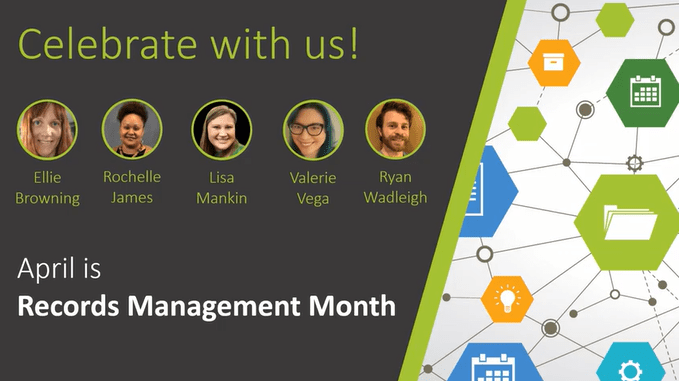
As King County employees, we have the responsibility of managing our records all year long. So what makes April so special?
“Records Management Month is the time we set aside to celebrate and recognize the important and valuable work that we all do as records managers!” County Records Analyst Lisa Mankin said. “Whether you’re a department director, an administrative specialist, or an inspector in the field, we are all records managers.”
The records employees create and receive are valuable assets.
“The Records Management Program is always happy to use the month of April to recognize the work that we do every day to organize and preserve our records, especially when we do it as part of our standard work processes.”
Follow these tips to help improve your records management best practices:
- Take the 15 minute “Basic Records Management Training” in KC eLearning.
- Delete transitory emails that don’t document your work.
- Create good records by using meaningful email subject lines and consistent file naming conventions.
- Include instructions for managing records as a part of user manuals of standard work.
- Contact records.management@kingcounty.gov if you have questions about how to manage your records.
Get more records management tips and resources.
Share this:

COVID-19 vaccines: Providing reassurance to communities

This is an excerpt of an article in the Public Health Insider. Read the full article here.
Many community organizations worked to reassure people who feared the vaccines were unsafe, even though they have been extensively tested. Online misinformation about vaccine safety has been rampant.
Reaching people with such concerns requires trust, said Janice Deguchi, executive director of Neighborhood House, which supports immigrants and refugees, many of whom speak limited English.
“Our staff speaks over 45 languages,” Deguchi said. “As a trusted messenger, we can combat rumors with accurate information.”

The Ethiopian Community in Seattle has hosted three community clinic events, providing vaccines to over 600 people. “People are grateful for the opportunity and the support they received in a place that speaks their language and answers their questions,” said Tsega Desta, a program manager for the organization.
“Through the workshops we provided in Amharic about the safety of the vaccines, we were able to convince the older generation and demystify any myths they have. As a result, they came to be vaccinated in numbers,” Desta reflected.
Close community ties are the key to successful outreach, agreed Dr. Anisa Ibrahim of the Somali Health Board of King County.
“Trust is the keystone to strong relationships, and it is earned,” Dr. Ibrahim said.
Share this:

Vaccine eligibility open to all residents ages 16 and over

from Whitney Abrams, Chief People Officer
Starting Thursday, April 15, all Washington residents age 16 and up are eligible to receive a COVID-19 vaccination. This is great news and an important step in ending this pandemic.
Vaccine remains the best tool we have against COVID-19. Already half of King County residents ages 16 and older have received at least one dose and more than 30% are fully vaccinated. This is in part due to the crucial role played by a wide array of community and faith-based organizations who delivered those vaccines and the exceptional work of our public health professionals, partners, and volunteers.
Yet COVID-19 cases and hospitalizations are rising rapidly in King County, especially within the younger adult populations, raising the possibility of a damaging fourth wave. We can’t predict how big this surge will be, how long it will last, or exactly how much harm it will cause.
That is why it is so important that we get vaccinated. With this opening of eligibility there will continue to be challenges with vaccine supply in the short-term, but we do expect the supply to increase in the coming weeks.

Finding an appointment initially may be difficult, but please remember that there are several ways you can make an appointment for the vaccine:
- Go to vaccinelocator.doh.wa.gov to search for COVID-19 vaccine appointments near you by zip code.
- WA COVID Vaccine Finder covidwa.com is a volunteer-driven effort to help Washingtonians find appointments for the COVID-19 vaccine
- Call your doctor’s office or health care provider to see if they have available vaccination appointments.
- Whether you’re a Kaiser Permanente member or not, King County employees can follow these steps to get a COVID-19 vaccine with Kaiser Permanente.
- For language interpretation, call the Washington state COVID-19 Assistance Hotline: Dial 1-800-525-0127 or 1-888-856-5816, then press #. Available Monday 6 a.m. to 10 p.m., and Tuesday to Sunday and observed state holidays 6 a.m. to 6 p.m. For language interpretation, state your preferred language when you are connected. Phone support is also available from the Public Health COVID-19 Call Center at 206-477-3977, 8 a.m. to 7 p.m.
- If you live in South or East King County, check out additional options at kingcounty.gov/vaccine for the Kent, Auburn, and Redmond vaccination partnership sites.
- Sign up for the City of Seattle’s vaccination appointment notification list to be notified when appointments become available at any of the four city-affiliated vaccination clinics. You can also call 206-684-2489 between 8 a.m. and 5 p.m. from Monday through Saturday for sign-up assistance. The sites are Lumen Field Event Center (330 South Royal Brougham Way), North Seattle College Community Vaccination Hub (9600 College Way North), Rainier Beach Community Vaccination Hub, 8702 Seward Park Ave. S., and West Seattle Community Vaccination Hub (2801 S.W. Thistle St).
I recognize that you may have questions or concerns about receiving the vaccine, and I encourage you to turn to trusted sources to talk through your questions. Our colleagues in Public Health have put together a wealth of flyers, videos, and other materials—many of them tailored for BIPOC communities and translated into several languages—to help you learn more and spread the word about COVID-19 vaccination in your community.
Vaccination ultimately will bring this pandemic under control, and the impact of COVID-19 will decrease as more people are protected through vaccination. Until then, we must remain committed to our proven prevention strategies:
- Wear a well-made, snug fitting face mask and maintain physical distancing
- Limit activities with unvaccinated people from outside your home
- Avoid crowded indoor spaces
- Improve ventilation in workplaces, businesses, and homes, including opening doors and windows when you can
- Stay home from work and get tested if you have COVID-19 symptoms or were exposed to someone who has tested positive – testing is free at any of the King County and Seattle sites.
Please continue to take care of yourself and one another.
Share this:

Supporting working parents as schools return to in-person learning

Many school districts in our region have either restarted in-person learning or announced plans to restart in-person learning. Seattle School District middle and high school students are returning to in-person classes April 19.
The return to in-person learning may create additional challenges for working parents and employees may need additional schedule flexibility or need to take leave during this learning transition.
We have provided some options below to support employees with school-aged children. Please work with your supervisor and seek approval when pursuing these options, and consult your HR Manager for more details. Supervisors are encouraged to be supportive and flexible with employees’ requests whenever possible.

- Request an adjustment to your work schedule. If you need to provide care or learning support for children during your usual workday, talk with your supervisor about whether an adjustment to your schedule could meet both your needs and the business needs of the county. Where permitted, an employee may adjust the time period in which they complete each day’s required work hours to help them better manage the competing demands on their time.
For example, instead of a standard 8 a.m. to 5 p.m. work schedule, an employee may be permitted to adjust their schedule to 6 a.m. to 10:30 a.m. and 3:30 p.m. to 7 p.m. five days a week. Employees may also be permitted to adjust their schedule to work a different number of hours on each day of the week as long as they complete their regular 35- or 40- hour work week. It is recommended that you create a consistent schedule to allow for some predictability for both your home and work life.
This option will not be appropriate for every employee or every function and will require the approval of an employee’s supervisor. Any change to the schedule of an employee represented by a labor organization must be consistent with the relevant collective bargaining agreement. If an employee would like to adjust their hours, they are encouraged to have a discussion with their supervisor.
A Pandemic Alternative Work Schedule form must be completed and approved by the employee’s supervisor prior to beginning an adjusted schedule. After an employee begins an adjusted schedule, supervisors should conduct periodic reviews with the employee to evaluate the success of the arrangement.
***Supervisors: Consider how you can support a schedule change and consult with your department’s HR Manager if you have questions or concerns. - Request to use your own accruals for time off. You can request to use your leave balances (vacation, BTO, comp. time, executive leave, etc.). For hourly employees this could mean taking two hours of vacation time and then logging six hours of work time. Currently FSLA exempt employees are not approved to use their own accruals in partial day absences.
***Supervisors: Consider how you can support your employee’s request and consult with HR if you have questions or concerns. - Request an Unpaid Leave of Absence. Ask your HR representative about the possibility of taking an unpaid leave of absence. Employees should also discuss potential impacts to employee benefits (for example, retirement credits, healthcare benefits, leave accruals, etc.) with HR.
You will also find more on leave options, telecommuting, and COVID-19 protocols in our Temporary COVID-19 Personnel Policy.
Metro Transit has also provided some useful tips to help students and families get ready for using transit for their school commute. Learn more here.






 Employee News