
Training Spotlight: Mental Health First Aid at Work

Mental Health First Aid at Work: Mental Health First Aid (MHFA) for the Workplace is a skills based and experiential training program. MHFA At Work teaches employees how to become aware of and support an individual who may be experiencing a mental health/substance use issue or crisis and help access appropriate resources. Register and learn more here.
View more training and development opportunities at www.kingcounty.gov/learning.
Share this:

Featured Job: Contract Specialist I-II

Salary: $73,132.80 – $104,374.40 Annually
Location: Seattle, WA
Job Type: Multiple job types-career service and/or temp
Department: DNRP – Natural Resources & Parks
Job Number: 2019-10564
Closing: 10/1/2019 11:59 PM Pacific
Learn more about this position or view all available positions.
Share this:

Pet of the Week: JoJo

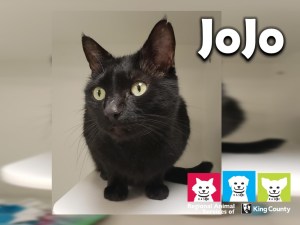 JoJo is a 12 ½ year-old, male, shorthair black cat (A403147). His personality color is GREEN, meaning he is an outgoing and adaptable cat who loves to go with the flow. This handsome boy is very sweet and loves to be around people. He can be the life of the party, especially if food is involved! He loves puzzles and works really hard when the reward involves a yummy treat! JoJo does have a heart murmur, so he will do best with regular visits to the veterinarian.
Read more at www.kingcounty.gov/adoptapet.
Share this:

Circle Keeper Process Training dates now available, Oct. and Nov.
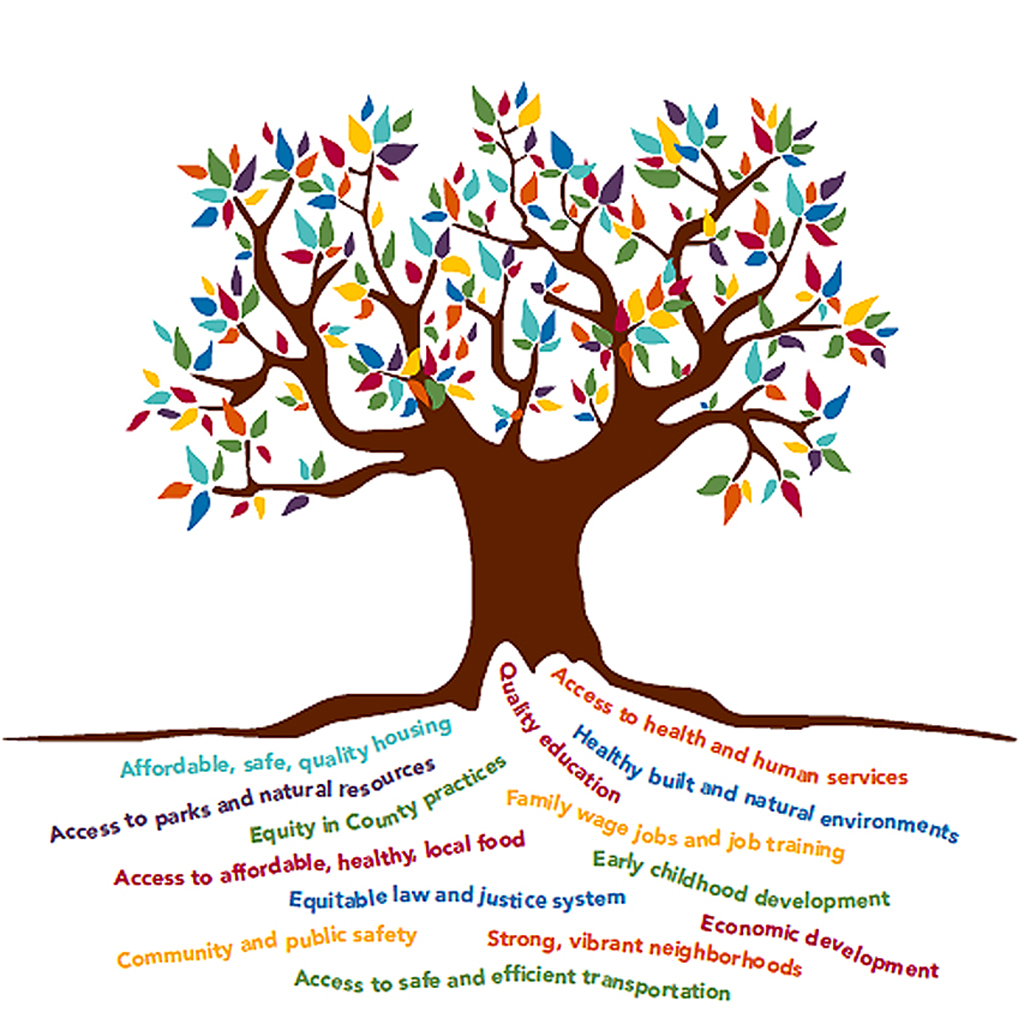
The National Compadres Network in partnership with King County’s Office of Equity and Social Justice presents Circle Keeper Process Training. This two day training is offered Oct. 22-23 and Nov. 5-6 from 9 a.m. – 5 p.m.Participants must be present for both days to receive certification and curricula.
For more information and to apply click here. If you have any questions about the training or the application please contact Tynishia Walker at twalker@kingcounty.gov or 206-263-0534
Share this:

Mindfulness classes offered to King County employees

Looking to reduce stress? Mindfulness is the simple yet powerful ability of the mind to attend more fully to the present moment’s experience. Cultivating mindfulness results in many benefits for mental and physical health, well-being, and happiness.
Through a partnership with Mindfulness Northwest, Balanced You offers Mindfulness classes, available online and in-person to all employees, free-of-charge. Visit Balanced You’s blog for a list of classes recently added for Fall/Winter 2019.
Share this:

Making Life Easier program offers tools for stress relief

King County’s Making Life Easier program offers the Wellspring Stress Center, a web-based stress management tool that includes a variety of resources to help become more stress-resilient. One of the tools, Instant Relief, is designed to help ease tension in minutes and stay relaxed and recharged throughout the day, by including guided meditation, muscle relaxation, desk yoga, and relaxation music. Access Instant Relief at www.kcmakinglifeeasier.com, enter username “King County,” and click on Stress Center.
Share this:

Get ready for 1,350 new bus trips per week starting Sept. 21
Crossposted from Metro Matters
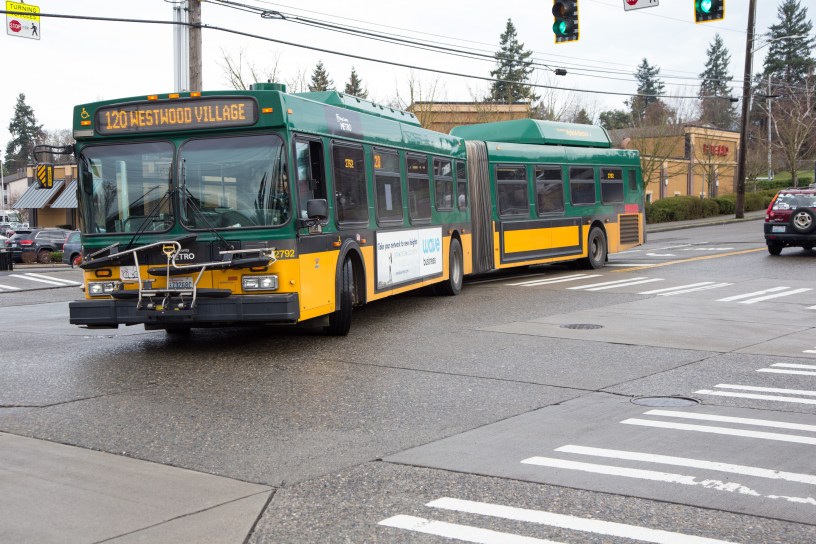
The last few times we’ve asked you to “get ready,” it hasn’t been connected with good news. Alaskan Way Viaduct closure and buses moving out of the Downtown Seattle Transit Tunnel required the public to change travel times and habits, and made tougher commutes for everyone. But, we have great news with the Fall Service Change starting September 21: more Metro to get you where you are going.
Read more from Metro Matters
Share this:

CFJC Resource Center connects youth and families to service providers
By Alex Hurtado
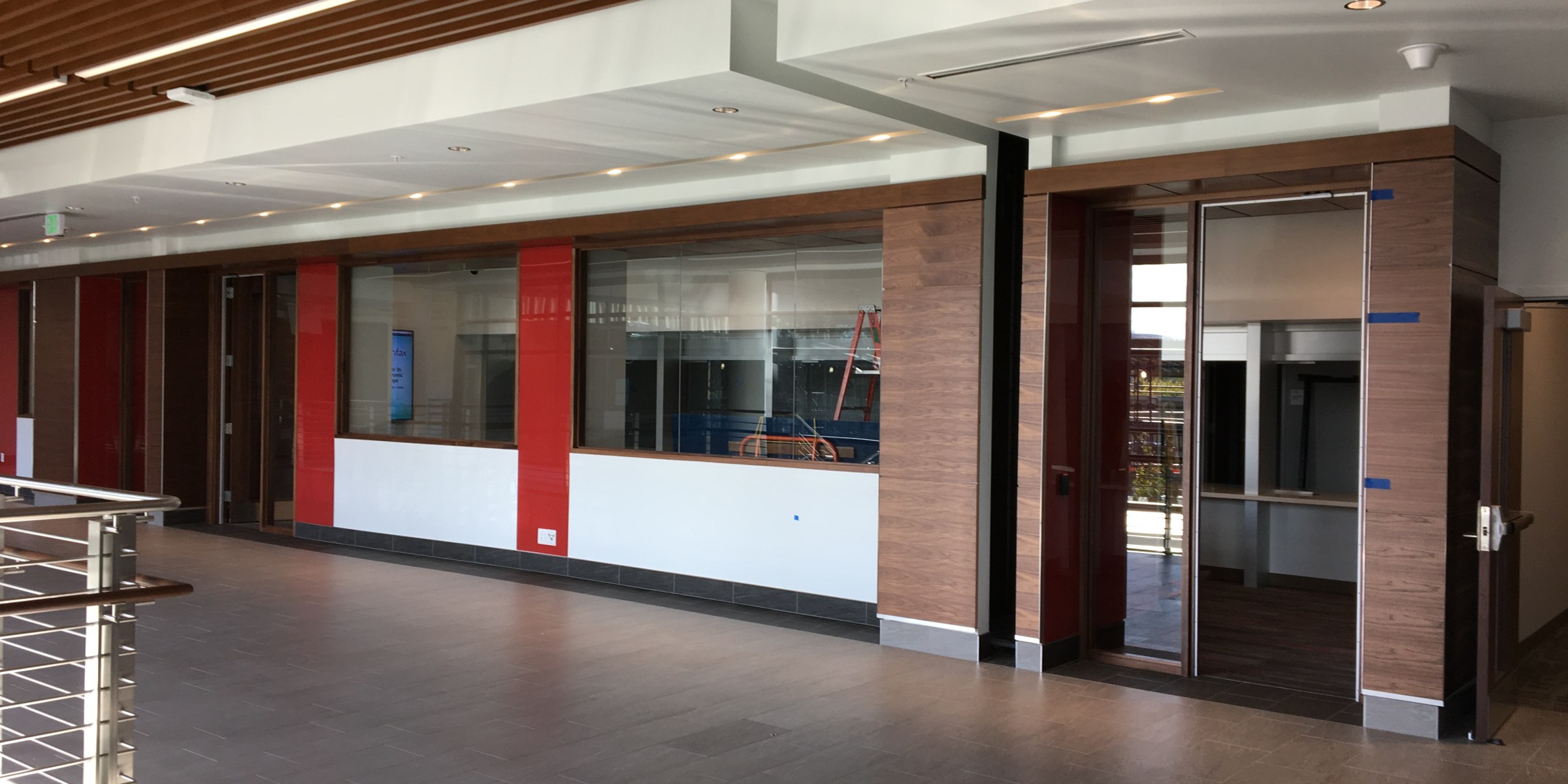
The brick and mortar of the Children and Family Justice Center (CFJC) is nearing completion, but it’s the services that will be provided to youth, their families and the community that will make this building shine.
Each courthouse level’s interior design has a King County theme; the main level of the courthouse side – The City – includes a café, community conference rooms, and a resource center. This floor will be vibrant, dynamic and community-centric.
Robert Gant, who is the Superior Court Community Partnership Manager, is enthusiastic about the opportunity to connect young people to community-based services on-site in a space that offers privacy to parents and youth. “One of the challenges at the Youth Services Center is the lack of privacy,” Gant said. “The CFJC Resource Center addresses that challenge with dedicated space and privacy, rather than meeting with families in the lobby.”
Many young people are in crisis and experiencing a variety of challenges in their life, such as lack of positive community connection, homelessness, minimal pro-social youth development, behavioral health/substance abuse, domestic violence, sexual abuse, family unit disruption, or limited employment options to name a few.
The CFJC Resource Center staff will connect families with a warm hand-off – whether they’re court-involved or not – to supportive social services, non-profits and community organizations. “This space will hopefully decrease the barriers for families seeking immediate assistance,” Gant said. Providers will be scheduled on-site on a rolling calendar. While representatives for some services may be on-site, Resource Center staff can bridge the gap for families with off-site service providers that are as close as possible to the family’s neighborhood.
Some of the providers include, YouthCare, Consejo, Community Passageways, Goodwill Job Training & Education, Nexus, and many more.
King County Information Technology is innovating how families connect to the Resource Center with the development and launch of the King County Youth Resources application/web-page for IOS and Android devices. This application provides information about youth and family resources in King County. Resources may be filtered on this application by type of service, age, and desired travel distance. The application will be available in early 2020.
The Resource Center will provide in-house interpreter services, a Youth Clothing Shop, legal resources, and it will provide youth with snack and hygiene packs.


Share this:

King County Information Technology Innovation Day, Sept. 30
Want to learn about amazing tech options available to aid your department or agency? Then come visit KCIT Innovation Day Monday, Sept. 30 from 9 a.m. – 4 p.m. Multiple rooms on the first floor of the Chinook Building will host different speakers and topics throughout the day.
Here’s a sampling of what’s available at Innovation Day:
- Augmented Reality: How Spatial Computing is Changing the Way We Learn and Work – Find out how mixed-reality hardware like the Microsoft HoloLens and software like Taqtile Manifest are changing how workers capture and transfer knowledge, collaborate and share critical information, and how they accelerate learning and training new employees to safely and confidently complete complex tasks.
- Come to the Nerd Tech room to see the latest offerings in PC computing and collaboration technology. We’ll display our current workstations and telecom devices and show you our new Microsoft Surface Hub 2S conference room collaboration tool. Technicians will also be onsite to answer questions and provide support.
- The Agile Process – Be a Partner in What Software Can Do For Your Team – Agile software development is the gold standard for how to develop software that powers your organization’s goals. As a representative of the business, you’ll participate every step of the way and will be instrumental in defining what an application needs to do for your team and your constituents! Come learn how to budget, plan and work with KCIT in this dynamic, creative and flexible process.
For questions or more information contact KCIT Communications Manager Elaine Porterfield.
Share this:

From Supported Employment Participant to Behavioral Health Division Employee

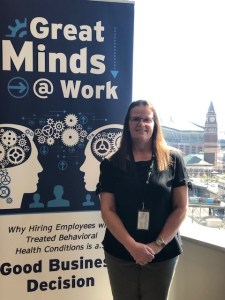
Patsy Murphy, Behavioral Health Recovery Care Authorizer with the King County Department of Community and Human Services
King County is celebrating National Recovery Month this September by helping to raise awareness, support, and recovery resources for people with mental health and substance use conditions and their families, friends and co-workers who support them.
One program that provides behavioral health supports is the Behavioral Health Supported Employment Program. This program assists people who have experienced chronic mental health and/or substance use conditions to gain and maintain competitive, integrated employment throughout our region.
The program provides job search assistance and ongoing support after job placement through an evidence-based, integrated team approach with behavioral health providers. People in the publicly funded behavioral health system move forward in their recovery journeys, despite the many challenges they may face such as homelessness, past criminal justice involvement and/or inconsistent work history.
Patsy Murphy, now a Behavioral Health Recovery Care Authorizer with the Department of Community and Human Services, credits the program with successfully helping her through difficult times several years ago to gain the courage to re-enter the workforce with support after a long absence due to her behavioral health condition.
“The program helped me create the structure and support I needed to reach for my goals and dreams,” she says.
Patsy knows how effective the program can be from her own experience. Many years ago, during a trying time, Patsy connected with the program and benefitted from the program’s assistance to find not only job opportunities but also resources that ultimately helped her achieve her bachelor’s and master’s degrees and become hired as a Forensic Peer with Valley Cities Behavioral Health, a community behavioral health agency. As a “Peer,” she provides support to others with similar conditions based on her own “lived experience” of having a behavioral health condition and navigating through the behavioral health system.
“Anything is possible if you put your heart and mind to it,” Patsy says.
Through the years, Patsy has continued to move along her wellness and recovery path. She now works as an employee for the Behavioral Health and Recovery Division, the division that helped her along the way. She now gives back to the community in different ways, such as helping with peer connection meetings and at various women’s shelters where she educates and helps others on their wellness and recovery path.
“I continue to use my recovery tools every day, including spending time with the supportive people I’ve worked hard to build relationships with. I do these things to stay well and show others that recovery is possible and that you’re never alone in your efforts to be well.”
Patsy praises the program from her own personal experience in hope that others with behavioral health conditions can benefit from the program as well. “Recovery is possible for everyone. I’m just one example of the many employees in Recovery who are compassionately contributing to our King County workforce with our own unique life experiences.” To learn more, visit the Behavioral Health Supported Employment Program website.






 Employee News