
Social Media Spotlight: King County International Airport Facebook

 King County International Airport—also known as Boeing Field—is one of the busiest primary non-hub airports in the nation. Just four miles south of downtown Seattle, we average around 200,000 takeoffs and landings each year.
King County International Airport ranks among the most successful public investments in state history. The airport’s economic impact is $3.5 billion in terms of local business sales that support 16,336 jobs and create $1.8 billion in labor income in the county. Our 150 tenant businesses also directly support 5,209 jobs in the local economy.
Follow King County International Airport on Facebook today!
Click here to view all King County social media pages.
Share this:

Amazing photos sought for King County Metro bus shelters!

Crossposted from Metro Matters
 Have you seen all of the bus shelters with amazing artwork and photography? King County Metro has nearly 800 photo murals in shelters across the system, and it’s time for us to accept entries for the next 100.
You can enter up to 10 photos for consideration online via Photographic Center Northwest. Deadline is Oct. 29, 2017. Photographers pay a $20 fee to submit five photos, and an additional five photos may be submitted for $5 each. The fees cover the costs of administering the program and preparing the photos for printing them mural-size for the shelters.
Last year, a panel selected 100 images from among the 1,300 images that were submitted by the public. Artists of all ages contribute, mostly from the northwest but also from other parts of the U.S. and beyond.
Read more at Metro Matters
Share this:

Ride Limebikes for free through Sept. 18

The LimeBikes free ride period has been extended through Sept. 18 for you!
Please remember that even though LimeBikes and bicycles in general provide an amazing and cool way to get around, unfortunately, they are not risk-free. To stay safe, follow the State and King County’s bicycling laws and always wear a helmet!
To learn more about your employee transportation benefits, visit: www.kingcounty.gov/ETP, call me at 206-477-5853, or email me at Hossein.Barahimi@Kingcounty.gov.

Share this:

Hurricane Harvey – How you can help

Crossposted from KC Employee Giving Program
 On August 25, 2017, Hurricane Harvey made landfall as a Category 4 Hurricane in Texas. Over the weekend, it brought with it devastating flooding and destruction. See full article from New York Times here.
“This event is unprecedented & all impacts are unknown & beyond anything experienced,” ~National Weather Service
The greatest anticipated needs after a natural disaster are typically for medical assistance, shelter, clean water, and relief supplies. The long-term needs of many communities are even more critical as communities rebuild and economies recovery.
Read more at KC Employee Giving Program
Share this:

KCIT ramps up training opportunities

You asked for it, we’re delivering it! KCIT is ramping up employee training opportunities in technology. KCIT now has a team dedicated to teaching you basic SharePoint, intermediate SharePoint, CRM, Skype for Business, and, our new favorite for data fiends, Power BI (Business Intelligence – this is new!). These technology tools help you get work more collaboratively, get work done and stay organized. We promise, they will quickly become a standard for your workgroup.
Check out our training schedule here (SharePoint).
The extra training on our calendar is Crucial Conversations, a two-day class that helps us change our mindset about difficult conversations. In short, they don’t have to be difficult. All our training comes with a small fee, but it is much cheaper than external training.
Share this:

Collaborative effort announces $2.25 million in emergency funding

 King County Executive Dow Constantine, Seattle Mayor Ed Murray, and Seattle Foundation announced a combined $2.25 million in emergency funding for critical services for immigrants, refugees, and other residents whose health, safety, and human rights are at risk.
The 38 nonprofits that successfully competed for the funding will provide a wide range of services, such as training for educators and mental-health providers who teach or provide treatment to immigrants and refugees. Other examples include providing critical legal services, preventing wage theft, launching a Know Your Rights campaign, and engaging the most vulnerable populations in the immigrant and refugee community.
“We proudly uphold the American promise that we are a nation that welcomes those fleeing oppression, seeking opportunity, and yearning for freedom,” said Executive Constantine. “We have created partnerships that will reinforce King County’s reputation as an inclusive community where all are welcome to build a better life.”
Read more in the official press release.
Share this:

Executive Constantine: Go simple with $2.75 Metro fare

 Metro currently has one of the most complex fare structures in the nation, with one zone for the City of Seattle and another for all areas outside the city, as well as extra charges during the morning and evening commute.
One-third of riders in a recent survey said the current system is too complex and difficult to understand. In a proposal to the King County Council announced, Executive Constantine streamlined Metro fares to $2.75, and increased funding for discounted tickets.
“You said you wanted simpler fares, and we made it happen. No matter where or when you ride, simpler is better,” said Executive Constantine. “Whether you’re traveling between Ballard and Bellevue, White Center and Westlake, or anywhere that crosses the Seattle city limits, this new fare means money in your pocket. For riders who may end up paying a little more, we’re making sure people with low incomes, seniors, and the disabled and have more access to transit than ever.”
Read more in the official press release.
Share this:

Internships at KCDOT can lead to careers

Crossposted from Inside Transportation
You never know where an internship can lead. Some of King County DOT’s top managers got their start as interns at the County. We’ve seen the demonstrable benefits of cultivating young minds that can bring fresh ideas and talent to public service, and in particular to the transit industry.
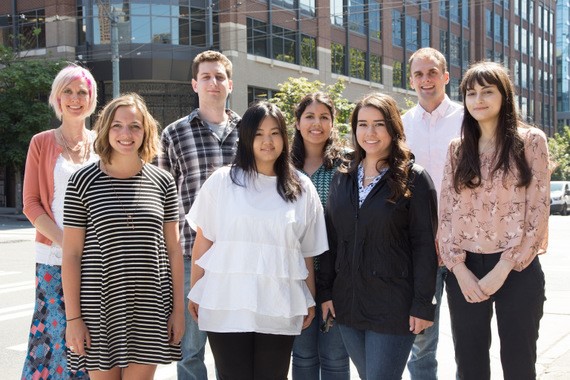
KCDOT’s intern program began as an offshoot of the Federal Work-Study program, and ever since then, hundreds of undergraduate and graduate students have generated innovative ideas, written meaningful policy, and refined and streamlined processes which have improved the lives of our residents. Scroll down to meet ten of our current interns in Metro Transit. If history is any guide, there is no limit to what they might achieve.
State Court of Appeals Judge Marlin Appelwick, who also served 16 years in the Washington State Legislature, was one of the earliest interns at KCDOT. He worked on legislation which led to the implementation of the Vanpool program.
Read more at Inside Transportation
Share this:

All Home Director Mark Putnam featured in blog about changing homelessness narrative

 All Home Director Mark Putnam recently contributed a guest blog to the Seattle Foundation called “It’s time to change the narrative on homelessness.”
“Changing the way we think about homelessness, which is deeply embedded in our internal and cultural biases, is critical to our ability to meaningfully address the crisis we are faced with today,” Putnam writes in the blog. “While we are housing more people through homeless services than ever, our efforts have failed to match the increasing need. Homelessness has reached emergency levels in Seattle/King County and it is no accident that we find ourselves in these current circumstances.”
Read more at the Seattle Foundation.
Share this:

Improving workflow and safety for DAJD staff

The Department of Adult and Juvenile Detention (DAJD) is in the process of retiring the 40-year-old system its more than 500 correctional employees use to manage detainees and is replacing it with one that will provide a smoother, more efficient workflow process from booking to release. The department has more than 41 applications that help to manage the various processes throughout the organization. A key deliverable of the new system will be to eliminate as many of these applications as possible.
The new Jail Management System (JMS) will simplify many of the processes of over 30,000 bookings per year, meal disbursements, and the relocation and release of inmates, to name a few.
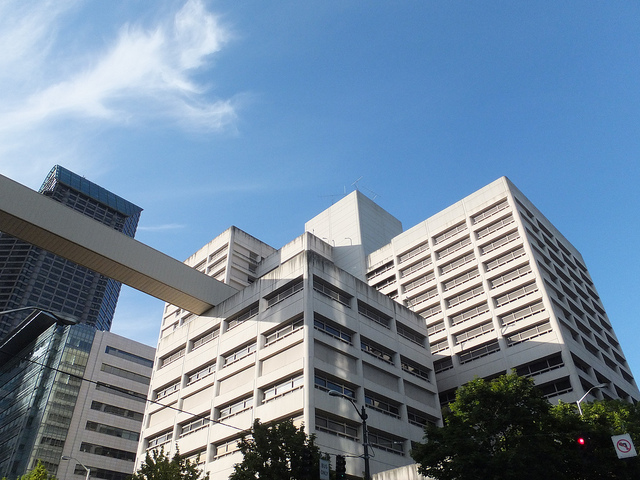
Nearing his three months with King County, DAJD Senior Business Analyst Allan Browning is leading the business process analyses with the support of five Subject Matter Experts representing knowledge bases across all five department divisions. The project is a collaborative effort with KCIT and is led by Latasha Battle who is the over-all Project Manager from KCIT. The project team is also working closely with all of DAJD’s partner agencies.
In order to provide a preview of what is currently possible within a modern JMS, in late May, the JMS team invited three vendors, Caliber Justice, Tribridge and Black Creek, to demonstrate their JMS solutions. Some of the features they were asked to showcase included Intake and Booking, Mugshot History, Alerts, Risk and Needs Assessments, Inmate Classification, Inmate Programs, Incidents, Visitation, Grievances.
“When compared to the systems demonstrated, it is clear that the current outdated systems, many of which were created as early as 1974, do not provide support for many key functions needed in today’s work environment,” Allan stated.
After conducting a thorough walk-through of the day-to-day interactions at the different facilities, Allan and his team came away with the reinforced understanding that re-engineering the current system, which is comprised of 57 separate subsystems, is no longer an option.
“One area that will see significant improvement with the new JMS is Management Information and Reporting. The new system will provide improved systems for tracking a variety of management information on inmates, community corrections participants, juvenile offenders and staff,” Allan said.
Juvenile Detention alone still uses 132 – and counting – paper forms and at least six paper forms are used to book a newly arriving detainee.
“From the very beginning of the tour, it became apparent to the team that basically every process performed at the Juvenile Detention Center is literally being performed on paper forms,” Allan said. “Comments from the JMS team heard from staff clearly demonstrates their eagerness for the new Jail Management System project to be completed successfully and as soon as possible.”
Currently the new JMS Project team is finalizing documentation of all processes and system requirements in order to complete the development of a Request for Proposal (RFP) to purchase a modern, commercial-off-the-shelf (COTS) JMS solution to address workflow and safety needs.
“Working in an environment where situational awareness is vital makes it imperative that processes be optimized and create as little distraction as possible,” Allan said. “The JMS team is determined to ensure the new JMS meets all of the needs of DAJD.”
The project could take up to three years to complete the transition from old-to-new JMS. DAJD Director Willie Hayes, the project sponsor, is thankful for everyone’s patience and participation as the project advances.
“I know many of you have heard the old adage, ‘Good things come to those with patience.’ In this case, it’s a really good thing that is coming, and boy have we been patient,” Hayes said.
The next phase is final requirements, which is planned to finish soon so that an RFP can be written and let the end of October or early November 2017.
“While the project seems to be daunting and overwhelming here at the beginning,” Allan said, “I am confident with the upbeat and open attitude of the entire DAJD staff, that the project will be successful.”






 Employee News