
Shop with a Cop events create smiles and connections

Cross-posted from the Sheriff’s Office newsletter
The annual Skyway Shop with a Cop event was held recently at the Renton Walmart. Over 80 children and their families showed up and were warmly greeted by volunteers and deputies from around the agency. Each registered child was paired with a deputy to walk through the store to select the child’s choice of items. The event was supported by the Alajawan Brown Foundation.
The Covington Shop with a Cop event also took place at the local Walmart. This year, approximately 180 children participated, with each child given approximately $75 to purchase something they would like for Christmas. They received support from the Covington Rotary and Maple Valley Rotary, as well as numerous volunteers.
At these special events, the children take away key lessons such as budgeting, decision-making, and teamwork, all while making a new friend. The events also provide an opportunity for law enforcement to have a positive interaction with needy children and their families.
Share this:

Records Management’s Jacqueline Tabor performs jazz in Japan

Cross-posted from Executive Services Express
Jacqueline Tabor, a member of the Records Management Program Team in Records and Licensing (RALS), recently returned from a whirlwind five-day Seattle-Kobe Sister City Association delegation trip marking the 65th anniversary of the sister city relationship. Read more.
Share this:

Restored upstream salmon habitat begins a decade of projects to open streams and rivers

Executive Dow Constantine recently announced significant gains this year by King County to restore access to high-quality salmon habitat, and that the county will soon embark upon a decade of projects to reopen at least 50% of the stream habitat currently blocked by county-owned roads and trails.
The team of experts guiding King County’s Fish Passage Restoration Program estimates that by 2032 these projects will allow access for native salmon to freely swim to more than 250 stream miles. Read more and watch the video.
Share this:

King County’s Equity and Social Justice Strategic Plan Highlights

In 2016, King County launched its Equity and Social Justice Strategic Plan, which has informed the direction for the County’s equity, racial, and social justice work since its development. To share just some of that work, King County has created the “ESJ Strategic Plan Highlights” – an online, interactive approach to presenting some of the County’s significant initiatives, efforts, and investments towards becoming anti-racist and pro-equity.
Watch this video for an overview of the highlights with King County Executive Dow Constantine and Chief Equity and Inclusion Officer Anita Whitfield. Spend time exploring the entire report to learn more about work across departments to meet the needs where they are greatest.
Share this:

Be prepared for cold temperatures, snow, and possible freezing rain

Extremely cold temperatures, snow, and possible freezing rain are forecast for our region this week, so please be prepared for possible commute delays and impacts to business operations.

If you work on site, please be prepared for cold weather. Have a plan for your commute, dress warmly, and let safety be your guide when making commute decisions. If you drive, have an emergency kit in your vehicle, including extra clothing, food, water, and a flashlight.
Power outages: If you are teleworking and experience a power outage that affects your ability to effectively work remotely, please contact your supervisor to discuss other options for completing work tasks. These may include taking leave or working from your regular King County worksite.
HR Policies: When an agency remains open, but conditions prevent you from reporting to work or from reporting on time, notify your supervisor as soon as possible. You may request leave, subject to approval by your supervisor. If you have no leave accrued, your supervisor may approve leave without pay to cover absences. Sick leave may not be used. Refer to HR Bulletin 2011-0009 County Operations During Emergency Situations and Inclement Weather (Sheriff’s Office employees refer to KCSO Inclement Weather Policy; Superior Court and District Court employees please see check court policies).
Alternative work arrangements: If you are impacted by the weather and adjusting work schedules, working at an alternative location, or taking vacation are options for your job, please discuss these beforehand with your supervisor.
Stay informed: Make sure you’re getting the latest King County information at work and at home in the event of inclement weather.
- Sign up for KCInform, King County’s employee alert and warning system. KCInform is used to reach County employees during an emergency with timely information about infrastructure disruptions, facility impacts, changes in your department’s business operations, and other critical impacts. Your King County desk phone and @kingcounty.gov email are already in the system. It is important to register your County-issued cell phone (if applicable) and personal cell phone and email address to ensure you receive time-sensitive messages. This service is free, and your personal contact information is secure and protected. To sign up, please contact kcinform@kingcounty.gov anytime or 206-296-3830 between 8:30 a.m. – 4:30 p.m. Monday – Friday to request your unique registration link. Visit the KCInform website to learn more or watch our short video.
- Call the Employee Hotline—206-205-8600 (save it to your phone now!).
- Check your King County email for information on business operations, delays, and closures. Log on at http://outlook.kingcounty.gov. Some agencies may send additional instructions directly to their staff.
- Contact your supervisor for specific instructions.
- Visit the Emergency News page at kcemergency.com for regional impacts.
Resources for travelers
- Metro: Visit MetroWinter.com and Eye on Your Metro Commute, and sign up for Metro Transit Alerts (text, email, tweets via @kcmetrobus, see RSS feed via desktop or mobile RSS reader)
- Roads: Visit Roads’ Snow and Ice resources and sign up for King County Road Alerts (text, email, tweets via @kcroads)
- Water Taxi: Sign up for King County Water Taxi Alerts (text, email).
Share this:

Inclusive All People Restrooms coming to Chinook and King Street Center


After many years of employee advocacy, King County is expanding the number of inclusive restrooms. Transgender and gender expansive employees have highlighted the need to create more inclusive restroom access where employees do not need to choose between gender-specific restrooms.
To advance this effort, the county will update sets of restrooms on the 5th and 12th floors of the Chinook Building and the northeast set of restrooms on the 3rd floor of the King Street Center to All People Restrooms. In this first phase, the Facilities Management Division (FMD) will install privacy strips in the stalls, post new signage indicating what types of fixtures can be found in the restroom, and make urinals temporarily unavailable. FMD began the work this week and it should be completed by the end of the year.
The 2023/24 FMD budget includes funding to further renovate the All People Restrooms by replacing current stalls with compartments that provide more privacy.
Employees who work in Chinook and King Street Center will automatically be given access to the floors with All People Restrooms. There will continue to be gender-specific restrooms on the other floors of the building that employees can use if they prefer.
King County’s True North is to be a welcoming community where all people have the opportunity to thrive. This vision naturally includes our employees. One of the ways we are realizing our True North in the workplace is by creating inclusive, respectful, and easy access to restrooms for people of all genders, people with disabilities, and anyone whose bathroom access is simplified by not having to choose a gender-specific restroom.
You can check out the FAQs and additional information here.
Share this:

New resources help managers and teams navigate project work

The Project Management Team (PMT) in the Office of Performance, Strategy and Budget has developed a set of tools, templates, and processes to guide project managers across King County in navigating project work.
Whether you are a designated project manager or someone who manages projects from time to time, these resources will support you and your team through your project work:
- A 13-minute video introduces the Project Management Team’s standard work and provides an overview of the required minimum standards for PMT-assigned projects.
- These tools and templates help project teams plan and implement their projects.
- To build specific project management skills, the PMT recommends these trainings.
The Project Management Team maintains a complete library of resources to assist project managers and teams. Developing and maintaining project management standards supports the county’s goal of becoming the Best-Run Government.
Share this:

Focus on Financial Goals in 2023

Whether you are building a budget, planning for a large purchase or thinking about retirement, My Secure Advantage (MSA) has money coaches available to help you and your family. King County employees get 90 days of money coaching every year. Read more on the Balanced You blog.
Share this:
King Street Center information session recordings available
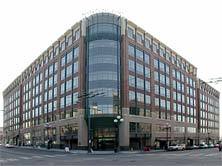
Nearly 550 King County employees recently joined information sessions about upcoming changes at King Street Center and across the downtown campus.
For those who were not able to attend, or attendees who want to review the information shared, you can now access the recorded sessions and related materials.
- Recording of Session 1
- Recording of Session 2
- Slide deck
- Audience Q&A, including follow-up on questions that weren’t answered live
Share this:
Drew Thompson, finalist for the Clean Tech Alliance Energy Leadership JEDI Award

Cross-posted from Clean Water Stories
Drew Thompson, Resource Recovery Project Manager for King County Wastewater Treatment Division, was recently a finalist for the 2022 Energy Leadership JEDI (Justice, Equity, Diversity & Inclusion) Award.
The award, given by the Clean Tech Alliance, recognizes those who perform outstanding work to make the energy sector more equitable, support climate justice and diversity in the sector, and foster an inclusive ecosystem. Read more.






 Employee News