KCC 2.15 training: Protecting immigrants, refugees, and limited English speakers
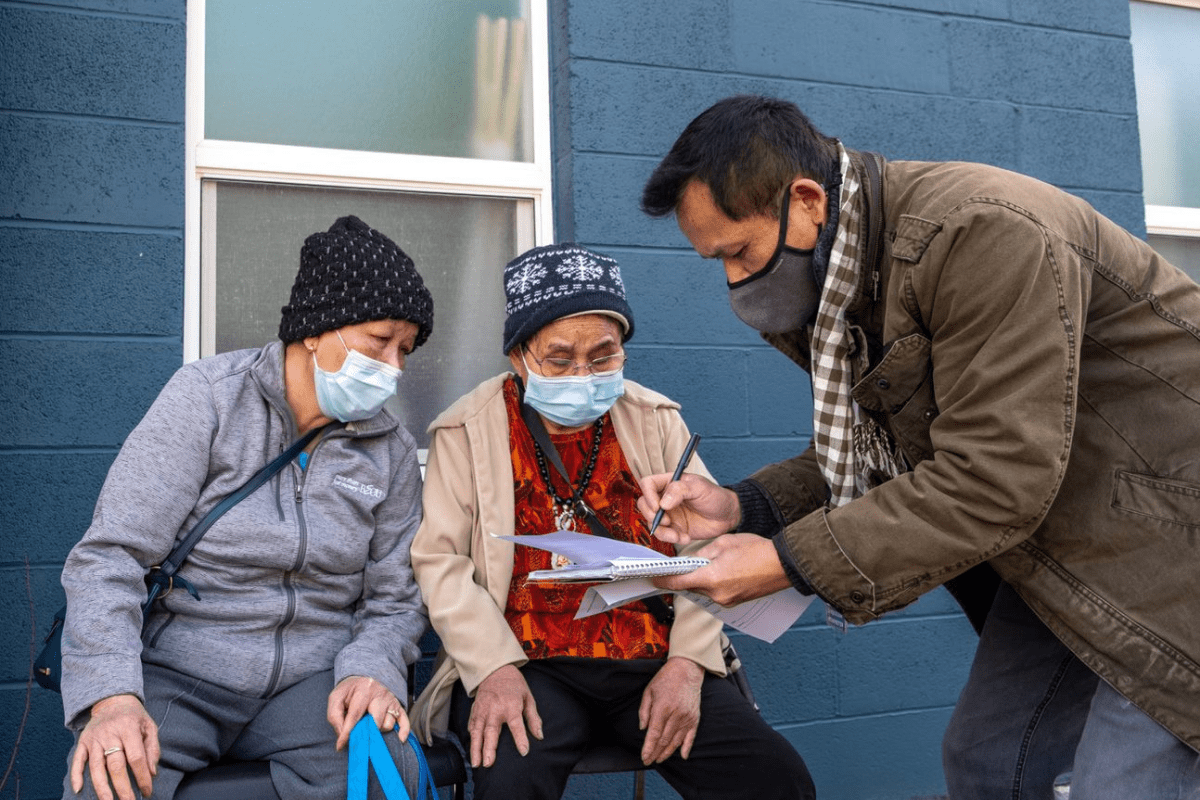
On Feb. 26, 2018, the Metropolitan King County Council adopted ground-breaking immigration legislation designed to protect everyone’s safety and civil rights. While still adhering to federal law, King County Code 2.15 Immigrant, Refugees and Language Access Ordinance (KCC 2.15) prevents the use of County funds and resources on federal immigration enforcement and outlines the steps the County uses to protect immigrants and refugees seeking services from the County, or who are victims or witnesses of crime.

“This legislation was developed with consultation from community organizations and leaders that advocate for equitable public policy,” said Hamdi Mohamed, Policy Advisor for the Office of Equity and Social Justice (OESJ), ”including Washington Defenders Association, the Public Defenders Association, Northwest Immigrant Rights Project, Colectiva Legal, ACLU, and OneAmerica. This collaboration helps ensure that the ordinance reflects the needs and desires of those we serve.”
Over the last decade, King County gained more than 200,000 new residents, half of which were foreign-born, speaking more than 170 languages, adding tremendous diversity to the local economy, political climate, and social fabric.
“I’m thankful to live in a place where we are working together to build a community where all are truly safe and genuinely belong,” announced Anita Whitfield, Chief Equity and Inclusion Officer. “This ordinance provides King County departments and agencies with guidance to ensure we’re respecting the safety and civil rights of our immigrant and refugee communities, so we can live our values of being an inclusive and racially just place.”
“As government employees and public servants our first task is to ensure all people, especially our immigrant and refugee neighbors, feel safe when they’re engaging with us and asking for services. By completing this training, we are one step closer to making King County a welcoming place where every person can thrive,” Whitfield added.
Training for County employees
As part of this ordinance, all County employees are required to take a brief training to ensure compliance with the Code.
Current County employees must complete the training by April 1, 2022, and any new hires will need to complete the training within 120 days of hire. Employees will be paid for their time taking the training and will work with their supervisors to fit it into their schedule.
“By completing this training, we are one step closer to making King County a welcoming place where every person can thrive,” Whitfield concluded.
Training timeline
Online training through NEOGOV Learn will be available to all employees with computer access beginning this month. Employees with computers will receive an email from NEOGOV with instructions when the training has been assigned to them and steps to complete the training. The online training consists of a six-minute video and educational resources.
Beginning in Nov., alternative methods to take the training (for example, paper-based or a slide presentation) will be available for employees who work non-standard hours or in an environment outside of an office, for employees without access to computers, and for those who may require accommodations. Employees who need to use an alternative format should work with their supervisor or Human Resource Manager to receive support.
“We have been working with agencies and departments across the County to plan for this enterprise-wide training. We’ve made significant improvements including providing information in an audio-visual format and large print, as well as offering translations in the top six languages used by County employees,” said Senayet Negusse, Language Equity Program Manager in the Office of Equity and Social Justice. “OESJ will continue to work with HR Managers and King County agencies so that all employees have equitable access to essential information provided in this training.”
Be on the lookout for additional information about this training. If you have any questions, please reach out to Hamdi Mohamed at hamdi.mohamed@kingcounty.gov.
Security Tips: Password Safety
Creating strong passwords should be the number one priority in keeping your online world safe. Having weak passwords could result in stolen identities, loss of data or money, and even the loss of a job and/or reputation.

You’ve likely heard recommendations for creating secure passwords before. Experts suggest using long, complex, and random combinations of words, letters, numbers and special characters. Follow the tips below to improve your password safety practices:
- Improve the strength of your passwords. Strong passwords are usually made up of at least eight characters. They should contain numbers, uppercase and lowercase letters, as well as special characters.
- Use passphrases. Recently, security standards strongly recommend using a passphrase rather than a single word. A good passphrase is one that is unique to you so that you can remember it, but is also secret enough that no one else can guess it.
- Never use personal or obvious information in your passwords. For example, never include your name, email address, phone number, birth date, or any other information connected to you.
- Never use the same password for multiple accounts. If cybercriminals steal your password from one account and you’re using that password on other accounts, then you’ve given them the key to all of the accounts where you’ve used the same password.
- Use a password manager. If your organization allows it, use a password manager to create, store, and sync complex passwords across multiple devices. Password managers only require you to remember one master password. Ask your internal IT (or other applicable) team to see if this is something you can do.
Help to protect King County (and your family) against cybercrime by improving your password safety today.
For more information about KCIT’s Cyber Security Awareness Training Program contact
kcitcsat@kingcounty.gov.
Superior Court program supports jurors with disabilities

It began with a 2019 court case. A blind juror was selected with a commitment from both sides that their witnesses would be descriptive enough to work with the juror. In this case, the lawyers were enthusiastic to make it work. And according to King County Superior Court Judge David Keenan, a judge has a duty to “figure out a way to make it work.” But the juror’s ability to hear descriptive evidence wasn’t the only issue. Jurors are required to take notes on a court-issued notepad and they’re not allowed to review those notes until deliberations. This particular juror used a laptop with a screen reader that would speak the notes back to him to ensure they were accurate.
Presiding over that case, Judge Keenan realized that, while accessibility issues were nothing new, there wasn’t really a robust process in place to help the court system support people with disabilities. When you have a deaf juror, you can get an American Sign Language interpreter. But what about the many other disability situations? This issue got him thinking.
A team effort
Along with Washington Supreme Court Justice G. Helen Whitener, King County Superior Court Judge David Whedbee, Washington Supreme Court Interpreter Commission Director Robert Lichtenberg, and Pam Ditman of the Office of the Administrator of the Courts, they recruited a team of panelists who worked together on a webinar training. Among other matters, the Administrative Office of the Courts trains and educates Washington court officials about technology considerations to increase equity and inclusion for people with all types of disabilities. This presentation was put together specifically about juries and inclusive justice. The panel consisted of Justice Whitener, Judge Whedbee, Judge Keenan, and Speech Language Pathologist Donna Cole Wilson.
Wilson is an expert in Augmentative and Alternative Communication. For the webinar, she and Judge Keenan talked about the various technology and accommodations that can be used to support jurors with disabilities to fully participate. They covered technology that is available for people who cannot rely on oral speech, who have limited or no vision or hearing, or other physical challenges, as well as individuals with learning differences. The two presented on the assistive technology and accessibility options in Zoom that are available to enable more inclusive juror participation.
Justice Whitener led the program, highlighting the importance of working with individuals in our community living with disabilities, ensuring that they have equal and equitable access to every aspect of legal system, including jury service. In addition, Judge David Whedbee gave a thorough and engaging presentation on the statutes, court rules, and case law under the Americans with Disabilities Act which govern the often-challenging considerations judges must analyze when working with prospective jurors living with disabilities.
Washington Supreme Court Justice Helen Whitener discussed how our courts can now think creatively and make situations work with implementing technologies and accommodations. Justice Whitener encouraged judges to start with a ‘yes’ and from there work toward the logistical and technological ways to make it happen.
“One of the most effective elements to the training was the interview with the blind juror,” Judge Keenan said. The juror “said ‘the first thing a juror should be asked is how would you like to be helped?’ It was elemental, but powerful.”
The feedback on the training has been extremely positive. Judges Keenan and Whedbee have taken what they’ve learned to create a technology-based reasonable accommodations bench card. “It’s a kind of cheat sheet for judges that includes information like legal requirements and potential resources,” Judge Keenan explained.
Celebrating Indigenous Peoples’ Day
Today is Indigenous Peoples’ Day, a day to celebrate the rich heritage, culture, contributions, and resilience of Indigenous people in our region and here at King County.
Our region benefits tremendously from the generations of Native American people on whose land we currently live. There are 29 federally recognized tribes in Washington State, and King County is home to a thriving Native American population from Tribal nations across the country. We are on the unceded ancestral lands of the Muckleshoot, Snoqualmie, Puyallup, Tulalip, and Suquamish Tribes, and the Duwamish people.
The legacy of colonization and generations of racist practices and institutions continue to harm and hold back Indigenous people nationally and in Washington State. Native American people experience disproportionately worse outcomes in our community: health, access to housing and good paying jobs, educational attainment, income, incarceration rates, and more. Native American people have been disproportionately impacted by COVID-19, with higher rates of death and at younger ages than other races.
Yet as they have for generations, Indigenous people continue to stand strong in the face of racism, oppression, and injustice. We stand with them in the fight for their rights, and to protect and promote their culture, language, traditional life ways, and values – and their future.
Our government is better for the many contributions of Native American employees, and I want to recognize the efforts of our employee-led King County Native American Leadership Council for raising the voices of Native American and Alaska Native employees and serving as a link to Tribal communities and urban Indigenous people throughout King County. Together with our Tribal partners, we are working to develop community-driven solutions and a strong government-to-government relationship between King County and Tribal nations that will help ensure the Treaty of Point Elliott is upheld, and that Native American people can truly thrive in their own land.
Starting in 2022, King County government will observe Indigenous Peoples’ Day as a new annual paid holiday on the second Monday in October. This new holiday will provide an opportunity for us to deepen our knowledge about our nation’s history and the institutionalized practices and policies that continue to harm Indigenous people today. We will also use this day to further our understanding of Indigenous heritage and culture, and the many ongoing contributions of Indigenous people in our region.
Today, on Indigenous Peoples’ Day, let us join with the Indigenous community and honor their ancestors in fostering justice and combating racism, and building a strong future here in King County and across the United States. As a government and individually, we all have a responsibility to work to remove the barriers which negatively impact those from whom this land was taken, and an obligation to ensure future generations can thrive.
Sincerely,

Dow Constantine, King County Executive
Who should get a COVID-19 vaccine booster?
The Centers for Disease Control and Prevention (CDC) now recommends booster doses of Pfizer vaccine for people who have completed two doses of Pfizer at least six months ago and are:

- 65 years or older
- Residents in long-term care facilities
- 50-64 years old who are at high-risk because of underlying medical conditions
The following people may also receive a booster shot of Pfizer vaccine at least six months after receiving two doses of Pfizer vaccine based on their individual benefits and risks:
- 18-49 years old who are at high-risk because of underlying medical conditions
- 18-64 years old in occupational or institutional settings that put them at high risk for COVID-19, such as first responders, healthcare workers, education staff, corrections workers, and public transit workers.
If you fall into any of these groups, please consider getting a booster shot. Pfizer booster shots are widely available at health care clinics and pharmacies across the region, and at King County’s comprehensive network of reopened and expanded partnership vaccination locations include sites in Auburn, Kent (two locations), Federal Way, Renton (three locations), Capitol Hill, Montlake, Harborview, Downtown Seattle, Northwest Hospital, Shoreline, Redmond, Bellevue, Eastgate, and Snoqualmie.
All COVID-19 vaccinations are free of charge and all King County vaccination partnership sites are Americans with Disabilities Act (ADA) accessible and open to the public.
You can find out where to get vaccinations and find answers to your questions at www.kingcounty.gov/vaccine.
Celebrating 2021 National Disability Employment Awareness Month
Every October, King County celebrates the many contributions made by people with disabilities, and how they strengthen our workforce, our communities, and our country.
With this in mind, the King County Executive and King County Council jointly honored their contributions by proclaiming October as National Disability Employment Awareness Month.
In the Oct. 5 virtually held King County Council meeting, Councilmember Dave Upthegrove and Councilmember Claudia Balducci shared reading of the proclamation, with each councilmember adding additional insights. The meeting can be viewed here.
“Every person deserves the opportunity to fulfil their potential, share their unique abilities, and fully participate in everything that our region has to offer,” King County Executive Dow Constantine said. “Disability Employment Awareness Month reminds us that we must continue to break down barriers to promote inclusion and expand opportunity for all people with disabilities.”
“Disability Employment Awareness Month encourages us all to acknowledge the barriers that continue to impact people with disabilities, and it challenges us to take action to create a more inclusive and supportive community and workplace,” said Councilmember Upthegrove. “Whether it be at work, at our child’s school or at a neighborhood barbeque, we can all foster an environment that celebrates everyone’s unique talents, rejects prejudice and discrimination and supports those living with disabilities.”
“People with disabilities contribute to our communities and our workplaces in innumerable ways,” said Council Chair Balducci. “October is National Disability Employment Awareness Month. Let’s take this opportunity to celebrate the ways in which all of our lives are enriched by the contributions of people with disabilities, like our colleagues at King County, while recommitting to removing barriers that still exist to their full participation.”
The proclamation highlights the commitment King County government has to advance people with disabilities and affirms the value and talent these individuals add to King County workplaces and communities.
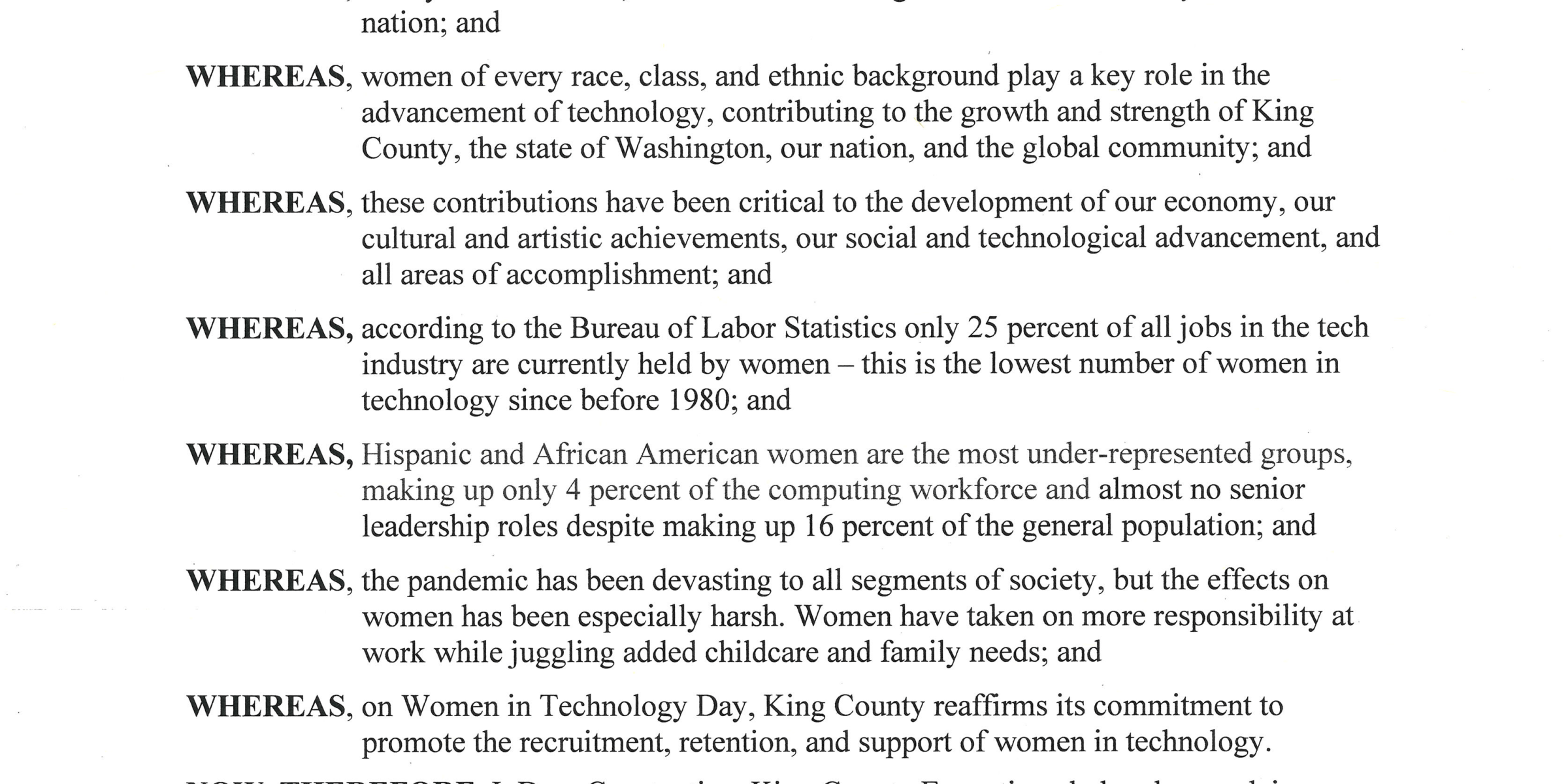
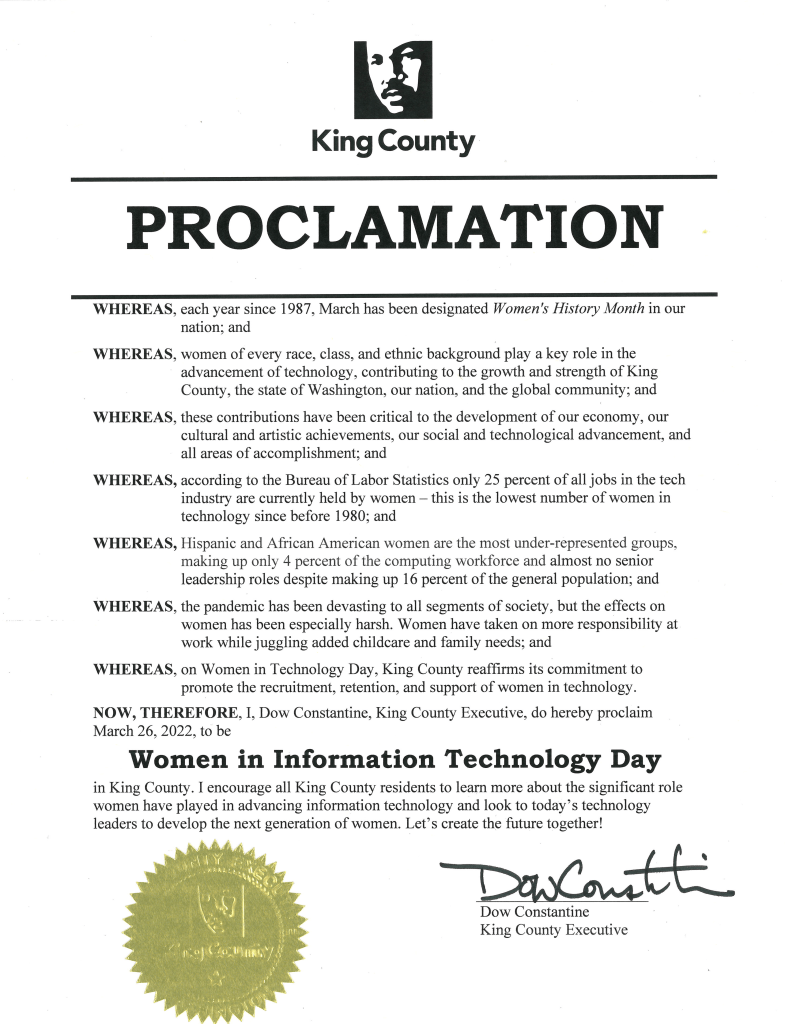
The official proclamation can be viewed here, and in the image above.
To get involved in recognizing and celebrating National Disability Employment Awareness Month next year, please contact Christina Davidson at Christina.Davidson@kingcounty.gov.
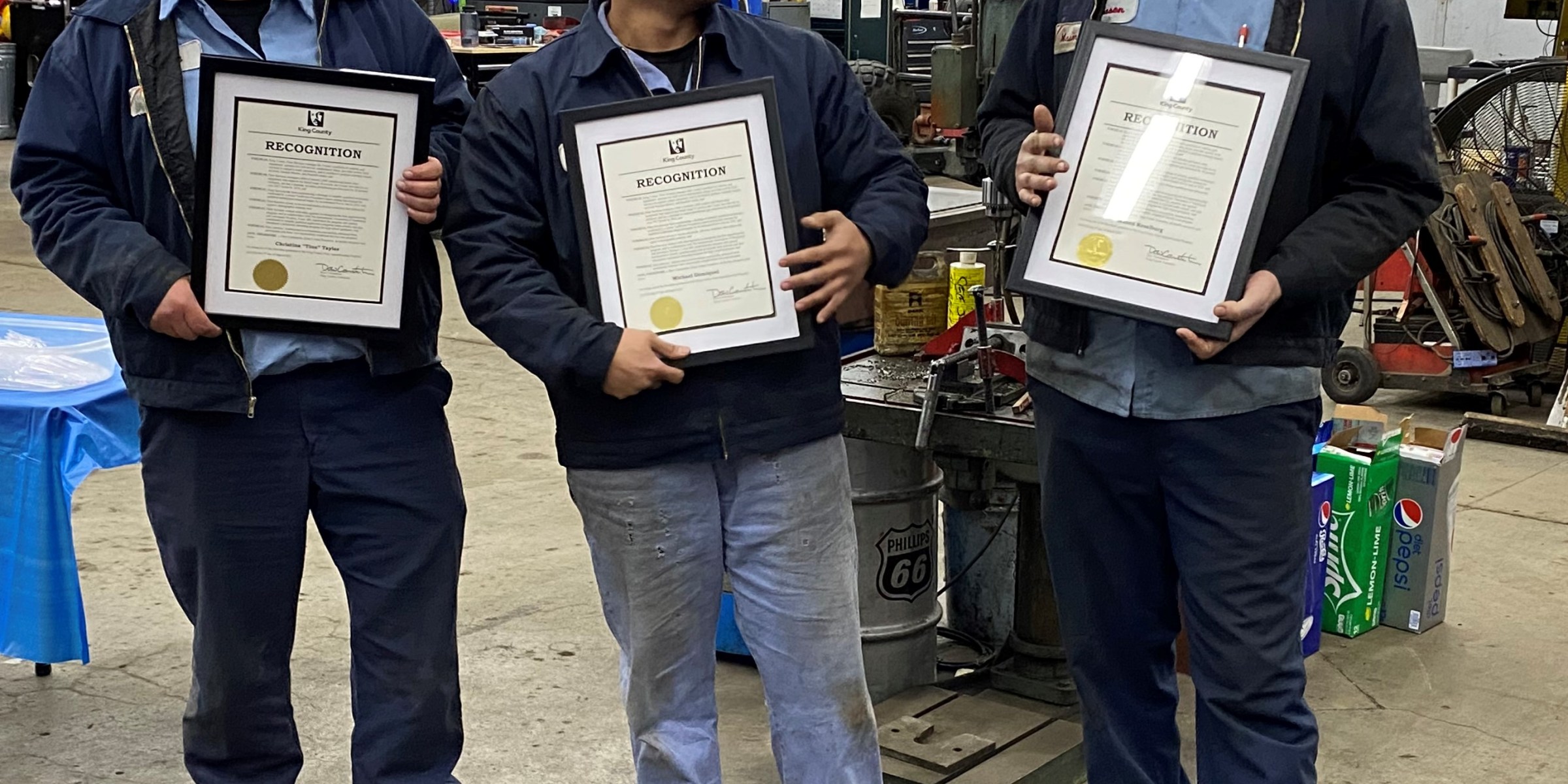
Matt Canady receives Executive’s People Leader Award
Each year, Executive Constantine holds the Performance Excellence Awards, which honor employees and workgroups at King County for their exceptional contributions to performance, leadership, and innovation. These leaders embody the Executive Branch values and strive to reach our True North: Making King County a welcoming community where every person can thrive.
The People Leader Award honors a leader below the department or division leadership level who directly manages staff and encourages and empowers their team to push for outcomes that make King County a better place for our employees and the people we serve.
The 2020 recipient of the People Leader Award is Matt Canady, a Transit Chief, with King County Metro Transit Facilities.

Matt leads Metro Transit’s Custodial Services team for Central Facilities, and his staff has worked tirelessly during the COVID-19 pandemic to keep transit facilities clean and safe for all employees. Matt worked with his team to develop a schedule that increased custodial presence without increasing cost.
“Matt is a people leader who truly embraces our values and applies them to his work and relationships with his team,” said April Putney, Chief of Staff for Executive Constantine. “He leads Transit’s custodial services team, and his team plays a crucial role for our transit staff – a role that became even more critical during our response to the COVID-19 pandemic and our efforts to keep our employees as safe as we possibly can.”
Watch the video to view the award presentation and learn how Matt stays connected to his team, engages them in decisions that affect them, and collaborates with them to solve problems.
Executive’s Performance Excellence Awards series
The Leadership Excellence Awards are part of the Executive’s Performance Excellence Awards series, honoring employees and workgroups at King County for their exceptional contributions to performance, leadership, and innovation.
“As we build a best-run government at King County, these awards recognize individuals and teams who have gone above and beyond to look at how they can do things differently to better serve our customers and employees,” said King County Executive Dow Constantine.
Learn more about the King County Performance Excellence Awards.
Indigenous Peoples’ Day to be an observed holiday beginning in 2022
Starting in 2022, King County government will observe two new paid holidays, Juneteenth and Indigenous Peoples’ Day, subject to available funding resources, bargaining, and potential impacts to existing county services.

The King County Council passed two Ordinances last year to establish Juneteenth (June 19) and Indigenous Peoples’ Day as paid holidays for King County employees who are eligible for leave benefits starting in 2022. (These new holiday observances are subject to available funding resources, bargaining, and potential impacts to existing County services.)
Based on engagement with Indigenous people who are King County employees and others in the Native community, King County will observe Indigenous Peoples’ Day on the second Monday in October, starting in 2022.
These new holidays represent just a part of our work to build a more racially just King County by honoring and strengthening our understanding of our history. They will be dedicated as days of service and learning and provide an opportunity for us to deepen our knowledge about our nation’s true history, Black and Indigenous heritage and culture, and the many ongoing contributions of Black and Indigenous people in our region. They will also help us sharpen our focus and commitment to undo the institutionalized racist practices and policies that harm Black, Indigenous, and People of Color today.
King County launches desk reservation system, embracing a hybrid Future of Work
In just a few clicks, King County’s new Indoor Viewer desk reservation system lets employees book cubicle space in the Chinook Building or King Street Center.

Indoor Viewer launches this week. The software uses cutting-edge indoor mapping technology but is surprisingly easy to use; simply select the date and choose an available desk, then watch the booking magically appear in your Outlook calendar. This major milestone in the county’s Future of Work implementation gives agencies the flexibility to embrace hybrid work schedules and cost-saving space consolidations.
Your agency will notify you when they are ready to activate the desk reservation tool for your team, pending further return-to-work guidance from the Executive and your agency’s Future of Work plan. Until then, enjoy this sneak peek video!
COVID Leave criteria, forms, and time codes
King County employees who are represented by a union that has signed the Memorandum of Agreement (MOA) or are non-represented can now request up to 80 hours of COVID Leave to use for COVID-19 reasons as listed in the MOA.
COVID Leave is a new benefit that applies to all participating unions, as well as non-represented employees with the following exceptions:
- Puget Sound Police Managers Association (PSPMA)
- King County Police Officers Guild (KCPOG)
- District Court
- Superior Court
- King County Council
- Prosecuting Attorney’s Office
Eligible employees may use COVID Leave in the following situations:
- Up to the total amount of 80 hours for an employee’s positive COVID-19 test.
- Up to 40 of the 80 hours to care for an immediate family member who tested for COVID-19 or to stay home with a child whose school or childcare center was closed due to an outbreak and the employee cannot telecommute.
- Up to one regularly scheduled (out of the 80 total hours) shift to recover from a vaccine side effect. The side effect day off must be within 48 hours of receiving the vaccine, and the employee cannot work.
- Note: There are only 80 total hours available under this program. Employees that do not have a qualifying reason cannot use these hours.
New time reporting codes are now available in PeopleSoft, but employees may request COVID Leave back to Aug 10, 2021: TRC634 – Covid Paid Leave Taken, TRC634AM – Covid Paid Leave Taken AM Hrs.
Employees can apply for COVID Leave by completing the COVID Leave Request Form and providing it with appropriate documentation to their agency Human Resources professional.
All forms and information are available at Accessing leave during COVID-19 – King County.
Please refer to the Frequently Asked Questions or contact your department’s Human Resources Manager for more information.