
Training Spotlight: Upcoming learning opportunities

Visit Learning and Development to find a diverse collection of classes available. Employees can view the King County Eventbrite page for current listings, and visit the Learning and Development website for other opportunities from various agencies. Current offerings include:
- King County Mentor Program Lunch and Learn – Online – This one hour Lunch and Learn is free and will provide detail on how to become a mentor or find a mentor. Facilitated by Rowena Jackson with a variety of options, you can register here for the next session on Friday, Sept. 25.
- Communication and Problems Solving Skills Online – Facilitated by Lenny Borer, this three-day training is $65 and takes place Tuesday, Oct. 13, Wednesday, the 14, and Thursday, the 15, from 9–11:30 a.m. each morning. Register here.
- Brain-based Time Management Online – This three hour class is $50 and space is limited. The next session will be held on Tuesday, Oct. 13, from 9:30 a.m. to 12:30 p.m. Register here.
More options for these classes and others is available on our King County Eventbrite page. For more information, contact the Learning and Development Team at KCTraining@kingcounty.gov or visit www.kingcounty.gov/learning.
Share this:

2020 Flu shot reminders

This year’s flu season will be a difficult one as we also navigate the COVID-19 pandemic. Do your part to keep yourself and your community healthy by getting a seasonal flu shot. Flu shots are available at King County job sites for essential employees required to report to work during this time. Essential, onsite employees can visit this Balanced You blogpost for more information, including a schedule of flu shot events and information on how to make an optional reservation. Telecommuting employees and all King County employees’ family members are encouraged to visit their local healthcare provider or pharmacy for their flu shot; visit this Balanced You blogpost for more information.
View upcoming Flu Shot Clinics for Onsite, Essential Employees here.
Share this:

One-stop website offers resources for employees facing layoff

Preparing for a layoff is a difficult and stressful time, and finding accurate and supportive information is important. King County provides a range of resources to support you during this time, including stress, career support, and other support services, and you can access all of them through our new one-stop Layoff Support Resources website: www.kingcounty.gov/layoff-resources.
This website shares information about benefits, pay, and retirement; programs that can help you land a new job; and mental health and well-being resources, so you have the tools you need as you transition from King County employment.
The resources are divided into four categories:
- Layoff programs, including Career Support Services and Priority Placement Program
- Mental health and well-being, including wellness programs offered by Balanced You, as well as Making Life Easier and the Employee Assistance Program
- Benefits and financial resources, with information on benefits, pay, insurance, and more
- Learn from home, including training and eLearning classes.
If you are facing a layoff, the Layoff Support Resources website is there to help you navigate a time of change and stress.
Share this:

Elections in the time of COVID-19

Crossposted from Election Connection
Keeping our staff and voters safe and healthy is one of our top priorities for this upcoming election. Here are some questions we’ve encountered about how we’re handling the upcoming election in the midst of a pandemic.
How do I vote in a COVID-19 world?
The great news is that we already vote-by-mail in Washington State. If you are already registered to vote, your ballot will be mailed to you automatically about three weeks before Election Day. You can fill it out in the convenience of your home and then either drop it in the mail or return it to any of our more than 70 ballot drop boxes across the county.
Share this:

My 2021-2022 proposed biennial budget
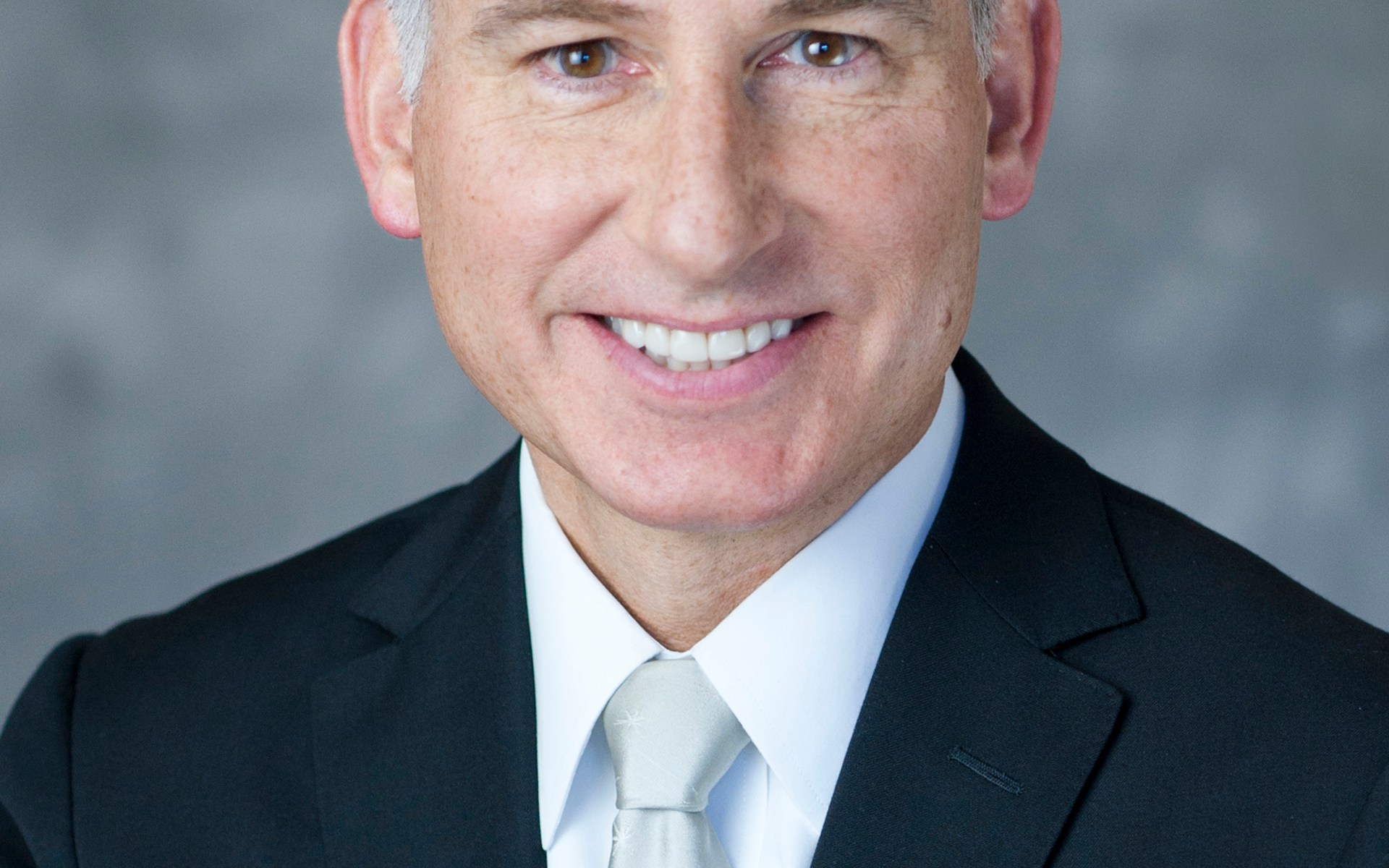
Dear fellow King County employee,
Today I transmitted my 2021-2022 proposed biennial budget to the Metropolitan King County Council.
It is a budget driven by our values, our anti-racism agenda, and the needs of our community. It tackles homelessness, transforms the criminal legal system, invests in our communities and community engagement, preserves and protects more of our region’s land and water, and continues our fight against climate change. It strengthens our equity and inclusion efforts, and purposefully incorporates an emphasis on racial justice and anti-racism.
Some of the highlights include:
- A proposal for the King County Council to enact a 0.1 percent sales tax increase to fund a $400 million investment in permanent housing for the chronically homeless, providing a place to call home for about 2,000 people.
- A package of proposals that transforms the criminal legal system and funds ongoing work to confront racism as a public health crisis. These include divesting $4.6 million of marijuana tax revenue and shifting these funds from law enforcement to community-based programs, and a $6.2 million investment in “Restorative Community Pathways,” which will see the Prosecuting Attorney’s Office refer up to 800 young people to comprehensive, community-based services by 2022-2023 in lieu of filing charges.
- Investments in unincorporated King County, including $10 million in seed funding for a community center in Skyway, $25.6 million for open space conservation, $8 million for parks improvements, and $6 million for new, flexible Metro transit service in Skyway
- Funding for key environmental priorities, including approximately $150 million in Wastewater Treatment Division (WTD) plant improvements that plan and build for the system’s future needs; $88.2 million in combined sewer overflow and green stormwater infrastructure; approximately $87 million for Eastrail, East Lake Sammamish Trail, the Foothills Regional Trail, and others; and at least $72 million in Conservation Futures Tax revenue for forests, farmlands, and open space.
My budget also serves as a springboard for the next steps in our internally focused pro-equity and anti-racist work, and I look forward to sharing more details with you in the coming weeks.
It hasn’t been an easy budget, and was developed against the backdrop of the economic downturn caused by COVID-19. While the budget includes the loss of nearly 450 County positions in 2021-2022, we have been able to limit the number of layoffs to under 50 through a combination of eliminating unfilled positions and employee participation in the Voluntary Separation Program.
Transmitting my proposed budget is the first step in a two-month public process, leading to Council adoption in November of a final County budget. You can watch a recording of my budget address here, and read the full transcript and press release here.
This year, 2020, will surely be remembered as one of the most pivotal of our lifetimes. How we act, what we do, the choices we make, the commitments we fulfill, will define us – not only now, but to generations to come. In the budget I presented today, I have laid out bold policies that reflect our common values, and hold us to the standards of Dr. Martin Luther King, who said: “The time is always right to do the right thing.”
Sincerely,

Dow Constantine
King County Executive
Share this:

King County website is available again

The King County website has been restored and is now available for use.
We apologize for any inconvenience caused by this morning’s outage, and thank you for your patience.
Share this:

Executive proclamation for 2020 Latinx/Hispanic Heritage Month and events

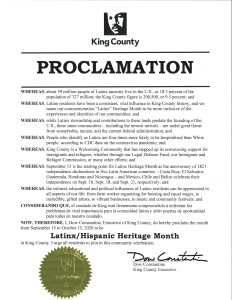 King County Executive Dow Constantine has proclaimed the month beginning Sept. 15 “Latinx/Hispanic Heritage Month” in King County. View the full proclamation here. To commemorate the celebration, the King County Latinx Affinity Group (KCLx) hosted a kick off celebration by hosting an informal panel discussion with the KCLx leadership committee.
“During these difficult times, this is an opportunity for us to proudly share and celebrate our diverse Latinx culture with our colleagues, as well as come together with our King County familia for mutual support,” shared Melissa Arias, KCLx Membership Chair and Program Manager for the Department of Community and Human Services.
KCLx is collaborating with Sound Transit Latinx in Transportation and Seattle Department of Transportation Latinx Caucus to host a series of events for Latinx/Hispanic Heritage Month, Sept. 15 – Oct. 15, 2020. For more information, view the events and registration details below.
Upcoming 2020 Latinx/Hispanic Heritage Month events
Guest Speaker – Pedro Espinoza – Wednesday, Sept. 23, noon to 12:50 p.m.
Pedro Espinoza is The Robin Hood of Technology according to The Voice of America. He is an internet entrepreneur, TED speaker, board member, CEO, and author. He firmly believes that inclusion is the key for success and will be delivering his inspirational message on timely topics that focus on creating a culture of belonging. Hosted by Sound Transit. Contact: Valerie Valero, valerie.valero@soundtransit.org or Sharon Chinchilla, sharon.chinchilla@soundtransit.org.
Join Microsoft Teams Meeting – Register for this event here on Eventbrite.
Latinx and Mental Health – Tuesday, Sept. 29, noon to 1 p.m.
2020 has been a year of stresses and trauma. It is important to take some time out of your daily routine to focus on your mental health. Come learn more about different stresses you may be feeling, where they could be coming from and stress-reducing exercises! Hosted by King County. Contact: Margarita Aguado, maguado@kingcounty.gov or Felicia Salcedo, Felicia.Salcedo@kingcounty.gov
Join via Zoom. Use passcode: 819427 – Register for this event here on Eventbrite.
Dia de Los Muertos Presentation – Thursday, October 1, noon to 1 p.m.
Learn about the history surrounding Day of the Dead. Get to know the origins of the holiday and why thousands honor their dead during Día de Muertos. Hosted by Seattle Department of Transportation (SDOT). Contact: Belen Herrera, Belen.herrera@seattle.gov.
Join Microsoft Teams Meeting – Register for this event here on Eventbrite.

Pictured: Bailadores de Bronce. Photo credit by Mario Zavaleta.
Lunch & Learn: Latinx Civic Engagement – Tuesday, October 6, noon to 1 p.m.
Join KCLx and our Panel of Precinct Committee Officers to learn how to get involved in your local government and help represent our community! Hosted by King County. Contact: Margarita Aguado, maguado@kingcounty.gov or Felicia Salcedo, Felicia.Salcedo@kingcounty.gov.
Join via Zoom. Use passcode: 997753 – Register for this event here on Eventbrite.
100 Latinos Dijeron – Wednesday, October 7, noon to 1 p.m.
100 Latinos Dijeron (100 Latinos Said) is the Spanish-language adaptation of the American program Family Feud, and is also a remake of the short-lived 2006–08 Spanish-language adaptation of Feud called ¿Qué dice la gente? (What Do People Say?). Join us as we celebrate Latinx Heritage month with laughter, games, and learning about Latinx countries. Hosted by Sound Transit. Contact: Valerie Valero, valerie.valero@soundtransit.org or Sharon Chinchilla, sharon.chinchilla@soundtransit.org.
Join Webex Meeting – Register for this event here on Eventbrite.
Art Showcase: Merging Communities and Social Justice – Monday, October 12, noon to 1 p.m.
Local King County Afrolatino artists will showcase their artwork, talk about their community involvement and explain how art plays a crucial role in fighting for Social Justice. Hosted by King County. Contact: Maria Jimenez-Zepeda, Maria.jimenez-zepeda@kingcounty.gov or Margarita Aguado, maguado@kingcounty.gov
Join via Zoom. Use passcode: 216492 – Register for this event here on Eventbrite.
Latinx Panel – Wednesday, October 14, noon to 1 p.m.
Join SDOT for a conversation of various Latinx employees share their experiences and broad discussion around the topic of Latinx Heritage Month. Hosted by Seattle Department of Transportation (SDOT) Contact: Belen Hererra, Belen.herrera@seattle.gov.
Join Microsoft Teams Meeting – Register for this event here on Eventbrite.
IdeaFest – Wednesday, October 21, noon to 1 p.m.
In honor of Latinx Heritage Month, join Sound Transit Latinx in Transportation (LiT) Employee Resource Group (ERG) and the Women Empowering Sound Transit (WEST) ERG for a special edition of IdeaFest. Meet three outstanding Latina women, all successful in their fields of public service, media, and entertainment, who have experienced unique highs and lows in pursuit of their dreams, and then have a group discussion on the topic and how we apply creative and revolutionary ideas to our work at Sound Transit. Hosted by Sound Transit. Contact: Valerie Valero, valerie.valero@soundtransit.org or Sharon Chinchilla, sharon.chinchilla@soundtransit.org.
Join Microsoft Teams Meeting – Register for this event here on Eventbrite.
Share this:

Watch Executive’s 2021-2022 Budget Speech today at 1 p.m.
You can watch a live stream of King County Executive Dow Constantine’s 2021-2022 budget speech at 1 p.m. today, Tuesday, Sept. 22.
To watch the Executive’s address please go to this livestream link at 1 p.m. today.
If you’re unable to watch the budget speech live, we will send out a link to the video following the speech. Please note that watching the speech during work hours is optional and may require supervisor approval.
Share this:

King County website currently down
The King County website is currently down for employees and the public, and cannot be accessed at this time.
KCIT is working to get the website back online as quickly as possible.
We appreciate your patience, and will let you know when the website is available again.
Share this:

Supporting employees with mental health conditions

 As we raise awareness for King County’s Suicide Awareness Prevention Month, it is important to remember that not all disabilities are visible.
Among disabilities that are often not visible or as apparent are mental health conditions. According to the National Alliance on Mental Illness (NAMI), about one in five American adults, or roughly 43.8 million adults, experience mental illness in a given year. Approximately 39% of employees in the U.S. workforce have a mental health condition. And, more than 50% of individuals with mental illness still avoid needed treatment. Untreated mental illness can result in other illnesses and behaviors, such as chronic pain and substance abuse, leading to further challenges for individuals experiencing mental illness and higher costs for employers. Regardless of culture, race, ethnicity, gender, religion, or sexual orientation, mental illness affects everyone, whether through our own experiences or the experiences of individuals we know.
The COVID-19 pandemic has had an even greater impact on individuals. According to a CDC survey, almost 41% of respondents are struggling with mental health conditions stemming from the COVID-19 pandemic and measures put in place to contain it, including physical distancing and stay-at-home orders. Mental health risks of social distancing, isolation and quarantine have led to, among other things, increased fear, anxiety, loneliness, sadness, anger, frustration, irritability and stigma. Those who are particularly more vulnerable include older adults, individuals with pre-existing mental health conditions, and healthcare workers.
Employment is an essential part of our identity, well-being and health. Employment provides a sense of purpose and allows us to build connections. Building and fostering a work culture that promotes self-care and focuses on mental health as an important part of overall health and well-being is critical to building inclusion and providing support to employees. A key part of this focus is to provide employees who experience limitations or restrictions associated with a mental health condition with reasonable accommodations in the workplace to be able to perform their job duties productively and effectively.
Yet employees with mental health conditions continue to face barriers when requesting reasonable accommodations in the workplace. Those barriers include:
- The employee is not willing to come forward with their conditions due to denial, shame and stigma
- Lack of supervisor knowledge to recognize and/or understand the impacts of mental health
- Difficulty knowing how permanent or temporary the symptoms are
- Discrimination or judgement against people with mental health conditions
- Lack of HR knowledge about how to accommodate
- Treatment providers do not document the health condition accurately, which results in inadequate accommodations
King County is committed to providing reasonable accommodations to all its employees and applicants for employment to ensure that individuals with disabilities, including mental health conditions, enjoy equal access to all employment opportunities.
Examples of reasonable accommodations that may be provided to employees with mental health conditions include the following:
- An employee with depression may benefit from noise cancelling headsets to help with concentration and focus.
- An employee coping with an anxiety disorder may need to have flexible and/or additional breaks built into the workday to step away when feeling overwhelmed.
- An employee with PTSD who experiences sleep problems due to their condition may need a flexible work schedule or later start time to help them cope with morning fatigue.
These are just a few of the many examples of reasonable workplace accommodations King County has provided to employees with mental health conditions to stay at work or return to work. In addition, providing such accommodations leads to greater employee loyalty, increased employee retention, better employee morale, more positive employee relationships and higher productivity and lower costs. Providing reasonable accommodations to employees with disabilities, both visible and hidden, contributes to the goal of building an inclusive workplace for all.
This is one of the many ways we can support employees experiencing mental health conditions at King County. If you need assistance with accommodation in the workplace, contact your Human Resources representative, supervisor, or Disability Services staff at 206-263-9329 or email DisabilityServices@kingcounty.gov.






 Employee News