Making meaning of the COVID-19 race and ethnicity data: A conversation with our health officer and our equity officer
Crossposted from Public Health Insider
A recent analysis of updated data by Public Health shows that in King County, COVID-19 is disproportionally impacting communities of color.
Our recent blog post dives into the data. We found rates of COVID-19 hospitalizations and cases that are significantly higher for Hispanic/Latinx, Native Hawaiian/Pacific Islanders and Blacks and higher for American Indian/Alaskan Natives (though not statistically significant due to the low population numbers) as compared to Whites.
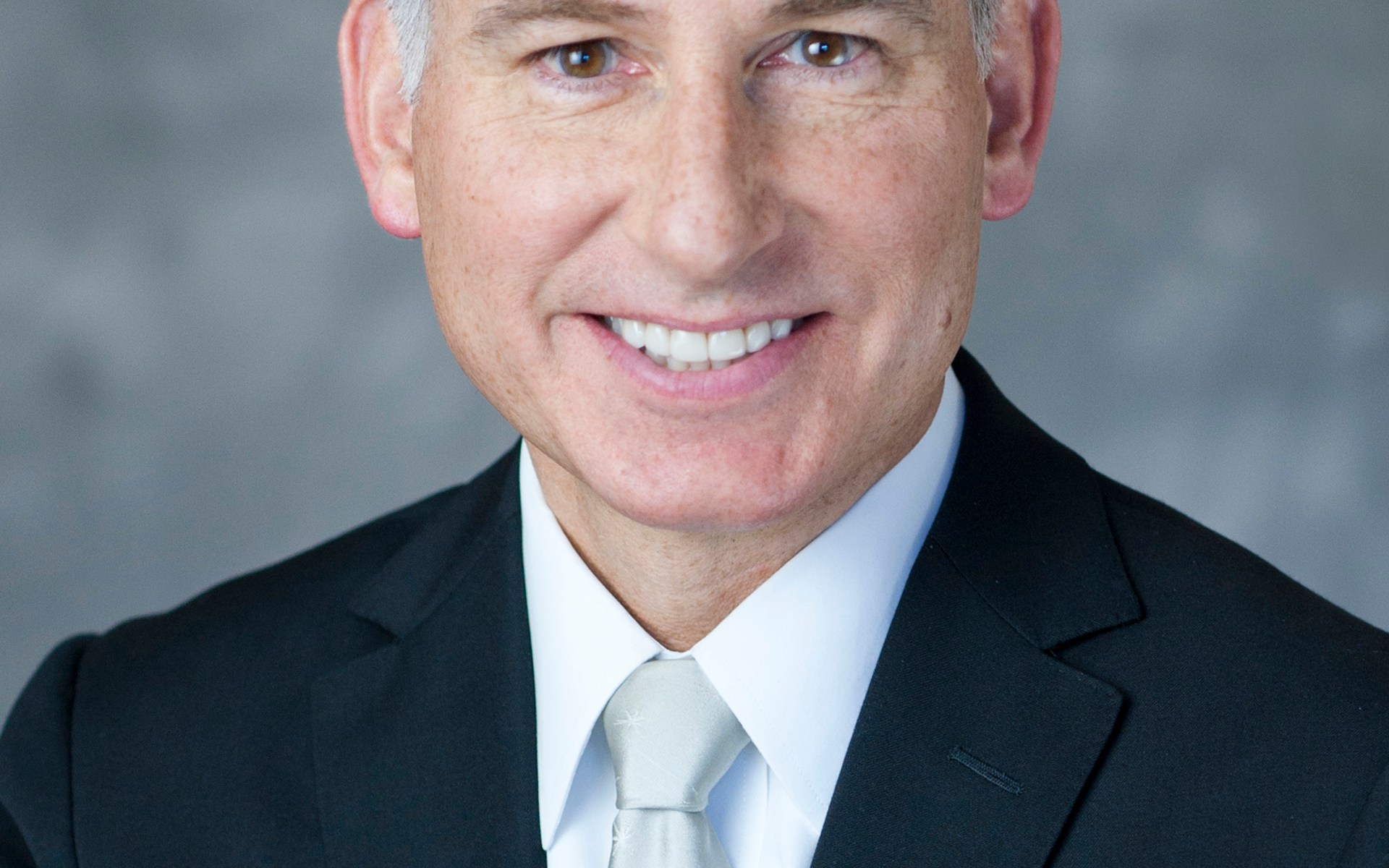
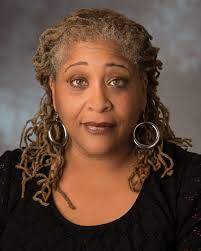
To gain a better understanding of disproportionate impacts of COVID-19 by race, we sat down with Matías Valenzuela, Equity Director for Public – Seattle & King County and Director of COVID-19 Community Mitigation and Recovery, and Dr. Jeff Duchin, Health Officer for Public Health – Seattle & King County.
Read more from Public Health Insider
Keeping you updated on COVID-19 personnel guidance
Last week, King County extended its mandatory telecommuting for Executive Branch employees who have been telecommuting through Sunday, May 31, 2020. Gov. Jay Inslee has also extended Washington’s stay-at-home order through May 31 and released plan for a phased approach for re-opening the state’s economy.
Here is a reminder of our key guidance for County employees. This guidance is subject to change and will be reissued if conditions warrant, and we will update you of any changes:
Telecommuting through May 31: King County has extended mandatory telecommuting for Executive Branch employees who have been telecommuting through Sunday, May 31, 2020. Our guidance remains the same for first responders and mission-critical employees for the Executive Branch until further notice. This applies to Executive Branch employees. Employees in other branches of County government will receive guidance from their leaders. Please see the full guidance here.
Non-essential travel ban: All non-essential work-related travel for all Executive Branch employees must be canceled and will not be approved through Sunday, May 31, 2020. This includes previously approved travel. Essential Travel is travel required to support critical life, health, and safety functions and cannot be delayed or handle remotely. Exceptions will be rare and must be approved by your department director and the Chief People Officer Whitney Abrams. The situation is evolving and subject to change. This applies to Executive Branch employees. Employees in other branches of County government will receive guidance from their leaders.
Accessing leave: King County offers a variety of leaves to help employees support our community and take care of themselves and their families during the COVID-19 outbreak. You can learn more about available leaves for COVID-19-related issues and their eligibility criteria on this webpage. There is also more information about other types of leaves on our Benefits website.
Temporary Leave and Telecommuting Policy: Please see our Temporary Leave and Telecommuting Policy to help answer your questions, talk to your manager or supervisor, or consult your department’s Human Resources Manager. This applies to Executive Branch employees.
Temporary reassignment: Employees who would not normally be able to telecommute but are provided a temporary reassignment or work arrangement and decline, must first use their leave accruals and then will be placed in leave without pay. Learn more about our Emergency Deployment Program.
Coverage expanded for COVID-19 medical care: King County employees and their family members enrolled in Kaiser (SmartCare) and Regence (KingCare and KingCare Select) medical plans will not have to pay copays, coinsurance, or deductibles for medical services and medications related to the diagnosis and treatment of COVID-19. Find out more.
Don’t forget: Our new one-stop webpage, www.kingcounty.gov/employees-coronavirus has health information, telecommuting resources, benefits updates, frequently asked questions, and more. This webpage can answer questions for King County employees about how their work is impacted by the coronavirus.
OESJ is confronting hate and bias by strengthening communities
In response to community concerns over the rise in hate and bias incidents in our region, the Civil Rights Program at the Office of Equity and Social Justice (OESJ) recently launched a new community-based reporting system for communities experiencing acts of hate and bias. This system is unique to the region and focuses upstream on empowering communities, rather than heightening enforcement through the criminal justice system.
Currently, data collected by law enforcement agencies does not accurately portray the realities of hate, bias, and discrimination that many communities face. Underreporting due to tenuous community-law enforcement relationships, lack of education on hate and bias incidents, fear, and a void of standardized data collection methods contribute to this issue. Thus, OESJ is partnering with trusted community groups to combat hate and bias by collecting incident information into a centralized and standardized database.
On March 10, 2020, the King County Council approved a suite of emergency legislation to aid in the County’s response to the COVID-19 outbreak, including $1 million for OESJ to provide flexible resources for engagement and outreach.
OEJS awarded funds to the following community partners to lead this work: The COVD-19 Community Reponses Fund Alliance, the Seattle Chinatown International District Preservation and Development Authority, the United Indians of All Tribes Foundation, and the Somali Community Service of Seattle. OESJ was also able to fund a community artist, Matt Echohawk Hayashi with the Headwater People, to provide artwork for this program.
While the current funds were allocated to address COVID-19 related incidents of hate and bias, the long-term goal is to provide King County and its diverse communities a reliable and broad network of support for long after this crisis is over. OESJ is proud and honored to support these community partners in this important work.
Emergency Deployment Program helps to facilitate donations and address community needs
The Emergency Deployment Program has seen many employees step forward to join efforts to combat the coronavirus (COVID-19), including the deployment of employees to support the King County Emergency Operations Center (EOC).
In its response to the virus, the EOC has developed a Donations Management Team to facilitate the donation of hundreds of thousands of masks, gloves, and hand sanitizer, as well as meals and other donations to first responders. The team is also responsible for connecting donation resources with community needs, and has set up the King County Regional Donations Connector to help facilitate this work.
To learn more about this effort, we connected with several employees working on the Donations Management Team at the EOC: Kevin Nuechterlein, Rey Sugui, and Judy Cordova. They each came on board to support the Team when it was created March 16.
Kevin deployed from his regular position with King County International Airport (KCIA) to help combat the coronavirus. Prior to deploying with the program, he worked on the engineering team as a capital project manager. He had been in this role for just over a year and with King County since 2016. He responded to a call early on to help stand up the Donations Management Team for the Emergency Operations Center COVID-19 response, and has been with the team since it was founded under the leadership of Janice Rahman, Senior Emergency Management Program Manager.
“The Donations Management Team was set up because there has been tremendous community support for the County’s response to COVID-19,” he said. “It has been an amazing experience seeing this outpouring of support, he said.
Rey joined the team from his position in the Department of Local Services (DLS), Roads Division as Intergovernmental Relations. He has been with King County for 21 years, since 1999. He was asked by the DLS Chief of Staff if he was interested in joining the Team.
“This is affecting all of us at the County as employees and as a community,” he said. “This program allows those that have the capacity and willingness to play a larger role in supporting the county’s staffing needs in its COVID-19 emergency response.”
Judy has been with the County since 1996, going on 24 years, and currently works for the King County Regional Automated Fingerprint Identification System (AFIS) as an Educator Consultant and Trainer. She provides training to law enforcement personnel on fingerprint related process and technology and educates the public about the County’s regional AFIS program. She was redeployed to assist in managing and to coordinate incoming donations of goods, services and cash to the EOC.
“With every emergency situation there are corresponding needs for the first responders and the community at large,” she explained. “Having an influx of donation offers streaming from individuals and organizations means we were able to respond and resource out offers to where the high needs are.”
The County has had to adapt to meet changing requirements and public health concerns. The Emergency Deployment Program has given employees the opportunity to support these efforts and play an active role in life-saving, essential work.
“Not everyone is able to help with this response in such a way but being a County employee, we have a unique opportunity to roll up our sleeves and lend a supportive hand,” Kevin said. “It gives me a great sense of pride to know that I am lending my skills and expertise to have a direct positive affect on our community’s response to COVID-19.”
Rey adds that while employees have others ways to get involved in the County’s COVID-19 response, such as donating money through the Employee Giving Program or donating leave hours for employees in need, this program offers something different.
“If you have a yearning to have more of a direct impact to helping the community then take one of the many roles needed and be assigned where you are working directly at any of the Assessment Centers/Recovery Centers, Isolation/Quarantine sites or at the King County Office of Emergency Management,” he said.
The Emergency Deployment Program has also provided Judi, Kevin, and Rey, with the opportunity to use their professional skills in a dynamic, changing environment, often collaborating with other departments and organizations. They have been able to work in multiple lines of service, including operations, logistics, donations, and emergency management, as well as witnessed firsthand the dedication of their fellow employees.
“This has been a wonderful opportunity to learn new valuable and transferable skills, work with a wide variety of people from throughout King County government and give back to my community during this critical time,” Kevin said.
“This is where things are happening,” Judy added. “I have worked with this group for almost 7 weeks now and the reward is amazing.”
“I have witnessed a well-oiled machine that has great leaders in time of crisis and disasters. I think we are lucky to have them,” Rey said.
Through the Emergency Deployment Program, employees can further King County’s efforts to battle coronavirus, and also engage with a part of the community they may not get to usually. This work allows employees to make a significant impact on overall coronavirus relief, and get personally involved in life-changing work. The EOC, like other sites, encourages and promotes safety measures for COVID-19 mitigation, including providing cleaning supplies, promoting physical distancing and related practices, and following other safety recommendations.
Judy sums up the value of the program as twofold, making a significant impact on the fight against coronavirus, and providing employees with insights and abilities they can only develop through their commitment to public service. She explains how employees will work with different County departments and organizations, meet and learn from other staff, and establish camaraderie with other employees who are banding together to work towards a common goal.
“If you are interested in a challenging and rewarding experience while providing assistance during these times of need, please consider getting involved as King County continues to take an aggressive approach to fighting the effects of COVID-19 in our region,” said Judy. “Visit http://www.kingcounty.gov/emergency-deployment to get more information, apply for a temporary assignment, and come work with us!”
For more information and to apply for the Emergency Deployment Program, visit www.kingcounty.gov/emergency-deployment. To donate to the coronavirus relief efforts through the King County Regional Donations Connector visit www.kingcounty.gov/emergency/donate.
Celebrating your service during Public Service Recognition Week
Dear fellow King County employee,
Here at King County and around the world, the work of public servants has never been more important or more valued than right now during the global COVID-19 response, so it is fitting that this week is Public Service Recognition Week.
You may be on the front lines, making sure that our community continues to receive the vital in-person services it counts on; or perhaps you have temporarily changed the way you deliver services so people can continue to get what they need without having to leave their homes; or you may have taken on a temporary redeployment to fill a critical service in our efforts to keep people safe. However you are helping us keep King County running during our COVID-19 response, please know that I am grateful for your efforts.
This is a challenging time, one with a lot of uncertainty, stress, and anxiety. We worry about the health and safety of friends and family, and the impact our actions are having on our economy and budget. We don’t know when life will return to normal or what the future holds. What we do know is that the actions we have taken have helped to slow the spread of the virus. We know we must continue to listen to our health professionals about what is best for our community. And we know that we are resilient.
Thank you for everything that you do for the people of King County. I have never been more proud to lead this County and to be your colleague in public service.
Sincerely,
Dow Constantine
King County Executive
New Equity Tool brings community considerations to decision making
King County’s Office of Equity and Social Justice has created a new Equity Impact Awareness Tool in partnership with Headwater People to ensure that impacts on low income communities of color are fully considered by the County in its COVID-19 mitigation strategies and decision making.
The tool was initially created to address the concerns of community members who were worried that the County would make decisions about quarantine and isolation facilities without considering the burden that will fall on communities who are vulnerable to the health and economic crisis.
Janine Anzalota, Equity and Civil Rights Manager for the Office of Equity and Social Justice, worked with Headwater People to help create the tool, collaborating with Tom Koney, Deputy Director for the Department of Executive Services, and Erica Cox, Inclusion Manager for the Office of Equity and Social Justice, who advised on the measures of the tool.
“The impact of public health emergencies to low income communities of color is always severe, particularly to our Black/African American, Native American/Indigenous, and Immigrant and Refugee Communities,” Janine said. “In response to community concerns, I contacted Tom Koney, Deputy Director for the Department of Executive Services, asking if it would be helpful if we were able to create a tool for his staff to use for siting potential quarantine and recovery facilities.”
The tool supports the Facilities Management Division and Real Estate Services with the quarantine sites in Kent, Shoreline, and White Center. It’s important to note that this tool was developed after quarantine sites in White Center and Kent were already announced.
The intention of the tool is to provide awareness of where sites are being concentrated, which allows for staff to see the potential impact to low income communities of color. In addition, Public Health is adding distribution and other types of sites to the tool.
“The tool isn’t perfect, but it gave us an important starting point,” Janine said.
Equity Impact Awareness Tool was developed in response to the COVID-19 crisis and should not replace the Equity Impact Review and other tools that include more inclusive community engagement processes. This tool was developed by Headwater People in partnership with the Office of Equity and Social Justice. To learn more about different resources and tools, visit Office of Equity and Social Justice website.
My Secure Advantage: New May webinars and COVID-19 financial resources
As the number of businesses affected by the coronavirus continues to rise, so do the financial impacts on countless employees. My Secure Advantage (MSA) remains steadfast in its commitment to provide responsive, relevant personal financial guidance to employees and their families throughout this crisis and the better days to come.
Register now for new May webinars
- Navigating your Finances in Unpredictable Times: May 1, 2020, 9 a.m. Register here.
- Investor Education: Managing your Money in Volatile Markets: May 1, 2020, noon. Register here.
- Tips for Major Purchases: May 12, 2020, 9 a.m. and noon. Register here.
- I Want to Buy a House: May 28, 2020, 9 a.m. and noon. Register here.
Stay up to date with MSA’s latest COVID-19 resources:
- Financial Checklists For COVID-19
- What emergency relief options should I consider during the coronavirus pandemic?
- What issues should I consider if I lose my job?
- What issues should I consider during a recession or market correction?
- Your Income & COVID-19
- Financial Resources for Health Emergencies
- Smart Financial Moves During The COVID-19 Crisis
- Stock Market Corrections & Your Investment Strategy
Black/African Affinity Group finds strength
At King County, having a community to connect with is crucial, even more so in dealing with the COVID-19 pandemic, and the County’s Employee Resource Groups, or Affinity Groups, are helping employees support one another.
The Black/African Affinity Group centers on providing employees with a community platform. Historically, the focal point of African American life has centered around community such as family, churches, neighborhoods, and organizations, providing a way to connect, share resources, and share knowledge.
“Our goal in our Black/African Affinity Group is to bring collective souls together for one purpose… to share our gifts and talents in a way that they benefit our community,” said Danita Carter, Records and Licensing Services (RALS) Finance Manager and Co-Chair of the Black/African Affinity Group.
“We have so much to offer, not only to each other, but also others that are seeking guidance, direction, and resources. During this time of uncertainty, we stand together; sharing ourselves, and bringing value by serving others.”
The Affinity Group has used its collective knowledge and networks to help people in the community. For example, a Black/African community member recently reached out to the Affinity Group seeking information about current COVID-19 practices and policies dealing with renters, landlords, and evictions of tenants. Multiple members of the group rose up in support and provided resources and information to help their fellow community member.
“It is essential that we do this work as one of many tools that disrupts and transforms oppressive structures,” said Jabari Hampton, Liaison for Capital Projects in Metro’s Vehicle Maintenance Division, and Communications and Membership Chair for the Affinity Group.
“As our community continues on its restorative journey, we will continue to create space for connection, healing, and development.”
Natasha Sable, a Functional Analyst I with Access in Metro’s Mobility Division and an Administrator with the Black/African Affinity Group Leadership Council, decided to put her creativity to use to give back to the community and help with COVID-19 response efforts. She searched the internet for an effective cloth mask design and created the first batch of 16 masks using fabric from her own personal supply.
Natasha donated the first batch of masks that she created to Metro’s Transportation for Pandemic Response (TPR) training team. TPR is a collaboration between various divisions that was launched in early April and transports individuals that have tested positive or presumed positive for COVID-19 to various approved sites such as quarantine isolation sites, shelters, hospitals, and more.
“I wanted to provide peace of mind to whomever ended up with the mask donations, whether it be the drivers or passengers, even if it was just to help minimize any personal stress,” Natasha said.
For Adé Franklin, Division Director of Transport Facilities, Metro Transit Department, and Co-Chair of the Black/African Affinity Group, being a member of the affinity group is important on multiple levels.
“When I think about what being a part of the Black and African Affinity Group means to me, I remember a conversation amongst our Leadership Council where the following quote from Rabbi Hillel was shared: ‘If I am not for myself, who will be for me? If I am not for others, what am I? And if not now, when?’,” Adé said.
“The first question reminds us to honor ourselves through self-care. The second reminds us that we must take care of one another. And the last reminds us to have a sense of purpose in our service. At least, in reflecting on what BAAG means to me – this is what comes to mind.”
If you are interested in joining the Black/African Affinity Group, email Jabari Hampton, Communications and Membership Chair. For information about the Affinity Groups, including the policy, visit the Affinity Groups webpage, download this flyer, or watch this video.
Miesha Vaughn and Ebony Frazier contributed to this article. Miesha is a Tort Claims Investigator in the Risk Management Division, and her role within the Affinity Group is Community Health and Outreach Officer. Ebony is a Project/Program Manager in the Community Corrections Division, and her role within the Affinity Group is Strategic Advisor.
Learning about your benefits: Life and disability insurance
In this short video, learn about the life and disability insurance options available to you as a new employee, during qualifying life events, and during Open Enrollment.
This video is part of a short created to help employees make informed choices about their options, and better understand their employee benefits package. View all the videos here, and get more information and resources on the Benefits, Payroll and Retirement website.
Featured job: Advanced Registered Nurse Practitioner – Covid-19 Response Recovery Centers
Salary: $42.69 – $60.09 Hourly
Location: Multiple locations in King County, WA
Job Type: Short Term Temporary, Part Time, Std Wkly Hrs Vary
Department: DPH – Public Health
Job Number: 2020NH11611
Division: Community Health Services
Closing: Continuous
Learn more about this position or view all available positions.