
2017 Annual Giving Drive: Youth

Crossposted from KC Employee Giving
Many of us have heard the old adage, ‘it takes a village to raise a child,’ but how many of us have reflected on helping a child during the Employee Giving Program’s 2017 Annual Giving Drive? With three week to go, you can still do your part to create a more equitable world for them.
Here are three of the many nonprofit organizations that are doing work with youth!
Read more at KC Employee Giving
Share this:

Innovative program sets employees on road to success
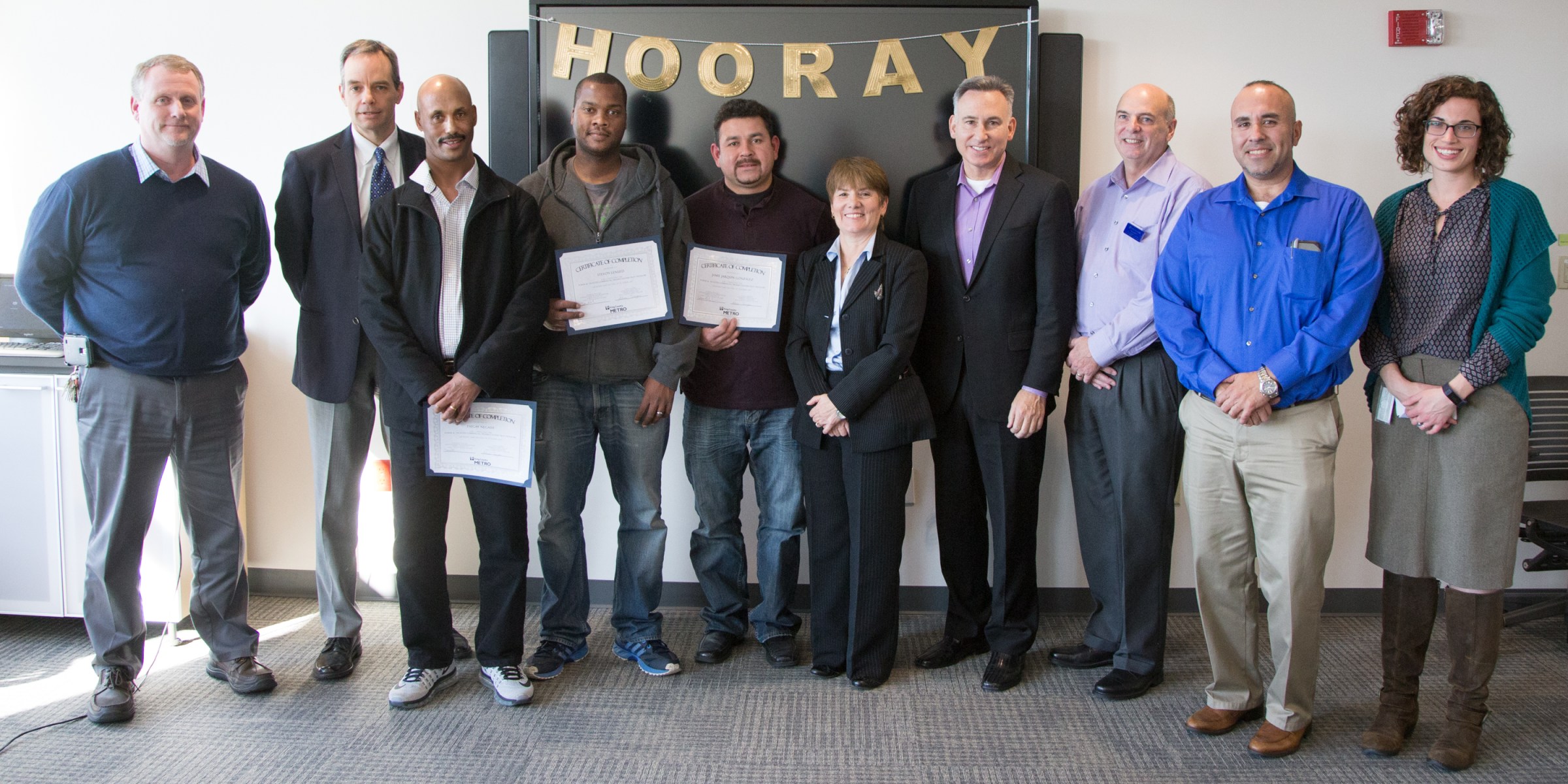
The first graduates from an innovative new program that helps employees get a key credential for moving their careers forward were recognized by King County Executive Dow Constantine and Metro General Manager Rob Gannon at a small ceremony this week.
Through a partnership between King County Metro, South Seattle College, and the Amalgamated Transit Union 587, a customized curriculum was created that helped frontline employees train for and apply for their Commercial Driver’s License, an essential requirement for advancing to other positions in the County as well as across Washington.
“We shouldn’t think of this as extraordinary,” Executive Constantine said. “This is what we should have been doing, what we should be doing, and what we have committed to doing much more of – providing equitable opportunities for all of our employees to get the skills, get the training, get the credentials that they need to pursue their dreams.”

The pilot program included a customized classroom and driving curriculum and also provided support for specific needs identified for employees in this workgroup, such as English proficiency and preparing for the CDL permit test. The pilot’s first participants worked in facilities management and custodial roles at King County.
“It’s not just the idea of a CDL, it’s what that represents; it’s an opportunity to grow and develop in itself but also to advance in the organization,” Metro General Manager Rob Gannon said. “I couldn’t be prouder of what you [program graduates] have accomplished but it also represents what we as an organization can accomplish.”
The four pilot graduates – Stevon Lenued, Tsegay Negash, John Keith and Jaime Gonzalez – have already begun or accepted Utility Laborer or Utility Worker roles at the County with their new accreditations, while a fifth, Nouane Thepvongsa, is working towards graduation.
Metro and its partners are now reviewing the results of the pilot to see how it can be adapted and expanded moving forward. The model will also help to inform Metro’s development of other apprenticeship and short-term training programs in the future.
Helping employees plot a career path and give them the support and resources to reach their goals is part of King County’s Investing in You strategy.
Share this:




2017 Annual Giving Drive: Women

Crossposted from KC Employee Giving
 King County’s Employee Giving Program’s (EGP) Annual Giving Drive provides over 60 prescreened nonprofit organizations whose primary category of service is promoting equity, safe-space, and programs that are important to and for women. Last year, donations by King County employees doubled to this category of service. This response was a powerful example of the collective impact of individuals that can be made through the Employee Giving Program.
Read more at KC Employee Giving
Share this:

Social Media Spotlight: King County Elections Instagram

 King County is the largest jurisdiction in the United States to conduct all elections by mail. The county has 1.28 million registered voters, a number that continues to grow each month. It is the 13th-most populated county in the country and home to one third of Washington’s voters.
Follow King County Elections in Instagram today!
Click here to view all King County social media pages.
Share this:

Featured Job: Environmental Scientist III

Closing Date/Time: Sun. 11/05/17 11:59 PM Pacific Time
Salary: $39.58 – $50.18 Hourly
Job Type: Career Service, Full Time, 40 hrs/week
Location: King Street Center – 201 S Jackson St, Seattle, Washington
Department: Department of Natural Resources & Parks – Water and Land Resources Division
Description: This position will perform a wide variety of work tasks related to river facility maintenance and property management activities. This position will work with the Maintenance Supervisor and collaborate with other staff in the River and Floodplain Management Section (RFMS) in the Water and Land Resources Division to implement countywide levee and revetment maintenance and monitoring program activities on 500 flood protection facilities along 119 linear miles of riverbank on the county’s major river system, and on approximately 800 acres of riparian open space.
Contact: For more information contact Michelle Kobuki at 206-477-4740 or Michelle.Kobuki@kingcounty.gov.
Learn more about this position, or view all available jobs.
Share this:

Tech Tip: Reminder: Beware phishing and spam emails

In light of a recent email phishing attack titled “King County Employee Feedback” KCIT would like to remind employees to be alert for phishing and spam emails, and to not open them.
KCIT is seeing an increase in phishing and spam emails being delivered to King County employees. Phishing is an attempt to obtain information from you which gives outsiders access to King County systems. Remember, if you receive an email asking you to provide any information, especially your login name and password, this could be phishing and you should be suspicious.
In addition, be cautious of emails with attachments from someone that you do not know or one that you did not expect. These can contain malicious software and compromise your computer.
Spam is simply email that you did not solicit and do not want. Generally these are not dangerous and can simply be deleted.
If you have concerns or questions, please contact the KCIT Service Center at 206-263-HELP (4357) or log a ticket at the HelpDesk website.
Share this:

Preparing for winter weather

Crossposted from Keeping Communities Connected
 It may only be early fall, but King County Roads knows that winter is coming. Every year county road crews prepare for the heavy rain, wind, and snow and ice that our region experiences. Preparations for snow and ice begin by determining the routes that will be plowed during a weather event. Routes are selected in partnership with nearby local jurisdictions, King County Metro, school districts and emergency services providers. The final routes are mapped and available on the Snow and Ice webpage. The county’s resources to plow and sand roads have been significantly reduced since the region’s last major snow storm in 2010. The county has resources to plow 15 percent of the county’s 1,500 miles of roads.
Road maintenance field offices around the county are stock piling materials including anti-icer, sand and salt. They check equipment like chainsaws for cutting downed trees and tree limbs are gassed up, sharpened and ready to be used at a moment’s notice.
Read more at Keeping Communities Connected
Share this:

Halloween pet safety tips

Crossposted from Tails from RASKC
 Halloween is “spook-tacular” for kids of all ages, but the holiday can be pretty scary for our pets. So, we’d like to remind pet owners of a few safety tips before the ghosts and goblins come begging on October 31.
Never feed candy to your pet, especially chocolate. If you suspect your dog or cat has gotten into Halloween treats, contact your veterinarian right away.
Costumes can be scary to some pets. If your pet is easily spooked by strangers or loud noises, consider keeping them safe in a pet crate or confined to a quiet room while trick-or-treaters are out. Also, if your pet is normally kept outside, consider bringing them inside on Halloween, or keep them in your garage or basement during the festivities.
Read more at Tails from RASKC
Share this:

Funding recipients for the 2017-2018 ESJ Opportunity Fund announced
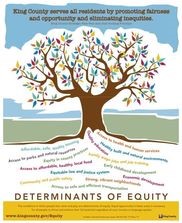
The ESJ Opportunity Fund is a competitive process overseen by the Office of Equity and Social Justice that provides resources to King County employees to develop and implement projects that work to advance equity and social justice and complement the ESJ Strategic Plan.
This year 39 applications were received totaling over $290,000 in requests, with a 2017-2018 ESJ Opportunity Fund budget of $100,000. This was a highly competitive process that highlights the commitment across the County to equity and social justice work; commitment not only at the department and agency level but also of our employees as individuals.
The selected projects come from all across King County and are doing a range of ESJ related work throughout the County. Learn more about the 2017-2018 recipients here.






 Employee News