
Kudos! Marymoor Park voted best dog park 2016

Crossposted from King County Parks Plog
 King 5’s viewer poll confirmed what you already knew. Marymoor’s 40 acres of off-leash area are your best friend’s favorite place to run free.
Shout out to our amazing partner S.O.D.A. (Serve Our Dog Areas), for their stewardship.
Who’s a good boy?
Share this:

Important fire safety tips for this holiday season

 Each year fires occurring during the holiday season cause injuries and damage. To ensure your happy holidays are fire safe you should follow a few extra fire safety precautions.
Candles: Always put candles in candlesticks before you light them. Don’t use lit candles as decorations on your holiday tree or near flammable decorations and curtains. Never leave candles unattended or within the reach of young children. Extinguish all candles when leaving the room or going to sleep.
Holiday trees: Dispose of fresh-cut trees before becoming dry to the extent that needles are falling and the color is fading. Contact your garbage disposal service to learn the details of their holiday tree removal program.
For more safety tips on electricity, cooking and fireplace use, view this Holiday Fire Safety guide from the City of Seattle.
Share this:

Social Media Spotlight: Department of Transportation blog

 The DOT blog, Inside Transportation, supports the DOT mission to improve the quality of life for people in King County by providing mobility in a way that protects the environment, helps manage growth, and reduces traffic congestion.
Follow the Department of Transportation blog today!
Click here to view all King County social media pages.
Share this:

New employee parking rates beginning in 2017

As you may know, parking rates at various King County parking facilities located in downtown Seattle will increase on January 1, 2017. The new rates will affect employees parking at the Goat Hill Garage, the King County Correctional Facility, the Chinook Building, and King Street Center. King Street Center is anticipated to enter King County’s property inventory in June 2017. Therefore, the new parking rates at King Street Center will be effective on June 1, 2017.
The parking rates for 2017 are as follows. Please note *indicates unchanged rates:
- Monthly Reserved Parking – $385
- Monthly Unreserved Parking – $300
- Monthly Rate for City of Seattle Certified Carpools and Electric Vehicles – $210
- Monthly Americans With Disabilities Act (ADA) Parking – $150
- Maximum Daily Employee Parking – $20
- Open Surface Lots – $20*
- Daily Motorcycle Parking – $5*
- After-Hour and Weekends – $7*
- Bicycles – Free* (Bicycle racks are located in the Goat Hill Garage, 5th Avenue Plaza of the Administration Building, and on Level A in the Chinook Building.
King County employees are eligible for a variety of commute benefits including an ID/ORCA card that pays your fare on a range of bus, rail and ferry systems, and discounts on Vanpool and Carpool fares. Find out more at the Employee Transportation Program website.
Share this:

Ongoing Paid Parental Leave benefit

 Based upon the success of the Paid Parental Leave Pilot Program, King County Council adopted legislation in November establishing an ongoing Paid Parental Leave benefit effective January 1, 2017.
The benefit will be the same as it has been under the pilot program. Paid Parental Leave supplements an employee’s accrued paid leave to provide the employee the equivalent of his or her full salary for up to a total of twelve weeks, when combined with the employee’s accrued leave (except for one week of sick leave and one week of vacation leave), following the birth, adoption, or foster-to-adopt placement of a child with the employee (“qualifying event”).
The benefit is available to leave-eligible employees who have been employed with the County for at least six months of continuous service at the time of the qualifying event, and are either a non-represented employee or an employee represented by a union that has agreed to participate in the program. A list of participating unions can be found here.
If you have questions, please contact your department’s human resources representative.
Share this:

Featured Job: Quality Assurance Specialist

Closing Date/Time: Mon. 01/02/17 4:30 PM
Salary: $35.21 – $44.63 Hourly, $73,236.80 – $92,830.40 Annually
Job Type: Term Limited Temporary, Full Time, 40 hrs/wk
Location: Chinook Building – 401 5th Ave, Seattle, Washington
Department: King County Department of Information Technology
Description: King County Information Technology – Business Solutions Services is looking for two QA Specialists to work closely with program managers, business analysts and developers to test agreed upon application functionality. These are both 24 month term-limited-temporary positions.
The QA Specialist will create and execute test cases to fully exercise all functionality. The QA Specialist is also responsible for developing test plans for projects of varying size, scope, and complexity in order to deliver high-quality systems on schedule. In addition, the QA Specialist will document and track all defects, as well as giving a final assessment of quality before product release.
Learn more about this position or view all available jobs.
Share this:

New Employee Orientation changing Jan. 1, 2017

King County’s New Employee Orientation (NEO) is getting a refresh beginning Jan. 1, 2017.

The changes to NEO will give a consistent positive experience to all new employees and will focus on King County’s values and what you can expect as a new employee.
If you need to register a new employee for NEO, this information is for you:
- NEO registration will be done through Eventbrite
- NEO will be held on every Monday starting Jan. 3, 2017
- If Monday is a holiday where offices are closed NEO will be held on Tuesday
- NEO will be all day (8 a.m. – 5 p.m.) except for non-benefitted employees who will leave at approximately 2:45 p.m.
- Employees will complete the first portion of their I-9 forms and bring to their HR the next day with required identification
- NEO will include obtaining ID badges as long as paperwork has been filed in advance with the King County ID Access Office.
You can find more information about the changes, agenda and how to sign up on this SharePoint site.
As with all changes, we encourage and welcome your feedback as we move forward. You can contact Meghan McKnight in Human Resources Division with any questions.
Share this:

Recognition of Emergency Medical Services program by the American Heart Association “warms the heart”
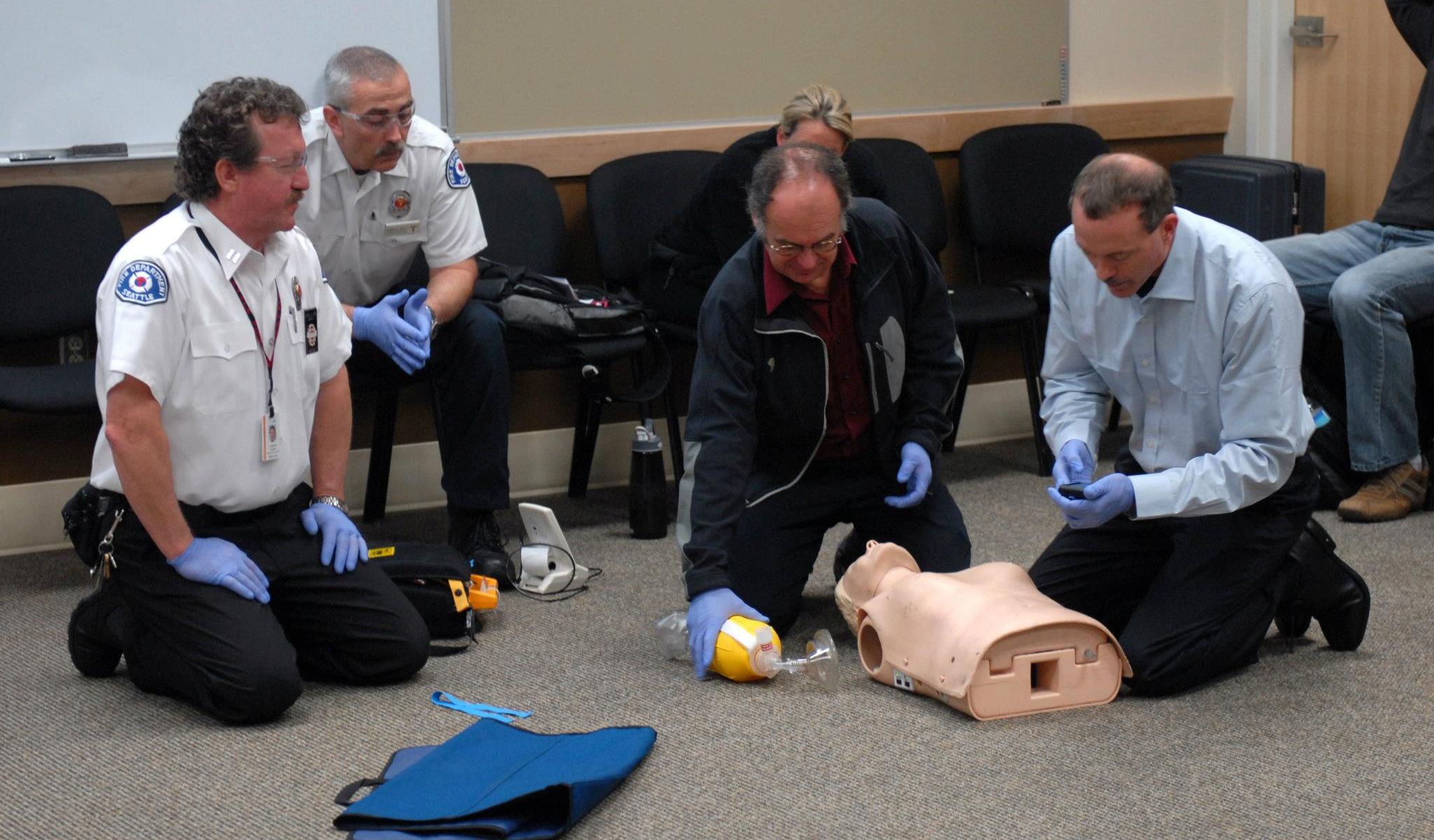
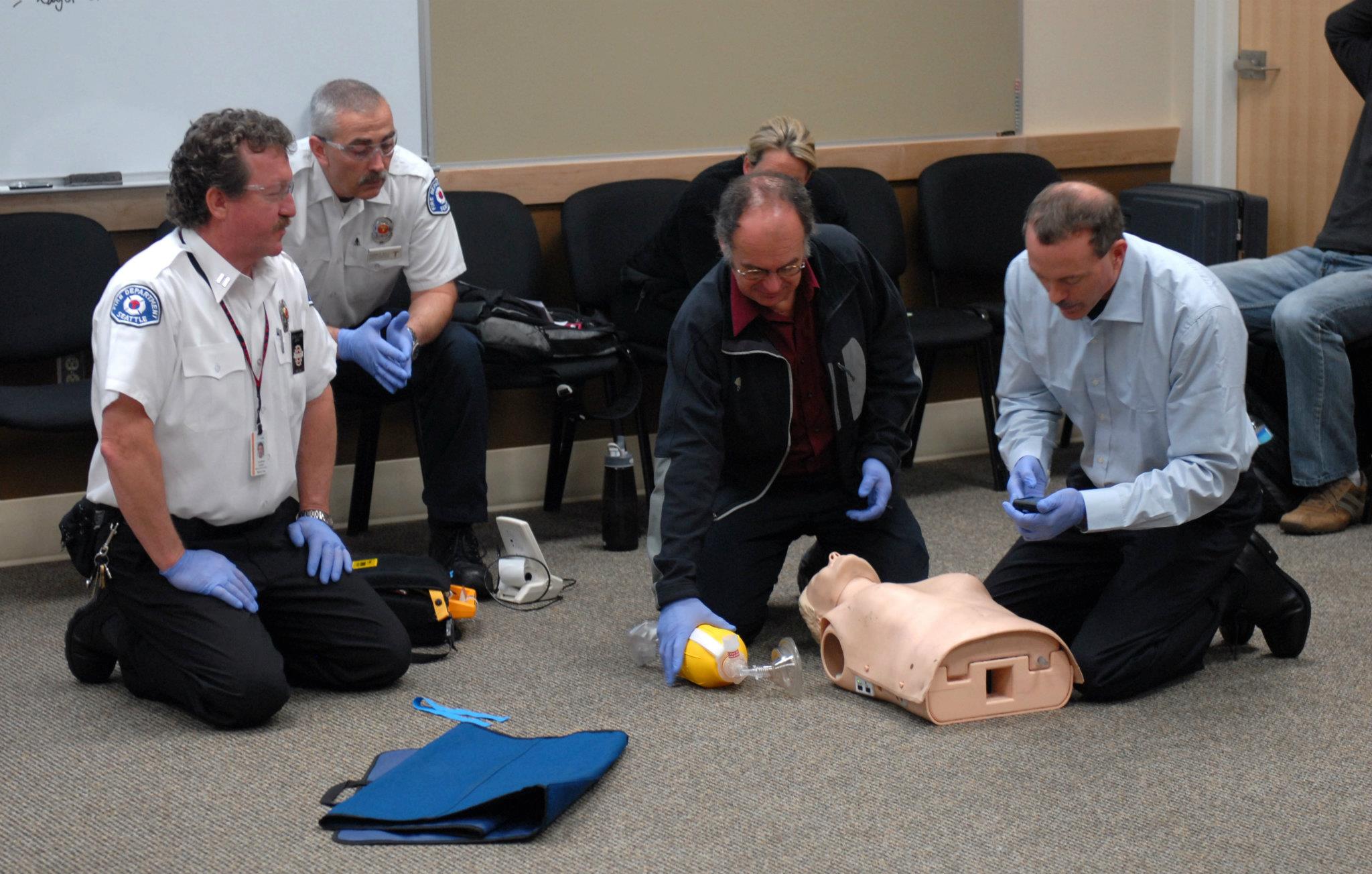 The American Heart Association recently presented its Ian G. Jacobs Award for International Group Collaboration to Advance Resuscitation Science to the Resuscitation Academy, which launched nine years ago to identify and disseminate best practices for treating cardiac arrest.
Mickey S. Eisenberg, Director of Medical Quality Improvement at King County EMS, accepted the award on behalf of the Resuscitation Academy.
“We hope to develop a road map and a set of tools that can be used by emergency medical systems in both high-resource and low-resource countries,” said Eisenberg. “We have the knowledge to increase cardiac arrest survival rates — we know how to do it. The main challenge is implementation.”
Share this:

King County Learning and Development delivers

 Employee training is one of the career development areas County employees asked for more of in the 2015 Employee Engagement Survey. As part of the response to that request, Human Resources Division’s Learning and Development team provided more than 50 offerings of 26 classes to many of the County’s departments during the first ten months of 2016.
During that time, more than 500 County employees and community partners attended training opportunities, eight of which were in high demand and generated impressive wait lists. These trainings included:
- Difficult Conversations
- So, You Want to be a Supervisor?
- Value-Based Leadership 101
- Facilitating Effective Meetings
- Four Generations in the Workplace
- Introduction to Lean
- Basic Equity and Social Justice
- Stories that Engage
 The KC eLearning site – www.KingCounty.gov/eLearning – has also had more than 12,000 visits to date this calendar year, where 1,646 employees accessed 2,572 eLearning resources. It can be accessed from a work or personal computer with an employee’s nine-digit PeopleSoft number. For those who cannot recall their password, it can be reset easily on the site. There is also a Quick Access Guide available, which provides an overview of the platform and it’s features.
The County’s eLearning resources include Skillsoft courses for Human Resources and Project Management certification exams, along with many other certification and self-improvement courses. The platform offers convenience to employees and managers, as the courses may be taken online, supporting both work schedules and learning and development goals – whether those goals be individually set or taken at the suggestion of a supervisor or mentor.
Share this:

Executive hosts first “Listening Session” to hear directly from employees

 If you want to know what’s going on in any organization, you ask the people who are doing the work.
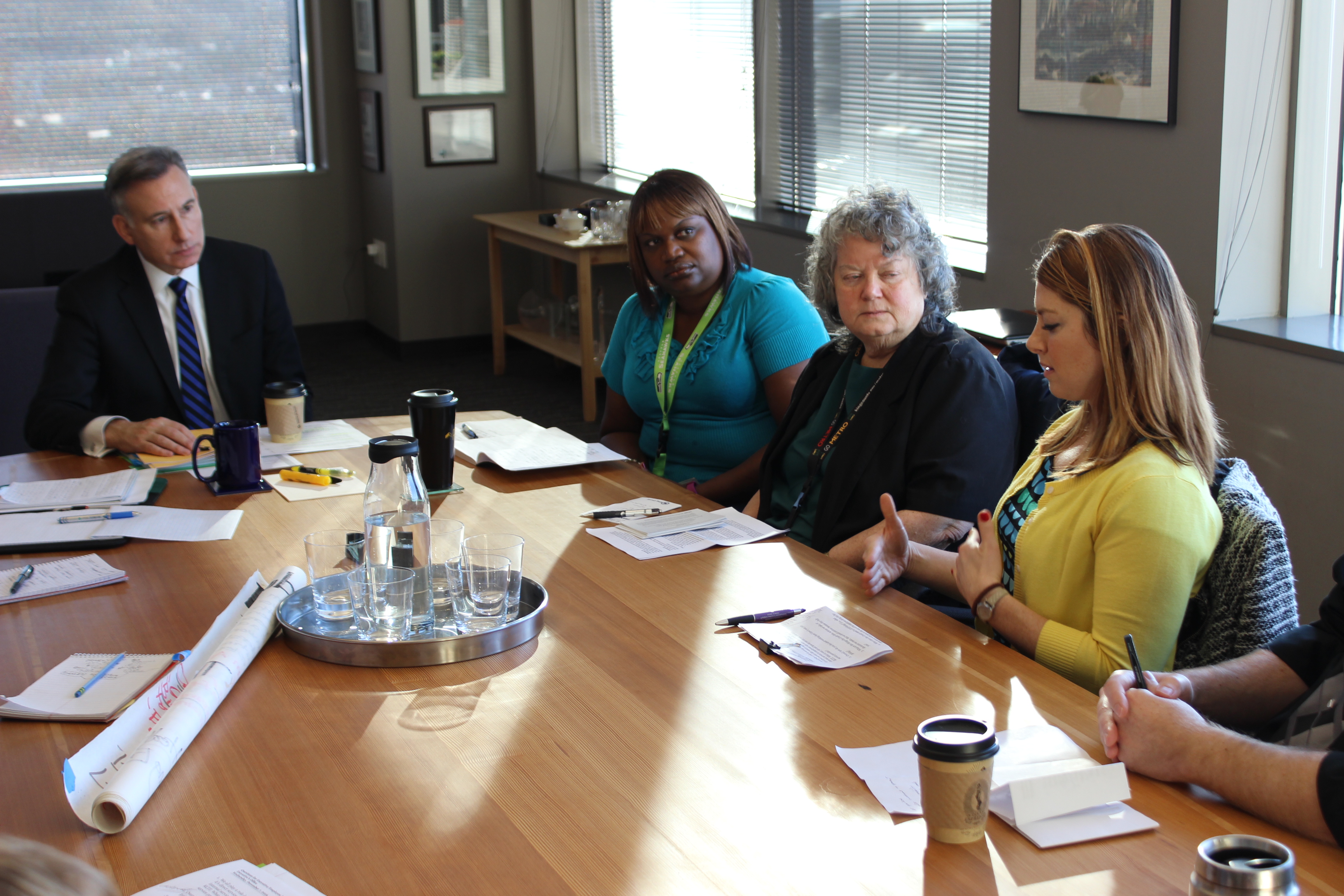
That’s why King County Executive Dow Constantine hosted his first Employee Listening Session – to hear from employees about the issues they are facing in their workplaces, and what the County can do to help them thrive and better serve their customers.
“Although I visit many King County work sites each month, I still don’t get as many opportunities as I would like to talk directly with individual employees, so I asked my staff to put together these listening sessions,” Executive Constantine told the small group gathered in his Chinook Building office. “I want to hear from you about what you’re working on, what’s working well, and where we could do better to help you succeed.”
The Executive’s Office worked with union leaders who nominated 11 employees from across the County to attend the first Employee Listening Session on Wednesday, December 7: Hossein Barahimi (Department of Transportation), Jason Canfield (Superior Court), Valerie Dreas (Assessments), Steve Ford (KCIT), Bob Goucher (Department of Natural Resources and Parks), Jennell Hicks (Department of Community and Human Services), Amy Lewis (Department of Public Defense), Lynn Mazer (Department of Judicial Administration), Keith Siebler (Public Health), Lois Watt (Department of Transportation), and Lisa Wray (Sheriff’s Office).
A passion for public service was a consistent theme among the employees at the event who all shared a strong commitment to serving their customers and zeal for their work.
Career advancement was a key topic of discussion, with attendees urging the Executive to look at how the County can ensure maximum transparency and objectivity on hiring panels, and to encourage County recruiters to value training and certifications alongside experience when evaluating job applications.
The attendees also advocated for managers to facilitate greater self-direction for employees wherever appropriate, which can lead to more innovation and problem-solving.
Another issue that was raised was support for military veterans, with one attendee advocating for King County to continue its Veterans Program and its focus on hiring and assisting local veterans.
The Employee Listening Sessions are part of the Executive’s commitment to connecting more frequently with employees – both in person at site visits and events like this one, and electronically through video and email messages.
The Executive’s team has taken the suggestions from the employees who attended the session and will work to address the concerns that the group voiced. The Executive plans to host more Employee Listening Sessions in 2017.






 Employee News