
Reminder: Win a book of poetry; further the conversation about equity and social justice, deadline December 30


Enter to win one of these 6 awesome books.
This year an Equity and Social Justice (ESJ) project team in DNRP organized a series of four literary readings called “Reflecting on Race and Racism through Spoken Word, Story, and Conversation” that was open to all King County employees. The purpose was to provide a forum for employees to discuss issues of race and racism to help reject stereotypes, practice empathy, and come to a greater understanding of the roots of inequity and injustice.
The ESJ literary project is also the reason behind this book giveaway open to all employees. To be eligible to receive one of six books by the poets featured in the reading series, simply respond to one of the following prompts:
- The most important thing I learned …
- What I hope to see in future events …
- I didn’t attend any of the events, but I would’ve if …
Send your entries to Rowena Johnson with the subject line ESJ Book Drawing (King County employees only). Deadline for entering is December 30, 2016. All responses will be included in a random drawing, with winners announced in January 2017. Titles to be given away are
- Aux Arcs by Shin Yu Pai
- Adamantine by Shin Yu Pai
- Digging for Roots by Kiana Davis
- Diglossic in the Second America by Quenton Baker
- This Glittering Republic by Quenton Baker
- Where Bullet Breaks by Casandra Lopez
If you are not among the winners, you can still get easy access to the books. A set will be available for checkout from the Local Hazardous Waste Management Program library.
Turning to books is always a good move. As Sherman Alexie says, “I firmly believe in the power of stories to change the world, and I firmly believe in the power of one story to change one life at a time.”
Share this:

Kudos to KC Roads for tackling snow and ice head on!

With winter weather on the way, we say thank you to everyone who is helping keep our roads safe!
Kudos to King County Road Services for maintaining 1,500 miles of road and 181 bridges in unincorporated King County. By making sure there is no ice on our roadways you are helping transit operators, commuters and all who travel during this busy season stay safe and sound.
Share this:

KCIT Training wants to help you get the knowledge and skills you need to get the most out of SharePoint

Due to the overwhelming response to our initial SharePoint course offerings, we’ve added more Basic and Intermediate classes to the schedule. Openings are currently available but they will fill up fast so enroll now to reserve your spot!
SharePoint Basic Training: In Basic training you’ll get familiar with site navigation, learn best practices and discover how SharePoint is configured for King County. To facilitate continued learning students also get exclusive access to post training support from the instructor.
SharePoint Intermediate Training: In Intermediate Training, we’ll build upon what you learned in Basic, learn more about Library settings, Custom Columns, Metadata and file structure. Creating Custom lists and management of metadata.
Click here for available Basic and Intermediate Training registration dates.
Students if you don’t see a class that works for you, please let us know! We’ll do our best to accommodate your request, and managers, we will work with you to identify and develop learning opportunities for your project or workgroup. Give us a call at 206-263-1335.
Share this:

Social Media Spotlight: King County Employees Twitter

 King County employees provide more than 2 million residents with excellence and equity in the essential services
Follow King County Employees on Twitter today!
Click here to view all King County social media pages.
Share this:

Featured Job: Best Starts for Kids Prenatal to 5 Years Policy & Program Manager

Closing Date/Time: Sun. 12/18/16 11:59 PM
Salary: $78,634.82 – $99,674.22 Annually
Job Type: Career Service
Location: Chinook Building, Downtown Seattle, Washington
Department: Department of Public Health–Administrative Services
Description: The BSK Policy & Program Manager will provide high-level project management to BSK implementation activities with an emphasis on developing strong partnerships with other County departments and community stakeholders to create opportunities for collaboration and alignment for BSK. This position will also conduct policy analysis and develop recommendations on policies impacting children and youth in King County, with an emphasis on prenatal to 5 year olds.
Learn more about this position or view all available jobs.
Share this:

Megan Pedersen appointed Director of Office of Labor Relations

 On Monday, King County Executive Dow Constantine announced the appointment of Megan Pedersen as Director of the King County Office of Labor Relations (OLR),
Megan has been the Interim Director of OLR since January 2016 where she helped lead the County to its first ever total compensation agreement with the County’s Coalition of Unions, establishing wages and health benefits for 2017-18, while developing a Total Compensation strategic framework for all bargaining in the County.
Prior to overseeing the Office of Labor Relations, Megan was the Deputy Director of the King County Records and Licensing Services (RALS) Division from 2012-2016, and a Labor Litigator with the Office of Labor Relations from 2010-2012.
Before joining King County, Megan was an associate with Seattle law firm Williams Kastner where she specialized in representing management in labor and employment law matters. She is a graduate of the University of Washington Law School.
As OLR Director, Megan will lead the County’s work in strengthening our new total compensation methodology and work with our labor partners to ensure we are an equitable, innovative and fiscally-responsible government for our employees and the people of King County.
Please join us in welcoming Megan to her new role.
Share this:

Holiday Food Drive Extended to Dec. 19
 Thank you to all who have given so generously during this year’s Holiday Food Drive benefiting Northwest Harvest. If you haven’t given yet, and you’d like to, you still have time! This year’s drive has been extended until Monday, Dec. 19.
Drop off your pre-packaged, non-perishable donations in the marked collection bins located in many King County buildings. If you have questions about the drive, call 206-477-9400 or email workorderdesk.fmd@kingcounty.gov. Thanks in advance for helping those in need this holiday season!
Share this:

Attend a Sounders FC pep rally Friday at noon

 The Seattle Sounders have been on an amazing run through the post-season… and now they’re on the verge of their first-ever MLS Cup!
Join your fellow employees at noon on Friday, Dec. 9 as we rally on the Administration Building Plaza (Fourth Avenue side) and raise a flag to celebrate our hometown club and Major League Soccer’s best fans.
If you are on break or at lunch, or not working during this time, you’re invited to put on your Sounders gear, join in the pep rally, and help cheer the Rave Green to a championship against Toronto FC.
Your attendance is of course strictly voluntary, and employees will not be compensated or receive overtime for joining the celebration.
FIGHT AND WIN! Go Sounders!
Share this:

Two public defenders become fellows in University of Washington Leadership Institute
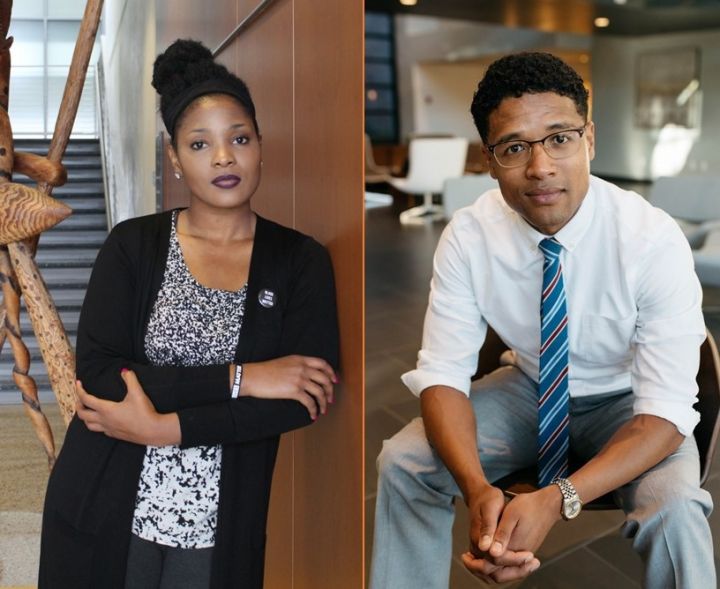
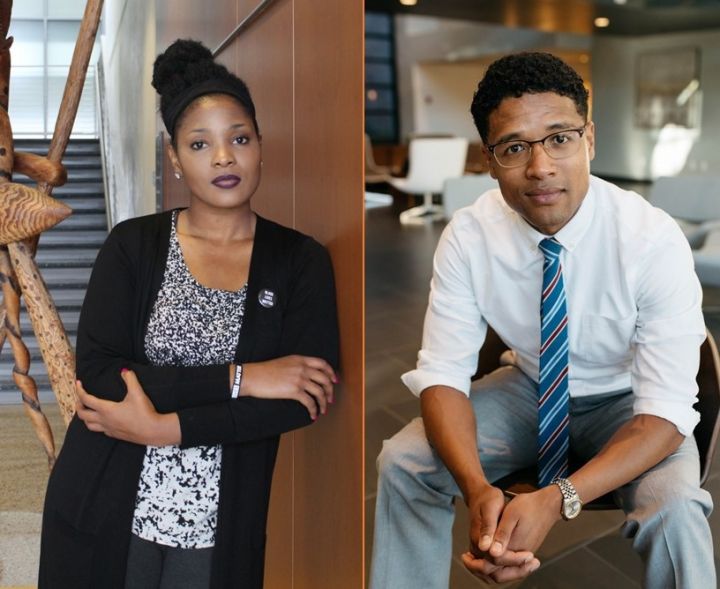
Sade Smith and Matthew Sanders are excited about their participation in the Washington Leadership Institute.
Crossposted from For The Defense
Both Sadé Smith and Matthew Sanders became public defenders because they knew it was in the courtroom – fighting on behalf of people who are often marginalized and disempowered – where they could make the biggest difference.
Now, they’re going to get the opportunity to take these values and aspirations to the next level.
Smith and Sanders, both attorneys at the King County Department of Public Defense, were selected as two of 12 fellows for the 2017 Washington Leadership Institute (WLI), a program co-sponsored by the University of Washington School of Law and the Washington State Bar Association (WSBA). WLI recruits, trains and develops minority and traditionally underrepresented attorneys for future leadership positions in the Washington State Bar Association and other aspects of the legal community.
Read more at For The Defense
Share this:

Tech Tip: What? Snow? Ice? Preparing to work from home in three easy steps!

The forecast says snow and you want to be prepared to work from home. Before you pack up and take your device with you (don’t forget the power cord), update the security patches. Go to your system tray (otherwise known as the “up arrow” in the lower right that shows “hidden icons”), click on the McAfee logo (it may be just an “M” or look different from this) and click “update security”.

Now, you are secure if you work from home.
Next, you can log in to Microsoft Outlook, Sharepoint and many other applications now without using VPN. (KCIT completed a major upgrade earlier this year to allow for this level of flexibility.) VPN is still required to access some files.
Finally, if you do need to use VPN, please know that KCIT will have 24/7/365 teams available to manage high volume access.






 Employee News