
Two awards honor green purchasing in King County
Crossposted from the DES Express blog
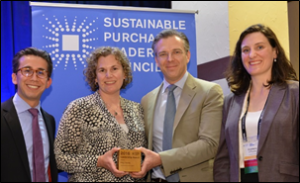
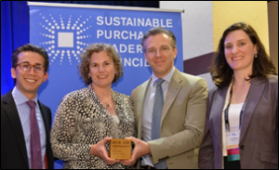 The Sustainable Purchasing Leadership Council (SPLC) has recognized King County with two awards. The first was the Leadership Award for Purchasing Innovation for the County’s new Proterra battery-powered bus fleet, which provides significant cost savings and environmental benefits. The second was an Outstanding Case Study Award for the purchase of liquid petroleum gas vehicles for the county’s fleet.
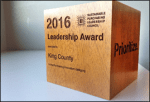 SPLC is a national non-profit organization dedicated to promoting green purchasing practices within large institutions. King County’s pair of awards were presented to environmental purchasing manager Karen Hamilton in Washington D.C. at the annual SPLC conference. Congratulations to FBOD’s green purchasing team!
Share this:

King County hosts international management forum

Crossposted from the DES Express blog
Last week, King County hosted the Consortium for Advanced Management International‘s (CAM-I) summer quarter meeting, focusing on “Private and Public Sector Partnerships.” CAM-I is an organization that over the last four decades has developed practical and effective management tools, techniques, and methods to advance the way organizations manage costs, processes, and performance. The event drew participation from employees all across King County, as well as Boeing and the Royal Australian Navy, to name a few. Speakers for the plenary session included Deputy County Executive Fred Jarrett, Bellevue City Manager Brad Miyeke, and John Bernard, author of “Government that Works.” The three day meeting, which consisted of full day workshops, trainings, and a plenary session, took place on the first floor of our Chinook Building. Many thanks to everyone who helped make the CAM-I forum a success!
Share this:

Mercer Islanders invited to try TripPool, Metro’s new ridesharing service

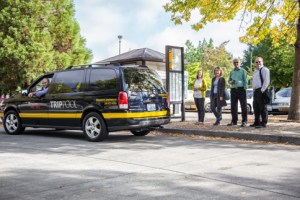 King County Metro’s Alternative Services program has launched a new transportation pilot program and it’s available to King County employees who live on Mercer Island! TripPool is a new rideshare connection from your home neighborhood to the Park-and-Ride. Riders use a mobile app to find and book trips. The best part is the TripPool van gets reserved parking at the Park-and-Ride! Be part of this pilot project at the Mercer Island Park-and-Ride and help us learn how to make the program even better. Interested? Email trippool@kingcounty.gov to learn how you can try it out for free and get $50 in ride credits! TripPool is open to all residents on Mercer Island so pass this along to your friends and neighbors. More info can be found at the King County Metro TripPool website.
Share this:

New online exhibit traces Seattle and King County’s response to HIV/AIDS epidemic

 The King County Archives announces a new online exhibit on how the Seattle-King County Department of Public Health led the response to HIV/AIDS in the 1980s and 1990s. The exhibit “Responding to AIDS: the Seattle-King County Department of Public Health, 1982-1996” (www.RespondingToAIDSExhibit.org) features photos, graphics, other historical documents and video clips from 4Culture grant-funded oral history interviews. This exhibit highlights how Public Health became a national leader in AIDS prevention, education, research, and support for quality care, through forward-thinking leadership, innovative programs, and engagement with the communities most affected by AIDS.
Share this:

KC Employee News site gets streamlined new makeover
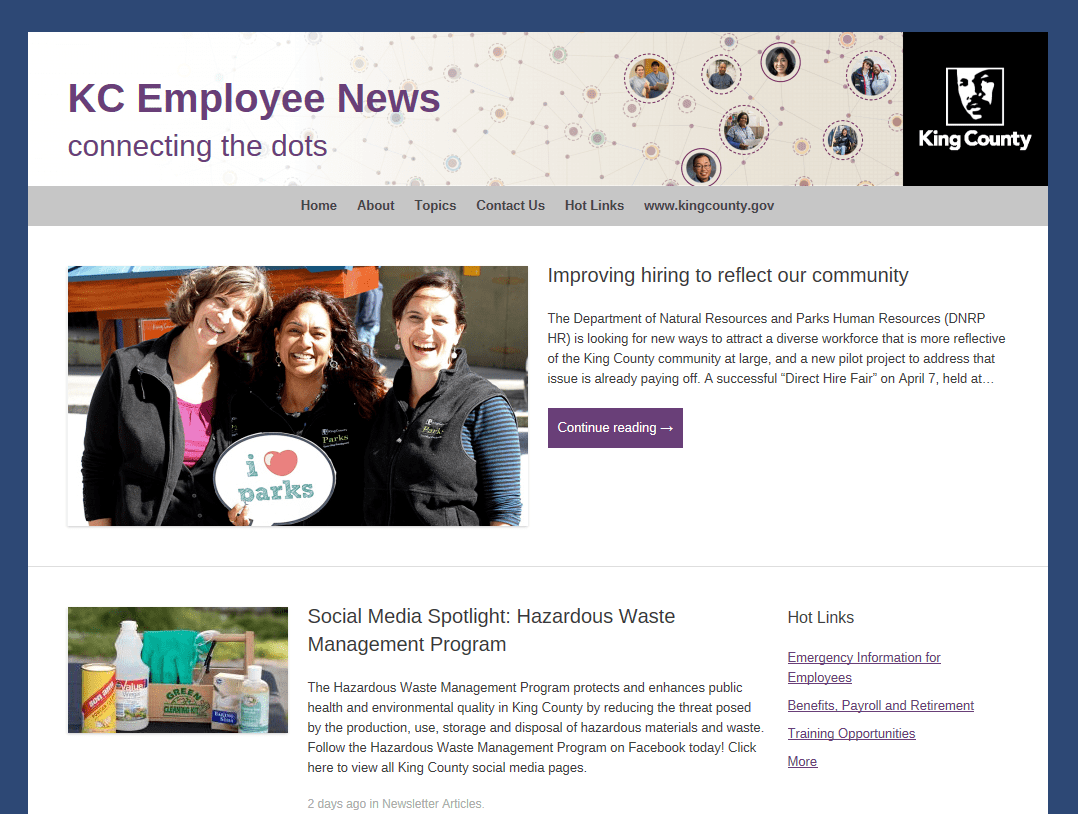
Just recently we revamped our news site www.kcemployees.com to highlight a fresher, bolder look. Reflecting the same content from the weekly Employee Newsletter, each story on the site now features even more engaging photos, new ways to share via social media and suggested reading tailored to readers’ interests.
We’ve updated the menu options to include sorting stories by topic, connect directly to the official King County website and offer a super helpful “Hot Links” page, with hyperlinks to Employee Discounts, Benefits and Payroll, Emergency Information and additional on-demand employee websites. There’s even a listing of all the blogs associated with King County departments and programs, so you can stay up to date with important King County Headlines.
Want to get all this news, discounts and employee information right to your inbox? Follow the blog to be notified every time a new post is shared, and never miss out on important King County Employee News again.
Stay connected with KC Employee News at www.kcemployees.com and follow us on Twitter, LinkedIn and Tumblr.
Share this:

Cascadia Rising: massive earthquake exercise wraps up

Crossposted from KC Emergency News
After more than four days of action simulating a catastrophic magnitude 9.0 earthquake, the Cascadia Rising exercise has come to an end. More than 20,000 people across the Pacific Northwest took part in the drills, which put emergency response and recovery plans to the ultimate test. King County activated its Emergency Coordination Center, where hundreds of people came together to support the exercise response.
Walt Hubbard, director of King County Emergency Management, says overall he was impressed by Cascadia Rising.
“The level of commitment to the exercise from county departments, our regional partners, the community, and our volunteers was excellent,” Hubbard said. “The level of focus we had, identifying problems and collectively working to find solutions, was a real highlight.”
Now, Hubbard and his team of emergency management professionals will take the lessons learned from Cascadia Rising to further refine and improve King County’s emergency response plans, with a focus on building community resilience.
Hubbard gave a brief statement following the end of exercise activities on Friday, June 10. Video is available below.

Share this:

Dr. Jeff Duchin on gun violence: “We need to do more.”

Crossposted from Public Health Insider
By Dr. Jeff Duchin, Health Officer
Early on Sunday, June 12th, a lone gunman with a semiautomatic rifle carried out the largest mass shooting in United States history at a gay nightclub in Orlando, Florida, killing dozens of men and women. Our thoughts, prayers and tears go out to the families and friends of the victims, along with our hope for the quick physical recovery for the many injured, though we know the psychological toll will be long-lasting.
So far in 2016, there have been 136 mass shootings (including those with four victims or more) in the US with over 200 deaths. Last year, there were over 13,000 deaths from gun violence in the US. King County is not immune from this epidemic of firearm suicides, homicides and unintentional shootings. Gun violence kills more people each year in King County than car crashes.
This past November, after the Paris terrorist attacks at the Bataclan concert hall, I wrote of the need to recognize gun violence as a public health problem and start to address it accordingly.
Read more at Public Health Insider
Share this:

Message from Executive Constantine: Amid terror, hope and courage
Dear fellow King County employee,
The mass shooting in Orlando – the deadliest in modern U.S. history – is shocking. An outrage. But yet somehow, sadly, not unexpected.
Years of hateful rhetoric in our nation’s politics and press has predictably led angry, fearful, frustrated individuals to misdirect the blame for their own disappointing lives toward the “other” – people of another race, religion, country of origin, or sexual orientation. The addition of easy access to military-grade weapons, as we have seen over and over, can quickly turn these warped beliefs into unspeakable tragedy.
Yet there is also hope and courage. As we witnessed Sunday at the candlelight vigils in Seattle and across the country, we stand united, defiant in the face of hatred and violence.
The work we as a county government do along with our community partners seeks to ensure that this is a safe, healthy and welcoming place for all – Latino and Muslim; lesbian, gay, bisexual and transgender – those singled out by this shooter; and those vilified even by certain major national political figures. We embrace diversity. We celebrate cultural pluralism. It is not homogeneity but mutual respect and unity that make and will keep this one of the most prosperous, dynamic and vibrant metropolitan regions in the nation.
I invite you to join me at noon Friday, June 17 in the Chinook Building lobby where we will pause to honor the victims of the attack in Orlando.
And I invite you to participate in this year’s Pride Parade on Sunday, June 26 in downtown Seattle. It is an opportunity for King County employees to demonstrate our support for the lesbian, gay, bisexual and transgender community. Let’s send a clear, strong message that we stand with our LGBT brothers and sisters in this troubling time. Contact me for details.
This is a difficult period in our nation’s history, but it is a challenge we will face together. We are strong. We are resilient. And we are dedicated to the fundamental American ideal that all are created equal.
Sincerely,

Dow Constantine
King County Executive
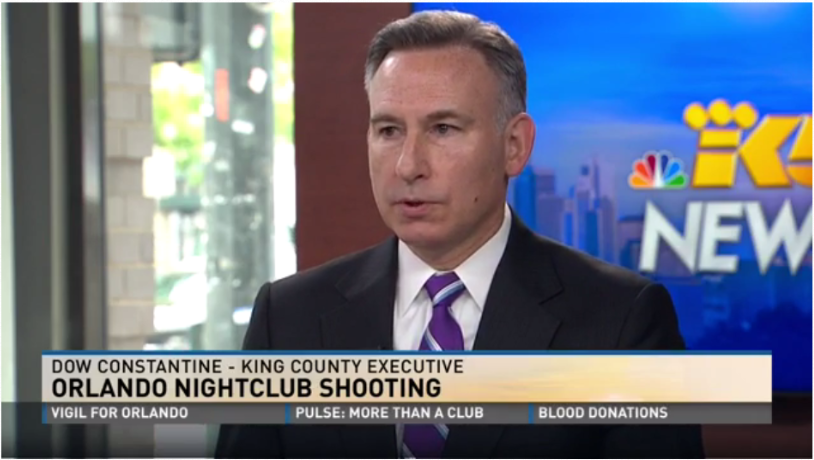
View this video to see Executive Constantine speaking to KING-TV about the Orlando shooting.

Share this:

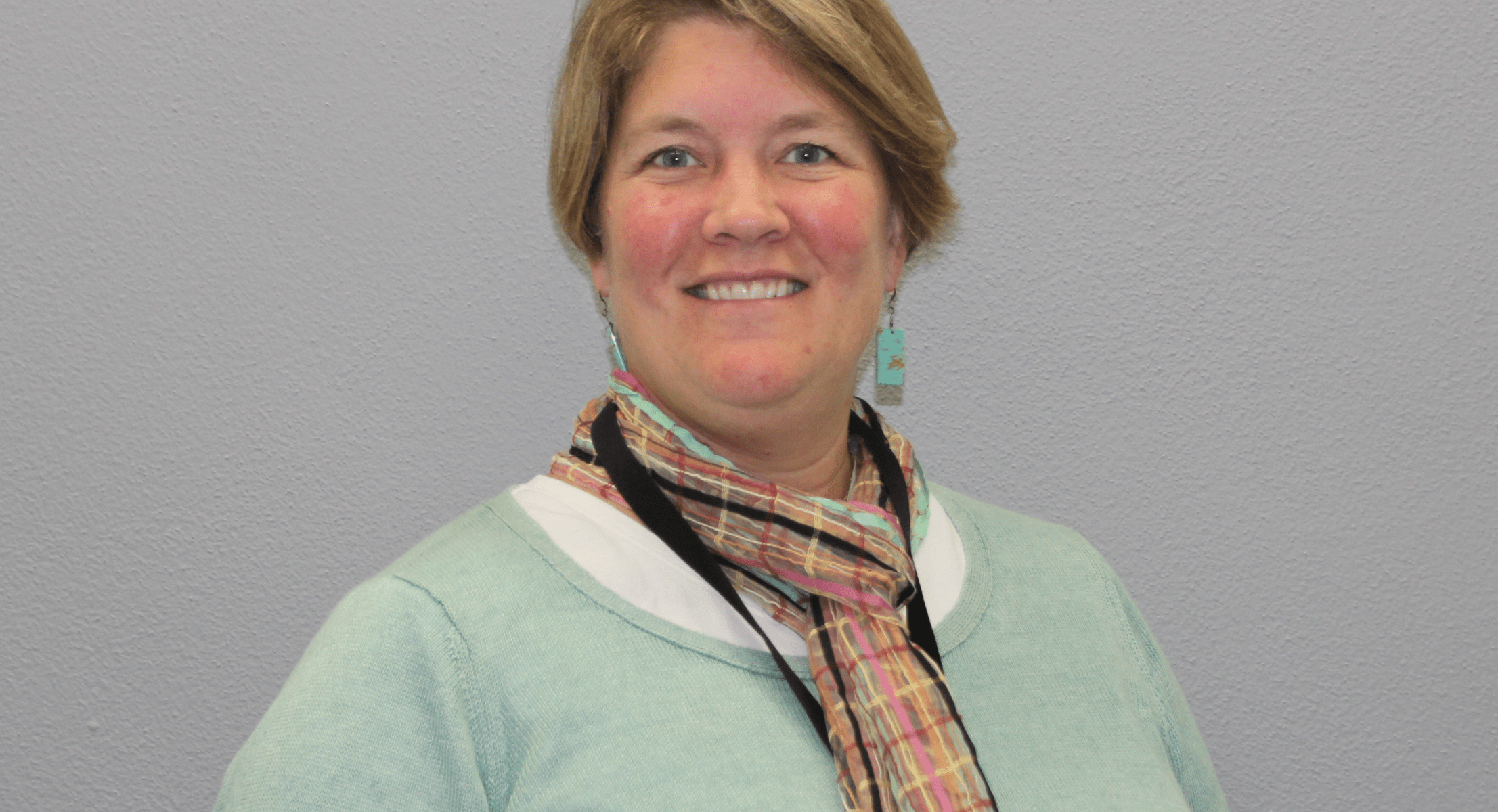
Five Questions with Brooke Bascom, Employee Engagement Manager
 1. Why did you start as an Employee Engagement Manager with King County?
My work with Healthy Incentives led me to employee engagement. We started examining workplace stress and what contributes to it. Turns out that there is a lot of crossover between the factors that cause stress and the factors that lead people to be engaged in their work. For example, if there is conflict in your team it can cause stress. On the other hand, if your team works well together, appreciates each other and encourages everyone’s best, that can be really engaging. I got even more excited when I learned the positive impacts engagement has on the organization. An organization with a highly engaged workforce produces better quality service with fewer injuries, grievances, sick leave and turnover. Engagement is really the point at which individual well-being meets organizational performance to produce really powerful results for the individual, the organization and the public we serve.
Share this:

Social Media Spotlight: Hazardous Waste Management Program Facebook

 The Hazardous Waste Management Program protects and enhances public health and environmental quality in King County by reducing the threat posed by the production, use, storage and disposal of hazardous materials and waste.
Follow the Hazardous Waste Management Program on Facebook today!
Click here to view all King County social media pages.






 Employee News