
Employees can now receive up to 12 weeks of paid parental leave

 King County Executive Dow Constantine’s proposal for up to 12 weeks of paid parental leave was approved by the County Council on December 7, putting King County at the forefront of the national movement to expand paid parental leave.
Beginning Jan. 1, 2016, County employees will be allowed to take up to 12 weeks of paid leave when welcoming a new family member through birth, adoption, or foster-to-adopt placement.
“I’m proud that King County is among the leading employers in the nation to offer a program that has a positive, lifelong impact on a child’s development,” said Executive Constantine. “It also demonstrates our commitment to recruiting and retaining the talented workforce we need to deliver the best outcomes for our community.”
Share this:

Hopes and Fears

 November 30 we started trainings for managers and supervisors on action planning with their workgroups. In the course of the trainings we talk about people’s hopes for how these conversations will go and what will come out of them.
There is a lot of hope from our people leaders that this will be the beginning of a new dynamic between managers and supervisors. I have been inspired by the hopes we have heard:
- This will be an opportunity to build trust with employees
- The action plan will have an impact
- Everyone will take ownership of the change that needs to happen
- This will be the start of an ongoing conversation that will help us continuously improve
- Conversations will be honest
- Conversations will be respectful
We also talk about people’s fears and how to navigate through those. There has been real honesty in these discussions and some great ideas for how to address these concerns. Here are a few that have come up in most sessions:
- Discussion will focus on something beyond our control to change.
- Acknowledge concern about this thing, refer it to your leaders
- Pick something you can influence
- The discussion and follow up action will impact our workload
- Something you are already doing might align with an issue to need to address to improve engagement
- Choose something doable
- Integrate discussions about engagement into existing meetings instead of calling additional meetings to discuss engagement
- The action will cost resources
- Look at it as an investment
- Be deliberate in choosing an action that will have the maximum positive impact with lowest amount of cost
- Nothing will really change and this will reinforce the narrative people have that things don’t change
- Choose an action that is doable and within your control
- Communicate incremental steps and milestones reached
- Make change visible by using tier boards and other visual management systems to track progress
- How to align action planning at multiple levels to maximize impact
- Create a heat map of “key questions to focus on” by color coding each key question for the department, division and work unit. Put them on a spreasheet or a wall so you can see which key questions run common throughout. This will give you an idea of common actions that can be taken at all levels of the organization. Here’s what that wold look like: key driver chart
- People will not engage due to their cynicism that things will change.
- Have everyone play a role in creating and implementing the action plan
- Communicate back progress
- People will dwell on the negative scores instead of talking about how to make things better
- Acknowledge the score and people’s feelings about it
- Ask what might be contributing to the low score
- Ask what it would be like if the score was incrementally higher
- Ask what steps you would take to get there (this would be your action plan)
- Ask if the group thinks is possible to get there
- Ask people to indicate their level of commitment to getting there
- Assign roles and responsibilities for implementing the action plan
- Groups with positive scores will not be motivated to change
- We all have room for improvement
- Delve into some of the lower scoring questions and ask why those are lower than some of the higher scoring questions
- Ask if moving those scores higher would have a positive impact on engagement and how
- Create an action plan
- Remember: it’s important to not sacrifice what you are doing well to focus on where you might be weak
Share this:

Open Ended Questions
 “Asking the right questions takes as much skill as giving the right answers”
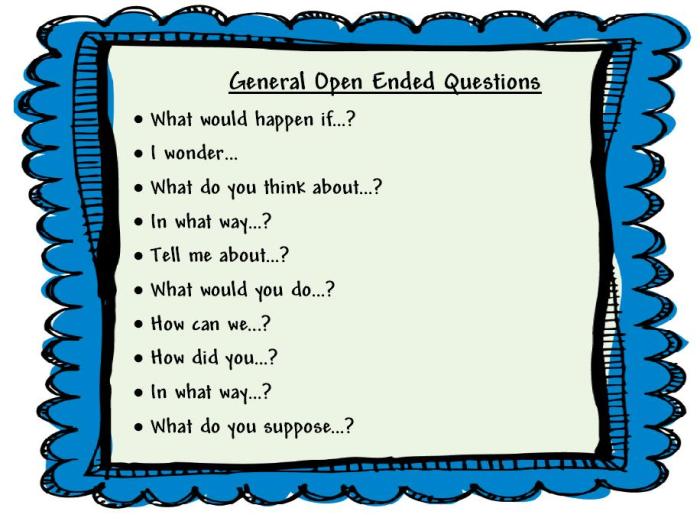
One of the best tools for having robust discussions about engagement and action planning with work groups is a handful of open ended questions. A good open ended question will engage people in discussion and help you better grasp the state of engagement, what success looks like and the steps needed to get there.
We give participants in our trainings space to brainstorm open ended questions they can use in their discussions with work groups and they’ve come up with some great ones:
- What does engagement mean to you?
- When you took the survey which issues were you hoping would be addressed?
- Looking at the key drivers of engagement for our department/division/group, what resonates as the things that are most influential for us in doing our best?
- Which of these things is more important than others?
- What surprised you in the results?
- What didn’t surprise you in the results?
- How do you think people interpreted this particular question?
- What would “strongly agree” look like for this question?
- What are we doing that makes this a strong or weak result?
- What are we doing well that we need to keep doing?
- What needs to be changed, improved, or enhanced to help us meet our goals of creating a work environment we all want?
- Of the things listed, what could be changed or improved in a week? A month? Three months? What would need organizational/senior leadership support?
- What steps would we need to take to meet our definition of success in this area?
Share this:

Breaking down barriers with Supported Employment: Jodeen Wieser
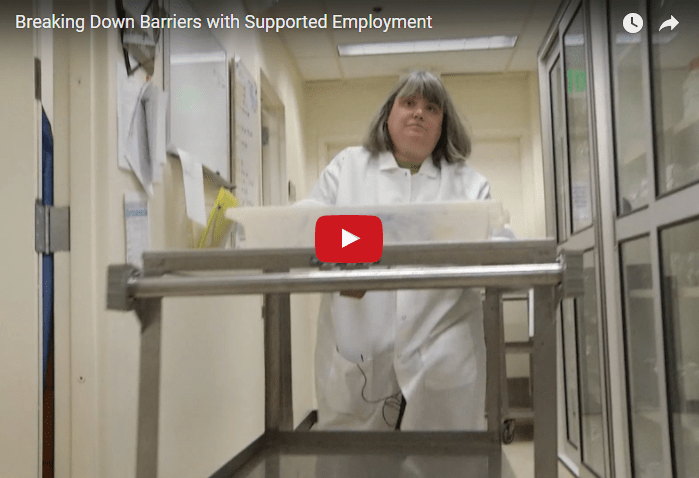
Jodeen Wieser is a 20-year employee with King County’s Environmental Lab, a Lab Assistant who performs a wide range of essential tasks that help the Lab do its work of collecting, analyzing and monitoring samples that protect our local environment.
Jodeen is also a supported employee through a King County program that pairs her with a job coach to help with learning new skills, communication and any other issues that arise.
“When you meet someone with a disability that maybe is a different picture of what you thought someone was or what they could do it really helps you to become more comfortable,” Christina Davidson, Supported Employment Program Manager for King County, said. “And as coworkers become more comfortable with employees and coworkers with disabilities, so does the community and it really helps to break down barriers.”
Hiring individuals with developmental disabilities through the Supported Employment Program is a cost effective way to improve efficiency in departments, change lives, and create more inclusive workplaces. Watch the short video below that highlights Jodeen and contact Christina Davidson, King County’s Supported Employment Program Manager, to learn more about ways you can take advantage of this program.
Share this:

Cybercriminals will ring in the Holidays

 The start of the holiday shopping season marked by Black Friday and Cyber Monday is here. Cybercriminals take advantage of busy online shopping days which provide an opportunity for dramatically increased illicit profits, but you can protect yourself.
The FBI has identified a number of different scams and schemes which could be used by cybercriminals this holiday shopping season such as:
- Malicious phishing emails for big ticket items and “too good to be true deals”
- Selling counterfeit or stolen products
- Fraudulent shipping notices from DHL, UPS and FedEx
- Holiday refund buncos
- Online surveys requesting personal information offering complimentary vouchers or gift cards
- Free malicious mobile applications
- Contests offering items such as movie tickets for popular shows seeking for personal information
- Fake charities
- Point-of-sale (PoS) malware.
Share this:

Administrative Professional recognized by peers
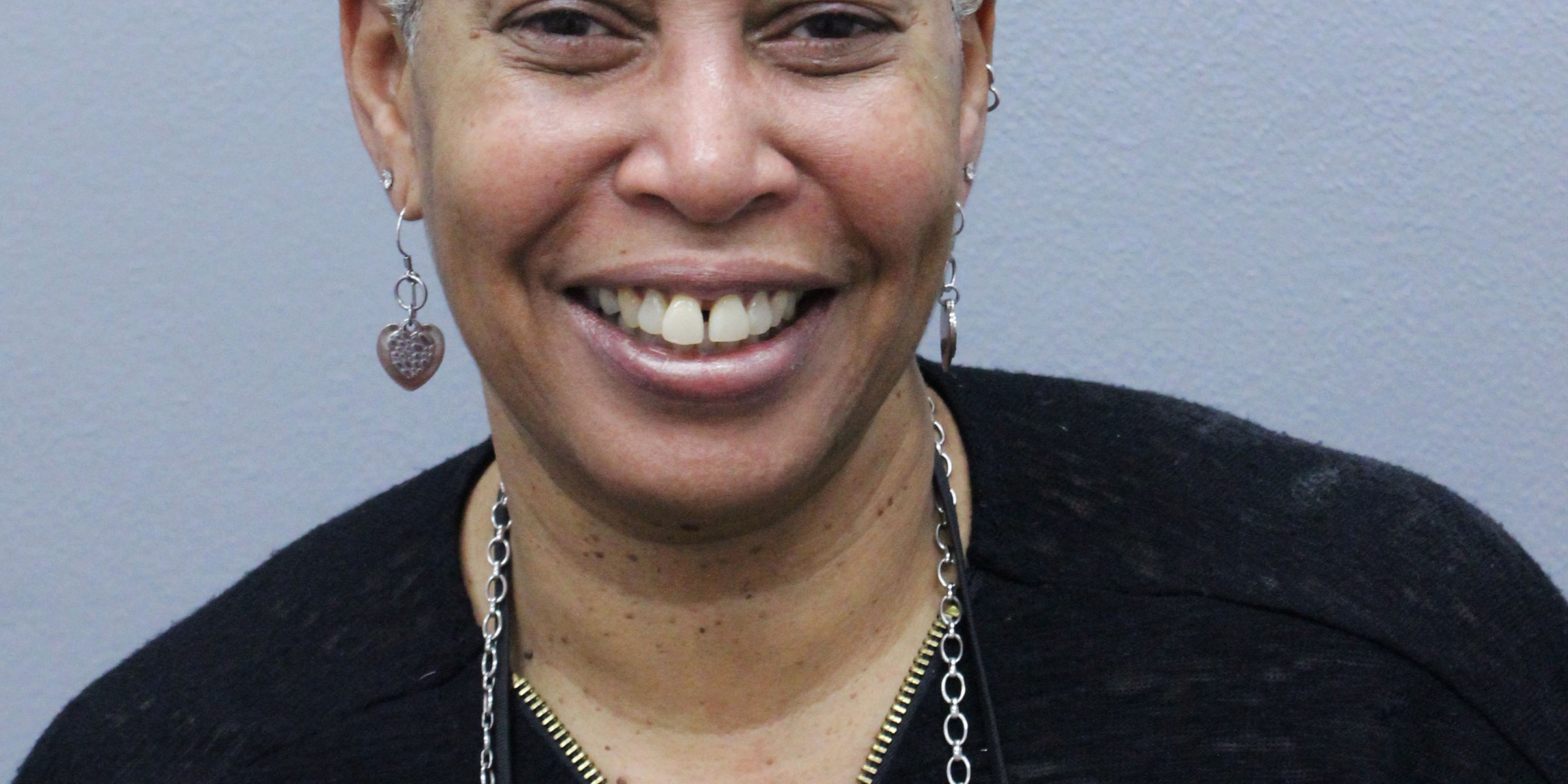
 Like all King County departments and agencies, the Human Resources Division is working on multiple wide-ranging programs and requests at any one time, and its employees rely heavily on the support of its administrative professionals to deliver services to County employees and customers.
Ask any HRD employee and they’ll likely tell you that the reason the division is able to run smoothly is administrator Kimberly Robinson, who recently celebrated 10 years with King County and HRD.
Robinson is a member of the HRD Administrative Team that provides high level administrative support to the Director’s Office. She is the office manager for the division, coordinating and submitting communications and transmittals on behalf of the Director’s Office. She also coordinates work orders with Facilities Management Division and KCIT as well as outside vendors, and serves as a resource for all customers who contact the division online, by phone or in person.
Share this:

Five Questions with Mei Barker, Human Resource Analyst, Human Resources Division

 1. What was your first role with King County? My first role with King County was to provide administrative support to the Public Health Tuberculosis Control Program, mainly processing billing reconciliations and special projects. About a year later I began my career in Human Resources with Superior Court.
2. What do you do in your role with Human Resources Division (HRD)? I handle the civil service recruitments for the Sheriff’s Office, as a member of the Compensation and Employment Services Section of HRD.
3. How is the process for hiring Sheriff’s Office employees different to other agencies?
Share this:

Employee working to end veteran homelessness featured in Lean blog
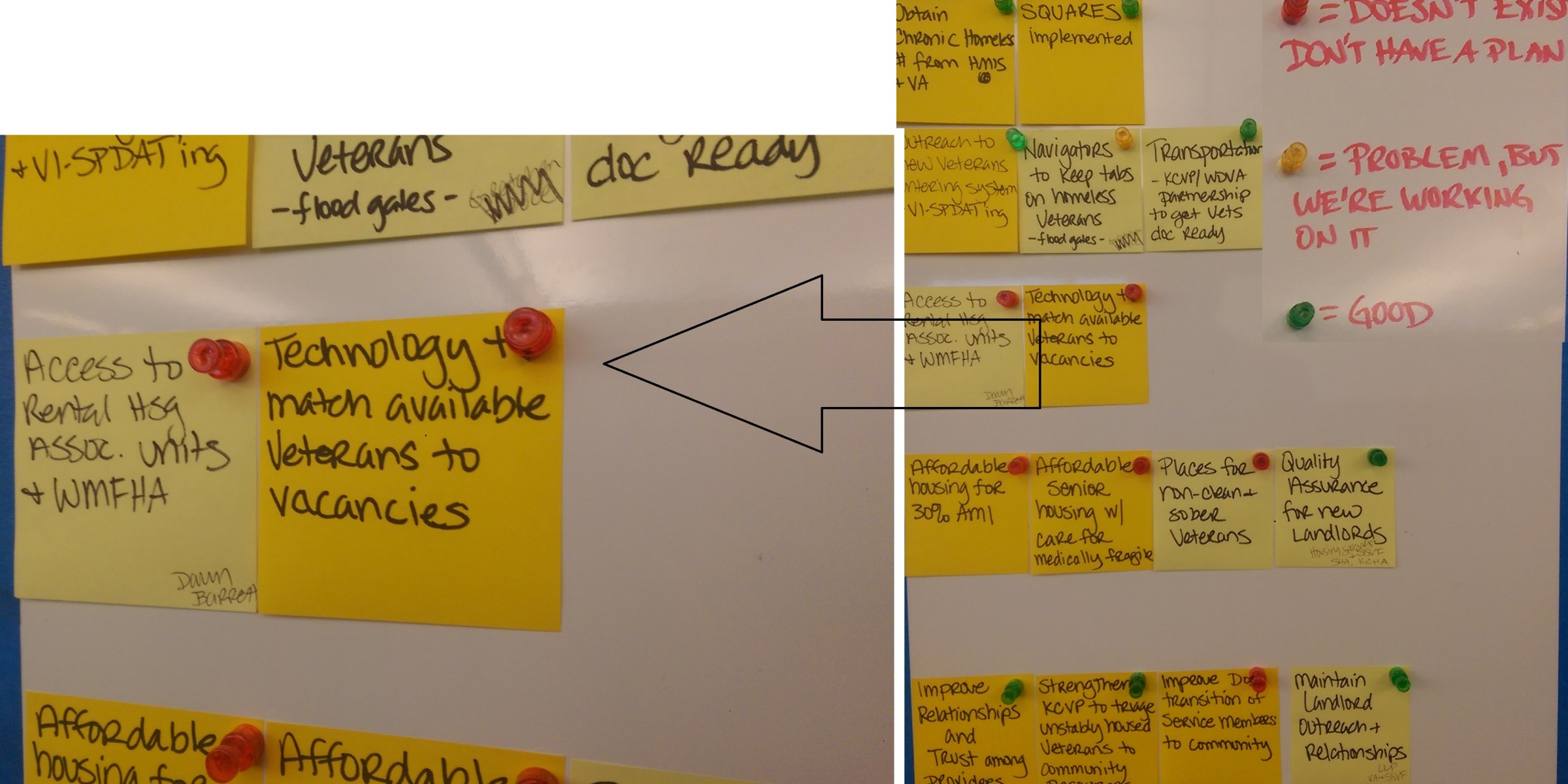
The Lean in King County blog recently featured Dawn Barrett – who we featured in our “Five Questions with… ” segment on November 10 – in an article called “Turning an (Almost) Impossible Goal into Concrete and Solvable Problems.”
Barrett is working on King County’s ambitious goal of ending homelessness among an estimated 1,100 veterans by the end of 2015.
“If we keep doing business as usual, we’ll keep housing as usual,” says Barrett.
Barrett and her team are using Lean to identify small, solvable goals with the aim of achieving the really big, audacious goal of ending veteran homelessness in King County.

Share this:

And… We’re Off!

 We revealed the 2015 Employee Survey Results today and now we’re embarking on an unprecedented effort to respond to the results. This is going to be exciting.
For the first time ever, we’re responding at every level of the organization. That means that departments, divisions and work groups will each have action plans to address issues that came up in the survey. And at the countywide level Best Run Government Employees will respond to the survey results.
This blog will follow our journey to address the results. I anticipate we will share successes and challenges. We will follow the stories of people doing the hard work of listening and changing and we will also share resources to help you along your journey.
Right off the bat it’s fascinating to see what drives engagement at King County. Each report has a page with 4 key questions to focus on. These are the strongest drivers of engagement for employees at that level of the county. Here’s how the consultant arrives at those 4 questions as the key drivers:
- Engagement is defined as someone’s willingness to say, stay and strive: say positive things about where they work, stay working there and strive to get the job done. Questions 60 – 65 on our survey measure this.
- Questions 1 – 59 in the survey measures the things that drive people’s desire to say, stay and strive. These drivers of engagement are: strategic alignment, senior leadership, role/relationship with manager/supervisor, peer culture, personal influence, growth and development, the nature of the job and employee recognition. In the report you can see questions 1 – 59 clustered by engagement driver.
- The consultant does a statistical analysis showing the 4 engagement driver questions that have the strongest correlation to the say, stay strive questions.
This gives us good information about the best place to focus our efforts. The key questions are different for every department, division and branch of government, though there are overlaps.
Most action planning will focus on better understanding and addressing what we learn about the key driver questions. As we do this action planning we’re building on other things that are also geared toward helping us provide the best service possible to the public — Lean and Equity and Social Justice. with employee engagement all are important to King County becoming the Best Run Government — providing service that is effective, innovative and customer-centric. Their similarities, their differences and how they interrelate form a foundation on which we build the Best Run Government. We will use Lean methodology to guide our action planning. We want to truly understand the problems before we act on them, we want to involve everyone in responding and we want to check our progress. As we do this, it will be important to look through an ESJ lens at everything we are doing.
Share this:

Veterans Court helps veterans in criminal justice system

For most, the court system can be complicated, confusing and scary. For many veterans, the process now comes with a sense of comradery and hope.
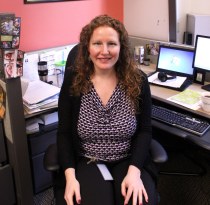
Callista Welbaum, Regional Veterans Court Program Manager
The King County District Court Regional Veterans Court serves veterans suffering from post-traumatic stress disorder or other disabilities from their time in service. In 2008, a judge in New York launched the first Veterans Treatment Court. Recognizing a need, King County launched a study in 2011 to determine the best treatment option, and in 2012 officially opened King County District Court’s Regional Veterans Court.
The Regional Veterans Court is classified as a therapeutic court, where individuals are served by what their needs and different risks are. By working with veterans, the Regional Veterans Court hopes to stop them from offending, and give them tools to deal with their underlying mental health and addiction issues, Callista Welbaum, Program Manager said.






 Employee News