
Employees talk about importance of paid parental leave

Several employees are featured in a new King County TV video talking about the importance of bonding with a new-born child and how King County’s Paid Parental Leave pilot program will help them create that bond.
“All the study shows that if you have that dedicated time that’s focused on a child you have better health outcomes for the child but also for the parents,” Councilmember Rod Dembowski said in the video. “And in this case, the program we’re talking about here, the parents are King County employees and we want to have good health outcomes for them, we want to have them return to work. So it’s also about being a good employer and a smart employer.”
King County Executive Dow Constantine’s proposal for paid parental leave was approved by the County Council on Monday, Dec. 7. Beginning Jan. 1, 2016, County employees will be allowed to take up to 12 weeks of paid leave when welcoming a new family member through birth, adoption, or foster-to-adopt placement. This supplemental benefit will be available to both new mothers and fathers.
Watch the video below and find out more about the pilot program here.
Share this:

Healthy Incentives is now underway

 Healthy IncentivesSM is now underway! This year’s program offers the same great options and features as last year to help you achieve your health goals and be your best every day—while saving on your 2017 health care expenses.
We invite you to think about your reason for being healthy and celebrate the reasons of your coworkers. You’re our reason for offering this program—to help you live a long, full life doing the things you love.
By now, you should have received a welcome letter at your home with your Healthy Incentives ID and instructions on how to earn Gold—the lowest out-of-pocket medical expense level. You can also find your Healthy Incentives ID in PeopleSoft under My Benefits.
Share this:

Disability doesn’t stop dancing employee

If you happen to see a man busting a move while cleaning up hedge trimmings or emptying a trash can at Marymoor Park, it’s probably Parks Specialist Dwight Lewis.
Dwight has been with parks for 17 years and his enthusiasm for the work is showing no signs of waning.
“He actually makes people on our crew want to be better at what they do,” Andy Boland, Parks Maintenance Coordinator, said. “He pushes us, he comes in with a lot of energy, positive attitude, and it’s really what we need; he’s a spark for our whole crew here.”
Dwight is a supported employee through King County’s Supported Employment Program, which matches job seekers with developmental disabilities to jobs by identifying efficiencies and unmet needs throughout King County government. Watch the short video below that highlights Dwight and contact Christina Davidson, the Supported Employment Program Manager, to learn more about ways you can take advantage of this program.
Read Dwight’s full story here at the King County Parks Plog.
Share this:

Featured Job: Business and Finance Officer I

Opening Date/Time: Fri. 01/22/16 12:00 AM Pacific Time
Closing Date/Time: Wed. 02/03/16 4:30 PM Pacific Time
Salary: $29.82 – $37.80 Hourly
Job Type: Career Service, Full Time, 40 hrs/week
Location: Chinook Building, 401 5th Avenue, Seattle, Washington
Department: Department of Community & Human Services
Description: The Department of Community and Human Services (DCHS) provides equitable opportunities for people to be healthy, happy, self-reliant and connected to community.
This position is being created to support the new Best Starts for Kids fund. The position will be responsible for day to day accounting transactions, regular monitoring of expenditures and reporting for all fund transactions.
Who May Apply: This position is open to all qualified candidates that meet the minimum qualifications. The Department of Community and Human Services values diverse perspectives and life experiences. The Department encourages people of all backgrounds to apply, including people of color, immigrants, refugees, women, LGBTQ, people with disabilities, veterans, and those with lived experiences.
Share this:

Five Questions with Heather Barr, Public Health Nurse
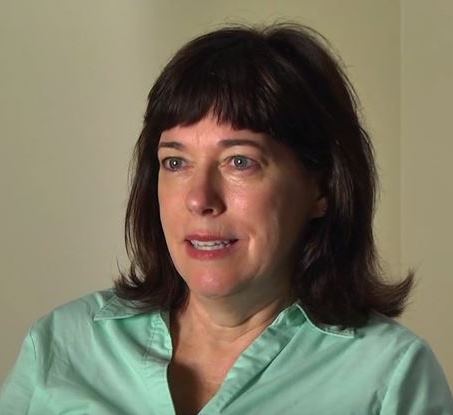
 1. When did you start as a Public Health Nurse with King County? 30-plus years ago. I started out in the Jail as a Registered Nurse in 1984. I met a nurse there (Kathryn Crawford) who asked me what I wanted to do with my career. I told her I liked to work with homeless people, and people with addictions. She said “I have the perfect job for you, I am leaving a position at the tuberculosis clinic running a drug trial for the Centers for Disease Control, most of my patients are alcoholic and homeless, so you would love it!” I called the TB manager, Anne Elarth; she invited me to meet, we chatted a while and she said, “Could you possibly start tomorrow? We can do the paper work later, I need a nurse now.” That was back in the day when things were a tad bit looser in HR, and also when people still smoked at their desk, if you can imagine that. I said yes, and stayed about six years. I loved that job. I worked in the old Detox Center for a while, too. Then I worked with Health Care for the Homeless Network (HCHN) as a Public Health Nurse for Parent Child Health, for MOM’s Project, and for the Child Care Health Team. I did a short stint as a nursing supervisor for the Downtown Clinic, and filled in as manager for the Interpreter Program for a while.
We have so appreciated all that you have done for our guests at the Mission. You’ve been instrumental in providing flu shots, TB tests, trainings – all with a gracious, caring, and friendly style. We feel like you have been part of our Mission team, and are so thankful for you. You have been available for questions that we’ve had, and given us advice when there is a lot of sickness at our shelters – all with the health and well-being of homeless men, women and children in mind. Gary Fast, Seattle’s Union Gospel Mission
2. What do you do in your role? My job for the last 20 years has been with Health Care for the Homeless Network. I do a lot of teaching about reducing the risk of communicable diseases at sites that serve people who are homeless, such as shelters and drop-in centers. I wrote Best Practice Guidelines for shelters and for Tent Cities. I get to go out in the community to visit shelters and provide training and support for the staff at many places in Seattle throughout the county. I give a lot of flu shots every winter, with a lot of help from Public Health Reserve Corps and the folks who process all that data. I field questions from the community about homelessness and health, which covers a lot of issues. I also provide technical support to our contracted providers in Health Care for the Homeless, primarily nurses. Recently, I have been called on to provide training about Trauma Informed Care.
Share this:

What the Trainings Told Us
 Last week we wrapped up trainings preparing managers and supervisors to lead their groups in responding to survey results. 498 (let’s call it 500) managers and supervisors participated in this training and still more are taking it online. That’s an incredible grassroots force out there leading culture change by having conversations with their work groups about how to improve engagement in the county.
Evaluations from the trainings (scores are out of 5 where 1 is strongly disagree and 5 is strongly agree) show that:
- People will be able to apply what they’ve learned (4.14)
- They understand why engagement is important to King County (4.28)
- They know how to read their reports (4.23)
- They know how to lead their group in action planning (4.02)
One area we still need to do some work is helping people understand how the county will respond to the survey results (3.82). We’ll be making a big effort to tell the story about how the county is responding in this blog, Town Hall meetings, videos, emails and in communication from the Executive.
Most useful – People found the most useful things about the training interacting with others, discussing biggest fears about having conversations with their work groups and learning to read the reports.
Most applicable – People said the things they learned and will apply in the next 30-60 days are how to have meetings with staff to discuss results, how to share results with staff and Lean Grasp, Plan, Do, Check, Adjust methodology for action planning. This last was particularly rewarding to see because we made an effort to integrate Lean and ESJ into our engagement practice so people could see how they interrelate. In our environment we often feel like there’s a lot coming at us so seeing how it all relates and builds off each other is important.
Improvements – Some people mentioned that they would like to have attended with their departments or divisions which is something we will be looking at for next year.
Take-aways from the trainings were:
- Managers and supervisors are eager to support culture change in the county
- There is a high level of interest in learning from each other so we need to create a lot more opportunities for people to connect
Also interesting is looking at what people said would be most useful to them in their action planning. Resources that are easily accessible online and ways for people to connect and learn from one another are the most popular. This informs what we need to do to next. We’re working on getting these things up and running right now!

Share this:

Team keeps Metro buses moving
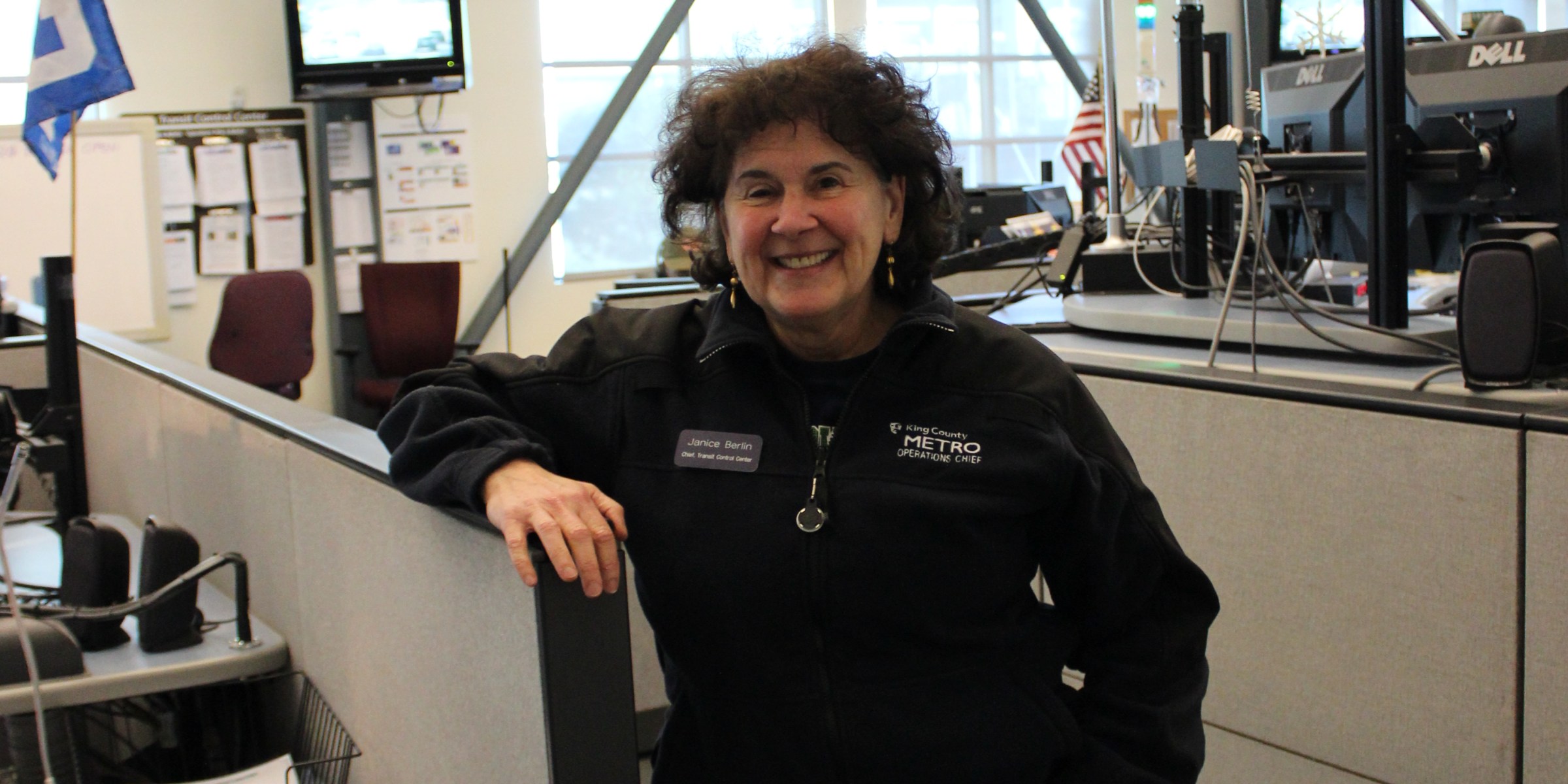

Janice Berlin at the Transit Control Center.
Whenever something out of the ordinary happens on a Metro Transit bus, King County’s Transit Control Center (TCC) gets a call.
Janice Berlin, one of three chiefs in the TCC, works to prepare for any situation that could happen on a bus. The TCC monitors everything from a bus breakdown to a medical emergency to a security threat so commuters are kept safe and issues are addressed quickly.
If a bus breaks down, TCC is notified and the responding coordinator dispatches assistance, generally a coach change, field supervisor and mechanic. Priorities are always safety and accommodating the passengers.
Share this:

Join Exec for 12th Man flag-raising Friday at noon

 The Seahawks begin their playoff run on Sunday and we’re kicking off their drive to the Super Bowl by raising the 12th Man Flag over the King County Administration Building!
Join King County Executive Dow Constantine at noon on Blue Friday, Jan. 8, as he raises the 12th Man flag in the Administration Building Plaza (Fourth Avenue side, 500 Fourth Avenue).
If you are on break or at lunch, or not working at this time, you are welcome to put on your Seahawks gear, join in the flag-raising and help fire up the 12th Man for the Seahawks’ run to the Super Bowl.
Your attendance is of course strictly voluntary, and employees will not be compensated or receive overtime for joining the celebration.
Go ‘Hawks!
Share this:

Chrissy Russillo selected as Interim Director of Human Resources Division
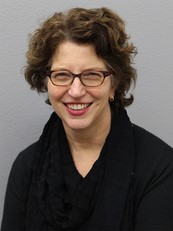
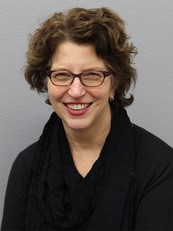 Chrissy Russillo has been selected as the Interim Director of the Human Resources Division, effective December 30, 2016.
Chrissy is filling a temporary vacancy at the Human Resources Division resulting from the departure of Nancy Buonanno Grennan who will be returning to Kitsap County to take the helm as Human Resources Director. Susie Slonecker provided exceptional leadership and dedication as the interim HR Director for the past eight months, is returning to the Prosecuting Attorney’s Office.
Chrissy has been with King County since 2010, having previously served as Chief of Staff for the Department of Public Health. In September 2014, Chrissy joined the Human Resources Division as Interim Deputy Director. Since 2015, Chrissy has served as the Project Director for Best Run Government: Employees, one of Executive Dow Constantine’s top priorities. She is known for her ability to work collaboratively across the County in service to our employees and the people of King County.
Chrissy brings the experience to provide seamless customer service as we conduct a formal, national recruitment to fill the permanent position.
Share this:

Featured Job: Housing Finance Program Manager/Project Program Manager III
Opening Date/Time: Wed. 12/23/15 12:00 AM Pacific Time
Closing Date/Time: Fri. 01/15/16 4:30 PM Pacific Time
Salary: $76,897.60 – $97,468.80 Annually
Job Type: Career Service, Full Time, 40 hrs/week
Location: Chinook Building – 401 5th Ave, Seattle, Washington
Department: Department of Community & Human Services
Description: The Department of Community and Human Services (DCHS) provides equitable opportunities for people to be healthy, happy, self-reliant and connected to community.
King County faces unprecedented affordable housing issues. Amidst tremendous growth, in places both obvious and hidden, many in our community are struggling to meet their basic housing needs. And while King County has supported affordable housing, in all its forms for many years, clearly the dramatic need demands new solutions and broader thinking. The Housing Finance Program Manager is a key leader in this effort, directing the development of the hundreds of affordable housing units needed throughout King County.
A central focus of the position will be the implementation of King County’s Affordable Housing Strategy. While still under development, the strategy identifies additional capital resources that will become available over the next several years. These resources need to be strategically targeted to the greatest need. In addition, the Affordable Housing Strategy calls for new partnerships and programs that can create new units more quickly and at lower costs. The Housing Finance Program Manager will work closely with DCHS leadership and stakeholders to effectively implement these strategies.
Who May Apply: This position is open to all qualified candidates that meet the minimum qualifications. The Department of Community and Human Services values diverse perspectives and life experiences. The Department encourages people of all backgrounds to apply, including people of color, immigrants, refugees, women, LGBTQ, people with disabilities, veterans, and those with lived experiences.
Work Schedule This position is exempt from the provisions of the Fair Labor Standards Act, and is not overtime eligible. Typical hours are Monday – Friday 8am-5pm.
Find out more here.






 Employee News