
Five Questions with Lisa Hillman, IT Service Delivery Manager, KCIT

 1. What was your first role at King County? Public Health MIS Desktop Manager. I came to King County in June 2003 as a contract employee to temporarily backfill a departing MIS IT desktop manager (PCSA Manager) plus kick-start the Windows 98 to XP migration. Never working in public service, I didn’t plan on staying with the County beyond the contracted 910 hours however; I was instantly attracted to the mission, the people and the potential to make a difference.
2. What do you do as an IT SDM? It’s fun, diverse and an action packed role. I support Public Health, and often times other County departments, by guiding and delivering innovative IT services through a standardized and unified approach. I get to work closely with project teams, align strategy and security with daily operations – as well as work on increasing our web services, reporting, analytics, and metrics. Technology is a rapidly expanding area of opportunity and I strive to remove barriers for our technical and business teams while supplying the right tools to meet needs. Now that KCIT has a proven and effective service model and catalog, the role of the IT Service Delivery Manager(s) is even more important in the partnership with our customers on the delivery of IT.
3. What do you like most about your job? The people! Never have I seen a workforce with as much passion, commitment and desire to serve, as those here at King County.
Share this:

Working to combat homelessness in King County

Making homelessness in King County a rare event, and when it does occur, a brief and one-time experience, is the mission of the Committee to End Homelessness (CEH) King County, and its latest annual report details how it will achieve these goals.
King County now has the third largest stock of homeless housing in the country, behind only New York City and Los Angeles, and yet on a single night, January 14, 2014, more than 3,123 individuals were living outside and another 6,171 individuals were in shelters or transitional housing, per the One Night Count conducted by the Seattle/King County Coalition for the Homeless. 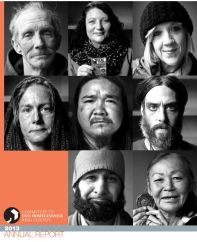
Comprising government, philanthropic organizations, faith-based groups, non-profits, and individual community advocates, and co-chaired by King County Executive Dow Constantine, the CEH outlined its strategies for making homelessness in King County rare, brief and a one-time experience in its 2013 annual report:
Share this:

Native Plant Salvage Program promotes financial and environmental sustainability
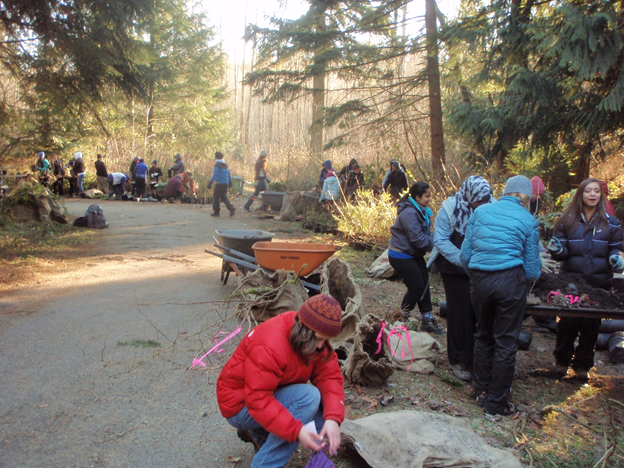
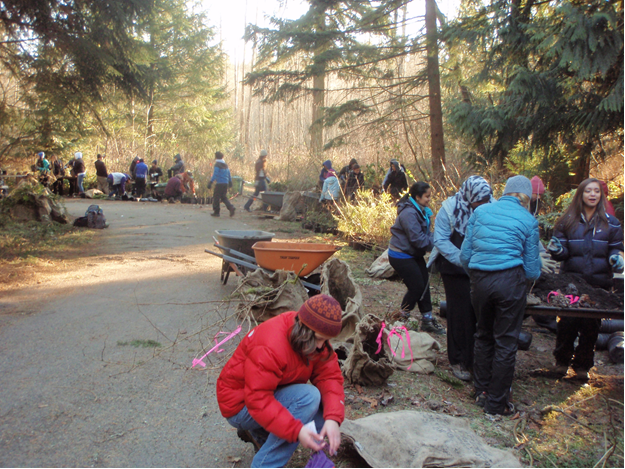 A small team of King County employees and many volunteers are making sure that native plants that would be impacted by development projects are finding new homes in revegetation and habitat restoration projects across the county.
This season alone, 11,260 native plants were salvaged for the Water and Land Resource Division’s Native Plant Salvage Program.
“The cool thing about this is that plants get used all over King County and not just on County-sponsored projects,” said Cindy Young, the ecologist who heads up the program. Volunteers also get to salvage plants for their own restoration projects or homes. Read More
Share this:

S.N.A.C. helps families and kids to eat fresh and healthy

Credit: King 5 Evening Magazine
According to Elizabeth Kimball from Public Health – Seattle & King County, the key to teaching nutrition is to teach about the origin of food.
“When you’re teaching nutrition it’s very hard to talk about nutrition without talking about food – eating food, tasting food and preparing, storing and packing food — all the logistics and practical elements of eating,” Kimball said.
Kimball heads up Public Health’s Seattle Nutrition Action Consortium, or S.N.A.C. program.
“One of the hallmarks of S.N.A.C. is all of our various projects include cooking, which I think is very unique and important,” Kimball said.
S.N.A.C.’s mission is “to improve the health and nutritional well-being of limited income families with children in Seattle and King County. S.N.A.C. promotes the good taste of healthy food.” Read More
Share this:

Kudos! Jack Millman, Metro Transit Operator

I just wanted to write in and say that this bus driver totally made my night last week! I sometimes am nervous taking the bus this late at night by myself, but his friendly attitude greeting everyone as they came on the bus instantly put me at ease. He was joking and commenting about different locations along the route and made everyone smile. I wish I had caught his name, but hopefully you can pass along the note that I appreciated his friendly attitude. – K. Renee
Share this:

Sheriff’s Marine Unit keeping local waters safe

Sergeant Jim Knauss and his unit of four deputies have a mission: to make sure boaters have a good time, but do so safely.
“We’re out here every day, we’re out patrolling. We have at least two boats out and we’re looking for things that aren’t safe,” Knauss said in a recent story produced by King County TV.
The King County Sheriff’s Office Marine and Dive Unit patrols eight contract cities and the unincorporated parts of King County, including water around Vashon Island, and in front of Shoreline and Burien. They also patrol 250 miles of river.
Share this:

DPD volunteers help former defendants get juvenile records sealed
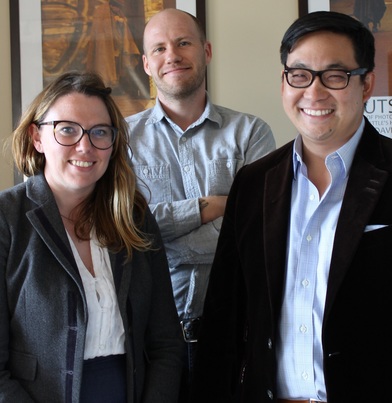
Nearly once a month, three Department of Public Defense employees give over an evening to help adults struggling with the long-lasting repercussions of mistakes they made as teenagers. Some of the people who show up at the free legal clinic can’t get a job; others are denied housing; still others get by-passed for graduate school – all because of a criminal record from their days as a youth.
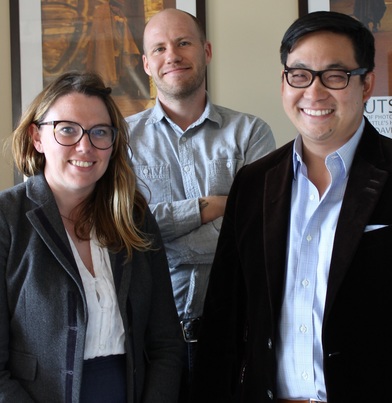
The DPD employees – Kari Boyum, an attorney, Matthew Pang, also an attorney, and Ryan Gray, an investigator – work with law students and other legal professionals at the monthly clinic held at one of DPD’s offices. Their job is to help people navigate a complex legal process, enabling them to petition the court to get their juvenile records sealed. All of those who work at the clinic are volunteers.
 The Juvenile Record Sealing Project began in 2004, launched by George Yeannakis, now special counsel to TeamChild, and Kim Ambrose, a law professor at the University of Washington, under the auspices of Street Youth Legal Advocates of Washington (SYLAW). Today, a decade later, Yeannakis estimates the clinic has helped at least 500 clients seal around 1,000 records. It’s now managed by TeamChild.
Share this:

Five Questions with Lilly Simmering, Food Economy Program Manager, Department of Natural Resources and Parks

 1. What does your role as food economy program manager involve? My main job duty is to shepherd King County’s new Local Food Economy Initiative. Part of that involves creating awareness of the initiative and its goals throughout King County and assembling a prestigious group of private, public, and non-profit stakeholders to form the Kitchen Cabinet, an advisory panel to the Executive on how we can achieve the goals under the initiative. I will also complete any necessary research and help put into action processes that are essential to moving the initiative forward.
2. Why has Executive Constantine launched a Local Food Initiative? The initiative is driven by the fact that King County is the largest food market in Washington valued at an estimated $6 billion dollars, and yet less than 2 percent of that goes back to King County farms. As Executive Constantine said in launching his initiative at Pike Place Market recently, getting more local food to more local tables will mean more jobs and an improved local farm and food economy, better access to healthy, affordable food in low-income communities, and a more resilient local food system to threats like climate change. We want to tap into this economic opportunity and do an array of things that will support our local farmers and food businesses so that they can grow and meet the demand of an area that is recognized nationally as a strong supporter of local foods and local eating.
3. What do you like most about your job? I like many things about this job but some of the highlights include meeting all the various stakeholders involved in our food system. Seeing how our food gets from farm to fork is a remarkable process and it really changes how you view food. Another highlight is just the overall education about eating. Coming from a farming family and one that has also run a restaurant, it makes you appreciate food and food preparation. A big perk is the necessity of research, which consists primarily of visiting all the farmers markets, farms, and food establishments here in King County. And finally, I like that I can play a role in helping King County catalyze efforts to improve the local food economy and address equity and climate change concerns at the same time. Read More
Share this:

Employees partner to produce career expo for veterans

When the Washington State Convention Center started to see more veterans applying to their job openings, they realized they wanted to do something to help veterans improve their job seeking skills. So, they teamed up with King County Veterans Program and WorkSource Seattle-King County to put on a Career Expo for Veterans and their spouses.
“This partnership reflects a strong local commitment to our veterans and the sense of community we are building around them,” said Nancy Loverin, the King County Veteran’s Program Manager and the acting workforce development services administrator with the Community Services Division Employment and Education Resources. Read More
Share this:

Thanks to County support, a new department takes shape
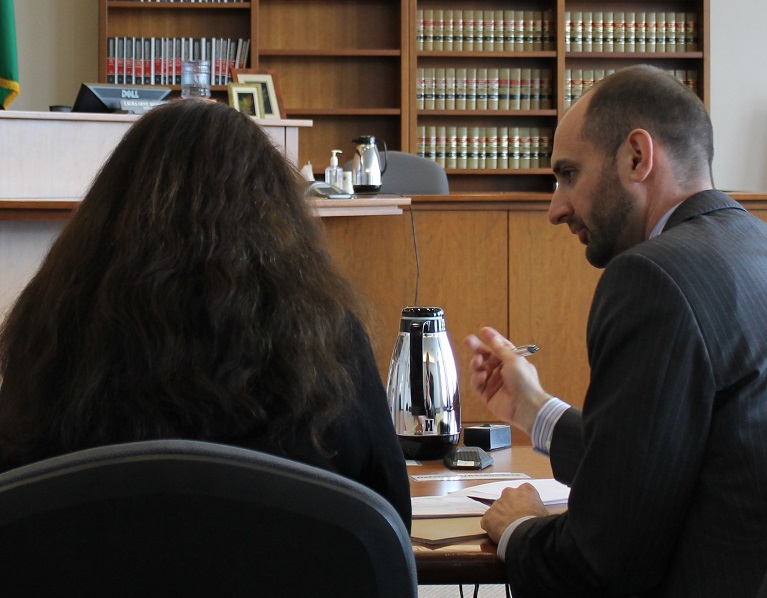
One year ago, a rare event took place in King County government: A new department was added to the county’s roster. The Department of Public Defense came into being on July 1, 2013, when nearly 400 public defenders, mitigation specialists, investigators, paralegals and support staff transitioned from one of four nonprofit law firms to County employment.
The creation of the department occurred after a ruling by the state Supreme Court in a long-contested class-action lawsuit; according to the high court, the public defense employees were “arms and agents” of the county and should receive state pension benefits. In the settlement that followed, the two parties to the suit agreed that public defense employees would become county employees on July 1, 2013.
Much has happened in the year since the department’s birth. Voters approved a charter amendment that made DPD a permanent department, dissolvable only by a vote of the people. The Executive appointed 11 stellar professionals in indigent defense to the new Public Defense Advisory Board (the appointments are pending County Council confirmation). Less glamorous but no less important, DPD staff – with support from several other departments – undertook the painstaking mechanics of a complex transition, building a new infrastructure in support of this new department.






 Employee News